





2026 NASDPTS Survey: Data Shows Further Reduction of Illegal Passing
Are Autonomous Vehicles Ready to Safely Navigate School Bus Stops?
NHTSA is accelerating autonomous vehicle deployment through new safety standards and commercial approvals. See why school transportation leaders are watching.
August 11, 2026
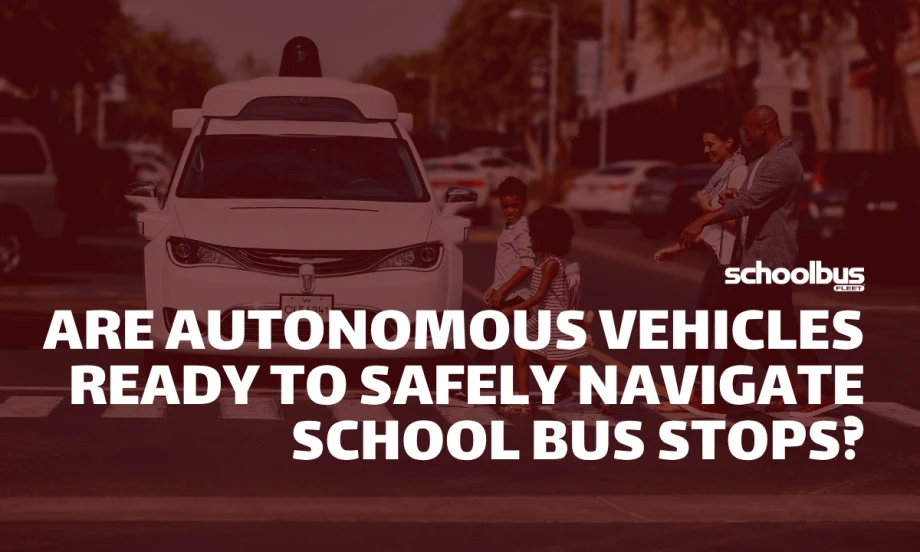
While the findings suggest autonomous vehicles are making meaningful safety gains, they don't fully answer the question school transportation professionals care about most.
Credit:
Waymo/School Bus Fleet
4 min to read
- NHTSA is advancing the deployment of autonomous vehicles by updating safety standards and approving commercial use.
- The focus on these developments includes evaluating vehicle safety in complex scenarios like navigating school bus stops.
- School transportation leaders are closely observing these advancements due to potential impacts on student safety and transportation efficiency.
*Summarized by AI
While recent headlines suggest autonomous vehicles (AVs) are making significant strides toward widespread deployment, school transportation leaders continue to focus on one of the most challenging and consequential questions facing the industry:
Can driverless vehicles safely operate around stopped school buses and students?
In recent weeks, the National Highway Traffic Safety Administration (NHTSA) announced several actions aimed at accelerating automated vehicle deployment, including the development of the nation's first AV performance standards, new guidance for developers, and a commercial exemption allowing Amazon-owned Zoox to begin operating its robotaxis without traditional controls such as steering wheels or pedals. Meanwhile, new research from the Insurance Institute for Highway Safety (IIHS) found Waymo's driverless vehicles were involved in fewer crashes than comparable human-driven vehicles.
NHTSA's latest announcements represent one of the agency's most comprehensive pushes yet to modernize how autonomous vehicles are evaluated and deployed.
The agency said it is working with industry partners to establish the first nationwide performance standards for automated vehicles, streamline exemption processes for companies testing new vehicle designs, and reduce regulatory barriers while maintaining safety oversight.
At the same time, Zoox received the first commercial federal exemption allowing a purpose-built robotaxi without a steering wheel or pedals to carry paying passengers. The exemption permits deployment under enhanced federal oversight while the company continues reporting safety performance to regulators.
In many ways, regulation is finally catching up to technology, as federal regulators change their focus from overseeing research and testing to preparing autonomous vehicles for commercial deployment.
Why School Transportation is Watching Closely
The regulatory announcements were accompanied by encouraging safety data, though the findings leave important questions unanswered for school transportation.
According to new IIHS research highlighted by the Governors Highway Safety Association, Waymo's driverless vehicles experienced fewer crashes than comparable human-driven vehicles across several crash types, adding to a growing body of research suggesting autonomous driving systems may reduce certain kinds of collisions.
While the findings suggest autonomous vehicles are making meaningful safety gains, they don't fully answer the question school transportation professionals care about most. Driving through everyday traffic is one thing. Safely navigating a school bus stop where federal and state laws require motorists to respond to flashing warning lights, stop arms, crossing children, and rapidly changing conditions is another.
As autonomous vehicle deployment expands, school transportation leaders continue to stress that protecting students during loading and unloading must remain a central consideration as regulators shape the next generation of AV policy.
The challenge is whether autonomous vehicles — not just robotaxis — can consistently respond to these unique, but very common, operating environments, including:
- Stopped school buses with extended stop arms
- Flashing red warning lights
- Children crossing unexpectedly
- Crossing guards directing traffic
- Loading and unloading zones where behavior is often unpredictable
Those scenarios have already been tested in the real world. Earlier this year, the National Transportation Safety Board determined that a Waymo autonomous vehicle illegally passed a stopped school bus because a human safety operator failed to intervene after the vehicle's automated driving system incorrectly assessed the situation.
The investigation highlighted both the challenges autonomous systems face around school buses and the continued importance of human oversight as the technology evolves.
More recently, a U.S. Senate report also questioned how autonomous vehicle companies describe their technology, alleging that some developers have understated the role remote operators play in supporting driverless vehicles. The findings renewed debate over transparency and what constitutes a truly autonomous system.
NHTSA Looks Ahead to the Next Phase of AV Policy
During the 2026 National School Transportation Association Annual Meeting, Michelle Atwell, who leads NHTSA, told school transportation leaders that the agency is actively monitoring how electric and autonomous vehicles interact with school buses.
"I will tell you NHTSA is very, very engaged in discussions with those manufacturers, and we are working tirelessly with them to try to figure out what [the next iteration of AV policy] looks like," Atwell said.
Her comments came as she updated attendees on NHTSA's school bus safety initiatives under the Infrastructure Investment and Jobs Act, including completed guidance on illegal school bus passing and ongoing reviews of technologies designed to reduce illegal passing, driver education materials, and the relationship between illegal passing and other school transportation safety issues.
As regulators continue developing national AV performance standards, transportation leaders will be watching closely to see whether those standards address real-world school transportation scenarios.
As autonomous vehicles become more common on public roads, it’s imperative to ask questions such as:
- How are school bus interactions being incorporated into AV testing?
- Will future federal performance standards include requirements for recognizing stop arms and school bus warning lights?
- How should districts prepare as autonomous vehicles become more common in their communities?
- What role can pupil transportation professionals play in helping developers understand school bus operations?
Ultimately, the success of autonomous vehicles will not be judged solely by lower crash rates or commercial deployments. For school transportation, the true benchmark will be whether automated driving systems can consistently recognize school buses, obey stop arms, and protect children during the most safety-critical moments of the school day.
More Safety
Illegal School Bus Passing Drops 24% in New York Districts
With fewer than 5% of citations involving repeat offenders, Westchester County officials said enforcement, education, and community partnerships are helping change driver behavior.
Read More →
School's Back. Here's What Happened to Traffic, Speeding & Distraction
What happens to traffic when school resumes? New data analysis examines changes in distracted driving, congestion, and speeding around schools.
Read More →
Geotab Expands Fleet Safety Tools With Video Coaching, Risk Insights
New safety and video capabilities aim to help fleet managers assess risk, support drivers, and take targeted action through video coaching, red-light violation detection, and more.
Read More →

How to Build a Better School Bus Driver Training Program
Is it time to strengthen your driver training? Here’s how to pick the right talent and improve recruitment, retention, and safety. This video is brought to you by IC Bus.
Read More →
Recent School Bus Accidents Leave 2 Dead, 2 Injured
Four school bus crashes in Florida, Illinois, and Georgia highlight risks in transportation lots, at bus stops, and during student loading and unloading.
Read More →
Sponsored•September 8, 2026
When Every Second Matters, Clarity Keeps Routes Moving
From routine delays to urgent incidents, strong communication practices help drivers, dispatchers, schools, and families respond with confidence.
Read More →
What Happens When a School Bus Catches Fire — and What Can Help
School bus fires are rare but can be devastating. Learn how advances in fire suppression and asset protection help fleets detect fires earlier, reduce damage, and improve safety.
Read More →
Geotab Launches Tool to Help Fleets Investigate Road Incidents
Geotab Investigations combines telematics data, video, documents, and other evidence to help fleets reconstruct incidents, resolve claims, and determine what happened.
Read More →
Texas Sixth Grader Wins 2026 National School Bus Safety Poster Contest
Sai Darshana Yekolu of Moseley Middle School in Prosper, Texas, was named the newest winner for her artwork, bringing the theme of “Safe Rides, Everyday Heroes” to life.
Read More →
Sponsored•August 27, 2026
Doing More With Less: How Transportation Directors Can Prioritize Safety Amid Budget Uncertainty
With diesel prices soaring and nearly one-third of transportation directors expecting budget cuts, maintaining student safety has never been more challenging. Download this guide to learn how leading districts are prioritizing risk, funding critical safety technology, and building stronger budget cases with data.
Read More →