




Most Bus Crashes Aren’t Your Fault. Here’s How to Prove It.
A guide for what to do in between a school bus crash and a claim: what to preserve, who to notify, and how to keep the facts available when they matter.
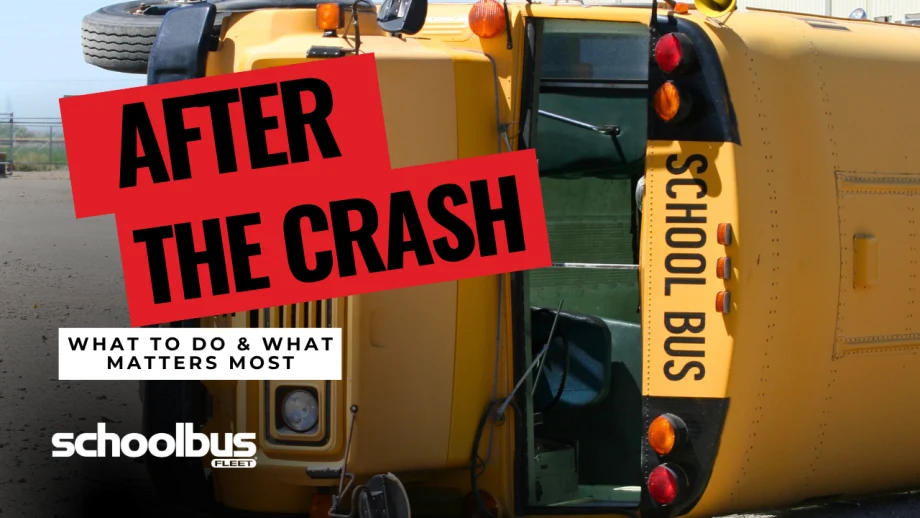
Good document retention policies will save a lot of headache down the road when dealing with incident and accident reports.
School Bus Fleet
I represent people injured in commercial vehicle accidents, including school bus accidents. It is possible to be accused of causing a crash even if the driver is not at fault. Sometimes evidence shows that the crash was caused by another driver, poor visibility, a hazardous stop location, a vehicle problem, or conditions beyond the bus driver's control.
A driver not at fault can still be hard to defend if crash records are missing. Routine deletion, incomplete reporting, and informal follow-up can be portrayed as concealment even when no one intends to hide anything. After safety needs are met, the operator’s task is to preserve the record before a claim arises.
Why Claims Are Decided Months After the Crash
A serious injury claim may arrive months or years later. By then, the route may have changed, staff may have moved on, and routine document retention practices may have removed records that could have explained what happened. Later, video, dispatch logs, route documents, incident reports, parent communications, and vehicle data often provide a more reliable account than memory.
A 2017 NAPT column in School Bus Fleet on two California school-bus-stop verdicts shows the problem: staff were directed to destroy documents at year's end, but emails and route maps found later on a USB drive helped prove the stop that caused said accident existed. What began as routine housekeeping could be seen in litigation as concealment when records turn up missing.
You do not need to act as though every collision will end in court. But after a serious incident, the records that explain what happened can be lost while normal business continues. The immediate job is to identify and save the information that may later show how the crash occurred and whether the driver followed procedure.
What To Save In the First 24 Hours
Preserve the source documents, not just a supervisor’s summary. A clip of the impact may omit minutes showing what the driver could see and how traffic behaved. A screenshot may omit speed, braking, time, and location. A revised route sheet may not show which instructions were in effect that morning.
If there is a serious crash or any other event likely to result in a claim, secure the following information ASAP:
- What the bus and traffic were doing: Full route onboard and stop arm video; GPS and telematics from that day; dispatch and radio logs; photos; incident reports; and law-enforcement records when available.
- What the driver was instructed to do: The route sheet and stop list in use that day, route-changing history, approvals, and route-specific instructions.
- Whether the bus and driver were ready: The driver qualification file, training and road-evaluation records, recent pre-trip and post-trip inspections, and maintenance and brake records.
- Who knows what: Parent communications, prior reports about the stop or route, driver’s notes, passenger or seating information if recorded, and post-crash testing documentation when applicable.
Save the full video, GPS data, or other records exactly as they come from the system. Do not edit it. If someone needs to watch or review it, give them a copy. Write down who saved the record, where it came from, and when they saved it. That evidence can show whether the driver made a mistake or whether something else caused the crash.
For crashes that require post-accident testing under 49 CFR 382.303, arrange alcohol and drug testing as soon as possible. If the alcohol test is not completed within two hours, document why. Your compliance or risk team should confirm whether the crash meets the rule’s testing requirements and document the timing.
Preservation requires prompt notice to the people and vendors who control records.
Who to Notify After a Serious Crash
Notify the insurer or risk management contact the same day to open the file, identify immediate needs, and coordinate with the claims contact. Notify the district’s or company’s attorney, risk official, or other designated decision maker. That person should determine whether a written preservation hold is needed. He or she should ensure it identifies the crash date, bus number, route, driver, and records covered.
Send preservation requests to outside providers that control relevant data (camera, telematics/GPS, routing, dispatch, and communications). Keep their written confirmation safe and preserve it. If a district uses a contractor, both sides should notify one another promptly. Each party must preserve the records it controls; neither should assume the other has video, route history, reports, or communications.
Notify human resources as well, so the driver’s qualification, training, testing, and employment records are safeguarded if the driver later changes jobs, retires, or separates. Designate one person to track notices and confirmations. Notice is only effective if someone verifies that it led to preservation.
Legal Compliance with Record Management
The trigger for a preservation hold should not be a lawsuit. It is any event or communication that reasonably suggests a claim: an injury crash; an incident involving a student outside the bus where injury, property damage, or responsibility may be disputed; or a communication raising a claim, medical expense, responsibility, or legal rights issue.
When the trigger hits, the designated attorney, risk manager, or claims authority should issue a written hold identifying the incident, bus, driver, route, date, custodians, vendors, and records covered. It should instruct recipients to stop routine deletion, alteration, and disposal of relevant material until the hold is released in writing.
Why Drivers Sometimes Do Not Report Small Incidents
A preservation plan can only protect existing records. After a minor scrape, tail swing contact, close call, or concern about a stop, a driver may worry that reporting will cost a job, trigger discipline, or count as an at-fault event. The result is often incomplete reporting: a property damage incident handled informally, a hazardous stop mentioned by phone, or a near-miss that never reaches a written log.
Those omissions become consequential if a complaint follows and ties into a future accident.
The practical solution is to separate timely reporting from blame. Require drivers to report crashes, hazards, and near-misses every shift. Make it clear that drivers won't face disciplinary action for reporting something. The violation should be failure to report, dishonesty, or failure to follow procedures, not the act of raising a concern.
What to Tell The Driver and The Parent
In the first hour after a crash, explain the process rather than pointing the finger. Tell the driver who will receive the report what records will be preserved, and why a same-day factual statement matters. Ask the driver to describe events in order, distinguish observations from assumptions, and say “I don’t know” when answers are unknown. Do not make fault conclusions or offer the driver any suggestions for how to proceed. If the driver’s interests differ from those of the organization, follow the established process.
The same discipline applies when a parent calls. For questions about medical expenses or a potential claim, contact the approved claims or risk management contact. Do not share opinions on fault or make any promises. Log who called, when the call happened, and what was said. That gives the family a clear next step while preserving an accurate account of the conversation.
The operator must also document what is done with concerns that emerge after the incident.
Document What You Did About a Reported Concern
A driver’s report should lead to a documented response. When a report identifies a route hazard, vehicle concern, recurring stop issue, or need for follow-up, record what was reported, who reviewed it, what was done, and when. The response may include a route review, vehicle inspection, stop adjustment, ride-along, or training.
This is not about creating a record against the driver. An operation’s evaluation of a reported concern is more important than leaving it informal. All related records should go into one maintained incident file.
Keep One Complete Crash File
Goal: a single, complete file understandable months later by insurer, new director, counsel, or claims professional. Assign one owner, maintain a simple index, preserve original exports when possible, and note the source and date for each item. If a record is requested but unavailable, note it.
Limit access to people who need the file to do their job, such as transportation staff, risk management, the insurer, or legal counsel. Video, student information, driver personnel records, drug and alcohol testing documents, and parent communications may have separate privacy or records disclosure rules, so don't share them casually. Student records may be protected under FERPA and related state or district rules
What Attorneys Often Find Missing Months Later
When I request records from a school bus operation, these are common gaps I see:
- Video shows the crash but not enough of what happened before it.
- Only one camera angle was saved.
- The route sheet does not show which version the driver used that day.
- Inspection, maintenance, or repair records are incomplete.
- Photos of the roadway, bus, stop, weather, damage, and traffic controls are missing.
- The file does not show how the operation responded to a reported hazard or concern.
- A routine stop was moved or removed, but there’s no record showing why, when, or who authorized the change.
- A driver file shows training certificates but no driving evaluation.
Note for Texas Districts and Contractors
The Texas Tort Claims Act caps damages from a governmental unit, and notice is usually provided within six months. It is important for contractors to review contracts, insurance, preservation duties, and applicable law with their counsel or risk management, and not to assume that the district's process will protect their interests.
Keep the Facts Available
- A complete record helps determine what happened without assigning fault.
- The goal is to preserve facts, not to build a defense.
- Most bus crashes are not the driver’s fault. Preserve the records that show why.

Josh Alexander
About the Author: Josh Alexander is the founder and managing attorney of J. Alexander Law Firm in Dallas, Texas, representing people injured in commercial vehicle crashes across Texas and Oklahoma.
More Safety
School Bus Stop-Arm Violations Decline 53% Across Verra Mobility Programs
Verra Mobility shares how school bus stop-arm cameras and school zone safety programs are changing driver behavior, reducing violations, and protecting students.
Read More →
National School Bus Safety Week 2026: Tips, Toolkits & Resources to Keep Students Safe
School bus safety takes more than awareness. Explore expert tips, enforcement strategies, and free resources to help protect students on every ride.
Read More →
2 Killed, Dozens Injured in Florida School Bus Crash
A multi-vehicle collision caused a Polk County school bus carrying 37 students to overturn on its way to Winter Haven High School.
Read More →
Illegal School Bus Passing Drops 24% in New York Districts
With fewer than 5% of citations involving repeat offenders, Westchester County officials said enforcement, education, and community partnerships are helping change driver behavior.
Read More →
School's Back. Here's What Happened to Traffic, Speeding & Distraction
What happens to traffic when school resumes? New data analysis examines changes in distracted driving, congestion, and speeding around schools.
Read More →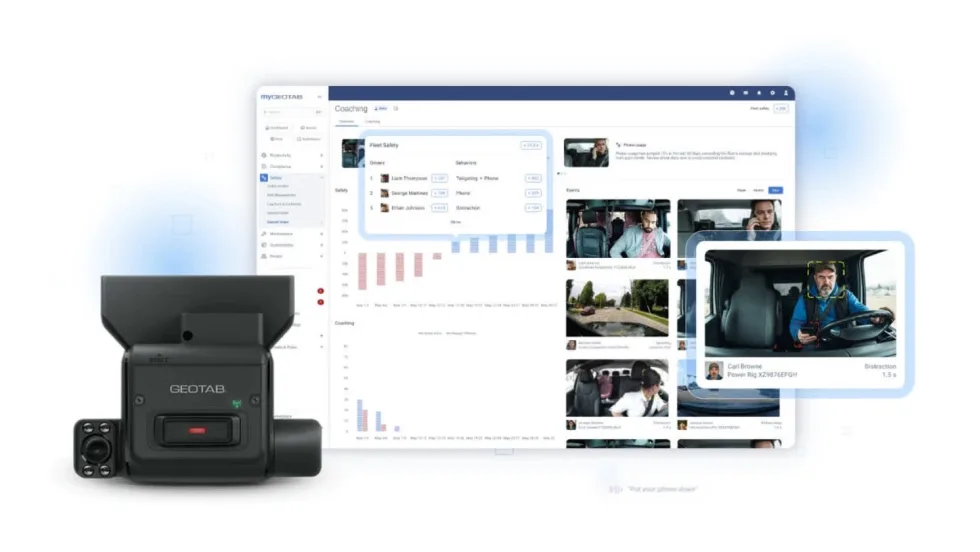
Geotab Expands Fleet Safety Tools With Video Coaching, Risk Insights
New safety and video capabilities aim to help fleet managers assess risk, support drivers, and take targeted action through video coaching, red-light violation detection, and more.
Read More →
How to Build a Better School Bus Driver Training Program
Is it time to strengthen your driver training? Here’s how to pick the right talent and improve recruitment, retention, and safety. This video is brought to you by IC Bus.
Read More →
Recent School Bus Accidents Leave 2 Dead, 2 Injured
Four school bus crashes in Florida, Illinois, and Georgia highlight risks in transportation lots, at bus stops, and during student loading and unloading.
Read More →
When Every Second Matters, Clarity Keeps Routes Moving
From routine delays to urgent incidents, strong communication practices help drivers, dispatchers, schools, and families respond with confidence.
Read More →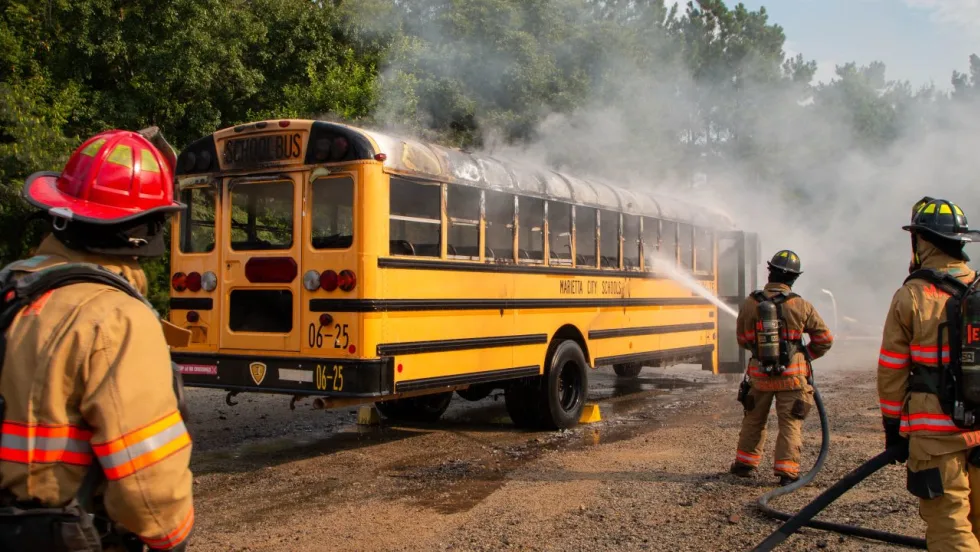
What Happens When a School Bus Catches Fire — and What Can Help
School bus fires are rare but can be devastating. Learn how advances in fire suppression and asset protection help fleets detect fires earlier, reduce damage, and improve safety.
Read More →