


By the Numbers
From January through September 2020, the clearinghouse has recorded 40,433 positive tests in highway transportation.
39,541 were drug-related.
892 involved alcohol.
34,156 drivers had not completed return-to-duty requirements.
 MENU
MENU SEARCH
The agency bolsters return-to-duty and removes exemption requirements for drivers with diabetes and some types of vision impairment. Meanwhile, it introduces a medication information form and clarifies sleep apnea testing requirements.

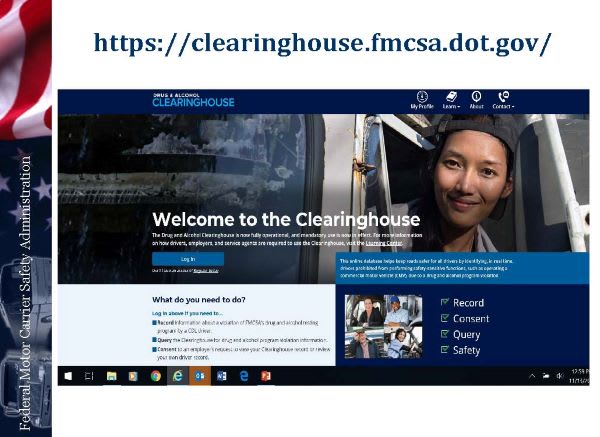
The Federal Motor Carrier Safety Administration is strengthening the return-to-duty requirement in its Drug and Alcohol Clearinghouse.
Screenshot of FMCSA presentation taken from virtual workshop held by National Association of State Directors of Pupil Transportation Services
One effort to close a loophole in the Drug and Alcohol Clearinghouse and another to make it easier for drivers with diabetes and some types of vision impairment to get certified were covered in a virtual workshop on Tuesday.
The online event was hosted by the National Association of State Directors of Pupil Transportation Services (NASDPTS).
Larry Minor, the associate administrator for policy at the Federal Motor Carrier Safety Administration (FMCSA), reminded attendees of the proper procedures to follow when submitting information to the Drug and Alcohol Clearinghouse, including signing up for a query plan and completing full queries for prospective drivers and limited queries for drivers already on staff. As for drivers, they should give their employer their consent to conduct the queries every year.
“It’s a great step forward for safety and a good opportunity to catch up with individuals with substance abuse issues to make sure they get help before rejoining a safety-sensitive position.”
The clearinghouse has captured positive alcohol and drug test information on commercial driver’s license (CDL) holders since its inception in January 2020.
The FMCSA’s latest rulemaking aims to prevent State Driver’s Licensing Agencies from issuing or renewing a CDL for drivers who have drug and alcohol program violations, Minor said, and keep them off the road until they comply with return-to-duty requirements.
Violations remain visible for five years after a driver completes the return-to-duty process. If they fail to complete the process, the violation remains in the clearinghouse indefinitely. That way, a driver cannot conceal the violation and go to work for another employer.
“We are ramping up the program and don’t want drivers to be able to slip through a loophole,” Minor said.
To demonstrate the significance of the problem of impaired driving, Minor said that from January through September 2020, the clearinghouse has recorded 40,433 positive tests in the highway transportation mode. Of those, 39,541 were drug-related, and 892 involved alcohol. Most of the violations occurred pre-employment. Additionally, 34,156 drivers had not completed return-to-duty requirements.
It is important to note, he added, that the positive results recorded are not an indication that the drivers were impaired at the time of the crash, but that the substances in question were in their system just recent enough for them to test positive.
“It’s a great step forward for safety and a good opportunity to catch up with individuals with substance abuse issues to make sure they get help before rejoining a safety-sensitive position,” Minor said.
Meanwhile, drivers with diabetes no longer need to go through the exemption process as long as they can provide proof to a medical examiner on the FMCSA’s roster that they are managing their condition.
The FMCSA has updated its website with medical card forms for diabetes assessment, as well as vision and hearing impairment and seizure exemption forms.
Also, in response to a concern voiced by the National Transportation Safety Board that many of the nearly 50,000 certified medical examiners may not have the pharmacological expertise required to understand the effects of many prescription drugs, the FMCSA developed a medication form for them to send to the prescribing physician to get more information.
“It just means call a time-out and have communication take place between the prescribing professional and medical examiner,” Minor said. “Maybe the driver should not get a two- or one-year medical card, maybe it’s six months.”
Additionally, in 2021, the FMCSA plans to:
• Allow drivers with stable vision in one eye who meet the physical standards to fill out a vision assessment form and get med card without having to go through the exemption process.
• Update the medical examiner’s handbook to ensure it is properly aligned with current standards.
“We want it to be a true source of information without providing misleading information [that might] result in drivers being disqualified,” Minor said.
• Update its 2015 bulletin to clarify that obstructive sleep apnea screening is not required for drivers. However, Minor said, if a driver discloses that they underwent a test and it is confirmed that they have moderate to severe sleep apnea and are not being treated for it, that is grounds for disqualification until they seek treatment.
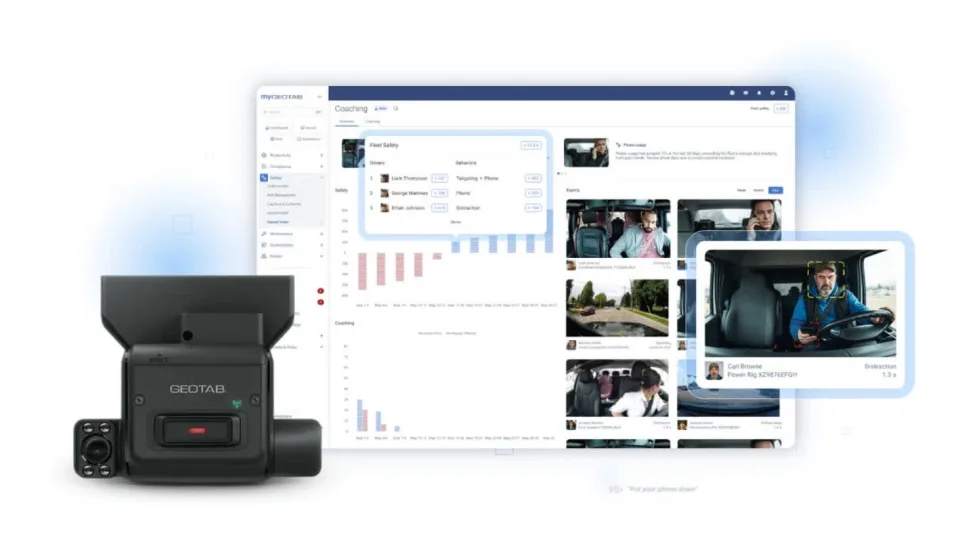
New safety and video capabilities aim to help fleet managers assess risk, support drivers, and take targeted action through video coaching, red-light violation detection, and more.
Read More →
Is it time to strengthen your driver training? Here’s how to pick the right talent and improve recruitment, retention, and safety. This video is brought to you by IC Bus.
Read More →
Four school bus crashes in Florida, Illinois, and Georgia highlight risks in transportation lots, at bus stops, and during student loading and unloading.
Read More →
From routine delays to urgent incidents, strong communication practices help drivers, dispatchers, schools, and families respond with confidence.
Read More →
School bus fires are rare but can be devastating. Learn how advances in fire suppression and asset protection help fleets detect fires earlier, reduce damage, and improve safety.
Read More →
Geotab Investigations combines telematics data, video, documents, and other evidence to help fleets reconstruct incidents, resolve claims, and determine what happened.
Read More →
Sai Darshana Yekolu of Moseley Middle School in Prosper, Texas, was named the newest winner for her artwork, bringing the theme of “Safe Rides, Everyday Heroes” to life.
Read More →
With diesel prices soaring and nearly one-third of transportation directors expecting budget cuts, maintaining student safety has never been more challenging. Download this guide to learn how leading districts are prioritizing risk, funding critical safety technology, and building stronger budget cases with data.
Read More →
The Florida district will deploy Gatekeeper’s updated Student Protector technology, which now incorporates AI to improve video evidence.
Read More →
As thefts and overnight security threats continue, school transportation leaders are combining stronger operational practices with AI-enabled surveillance to better protect buses, facilities, and staff.
Read More →