




Proposed FMCSA Rule Aims to Close Information Gap With Drug and Alcohol Clearinghouse Info
The proposed rulemaking seeks to prevent commercial vehicle drivers with substance abuse violations from being licensed by closing an information gap with real-time information from the Drug and Alcohol Clearinghouse.


The FMCSA's proposed rulemaking seeks to prevent commercial vehicle drivers with substance abuse violations from being licensed by closing an information gap with real-time information from the Drug and Alcohol Clearinghouse. File photo
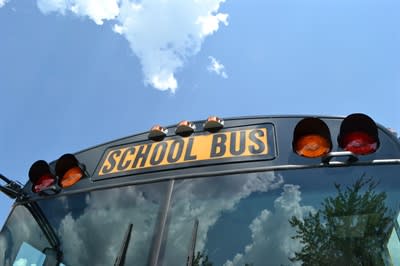
The FMCSA's proposed rulemaking seeks to prevent commercial vehicle drivers with substance abuse violations from being licensed by closing an information gap with real-time information from the Drug and Alcohol Clearinghouse. File photo
WASHINGTON, D.C. — The Federal Motor Carrier Safety Administration (FMCSA) has issued a Notice of Proposed Rulemaking (NPRM) to tighten current regulations intended to keep commercial vehicle drivers with substance abuse violations from being licensed by closing an information gap with real-time information from the Drug and Alcohol Clearinghouse.
According to the Federal Register docket, the proposed rule would prevent State Driver’s Licensing Agencies (SDLAs) from “issuing, renewing, upgrading, or transferring a commercial driver’s license (CDL), or commercial learner’s permit (CLP), for individuals prohibited under current regulations from driving a commercial motor vehicle (CMV) due to controlled substance (drug) and alcohol program violations. The CMV driving ban is intended to keep these drivers off the road until they comply with return-to-duty (RTD) requirements.”
The FMCSA's proposal also plans to update how reports of actual knowledge violations, based on a citation for Driving Under the Influence (DUI) in a commercial motor vehicle, would be maintained in the Drug and Alcohol Clearinghouse, according to the docket. The proposed changes are intended to improve highway safety by increasing compliance with existing drug and alcohol program requirements.
The proposed rulemaking would help with enforcement and improve compliance with existing regulations, prohibiting commercial motor vehicle drivers with substance abuse violations from operating a CMV or performing other safety-sensitive functions until completing return-to-duty requirements listed in part 40, subpart O, the docket states.
Historically, the CMV driving prohibition has mainly been self-enforcing, with the FMCSA mostly relying on the drivers and their employers to comply. The reason, the docket notes, is that before the Drug and Alcohol Clearinghouse was established, the agency did not have real-time access to drug and alcohol program violations of CDL holders.
The Drug and Alcohol Clearinghouse final rule addressed that information gap so that, based on violations reported to the clearinghouse, FMCSA can now provide certain state enforcement personnel real-time notice of the driver’s prohibited driving status. However, the information gap regarding SDLAs still exists. The proposed rulemaking would, according to the docket, establish how and when SDLAs would access and use driver-specific information from the clearinghouse to keep CMV drivers who violate drug and alcohol use testing rules off the road until they complete RTD requirements.
As previously reported, starting in 2020, the clearinghouse database has served as a central repository containing records of violations of FMCSA’s drug and alcohol testing program by CDL holders, including school bus drivers.
The 2016 final rule primarily addressed how motor carrier employers and their service agents will interact with the clearinghouse by accessing and adding drug and alcohol testing information to a driver’s record. Although that final rule did incorporate the statutory requirement that SDLAs check the clearinghouse before renewing or issuing a CDL, it did not otherwise address the SDLAs’ use of clearinghouse information for drivers licensed or seeking to become licensed in their state, according to the docket. The proposed NPRM responds to operational questions and legal issues identified by state licensing agencies both individually and through the American Association of Motor Vehicle Administrators, following publication of the final rule.
The FMCSA is seeking comment on alternate proposals that would establish additional ways that SDLAs would use information, obtained through the Drug and Alcohol Clearinghouse, to increase compliance with the commercial motor vehicle driving prohibition.
The deadline for submitting comments is June 29. Comments may be submitted online here, or by mail or courier. For more information, read the docket in full here.
More Safety

Geotab Expands Fleet Safety Tools With Video Coaching, Risk Insights
New safety and video capabilities aim to help fleet managers assess risk, support drivers, and take targeted action through video coaching, red-light violation detection, and more.
Read More →
How to Build a Better School Bus Driver Training Program
Is it time to strengthen your driver training? Here’s how to pick the right talent and improve recruitment, retention, and safety. This video is brought to you by IC Bus.
Read More →
Recent School Bus Accidents Leave 2 Dead, 2 Injured
Four school bus crashes in Florida, Illinois, and Georgia highlight risks in transportation lots, at bus stops, and during student loading and unloading.
Read More →

When Every Second Matters, Clarity Keeps Routes Moving
From routine delays to urgent incidents, strong communication practices help drivers, dispatchers, schools, and families respond with confidence.
Read More →
What Happens When a School Bus Catches Fire — and What Can Help
School bus fires are rare but can be devastating. Learn how advances in fire suppression and asset protection help fleets detect fires earlier, reduce damage, and improve safety.
Read More →
Geotab Launches Tool to Help Fleets Investigate Road Incidents
Geotab Investigations combines telematics data, video, documents, and other evidence to help fleets reconstruct incidents, resolve claims, and determine what happened.
Read More →
Texas Sixth Grader Wins 2026 National School Bus Safety Poster Contest
Sai Darshana Yekolu of Moseley Middle School in Prosper, Texas, was named the newest winner for her artwork, bringing the theme of “Safe Rides, Everyday Heroes” to life.
Read More →
Doing More With Less: How Transportation Directors Can Prioritize Safety Amid Budget Uncertainty
With diesel prices soaring and nearly one-third of transportation directors expecting budget cuts, maintaining student safety has never been more challenging. Download this guide to learn how leading districts are prioritizing risk, funding critical safety technology, and building stronger budget cases with data.
Read More →
Walton County Schools Adds Gatekeeper Stop-Arm Enforcement System
The Florida district will deploy Gatekeeper’s updated Student Protector technology, which now incorporates AI to improve video evidence.
Read More →
How To Build a More Secure School Bus Yard During and After Hours
As thefts and overnight security threats continue, school transportation leaders are combining stronger operational practices with AI-enabled surveillance to better protect buses, facilities, and staff.
Read More →