




WATCH: Top Tips for New Student Transportation Directors [Video]
 MENU
MENU SEARCH
Learn from school transportation leaders on how to develop bus drivers, monitors, and mechanics into future leaders through coaching and culture.

If school transportation departments want a stronger culture, confident teams, and better driver retention, they must cultivate leaders at every level.
School Bus Fleet
*Summarized by AI
In pupil transportation, leadership doesn’t begin in a conference room. It begins in the cab of a school bus every morning, in a dispatch office juggling last-minute changes, and in the garage where mechanics work on keeping buses safe to drive.
For all this responsibility, leadership development remains one of the most underbuilt areas of K-12 transportation operations.
That’s the message echoed throughout multiple workshops at the recent National Association for Pupil Transportation (NAPT) Conference & Trade Show in Grand Rapids, Michigan. Sessions on developing leaders, accountability, and appreciation paint a clear picture.
If school transportation departments want a stronger culture, confident teams, and better driver retention, they must cultivate leaders at every level.
In the session “Developing Leaders Behind the Wheel: Growing Internal Talent in Transportation,” Bernando Brown, director of student transportation at DeKalb County School District in Georgia, highlighted how transportation departments often overlook their own richest pool of leadership potential.
Drivers, monitors, mechanics, and dispatchers possess deep institutional knowledge of students, schools, neighborhoods, and the daily realities of the job. Too often, districts focus heavily on recruitment and retention, but skip a crucial step: development. Without opportunities to grow, employees assume advancement isn’t an option, leading to turnover and disengagement.
“We need to attract qualified staff, develop and mentor qualified staff, so that we can retain them,” Brown said.
Brown shared examples from his own department, which currently consists of over 70 staff members (not including drivers and monitors, who would add hundreds to the total), where team members moved from monitor to manager because someone invested time in mentoring and training them. For many, the only thing separating a great driver from a great leader is the opportunity to try.
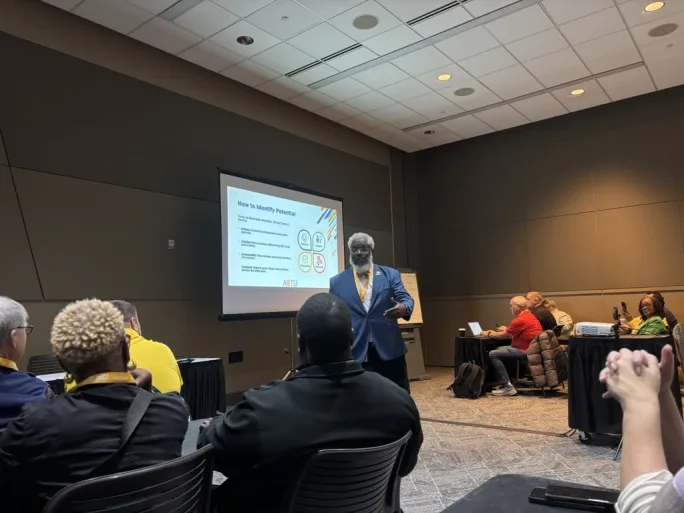
Bernardo Brown emphasizes that transportation departments often overlook their greatest leadership potential in drivers, monitors, mechanics, and dispatchers.
Elora Haynes
If Brown answers the who of leadership development, Keith Terry, director of transportation for the Orangeburg County School District in South Carolina, addresses the how.
Terry’s workshop, “Coaching Conversations: How to Build Trust and Accountability with Your Team,” emphasized that people don’t respond to correction as well as they do to connection. Many leaders, he noted, default to discipline rather than dialogue, but sustainable accountability comes from relationships.
Real coaching begins with simple human questions:
These conversations build trust long before a problem arises. When employees feel seen and respected, they are far more open to feedback and more willing to take responsibility.
Terry also reminded attendees that timing and tone matter. Public correction can humiliate an employee, whereas private coaching humanizes them. Great leaders use clarity to help enforce expectations.
“Your character supersedes your reputation,” Terry said. “You define your character. Your reputation is merely how others perceive you. In the end, your character will always outshine your reputation.”
Ultimately, Terry’s message is simple, but powerful. Accountability without empathy becomes punishment, and empathy without accountability becomes chaos. Coaching blends the two into forward momentum.
Leadership development doesn’t happen by accident. Brown stressed that strong departments create intentional systems that reveal talent, stretch employees, and prepare them for succession long before a vacancy appears. Here are a few strategies to consider when strengthening your culture and growing future leaders.
Every employee makes decisions, manages conflict, and influences outcomes. Recognizing leadership at every level helps people see themselves as capable of more.
When only one person knows how to perform a critical task, the department becomes vulnerable. Cross-training builds resilience and prepares employees for future roles.
Brown described everyday responsibilities, such as supervising inspections or helping train new drivers, as low-risk opportunities to reveal leadership qualities like initiative, organization, composure, and communication.
Brown shared a personal turning point: meeting a driver outside work and realizing he hardly knew her, even though she had been working with the district for over five years. “We have to be more intentional, regardless of how small or large our staff is, and learn our people to understand what it is they want,” he said. Leadership by proximity builds rapport and reduces the disconnect between frontline staff and administration.
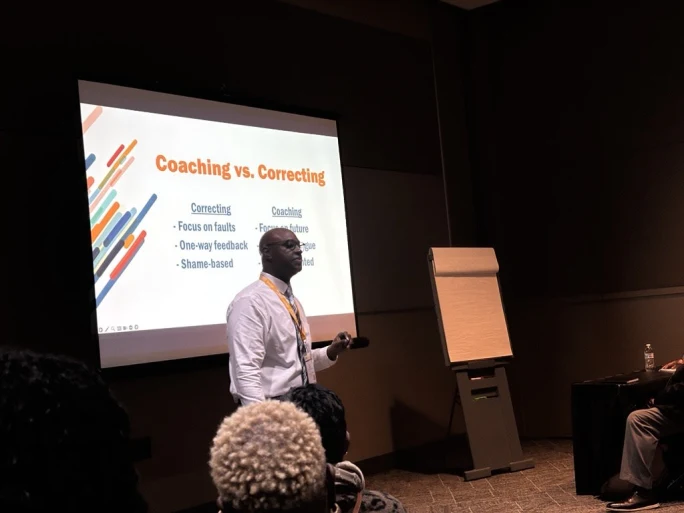
Keith Terry’s workshop on coaching conversations highlighted the power of connection over correction, showing that trust and accountability are built through dialogue and relationships, not discipline alone.
Elora Haynes
In the workshop “Appreciating Our Way to a Stronger Team: Using the 5 Languages of Appreciation in Transportation,” Amy Scopac, director of transportation and fleet services for Temple ISD, and Teri Mapengo, director of transportation for Prosper ISD, both located in Texas, underscore how much recognition matters.
Their explanation of the book “The 5 Languages of Appreciation in the Workplace” by Gary Chapman and Paul White highlighted how tailored acknowledgment, whether that be handwritten notes, public praise, acts of service, or meaningful time spent at work, increases morale and encourages consistency.
However, appreciation alone doesn’t create leaders. When paired with coaching and clear expectations, appreciation reinforces the behaviors transportation departments want more of. It’s a big signal to employees, “We notice your growth. We value your effort. We believe in your potential.”
Transportation departments often assume leadership development requires large budgets or formal programs, but Brown and Terry showed that meaningful change can start with small, consistent steps. Here are actionable strategies any department can use.
Look for individuals who communicate well, show initiative, handle stress gracefully, or naturally help their peers.
A supervisor or seasoned leader can guide them through a 60 to 90-day coaching cycle focused on growth and goal-setting.
Start small. Allow these individuals to coordinate safety drills, assist with onboarding, or manage a portion of route operations. Confidence builds through practice.
Using Terry’s coaching framework, schedule no-pressure check-ins that center on listening rather than instructing.
Whether in a newsletter, on a bulletin board, or during a staff meeting, recognition reinforces progress and encourages others to aspire to leadership.
Brown noted that partnerships with local colleges or workforce agencies can expand access to training at little to no cost.
The three workshops reinforce the idea that great leaders are invested in, and that the strength of a transportation department lies in how intentionally it develops its people.
Drivers become mentors. Monitors become supervisors. Mechanics become managers. Leaders emerge when someone believes in them, guides them, coaches them, and acknowledges their progress.
The next generation of transportation leadership is already showing up every morning, so cultivate their potential.
School bus operators can identify potential leaders by observing staff members who show initiative, communicate effectively, demonstrate reliability, and exhibit a strong work ethic.
*Summarized by AI
Loading data...

Management
What makes emotions run high, and how should you handle an angry colleague or parent? Follow these steps for staying calm, listening, showing empathy, and resolving conflict.

Management
Learn the five key elements that bus drivers and transportation directors can use to stay calm in any situation.

Management
Every day, millions of students climb aboard. But few realize the yellow school bus has helped transform education, connect communities, and come to symbolize civic responsibility.

Management
Discover five strategies for building an effective mentorship program to strengthen leadership development and support staff retention.

Special Needs Transportation
Small missteps in wheelchair securement can have serious consequences. Here are 32 tips from experts to reduce risk and increase student safety on the bus.

Management
Take the burden out of bidding. Cooperative contracts can save district transportation teams time, money, and hassle. Here’s how.

Management
Learn from school transportation leaders on how to develop bus drivers, monitors, and mechanics into future leaders through coaching and culture.
Safety
With student safety on the line, here’s a look at what’s working, what’s changing driver behavior, and what districts need to know when it comes to stop-arm programs.
Management
As we celebrate seven decades of industry coverage, let’s revisit historic milestones, timeless content, and examine the industry's progression from those who lived it.