





More: Cross with Confidence: Railroad Safety Tips for School Buses
'A Train Is Coming': Florida School Bus Close Call Highlights Critical Railroad Safety Reminders
Two recent close calls at railroad crossings, a train clipping a bus and a rear-end crash, highlight why vigilance and training still matter. Here’s what happened and what to tell your own drivers.
April 7, 2026
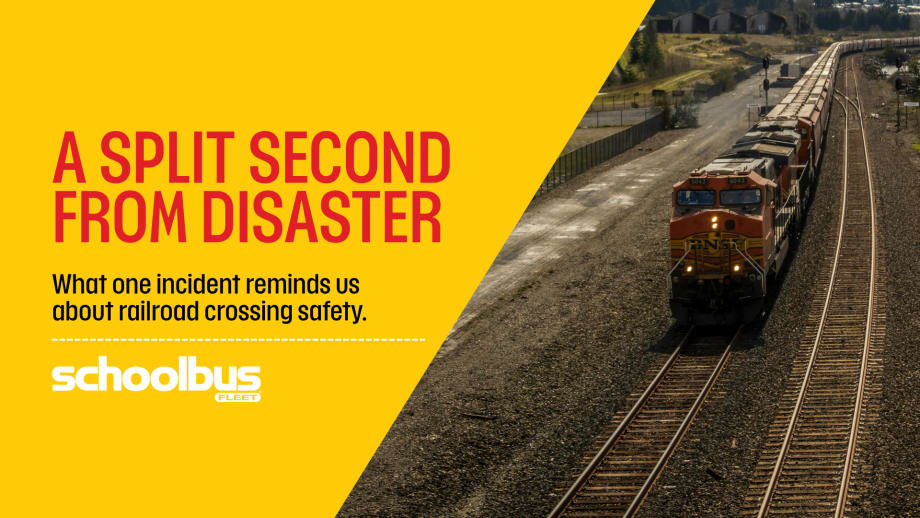
A train clipped a Florida school bus carrying 29 students last week after the driver appeared to ignore crossing signals. It’s a serious reminder about the importance of rail safety.
Credit:
School Bus Fleet
4 min to read
On April 2, 2026, students aboard a Sumter County School District bus in Florida faced a terrifying moment as the bus crossed railroad tracks in Bushnell.
Florida's School Bus-Railroad Close Call: What Happened
A train clipped the back of the bus with 29 kids and two adults inside.
WESH 2 News detailed how it happened per the arrest report: The driver proceeded over a railroad crossing after the warning lights had already activated and the crossing arms had begun to lower. A student was heard on video shouting, “A train is coming!” Another local report shared that the driver’s voice could be heard saying, “Not gonna stop for no train.”
Thankfully, no one was injured, though several students expressed fear of riding the bus again.
Here is one TikTok video that a student onboard the bus shared:
@pre.k.thug26#trainhitmybus#busdriversfault#sumtercountyfl#yoysucksumtercounty@༒𝕴𝖟𝖟𝖞༒ @theyluv_jaky @Landon @leneaa💘💘.@unfinishedplsignore ♬ original sound - pre.k.thug26
According to local news reports, the driver was cited the same day for failing to stop at a railroad crossing. She is no longer employed by the district and now faces 29 counts of child neglect and a reckless driving charge.
The district superintendent asked all district buses to avoid the East Central Avenue crossing and reroute to one of four signal-controlled crossings. They are also reviewing bus driver qualifications, railroad crossing procedures, and route planning.
Here is their statement regarding the incident:
The incident offers a stark reminder of the need for proper driver training regarding railroad safety.
Nearby, a Rear-Ending on the Tracks
That same day, near Jacksonville, San Pablo Elementary School students received a scare near train tracks, too.
A Duval County Public Schools bus carrying San Pablo Elementary School kindergarteners for a field trip was rear-ended, according to local news reports. A witness said a semi-truck crashed into the back of the school bus after a row of buses were stopped at a crossing to check for passing trains. Four students were injured.
In Dick Fischer's SchoolBus Safety e-newsletter on April 13, 2026, he reminded that this is why he recommends not placing students in the last two rows of the bus.
FMCSA’s Potential Crossing Change
It’s worth noting that FMCSA is considering a change to its long-standing rule that school buses must stop at all railroad crossings at all times. The proposed change would add an exception for a crossing equipped with an active warning device not in an activated state.
According to Federal Railroad Administration data:
- School buses were not involved in any vehicle-rail collision at any crossing type between 2016 and 2024.
- There were no rear-end fatal crashes involving school buses near active crossings with highway signals, nor at passive crossings. There were 10 fatal rear-end crashes (only two involving a school bus) near crossings actively controlled by crossing gates or flashing lights between 2016 and 2023.
- Across 71,249 active railroad grade crossings with multiple trains traveling through per day, there are approximately 263 signal failures per year.
Close calls and other non-fatal incidents were not mentioned.
Public comment is now open through April 27, 2026.
6 Railroad Crossing Safety Reminders for School Bus Drivers
- Slow down, test your brakes, and activate your four-way hazard lights about 200 feet before the crossing. (If you drive a manual vehicle, downshift before you cross.)
- Check for traffic around you. Make sure it’s clear that you intend to stop. Use a pull-out lane if one is available, and flashers, if necessary.
- Prepare the bus: Put the transmission in neutral, press down on the service brake, or set the parking brakes (depending on your district’s policy). Turn off the radio and other noisy equipment; ask passengers to be quiet.
- Stop where you have the best view of the tracks, no closer than 15 feet and no farther than 50 feet from the nearest rail. Check for traffic congestion, a signal, or stop sign. Be certain the containment area across the tracks is large enough to hold the entire bus, plus 15 feet.
- Open the service door and driver's window. Look and listen for an approaching train in both directions. Proceed only after checking the crossing signals.
- Go! When you’re sure that no train is approaching, do not hesitate. Cross in low gear and do not change gears while crossing.
Source: Operation Lifesaver, Inc.
Need to give your drivers a refresher on railroad crossing safety? Operation Lifesaver offers free in-person presentations! Consider it as an upcoming driver in-service.
Find more resources and railroad crossing reminders on Operation Lifesaver’s website.
Editor's note: This post was originally published on April 7, 2026, and was updated on April 13, 2026, to add details on the Jacksonville rear-ending.
Quick Answers
In Sumter County, a school bus had a close call with a train at a rail crossing, emphasizing the need for heightened awareness and caution at such intersections.
*Summarized by AI
Topics:Safety
More Safety

How to Build a Better School Bus Driver Training Program
Is it time to strengthen your driver training? Here’s how to pick the right talent and improve recruitment, retention, and safety. This video is brought to you by IC Bus.
Read More →
Recent School Bus Accidents Leave 2 Dead, 2 Injured
Four school bus crashes in Florida, Illinois, and Georgia highlight risks in transportation lots, at bus stops, and during student loading and unloading.
Read More →
Sponsored•September 8, 2026
When Every Second Matters, Clarity Keeps Routes Moving
From routine delays to urgent incidents, strong communication practices help drivers, dispatchers, schools, and families respond with confidence.
Read More →

What Happens When a School Bus Catches Fire — and What Can Help
School bus fires are rare but can be devastating. Learn how advances in fire suppression and asset protection help fleets detect fires earlier, reduce damage, and improve safety.
Read More →
Geotab Launches Tool to Help Fleets Investigate Road Incidents
Geotab Investigations combines telematics data, video, documents, and other evidence to help fleets reconstruct incidents, resolve claims, and determine what happened.
Read More →
Texas Sixth Grader Wins 2026 National School Bus Safety Poster Contest
Sai Darshana Yekolu of Moseley Middle School in Prosper, Texas, was named the newest winner for her artwork, bringing the theme of “Safe Rides, Everyday Heroes” to life.
Read More →
Sponsored•August 27, 2026
Doing More With Less: How Transportation Directors Can Prioritize Safety Amid Budget Uncertainty
With diesel prices soaring and nearly one-third of transportation directors expecting budget cuts, maintaining student safety has never been more challenging. Download this guide to learn how leading districts are prioritizing risk, funding critical safety technology, and building stronger budget cases with data.
Read More →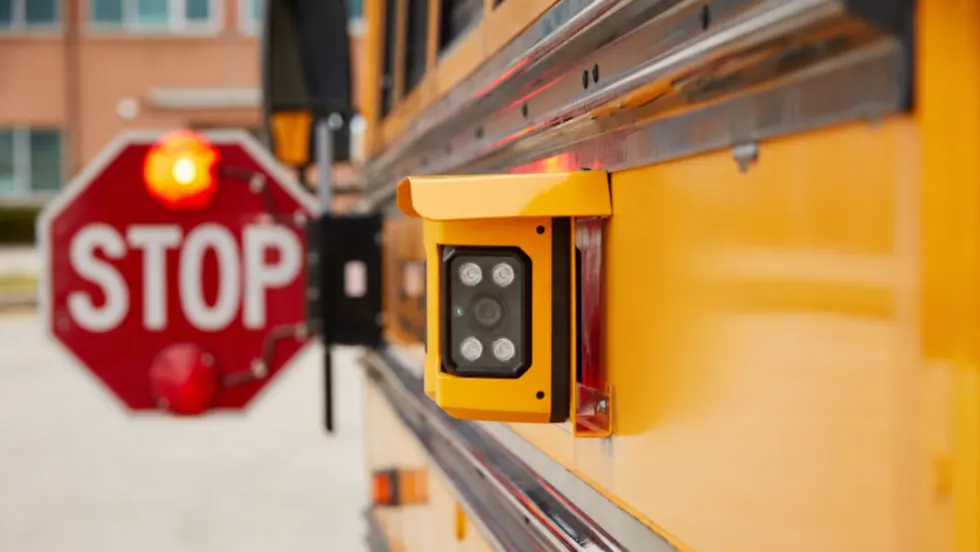
Walton County Schools Adds Gatekeeper Stop-Arm Enforcement System
The Florida district will deploy Gatekeeper’s updated Student Protector technology, which now incorporates AI to improve video evidence.
Read More →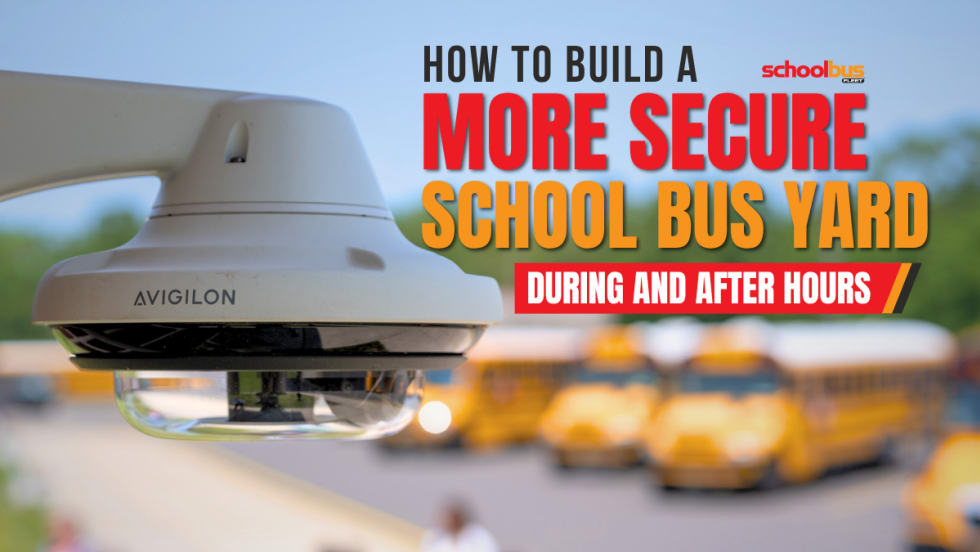
How To Build a More Secure School Bus Yard During and After Hours
As thefts and overnight security threats continue, school transportation leaders are combining stronger operational practices with AI-enabled surveillance to better protect buses, facilities, and staff.
Read More →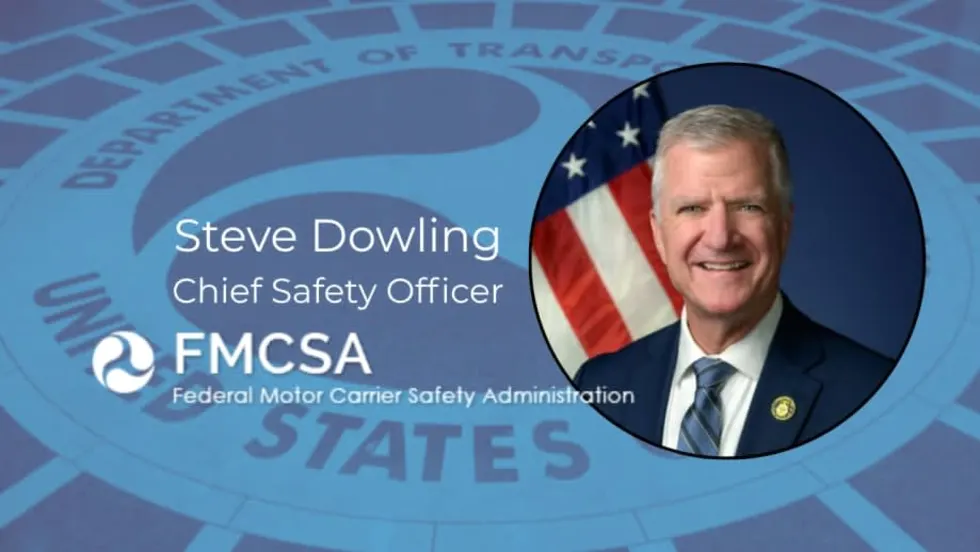
FMCSA Names New Chief Safety Officer: What School Bus Operators Should Know
Steve Dowling is set to lead the federal agency's efforts to advance commercial motor vehicle safety and reduce crashes, fatalities, and injuries on the nation's roadways.
Read More →