



Read More: Cross with Confidence: Railroad Safety Tips for School Buses
Effective Ways to Train Drivers on Rail-Crossing Safety
Rail-crossing safety remains a critical focus for school bus driver training. Learn key strategies, real-world lessons, and expert guidance to prevent dangerous mistakes.
by Albert Neal, Assistant Editor
June 1, 2004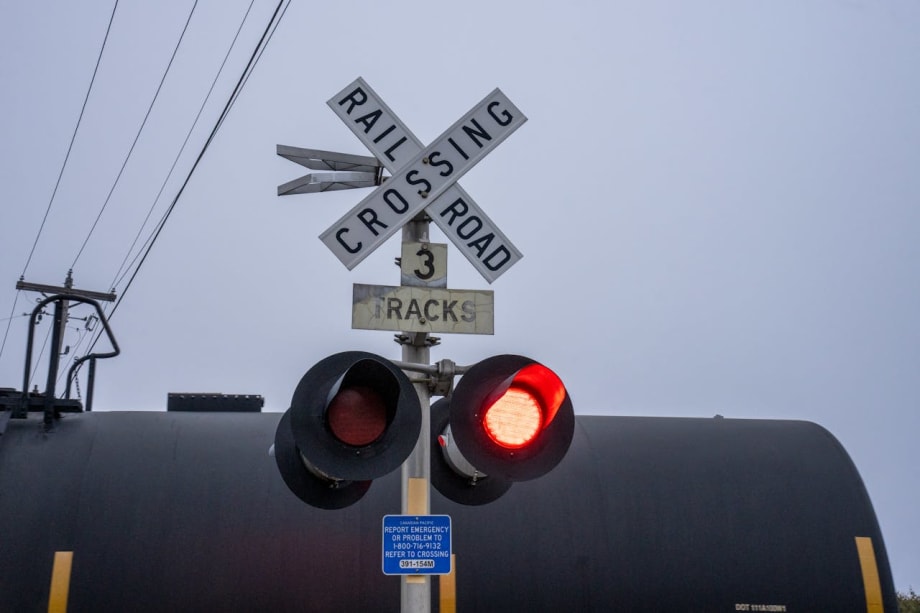
Effective rail-crossing safety training emphasizes awareness, proper stopping procedures, and the importance of never rushing through a crossing.
Credit:
Tom Fisk via Pexels
6 min to read
The need for transportation managers to emphasize rail-crossing safety in school bus driver training is imperative. Drivers must be taught that one mistake at a highway-rail grade crossing can not only cost them their jobs, but it can also cost lives.
Statistically speaking, collisions between school buses and trains are rare, but they do occur. The Murray County, Ga., collision in 2000 that claimed three lives, and the Fox River Grove, Ill., incident in 1995, with seven fatalities, are constant reminders. The question is how much have we learned?
State police in Beaver County, Pa., reported recently that a school bus driver got stuck trying to turn around near a railroad crossing, but managed to evacuate students before the bus’ rear emergency door was struck by a passing 36-car freight train. No one was injured in the collision, but trainees must be taught to avoid such incidents. Trainers should consult rail safety authorities to learn how.
Take advantage of Operation Lifesaver
Operation Lifesaver (OL), a national, non-profit education and awareness program dedicated to ending tragic collisions, fatalities and injuries at highway-rail grade crossings is an authority in the field.
OL has programs in 49 states and the District of Columbia and about 3,000 volunteer speakers that go out and talk to the public about the dangers at rail crossings.
“We reach out to the renewable resources of new school bus drivers every year to deliver the message to look, listen and live,” says Gerri Hall, OL president.
“We use OL for our primary source of training,” says Jene Jensen, supervisor of transportation at Campbell County School District in Gillette, Wyo. “They are able to go to a local setting and talk to us about specific crossings.”
Some of Campbell’s drivers undergo grade crossing safety training twice a year, once with OL representatives at their school district and again at a workshop sponsored by the Wyoming Pupil Transportation Association.
“On the local level, the training is nice because the facilitators are able to answer specific questions,” says Jensen. “They can tell us about multiple tracks, about loose gravel and designated and non-designated rail crossings.”
Jensen says local training is very specific, while OL training is more general. Working with both local and regional safety advocates is probably the best way to ensure that your drivers receive comprehensive training.
Engage your audience
Vivian Bridges, OL state coordinator in North Carolina, trained school bus drivers for 27 years before joining OL. Learning to engage an audience can be a challenge, but she says that anyone with sound information and good intentions can put on an excellent workshop. Bridges lists the following as key steps in that process:
1. Minimize — If possible, keep class size down to 15 to 25, especially with new drivers. You have more time to entertain questions and to engage in discussions with smaller groups.
2. Identify — Try to learn the trainees’ names. Everyone responds to his or her name. Table tents with the trainees’ names are a good idea. They help the trainer learn the names of the attendees, which helps to establish relationships.
3. Empathize — Bus drivers are under-appreciated. They love knowing that a trainer appreciates their hard work. Be considerate.
4. Emphasize — Underscore your point. Ask engaging questions like, “What was the mistake here? Why did it happen? How could it have been avoided?”
5. Realize — If a class is not paying attention, stop and regroup. Describe a horrific scenario or recite a statistic that instantly grabs their attention. And remember, communication is a two-way street.
Not just the facts ma’am
In 2003, at least 325 people were killed and 978 seriously injured in 2,909 highway-rail grade crossing collisions involving public and private crossings.
Although rail fatality and injury statistics are staggering, drivers often need visual stimulation to understand the full impact of rail collisions.
“Giving them facts isn’t always the way,” says Bridges. “Drivers need to see things in black and white and in color. Videos are always great for getting drivers’ attention.”
“Visuals are impressive,” says John Davies, director of transportation at Independence (Mo.) Public Schools. “Trainees are always surprised or intrigued by what they see and what can happen if they’re not careful.” That’s why Davies uses PowerPoint presentations.
“PowerPoint presentations are excellent because you can stop and discuss the visuals at any time,” says Bridges. “All the creative things you can do with PowerPoint, as far as graphics, images and sound, can help break the monotony of a class as well.”
Posters are useful too, says Tim Parker, assistant director of transportation services at Fairfax County (Va.) Schools. “People learn and remember different ways,” he says. “Sometimes we’ll even remind our drivers of rail safety with a brief radio message from dispatch.”
Simulated collisions go even further to drive home the point of rail safety. In the past three years, OL has staged at least three collisions involving a school bus and a train. Mock collisions have multiple benefit. Several districts may come out to learn from the incident and drivers can role-play to experience the helplessness of victims. In addition, crushing a real school bus (empty, of course) with a train dramatically demonstrates the impact of a collision. This can have a strong psychological impact on drivers, which greatly improves their attentiveness to rail safety.
Reward attentive listeners
To be effective, safety trainers must have the undivided attention of their trainees. Often, this becomes a challenge, so trainers have to be creative.
At the beginning of the school year, before classes start, Bridges reminds drivers of how easy it is to become inattentive, especially behind the wheel.
“We’ll ask an off-the-wall question like, ‘How many of you didn’t stop for the railroad crossing on the way here?’” Inevitably, she says, a driver will raise a hand not realizing that he or she wasn’t paying full attention, didn’t fully understand the question or simply failed to practice good rail safety and is willing to admit such.
“We’ll pick one person and ask him if he was paying attention or if he was on a mental vacation.” The point, says Bridges, is that a mental vacation can cause you to miss that railroad or skip a step in a procedure and lead to a fatality. Bridges says she discourages inattentiveness by rewarding attentiveness.
“We give out key chains, bracelets, yellow safety whistles, bumper and dashboard stickers, battery-operated fans and Operation Lifesaver coffee mugs and baseball caps,” she says. “We try to use incentives to get the drivers involved.”
Rail-related door prizes
Kevin Oleson, operations manager at Renton (Wash.) School District and a model train builder and train enthusiast, has connections in the railroad industry. Oleson uses these connections with rail companies like Union Pacific to collect special items to reward his drivers during training sessions.
“Whenever we have rail safety meetings, I always have door prizes, things that people just can’t go out and buy,” says Oleson. “It gets our drivers’ attention and it helps reinforce what’s being taught.”
In the end, almost anything goes when it comes to getting the message across about the dangers of highway-rail grade crossings, and a strong closing will help make your presentation memorable.
Conclude strongly
Hall suggests closing with a firm reminder of the dangers of rail-grade crossings. Remind drivers that 50 percent of the time when there is an incident at a crossing it is because somebody has failed to observe the signs and signals.
The bottom line, she says, is that “it takes a train moving at 55 miles per hour one mile, or the length of 18 football fields, to stop completely. So, if you see a train coming, wait for it. It’s not worth trying to beat the train. It could be coming faster and be closer than you’d expect.”
Subscribe to Our Newsletter
More Safety
FMCSA Names New Chief Safety Officer: What School Bus Operators Should Know
Steve Dowling is set to lead the federal agency's efforts to advance commercial motor vehicle safety and reduce crashes, fatalities, and injuries on the nation's roadways.
Read More →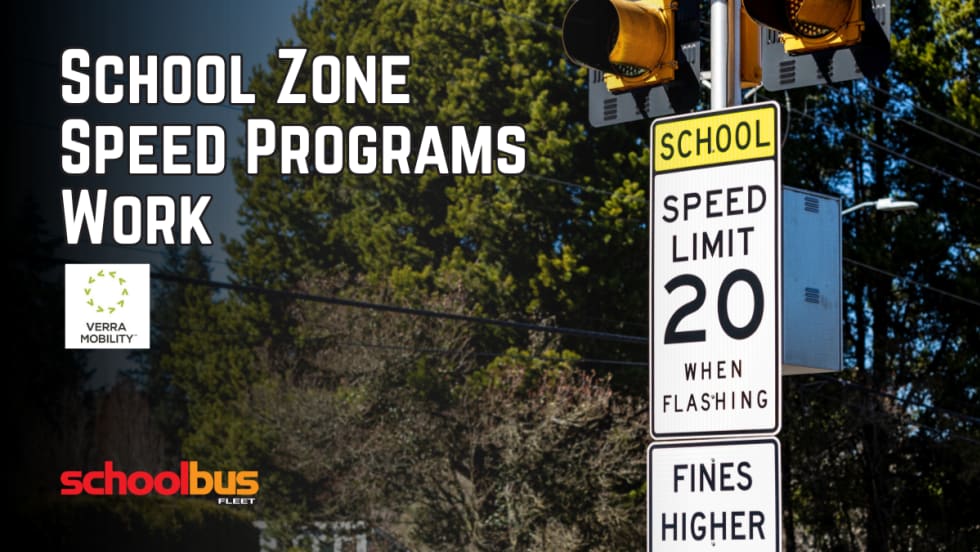
New Study Finds School Zone Speed Safety Cameras Cut Speeding Violations 97%
A Florida university's research demonstrates that Verra Mobility's automated enforcement changes driver behavior and significantly improves school zone safety.
Read More →
What Changed in DOT’s New National Roadway Safety Strategy?
The federal agency's new plan shifts its focus to safer people, roads and vehicles, with a new three-pronged approach instead of five. One outlined action even addresses a key industry concern around illegal school bus passing.
Read More →
Are Autonomous Vehicles Ready to Safely Navigate School Bus Stops?
NHTSA is accelerating autonomous vehicle deployment through new safety standards and commercial approvals. See why school transportation leaders are watching.
Read More →
NFL Star Lomas Brown Kicks Off New Illegal School Bus Passing PSA
Just in time for the back-to-school season, the former Detroit Lions offensive tackle took time to record a video encouraging motorists to slow down around school buses.
Read More →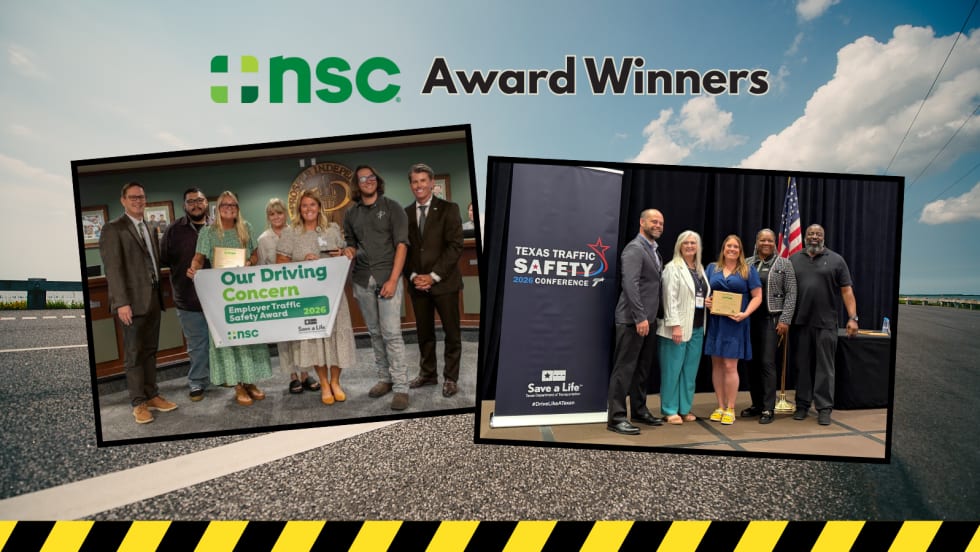
How Two Texas Districts Built Award-Winning Safety Programs
Learn how Prosper ISD and Rockwall ISD earned National Safety Council honors through hands-on training, safety culture, and strategies that reduced transportation incidents.
Read More →
NHTSA Releases 10-Year Review of Fatal School Bus Crashes
The latest federal analysis reinforces the safety of school buses while identifying where school-age pedestrians and other motorists remain most at risk.
Read More →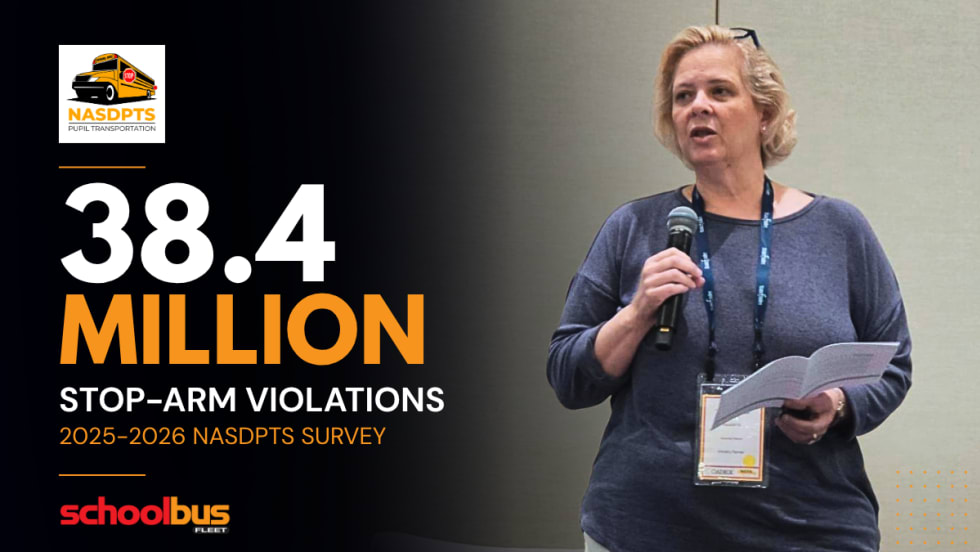
2026 NASDPTS Survey: Data Shows Further Reduction of Illegal Passing
New data is in! School bus stop-arm passings are down to 38.4 million violations per year, about a 2.3% decrease from last school year — but passings on the right side of the bus are higher than ever.
Read More →
Another School Bus Fatality Reported in Monsey, New York
A 7-year-old girl died after being struck by a school bus in Rockland County, New York while crossing the street. Here's what we know.
Read More →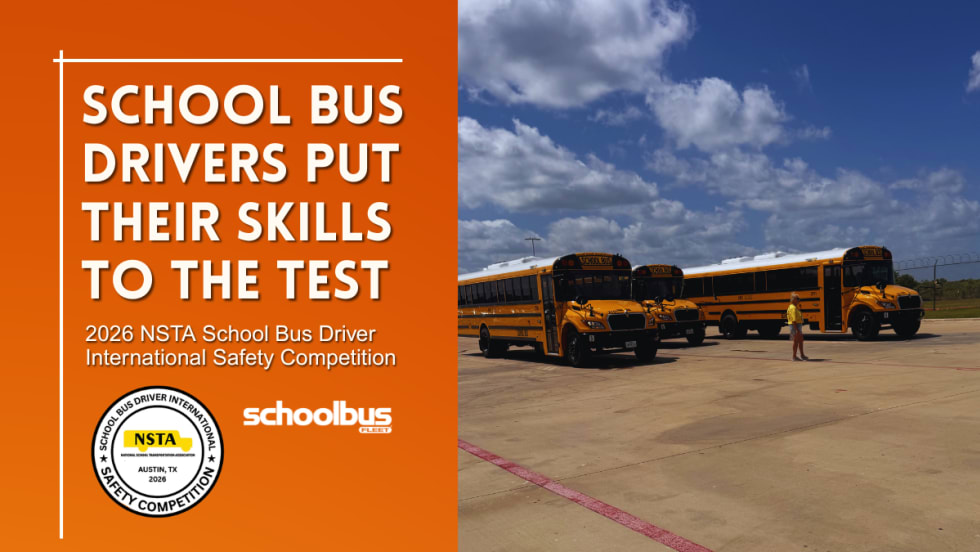
NSTA Announces 2026 School Bus Driver International Safety Competition Winners
Drivers from across the U.S. and Canada showcased their safety and driving skills, with two defending champions successfully retaining their titles.
Read More →