





Similarly: America Has a School Bus Passing Problem — and Distraction Is Making It Worse
New Study Finds School Zone Speed Safety Cameras Cut Speeding Violations 97%
A Florida university's research demonstrates that Verra Mobility's automated enforcement changes driver behavior and significantly improves school zone safety.
August 20, 2026
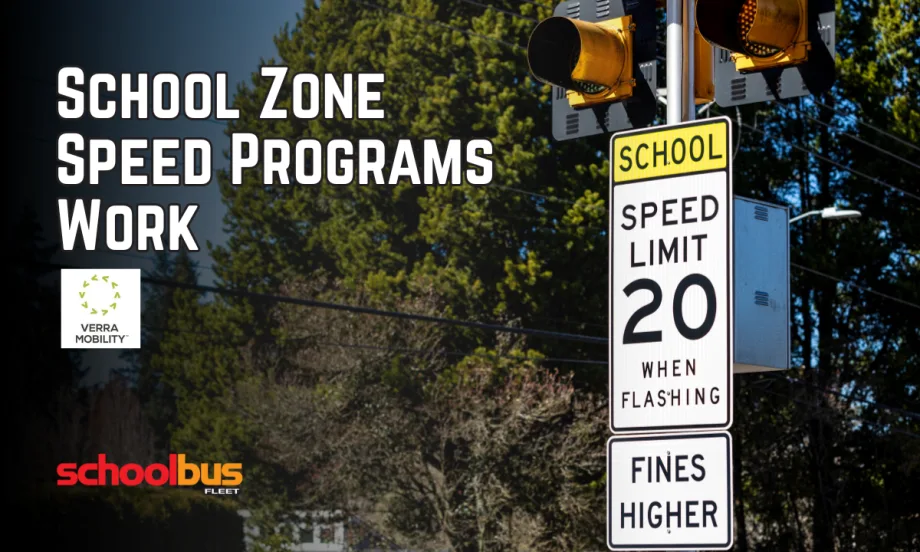
The study collected evidence of how technology influences driver behavior and safety outcomes.
Credit:
School Bus Fleet
2 min to read
- A study conducted by a Florida university reveals that automated speed cameras in school zones result in a 97% reduction in speeding violations.
- The research highlights that Verra Mobility's enforcement technology effectively modifies driver behavior in these areas.
- The implementation of these speed safety cameras significantly enhances safety in school zones.
*Summarized by AI
Verra Mobility has just announced the findings of an independent study conducted by researchers at the University of South Florida's Center for Urban Transportation Research (CUTR), demonstrating that school zone speed safety programs reduced speeding violations by 97% at participating Florida school zones.
The research was funded by the Florida Department of Transportation (FDOT) and evaluated Verra Mobility-operated speed programs in the City of St. Cloud and Osceola County.
Speeding Dropped Before Citations Even Began
The study analyzed vehicle speeds before camera activation, during Florida's required 30-day warning period, and throughout the first 30 days of citation enforcement.
Notable Study Findings
Across 18 school zone speed cameras, researchers found that:
- Total speeding violations dropped from 3.47% of passing vehicles to just 0.09%, representing a 97% reduction in violations.
- Warnings alone reduced violations by 93%, demonstrating that driver awareness significantly influences behavior even before citations are issued.
- Severe speeding (16+ mph or more over the speed limit)declined from 74% to 45%, while many individual school zones experienced reductions exceeding 95% during the citation period.
At BridgePrep Academy in Osceola County, one camera location recorded an 80% high-speeding rate before the program began and reached zero during both the warning and citation periods.
The study also found that the greatest changes occurred during the warning period, reinforcing the importance of public education and awareness alongside enforcement. Researchers concluded that drivers consistently slowed when enforcement was present and suggested that these behavioral changes could contribute to safer driving beyond camera locations.
What the Findings Could Mean for School Zone Safety
"Independent research continues to validate what communities across the country are experiencing firsthand," said Stacey Moser, chief customer officer, Verra Mobility. "Automated school zone speed enforcement changes driver behavior and helps create safer environments for children. A 97% reduction in speeding violations is an extraordinary outcome, but even more important is that those numbers represent thousands of drivers making safer decisions around our children. That's exactly why communities invest in these programs."
Dr. Pei-Sung Lin, director of the Intelligent Transportation Systems, Traffic Operations, and Safety Program at the University of South Florida CUTR said that this now allows municipalities to move beyond theoretical discussions and generate practical, evidence-based insights that help communities make informed decisions about technology investments.
Florida authorized school zone speed detection systems through House Bill 657 in 2023. Since then, Verra Mobility has partnered with communities throughout the state and across the nation to deploy programs that prioritize education, encourage voluntary compliance, and improve safety for students, families, pedestrians, and school staff. The company supports automated safety programs in more than 300 communities.
More Safety

2 Killed, Dozens Injured in Florida School Bus Crash
A multi-vehicle collision caused a Polk County school bus carrying 37 students to overturn on its way to Winter Haven High School.
Read More →
Illegal School Bus Passing Drops 24% in New York Districts
With fewer than 5% of citations involving repeat offenders, Westchester County officials said enforcement, education, and community partnerships are helping change driver behavior.
Read More →
School's Back. Here's What Happened to Traffic, Speeding & Distraction
What happens to traffic when school resumes? New data analysis examines changes in distracted driving, congestion, and speeding around schools.
Read More →
Geotab Expands Fleet Safety Tools With Video Coaching, Risk Insights
New safety and video capabilities aim to help fleet managers assess risk, support drivers, and take targeted action through video coaching, red-light violation detection, and more.
Read More →
How to Build a Better School Bus Driver Training Program
Is it time to strengthen your driver training? Here’s how to pick the right talent and improve recruitment, retention, and safety. This video is brought to you by IC Bus.
Read More →
Recent School Bus Accidents Leave 2 Dead, 2 Injured
Four school bus crashes in Florida, Illinois, and Georgia highlight risks in transportation lots, at bus stops, and during student loading and unloading.
Read More →
When Every Second Matters, Clarity Keeps Routes Moving
From routine delays to urgent incidents, strong communication practices help drivers, dispatchers, schools, and families respond with confidence.
Read More →
What Happens When a School Bus Catches Fire — and What Can Help
School bus fires are rare but can be devastating. Learn how advances in fire suppression and asset protection help fleets detect fires earlier, reduce damage, and improve safety.
Read More →
Geotab Launches Tool to Help Fleets Investigate Road Incidents
Geotab Investigations combines telematics data, video, documents, and other evidence to help fleets reconstruct incidents, resolve claims, and determine what happened.
Read More →
Texas Sixth Grader Wins 2026 National School Bus Safety Poster Contest
Sai Darshana Yekolu of Moseley Middle School in Prosper, Texas, was named the newest winner for her artwork, bringing the theme of “Safe Rides, Everyday Heroes” to life.
Read More →