





Watch: Safety Lessons from School Bus Accidents with Meg Sweeney of the NTSB [Video]
NTSB Calls for Alcohol Impairment Systems, Seat Belts After W.V. Crash Investigation
The federal agency's report asks NHTSA to require all new school buses to be equipped with vehicle-integrated alcohol detection systems and passenger lap-shoulder belts.
April 24, 2026
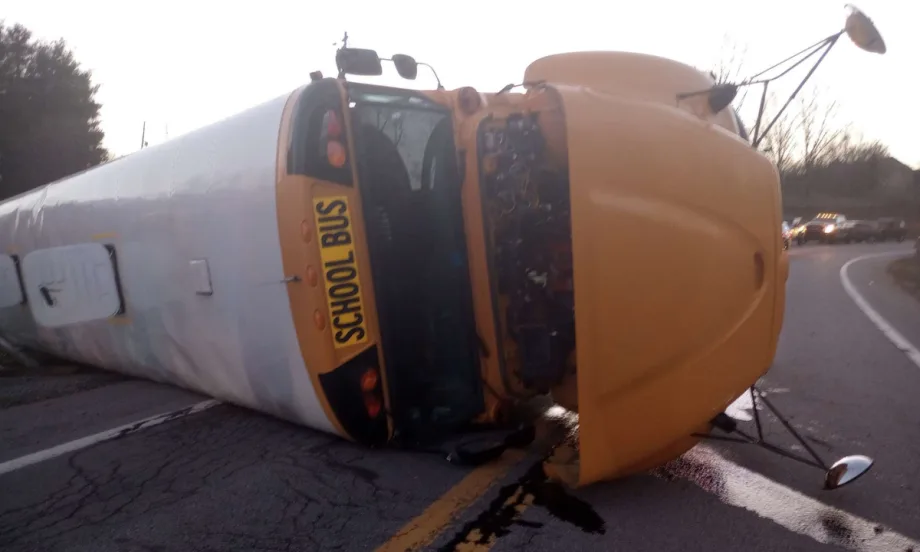
The NTSB determined that the probable cause of the Millstone, W.V., crash was the school bus driver’s alcohol impairment that resulted in his loss of control, while the lack of seat belts contributed to the severity of passenger injuries.
Pictured here is the West Virginia school bus at final rest position across the southbound lane of SH-16; the view looking north.
Credit:
West Virginia State Police; annotated by NTSB
3 min to read
- The NTSB has recommended the implementation of vehicle-integrated alcohol detection systems in new school buses.
- The agency's report suggests that these systems could improve safety by preventing alcohol-impaired driving.
- It also advises equipping school buses with passenger lap-shoulder belts to enhance occupant protection.
*Summarized by AI
Yesterday, the National Transportation Safety Board (NTSB) released its final report after investigating a 2024 school bus rollover in West Virginia.
Accident Summary
On the afternoon of Monday, March 4, 2024, a 2022 IC full-size school bus operated by the Calhoun County Board of Education was traveling south on State Highway 16 (SH 16) near Millstone in Calhoun County, West Virginia. It had 19 students on board, plus the driver. As the driver navigated a left-hand curve, the bus departed the right side of the paved roadway and entered an earthen drainage channel with a culvert along the right side of the road.
The right-front tire struck the end of the culvert; the bus then struck a fence and began to yaw counterclockwise as it re-entered the roadway. The right-rear tire struck the culvert, and the bus rolled a quarter turn onto its right side before coming to rest across both lanes of SH-16.
Three students on the bus sustained serious injuries, 16 students sustained minor injuries, and the driver was not injured.
NSTB Findings
The agency found that at the time of the crash, the school bus driver was impaired by alcohol, which resulted in his loss of control. He had a blood alcohol concentration reading of 0.161 grams per deciliter.
"We found that implementing alcohol detection systems on school buses can prevent alcohol-impaired driving by school bus drivers," the agency said.
The investigation found that alcohol impairment among school bus drivers occurs with concerning frequency. A Stateline study found that from 2015 through 2019, 118 school bus drivers nationwide were cited or arrested for operating a bus while impaired by alcohol, drugs, or a combination of both.
NTSB also noted that active and passive alcohol detection technologies already exist that can prevent a vehicle from operating if driver alcohol impairment is detected. These systems are being used successfully on school buses in parts of Europe. As a result, the NTSB recommended that the National Highway Traffic Safety Administration require all new school buses to be equipped with vehicle-integrated alcohol detection systems.
But there's another component to this accident and NSTB's findings.
"We also found that unbelted bus passengers were injured from impacting other occupants and the school bus interior during the rollover sequence," NTSB said. "Lap/shoulder belts, had they been installed and properly worn, would have provided the best protection for the students by keeping the occupants within the protective seating compartment."
The agency has previously spoken out that seat belts, when used properly, can help prevent fatalities, especially in side impact and rollover crashes like the Millstone crash. "In these types of crashes, the compartmentalized seating design of large school buses alone may not prevent injuries because unbelted children can be thrown from their seating area, strike other occupants or hard surfaces, or be partially or fully ejected from the bus. In both the Millstone, West Virginia, and the Dale, Texas, crashes, the unbelted students were thrown about the interior of the bus, resulting in the increased risk of injuries and ejections."
As part of the investigation, the NTSB reiterated its recommendation that West Virginia require passenger lap-shoulder belts on new large school buses and called on the state to establish enforceable procedures to ensure students use the seat belts properly on every trip.
More Safety

How to Build a Better School Bus Driver Training Program
Is it time to strengthen your driver training? Here’s how to pick the right talent and improve recruitment, retention, and safety. This video is brought to you by IC Bus.
Read More →
Recent School Bus Accidents Leave 2 Dead, 2 Injured
Four school bus crashes in Florida, Illinois, and Georgia highlight risks in transportation lots, at bus stops, and during student loading and unloading.
Read More →
Sponsored•September 8, 2026
When Every Second Matters, Clarity Keeps Routes Moving
From routine delays to urgent incidents, strong communication practices help drivers, dispatchers, schools, and families respond with confidence.
Read More →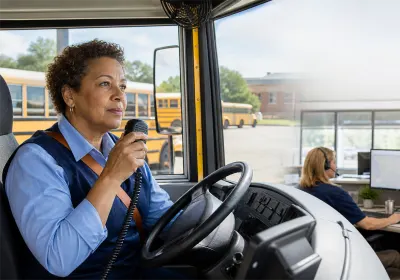

What Happens When a School Bus Catches Fire — and What Can Help
School bus fires are rare but can be devastating. Learn how advances in fire suppression and asset protection help fleets detect fires earlier, reduce damage, and improve safety.
Read More →
Geotab Launches Tool to Help Fleets Investigate Road Incidents
Geotab Investigations combines telematics data, video, documents, and other evidence to help fleets reconstruct incidents, resolve claims, and determine what happened.
Read More →
Texas Sixth Grader Wins 2026 National School Bus Safety Poster Contest
Sai Darshana Yekolu of Moseley Middle School in Prosper, Texas, was named the newest winner for her artwork, bringing the theme of “Safe Rides, Everyday Heroes” to life.
Read More →
Sponsored•August 27, 2026
Doing More With Less: How Transportation Directors Can Prioritize Safety Amid Budget Uncertainty
With diesel prices soaring and nearly one-third of transportation directors expecting budget cuts, maintaining student safety has never been more challenging. Download this guide to learn how leading districts are prioritizing risk, funding critical safety technology, and building stronger budget cases with data.
Read More →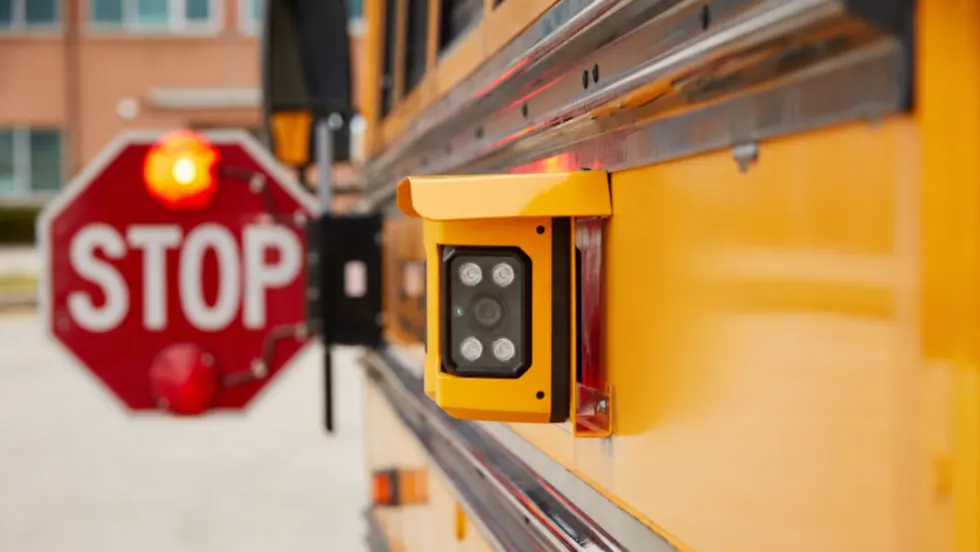
Walton County Schools Adds Gatekeeper Stop-Arm Enforcement System
The Florida district will deploy Gatekeeper’s updated Student Protector technology, which now incorporates AI to improve video evidence.
Read More →
How To Build a More Secure School Bus Yard During and After Hours
As thefts and overnight security threats continue, school transportation leaders are combining stronger operational practices with AI-enabled surveillance to better protect buses, facilities, and staff.
Read More →
FMCSA Names New Chief Safety Officer: What School Bus Operators Should Know
Steve Dowling is set to lead the federal agency's efforts to advance commercial motor vehicle safety and reduce crashes, fatalities, and injuries on the nation's roadways.
Read More →