





- Route Efficiency Ratings
- 64% — Somewhat efficient (room for improvement)
- 22%— Very efficient
- 14% — Neutral or inefficient
- Top Barriers to Efficiency (selecting up to two)
- 68% — Driver shortages
- 46% — Long geographic distances / rural coverage
- 44% — Bell time constraints
- 41% — Special education routing requirements
- 39% — Community/political
- Bus Capacity Utilization
- 49% — 25 to 50% of buses run below
- 27% — Less than 25% under capacity
- 24% — More than 50% under capacity
- Top Metrics for Measuring Efficiency
- 72% — On-time performance
- 69% — Bus utilization (capacity usage)
- 51% — Student ride time
- Routing Review Frequency
- 58%— Multiple times per year
- 28% — Once per year
- 14% — Only when issues arise or rarely
- Primary Routing Tools
- 72% — Routing software
- 18% — Institutional knowledge/manual
- 10% — Spreadsheets or mapping tools
- Confidence in Routing Technology
- 55% — Very confident
- 26% — Somewhat confident
- 19% — Not confident
- Top Benefits of a 10% Efficiency Gain
- 63% — Fewer buses required
- 52% — Easier daily operations
- 49% — Reduced fuel costs
- 46% — Shorter student ride
'Our Routes Looked Like Spaghetti': Survey Reveals School Bus Routing Struggles
Transfinder's new data reveals how driver shortages, bell schedules, and community demands are limiting school bus routing efficiency nationwide — and what districts are doing.
May 29, 2026
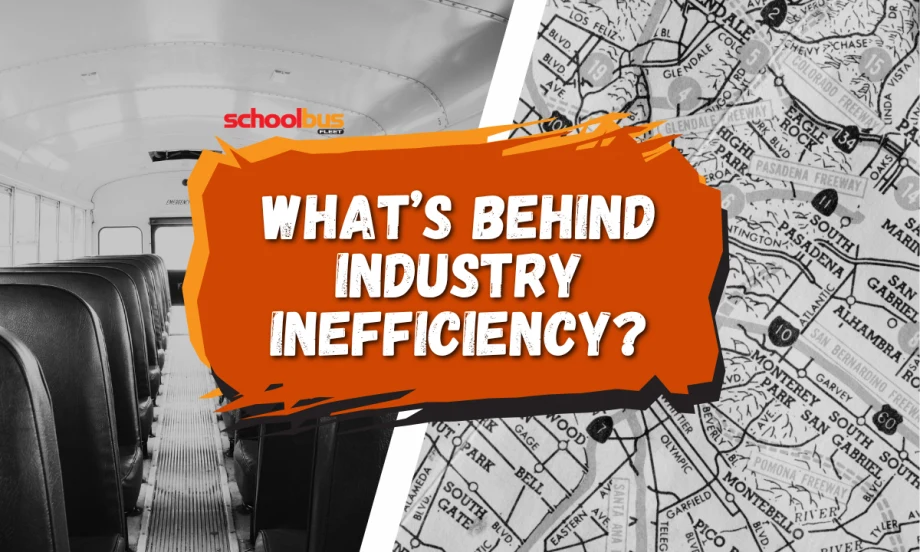
Many districts report buses running below capacity not because of poor planning, but because driver shortages and bell schedules are forcing difficult routing compromises.
Credit:
School Bus Fleet
4 min to read
- Transfinder's survey highlights the inefficiencies in school bus routing caused by a combination of driver shortages, rigid bell schedules, and diverse community requirements.
- The data emphasizes that these challenges are widespread and affect the ability of school districts nationwide to optimize their transportation routes.
- Several school districts are actively seeking solutions to these issues to improve routing efficiency and better meet community needs.
*Summarized by AI
A new nationwide survey conducted by software solutions provider Transfinder of school transportation professionals revealed that while most districts consider their bus routes moderately efficient, major operational challenges continue to limit optimization.
Key Findings from the Survey
- Most districts rate their routing as only “somewhat efficient,” with clear room for improvement.
- Driver shortages are the leading barrier to efficiency, cited across nearly every respondent group.
- Between 25% and 50% of school buses on the road run below capacity in many areas.
- On-time performance and bus utilization are the top metrics used to measure success.
“The challenges transportation leaders are facing are real and in many cases have been longstanding, such as the driver shortage,” said Transfinder president and CEO Antonio Civitella. “But the survey also reveals that transportation leaders have some actions they can take to regain some control and mitigate some of the external forces.”
Districts Balancing Efficiency with Real-World Constraints
While some districts report highly optimized operations, the majority say practical limitations prevent full efficiency.
“Efficiency for us is balancing trip duration, student safety, bus capacity, and trip distance so that neither of the components becomes a parental or school issue,” said Michael Bebko, transportation & financial assistance coordinator at Hopkinton Public Schools in Massachusetts.
Patricia McGrane, a transportation supervisor at Northport-East Northport Union Free School District in New York, added: “Efficiency is the ability to streamline processes so that work is completed smoothly, on time, and with the best use of available resources, while minimizing unnecessary stress.”
Driver Shortages Continue to Reshape Routing Decisions
The survey underscored that driver shortages are not just a staffing issue, but are directly shaping routing outcomes.
Districts report running less-than-full buses, combining routes, or adding complexity to meet service expectations.
“We are meeting our bell times better, but we still encounter a driver shortage, and we are running half empty buses or more regularly to meet the bell times,” said Lori Smith, transportation coordinator at Bellbrook Sugarcreek Schools in Ohio.
Others noted that consolidating routes, while necessary, can have trade-offs.
“We have combined and eliminated buses. This hurt my company financially but it had to be done due to driver shortage,” said Shae Harkleroad, president of Raystown Transit Service, a contractor in Pennsylvania.
Community Expectations and Bell Schedules Limit Optimization
Beyond staffing, respondents repeatedly pointed to community expectations and school schedules as major constraints.
Requests for shorter ride times, neighborhood stop preferences and strict bell schedules often conflict with efficiency goals.
Political/community expectations, such as stop locations and ride times, ranked among the most frequently cited barriers to efficiency.
In many cases, districts prioritize service levels over cost savings or capacity optimization, respondents said.
Technology Widely Used, but Confidence Varies
The vast majority of districts rely onrouting software, yet confidence in these systems is mixed. Some respondents expressed strong confidence in their tools, while others said software alone cannot replicate real-world nuances.
“We relied heavily on the Optimize feature to build trips after we set up our general education stops,” said Jack Gershon, a dispatcher at Livonia Public Schools in Michigan. “We then revise those trips based on institutional knowledge and mirror trips.”
Despite Challenges, Districts Are Finding Gains
Even with constraints, many districts are making measurable progress through creative strategies, including:
- Tiered bell schedules to reduce fleet size
- Double runs and wave scheduling to offset driver shortages
- Route consolidation and redesign to eliminate overlap
“Our routes looked like someone threw a bowl of spaghetti on a map,” said James Graham, financial secretary at Norman Public Schools in Oklahoma. “We had routes crisscrossing, two or three buses in the same neighborhood. With Transfinder tools, we solved this.”
Efficiency Gains Could Deliver Immediate Impact
Respondents said a modest 10% improvement in routing efficiency would yield significant benefits, including:
- Fewer buses required
- Lower fuel costs
- Easier daily operations
- Shorter student ride times
Summarizing the stakes for school systems, Chris Corder, transportation director at Hardin County Schools in Kentucky, said: “Maximizing taxpayer monies that we are entrusted with to run our department.”
Debbie Schomisch, transportation director at Farwell Area Schools in Michigan, put it this way: “Getting the most bang for the schools money.”
An Ongoing Effort, Not a One-Time Fix
The survey makes clear that routing efficiency is a continuous process and not a one-time achievement.
“Efficiency is an evolving target,” one respondent noted, emphasizing the importance of ongoing data analysis, route reviews, and stakeholder collaboration.
For districts nationwide, improving transportation efficiency will require balancing technology, policy, and community needs while adapting to changing conditions year after year.
Survey Methodology
The School Bus Routing Efficiency Poll, conducted by Transfinder in April and May 2026, gathered feedback from transportation leaders in more than 30 states and Canada, highlighting both persistent pain points and emerging strategies for improvement. The survey was sent to Transfinder clients as well as users of other transportation products or those who manually create routes.
More Management
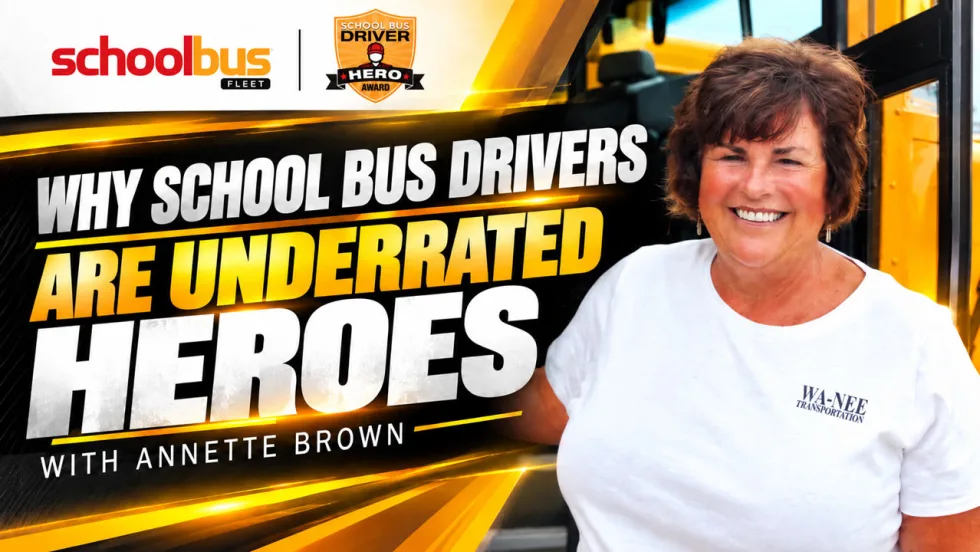
Meet the 2025 School Bus Driver Hero Winner: Annette Brown
We caught up with Wa-Nee Community Schools' Annette Brown on site at SBFX, where she was named the 2026 School Bus Driver Hero Award winner. Hear about her reaction, what she loves most about being a school bus driver, and more!
Read More →
Predictability Is Like Ketchup (According to 6-Year-Olds)
To students, a different school bus can feel like a full-blown crisis. One driver reflects on why familiar routines, showing up on time, and being reliably boring matter more than we think.
Read More →
Samsara Launches Free Driver Rewards Program
The new Driver Perks program gives eligible professional drivers access to discounts and offers without adding a cost for participating fleets.
Read More →

How Tax-Exempt Municipal Leases Can Help Finance School Buses
Let’s explore school bus financing options, including municipal leases, vendor payable accounts, and balloon payments, and how they can help stretch fleet budgets.
Read More →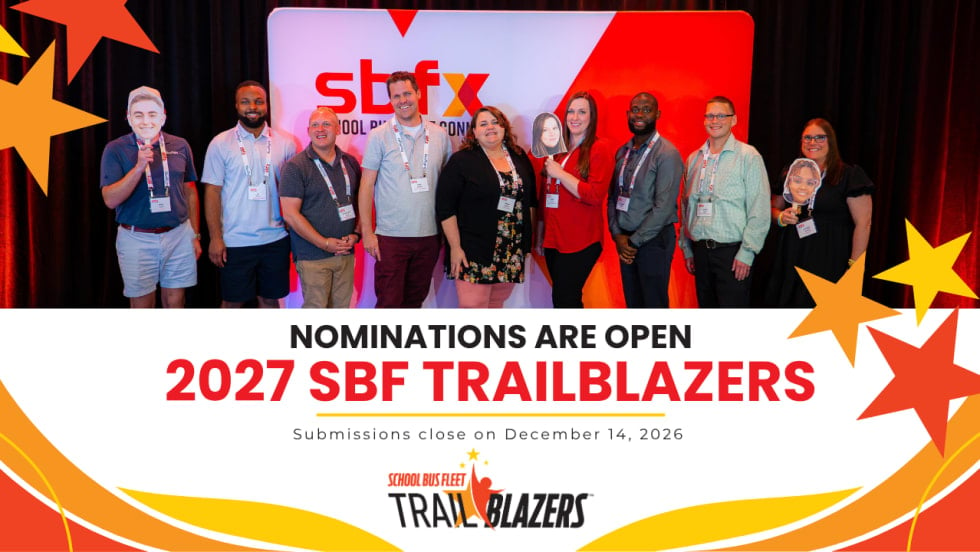
Nominate Rising School Transportation Pros Under 40!
We’re searching for the next generation of leaders making an impact across the K-12 student transportation industry to recognize as SBF’s 2027 Trailblazers. Nominations are open now!
Read More →
Changing Lanes: BusWhere, EverDriven, InterMotive, Summit School Services, Switzer-Carty & Thomas Built Buses
Check out who's been hired, promoted, and appointed to leadership positions at various school transportation suppliers, contractors, and manufacturers.
Read More →
The Most Expensive Thing You Do Before Selling a School Bus: Wait
When should you sell an aging school bus? Learn how maintenance, mileage, corrosion, specifications, and timing can affect resale value long before the auction.
Read More →
American Student Transportation Partners Acquires AJ Myers and Sons
A new deal brings a 75-year Pennsylvania student transportation provider into one of the nation’s largest private school bus contracting groups.
Read More →
What I Brought Home From SBFX: Relationships, Leadership, and Preparing What's Next
Who could lead your transportation operation tomorrow if you couldn't? Bernando Brown explores succession planning, mentorship, and preparing emerging leaders to step up.
Read More →
Inside School Bus Fleet ConneX 2026: Industry Leaders Connect in Scottsdale [Photos]
See highlights from SBFX 2026 in Arizona, where school bus operators and suppliers gathered for meetings, education, networking, awards, and more.
Read More →