





Traffic Control & School Bus Stops: 9 Keys to Keeping Students Safe
Minneapolis School Zone Pilot Cuts Speeding 41% with Low-Cost Street Design Changes
In a pilot project in Minnesota, two school-area intersections had low-cost, temporary road and traffic flow improvements made to measure the impact on roadway and student safety. Here's what they found.
November 4, 2026
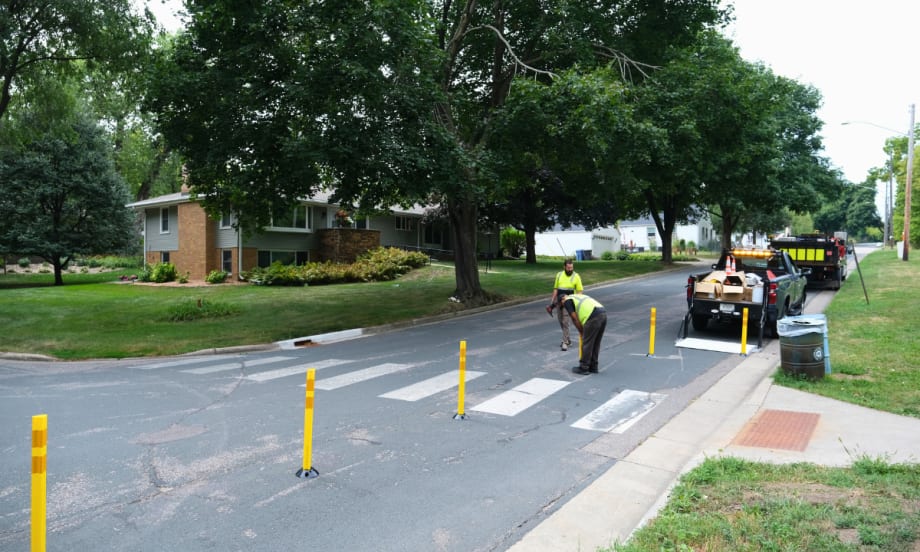
Crews install temporary curb extensions and flexible bollards at one of two selected school zones in a traffic safety effort led by Safe Routes Partnership, Cambridge Mobile Telematics, and the City of Minneapolis.
Credit:
Safe Routes Partnership
3 min to read
At last month's Safe Routes to School 2026 National Conference, three organizations — Safe Routes Partnership, Cambridge Mobile Telematics, and the City of Minneapolis — presented findings from a Minneapolis pilot that looked at how driving behavior data and low-cost street improvements can help school zones and communities identify roadway risks and measure changes in a matter of weeks.
What Went into the Minneapolis Pilot?
Temporary curb extensions and flexible bollards were installed near two Minneapolis schools in late August and produced dramatic reductions in speeding, according to a news release.
Materials for the pilot cost $5,100.
CMT’s StreetVision technology uses aggregated, anonymized driving behavior data from connected smartphones and vehicles to identify safety risks without targeting individual drivers. The approach helps communities use street design, rather than enforcement, to address risky driving.
Key Pilot Results
At West Chestnut Avenue and Thomas Avenue South:
- Driving 10 or more mph over the speed limit dropped 41%.
- There was 56% less phone motion by motorists when driving.
At 51st Avenue North and Girard Avenue North:
- Trips above 25 mph fell 41% during school hours and 66% during the afternoon pickup window, compared to a citywide change of just 2% to 5% over the same period.
- There were 35% fewer trips above 25 mph compared to the year prior.
“This pilot shows the promise of proactively pairing innovative technology with low-cost, quick improvements to make streets safer for families,” said Marisa Jones, executive director of Safe Routes Partnership. “We know how to engineer our streets to be safer, and now we have the technology to guide where improvements should be made — without waiting for a tragedy to take place.”
“Too often, we wait for crashes to tell us where our roads are failing. This pilot shows we don’t have to,” said Andrew Rogers, executive director of the Modern Analytics for Roadway Safety Coalition. “The lesson is bigger than Minneapolis: By demonstrating what’s possible when predictive analytics are paired with practical, low-cost safety improvements and real-world driving data that exists right now, communities can make more informed decisions about how to make their roads safer, especially around schools where children and families should be able to travel safely. We should be putting these tools to work in school zones and communities across the country — not waiting for another crash to tell us where improvements are needed.”
Tips to Bring This to Your Region
For other communities interested in a similar project, the partnership offered a few tips:
- Start with a safety question around one key location you want to study and understand better.
- Pick a clear measure of change to monitor.
- Work with local agencies to plan appropriate treatments that fit.
- Start with a baseline measurement, then compare similar periods before and after for key changes.
- Add community experience: Pair measured behavior with observations on how the changes altered perception.
- Learn and share your findings, build another test, or plan for long-term change.
More Safety
Sitestream, Safety Vision Partner with Connecticut City to Launch School Bus Stop-Arm Camera Program
The new enforcement initiative combines camera technology and violation management software to document illegal school bus passing, encourage driver compliance, and enhance student safety.
Read More →
Sponsored•November 1, 2026
From Reactive to Proactive: Making Every Ride Visible
Smart technology only delivers its full value when it works together. See how Catalyst connects proven industry platforms to move student transportation from reactive to proactive.
Read More →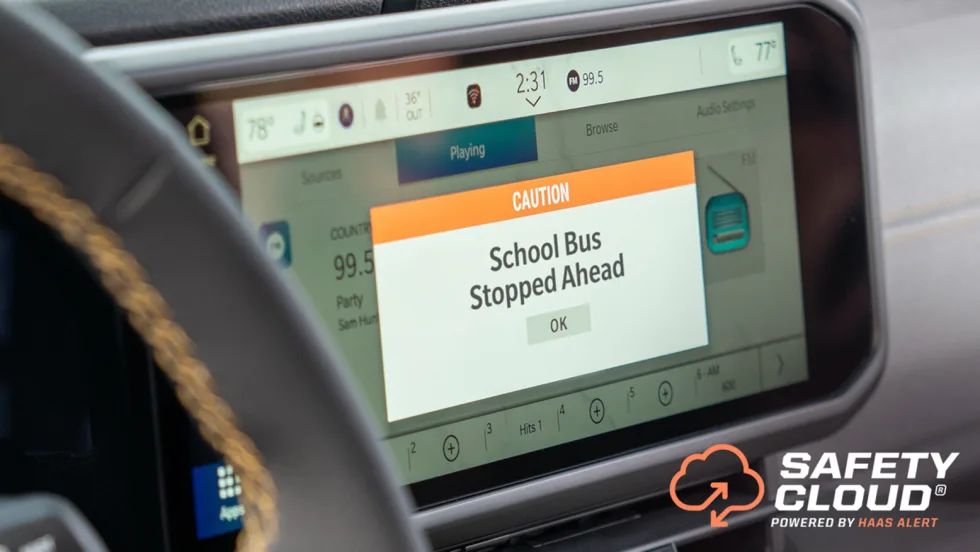
HAAS Alert’s Safety Cloud Warns Motorists of Stopped School Buses
Through a transponder or Samsara connection, the product lets school bus fleets send advance warnings to approaching drivers through in-vehicle alerts.
Read More →

HopSkipDrive Reports Progress on Safety Advisory Council
More than a year after forming the council, independent safety experts have helped shape new rider-safety features and policy progress, with a new goal to address rider behavior.
Read More →
What the 2026 National School Bus Safety Month Resolution Means for Student Transportation
The bipartisan resolution highlights illegal school bus passing, student safety during loading and unloading, and the need for driver training and public education.
Read More →
School Bus Stop-Arm Violations Decline 53% Across Verra Mobility Programs
Verra Mobility shares how school bus stop-arm cameras and school zone safety programs are changing driver behavior, reducing violations, and protecting students.
Read More →
Most Bus Crashes Aren’t Your Fault. Here’s How to Prove It.
A guide for what to do in between a school bus crash and a claim: what to preserve, who to notify, and how to keep the facts available when they matter.
Read More →
National School Bus Safety Week 2026: Tips, Toolkits & Resources to Keep Students Safe
School bus safety takes more than awareness. Explore expert tips, enforcement strategies, and free resources to help protect students on every ride.
Read More →
2 Killed, Dozens Injured in Florida School Bus Crash
A multi-vehicle collision caused a Polk County school bus carrying 37 students to overturn on its way to Winter Haven High School.
Read More →
Illegal School Bus Passing Drops 24% in New York Districts
With fewer than 5% of citations involving repeat offenders, Westchester County officials said enforcement, education, and community partnerships are helping change driver behavior.
Read More →