





Keep Reading: Why Gasoline School Buses Are Making a Comeback
Alt-Fuel Moves: Electric Bus Rollouts, Bidirectional Charging & Propane Growth
See which fleets are adding electric and propane school buses as districts and operators invest in charging infrastructure, bidirectional technology, and alternative-fuel expansion.
October 5, 2026
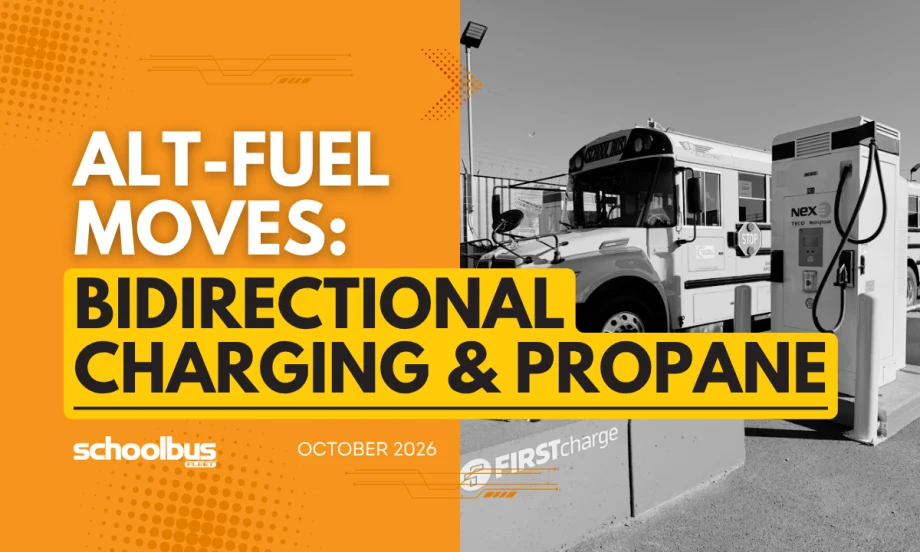
This edition of Alt-Fuel Moves looks at electric school bus deployments, bidirectional charging projects, infrastructure investments, and Marietta City Schools’ continued shift toward propane.
Credit:
First Student/School Bus Fleet
5 min to read
- Various fleets are incorporating electric and propane school buses to modernize transportation.
- Investment is increasing in charging infrastructure and bidirectional technology to support new bus fleets.
- School districts and operators are focusing on expanding alternative-fuel options for transportation.
*Summarized by AI
Alternative-fuel school transportation continues to take different forms across the country, with districts and operators weighing vehicle performance, infrastructure, energy costs, and funding as they make fleet decisions.
Recent moves include San Francisco Unified School District beginning a major electric school bus rollout after years of testing, a Georgia district working toward an all-propane fleet, new California funding for zero-emission infrastructure, a New York City charging project designed to cut construction costs, and six electric buses paired with bidirectional chargers in Colorado.
Here’s a look at the latest alternative-fuel developments.
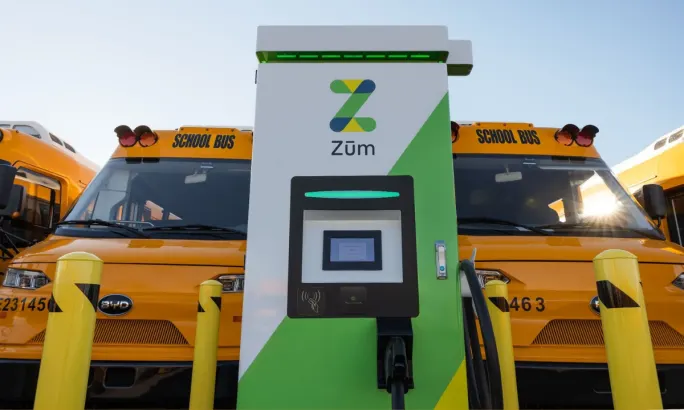
Zum has begun rolling out electric school buses for San Francisco Unified School District, with charging infrastructure in place to support the district’s growing electric fleet.
Credit:
Zum
Zum Begins Electric School Bus Rollout for San Francisco Unified
Zūm has begun deploying electric school buses for San Francisco Unified School District (SFUSD), moving the district’s planned large-scale fleet transition into its rollout phase.
The first buses are now being deployed, with additional vehicles expected to phase in throughout the fall as they arrive from the manufacturer. Zum said the charging and supporting infrastructure needed for the fleet is already in place.
The rollout follows several years of preparation. Zum began testing electric school buses in 2022 and has evaluated multiple configurations under real-world conditions, including testing in San Francisco to account for the city’s hills, terrain, weather, and operating environment. Drivers were also involved in the transition through training, hands-on experience, and feedback ahead of deployment.
The buses will integrate with Zum CMX, the company’s operating system connecting routing, dispatch, drivers, schools, families, safety, and other operational functions.
Zum and SFUSD previously announced plans for 104 electric school buses in the first phase of the project, with an eventual expansion to 238 buses by the 2027-28 school year. However, Zum’s September rollout announcement did not specify how many buses are currently in service.
Georgia District Works Toward All-Propane Fleet
While electric school buses continue to expand in many districts, Marietta City Schools in Georgia is moving in a different direction with propane.
The district operates a 114-bus fleet, including 38 propane school buses, and Transportation Director Kim Ellis said the district plans to continue replacing diesel vehicles with propane.
Fuel cost is a major factor. Ellis told Atlanta News First that the district was paying $1.72 per gallon for propane compared with $4.12 per gallon for diesel at the time of the report.
The district also cited quieter operation, reduced maintenance needs, and cleaner operation among the benefits it has experienced with propane.
Marietta City Schools has considered electric school buses, but Ellis said concerns about battery life and vehicle longevity have kept the district focused on propane for future purchases. The district’s long-term goal is to transition its fleet entirely to propane.
California Sets Aside $30.2 Million for Medium- and Heavy-Duty ZEV Infrastructure
California is directing $30.2 million toward zero-emission infrastructure that can support school buses, public fleets, freight operations, and ports.
The funding is part of a $95.2 million Clean Transportation Program investment plan approved by the California Energy Commission. The broader plan also allocates $48 million for light-duty EV charging, $15 million for hydrogen refueling, and $2 million for zero-emission vehicle workforce training and development.
At least half of the program’s funding must support projects benefiting or serving low-income Californians and residents of disadvantaged communities.
For school transportation operations, the $30.2 million allocation could help address charging infrastructure, which is one of the biggest pieces of fleet electrification beyond the buses themselves. However, the allocation is a funding framework, not an announcement of specific school bus projects. The plan covers fiscal year 2026-27 and includes projected allocations through 2028-29.
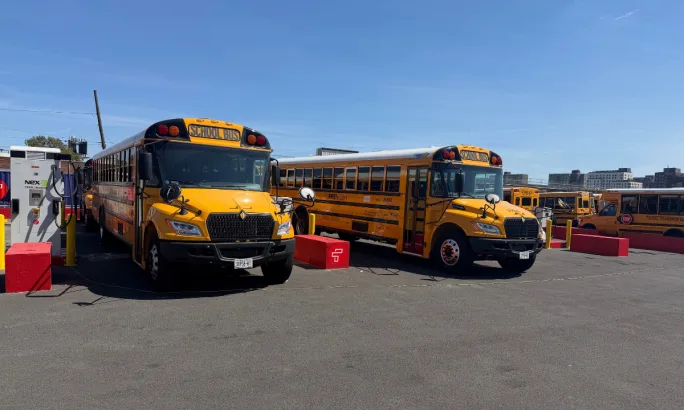
First Student and Con Edison completed the first phase of an electric school bus infrastructure project serving the New York City Department of Education, including First Student’s trenchless First Charge system.
Credit:
First Student
First Student, Con Edison Complete First Phase of NYC Electric Bus Infrastructure Project
First Student and Con Edison have completed the first phase of an electric school bus infrastructure project serving the New York City Department of Education, with buses operating across Brooklyn and Queens.
A central piece of the project is First Student’s First Charge modular charging infrastructure. The trenchless design avoids traditional underground trenching, which First Student said reduced infrastructure construction costs by 13% while limiting construction complexity and disruption.
The project combines electric school buses with bidirectional charging technology and load-management software. The software allows buses to charge during off-peak periods when electricity costs are lower.
Con Edison and the New York State Energy Research and Development Authority provided funding support. That includes six electric school bus vouchers through the New York School Bus Incentive Program and support for four retrofit buses.
First Student is also planning to add 40 electric school buses serving the New York City Department of Education and is considering additional projects at its Brooklyn facilities, including expanded solar generation and a smart energy hub.
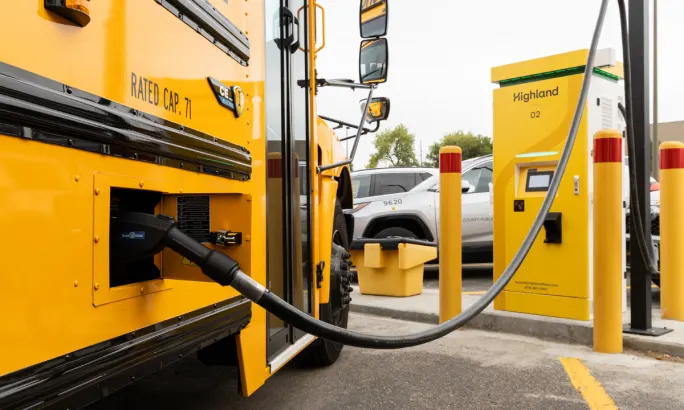
Jeffco Public Schools launched six IC electric school buses with six bidirectional chargers through a partnership with Xcel Energy and Highland Electric Fleets.
Credit:
Highland Electric Fleets
Colorado District Launches Six Electric Buses With Bidirectional Charging
Jeffco Public Schools in Colorado has launched six IC electric school buses alongside six bidirectional chargers through a partnership with Xcel Energy and Highland Electric Fleets.
The buses are expected to begin transporting Jeffco students during the 2026-27 school year. Xcel Energy provided $3.4 million through its Electric School Bus Program to support the project, while Highland is providing the vehicles, charging infrastructure, and long-term services through its Electrification-as-a-Service model.
The project will also serve as a real-world demonstration of bidirectional charging. The technology allows energy stored in the buses’ batteries to potentially flow back to the grid when the vehicles are parked and not needed for transportation.
Jeffco’s six buses are part of a larger Xcel Energy effort supporting 38 electric school buses and 30 bidirectional charging systems across Colorado.
For the district, the project offers an opportunity to evaluate electric buses not only as student transportation vehicles, but also as potential energy resources when they sit at the depot.
More Alternative Fuels

Nobody Told Diesel Prices They Were Supposed to Come Down
With diesel prices surging, school bus fleets have new reason to stress-test fuel costs, consider diversification, and calculate what each route really costs to operate.
Read More →
Why Gasoline School Buses Are Making a Comeback
Gasoline is gaining ground in full-size school buses. See how today’s options stack up against diesel on cost, maintenance, emissions, performance, and more.
Read More →
EPA Opens $180M DERA Funding Round for Diesel Upgrades
The 2026 Diesel Emissions Reduction Act program seeks applications from eligible organizations to accelerate the retirement of legacy diesel vehicles.
Read More →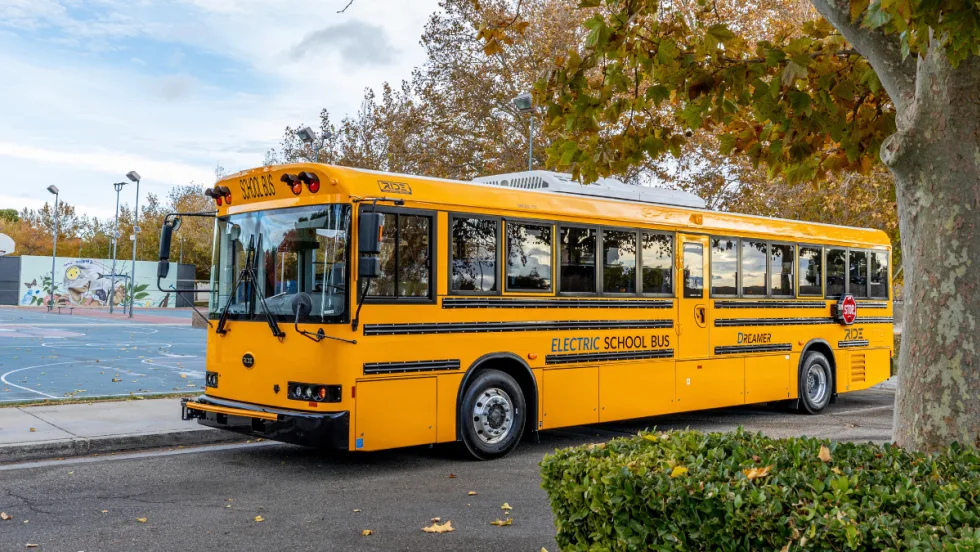
The Secret Life of an Electric School Bus Battery
Batteries change throughout years of daily routes, but degradation doesn’t necessarily mean the end. Here’s what operators should know about performance, safety, and second life.
Read More →
CALSTART and Forth Combine to Form Catalyst Mobility
The new name represents a renewed vision for the nonprofit focused on advancing clean, equitable, and affordable transportation solutions that move people and goods.
Read More →
Alt-Fuel Moves: New Buses, Charging Hubs & Real-World EV Testing
Propane and electric school bus deployments continue to grow as districts add new vehicles, expand charging infrastructure, and gather more real-world operating data.
Read More →
Fewer Electric School Bus Models Reshape the U.S. Market
WRI’s latest buyer’s guide points to a consolidating electric school bus market, but fewer options may reflect a maturing industry rather than fewer meaningful choices for school bus operators.
Read More →
The Fuel Budget You Can Actually Predict: How Propane Autogas Keeps Money in the Classroom
Learn how propane autogas helps school districts manage fuel costs with predictable pricing, lower maintenance, and reduced emissions from former transportation director Joel Stutheit.
Read More →
Hendrickson, Driventic Introduce New Electric Powertrain for School Buses
ELECTRAAX, the electrified, lightweight drive axle offers integrated ePowertrain efficiency and modular flexibility for Class 6–7 school bus use.
Read More →
The Mobility House Joins PowerFlex in Fleet Electrification Deal
The acquisition combines intelligent charging software, bidirectional charging expertise, and fleet electrification services to support the growing adoption of electric school buses across North America.
Read More →