




The Fuel Budget You Can Actually Predict: How Propane Autogas Keeps Money in the Classroom
Learn how propane autogas helps school districts manage fuel costs with predictable pricing, lower maintenance, and reduced emissions from former transportation director Joel Stutheit.

Joel Stutheit argues that predictable fuel costs, rather than trying to anticipate market swings, can help districts better manage transportation budgets while safely keeping buses on the road.
PERC
I spent years as a school district transportation director, so I know exactly how this year felt for the people doing that job now.
Fuel price fluctuations aren't new. Anyone who was managing a fleet budget in 2022 or 2023 has been through versions of this. What's changed is the takeaway. Each spike used to be treated as an exception: absorb it, rebalance, and budget for a return to normal. This year made that approach harder to defend as diesel and gasoline prices spiked, eased, then climbed again — recently topping $5 per gallon again with a new school year just weeks away.
Planning a fuel budget on the assumption of stability is no longer the conservative choice — it's the risky one. Nearly a third of districts reported moving money from other programs, and almost a fifth had tapped reserves to cover fuel costs this past school year, according to a May survey by NAPT and AASA, the School Superintendents Association. And through all of it, the routes still have to run.
As we head into another school year, and another year of uncertainty, here's the conclusion I've come to: you cannot forecast your way out of volatility. What you can do is restructure your exposure to it. A growing number of districts have done exactly that — and their operating model is worth looking at closely.
America's abundant, overlooked energy source
In my role at the Propane Education & Research Council (PERC), where I work with school districts and fleet operators across the country on propane autogas adoption, one fact consistently surprises the transportation directors I meet: the United States is the world's largest producer and exporter of propane. In 2025 alone, the U.S. produced roughly 35.2 billion gallons and consumed 12.8 billion at home — exporting far more than we use domestically.
Because propane is an abundant domestic fuel, its price is less exposed to global oil market disruptions. While diesel and gasoline prices have fluctuated by dollars, propane autogas prices moved by cents, allowing districts with propane autogas buses to pay well under $2 per gallon all year.
Predictable pricing by design
Instead of guessing where global oil markets will land next month, districts utilizing propane autogas take control of their supply by locking in predictable 12-, 24-, or 36-month contracts with on-site fueling infrastructure. Thanks to low propane autogas fuel prices, streamlined fueling infrastructure supported by local propane marketers, and standard fuel taxes, propane autogas fleets typically achieve all-in fuel costs less than $2 per gallon, with many school districts paying even less.
The primary value isn't just that the number is low. It's that every element of it is known in advance.
Compare that to what diesel and gasoline did this year, and — more importantly — to what diesel and gasoline might do next year, no fleet manager can predict.
Real-world results: the districts' receipts
These aren't theoretical numbers. Districts across the country closed this school year with their fuel budgets intact, and their books show how.
- Wa-Nee Community Schools in Nappanee, Indiana, paid an average of $0.99 per gallon for propane autogas this school year — against a most recent local diesel cost of $5.06 — and estimates it saves $10,000 for every 30,000 miles driven. Those predictable savings preserve something concrete: student sports and music programs that stay free for families.
- Newport News Public Schools in Virginia operates 189 propane autogas buses logging over 2.7 million miles annually. While diesel averaged $3.22 and peaked above $5.09, Newport News' fuel price never topped $1.35. That produced more than $439,000 in fuel savings in a single year — contributing to nearly $2 million saved since they began converting their fleet in 2017.
Because their savings compounded predictably, these districts avoided cutting programs, deferring vehicle purchases, or drawing from emergency reserves.
Beyond the pump: compounding advantages
By eliminating complex diesel emissions aftertreatment systems — such as diesel particulate filters (DPF) and diesel exhaust fluid (DEF) components that frequently cause downtime — propane autogas fleets save even more per mile in maintenance compared to diesel. At Wa-Nee, this simplified design allows a single in-house mechanic to efficiently maintain their entire 56-bus fleet.
The daily operational benefits go beyond maintenance:
- All-Weather Reliability: While diesel fuel gels in freezing temperatures and electric vehicle batteries experience range reductions in cold weather, propane autogas stays liquid down to -40°F, ensuring no cold-start delays on frozen winter mornings.
- A Better Student Experience: Propane autogas buses eliminate tailpipe emissions in school loading zones and operate quietly, creating a safer, calmer environment for students and drivers alike.
- Regulatory & Practical Protection: A district planning its next procurement cycle isn't just choosing an energy source; it's choosing which side of that compliance cost it wants to be on. Current propane autogas engines already exceed near-zero nitrogen oxide (NOx) emission standards (0.02 g/bhp-hr), exceeding upcoming 2027 EPA rules expected to add $12,000 to $15,000 to the price of every new diesel engine. As a ready-now solution, propane autogas complements a district's broader energy strategy.
Predictability is a decision
More than 24,000 propane autogas school buses now operate across 1,100 districts in 49 states, safely carrying over 1.3 million students every day. This approach is not experimental — it's a proven operating model with a decade of receipts to back it up.
After this year, the lesson for pupil transportation is simple. The districts that came through with budgets intact were not better forecasters; they had stopped forecasting. They chose an energy source whose price they could know in advance, locked it in with multi-year contracts before the year began, and spent the spring running routes instead of rewriting budgets.
Volatility is the market's decision. Predictability can be yours.

PERC
About the Author: Joel Stutheit is senior manager of propane autogas business development at thePropane Education & Research Council (PERC), and a former school district transportation director for Bethel School District, where he established and championed the district’s highly successful propane autogas school bus program.
This article was authored and edited according to School Bus Fleet editorial standards and style. Opinions expressed do not necessarily reflect that of SBF or Bobit Business Media.
More Alternative Fuels
EPA Opens $180M DERA Funding Round for Diesel Upgrades
The 2026 Diesel Emissions Reduction Act program seeks applications from eligible organizations to accelerate the retirement of legacy diesel vehicles.
Read More →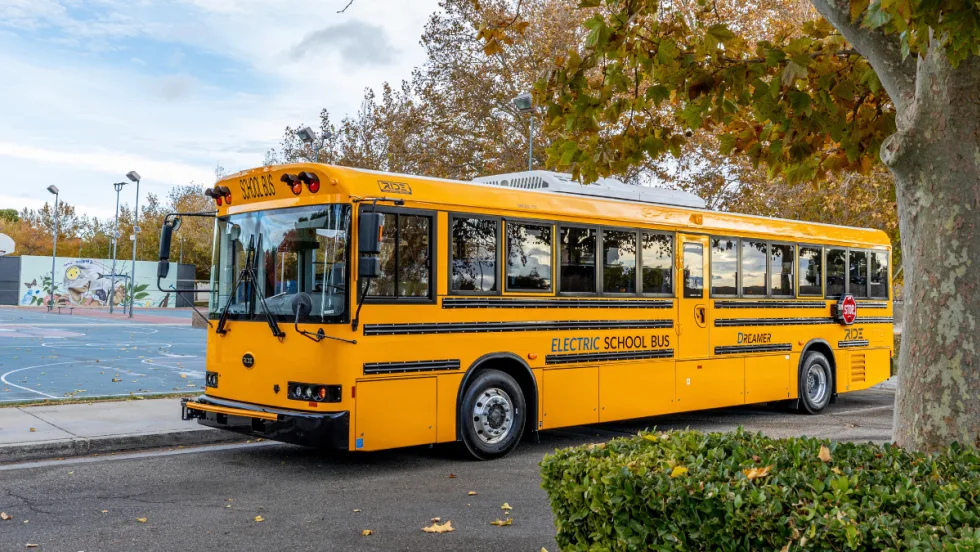
The Secret Life of an Electric School Bus Battery
Batteries change throughout years of daily routes, but degradation doesn’t necessarily mean the end. Here’s what operators should know about performance, safety, and second life.
Read More →
CALSTART and Forth Combine to Form Catalyst Mobility
The new name represents a renewed vision for the nonprofit focused on advancing clean, equitable, and affordable transportation solutions that move people and goods.
Read More →
Alt-Fuel Moves: New Buses, Charging Hubs & Real-World EV Testing
Propane and electric school bus deployments continue to grow as districts add new vehicles, expand charging infrastructure, and gather more real-world operating data.
Read More →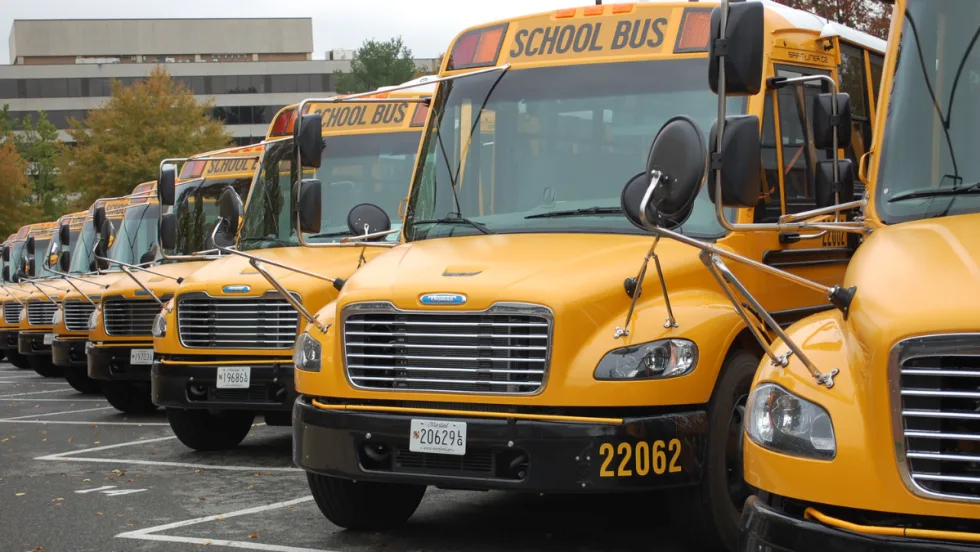
Fewer Electric School Bus Models Reshape the U.S. Market
WRI’s latest buyer’s guide points to a consolidating electric school bus market, but fewer options may reflect a maturing industry rather than fewer meaningful choices for school bus operators.
Read More →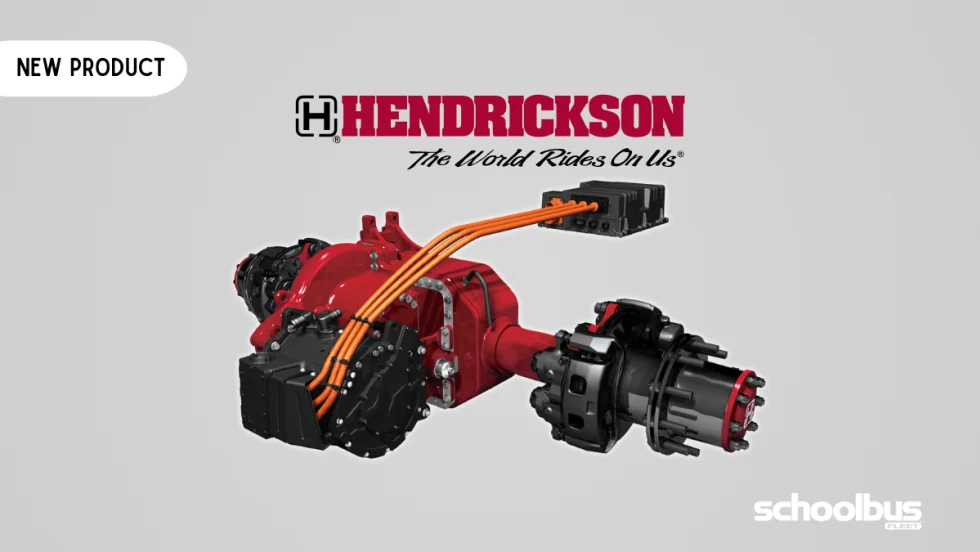
Hendrickson, Driventic Introduce New Electric Powertrain for School Buses
ELECTRAAX, the electrified, lightweight drive axle offers integrated ePowertrain efficiency and modular flexibility for Class 6–7 school bus use.
Read More →
The Mobility House Joins PowerFlex in Fleet Electrification Deal
The acquisition combines intelligent charging software, bidirectional charging expertise, and fleet electrification services to support the growing adoption of electric school buses across North America.
Read More →
Alt-Fuel Moves: Electric School Bus Investments Hit the Road
See which districts across the U.S. are putting electric school buses into service, expanding charging infrastructure, and planning the next phase of fleet electrification.
Read More →
With Fuel Volatility Ahead, School Districts Turn to Propane
While diesel prices peaked above $5 this spring, districts with propane autogas-powered fleets paid under $2 per gallon, according to PERC.
Read More →
EPA Unveils Proposed Changes to 2027 Heavy-Duty Engine Rules
The federal agency has proposed changes to next year’s targets that would eliminate DEF derates, ease warranty requirements, and retain current NOx emissions standards.
Read More →