





Report: 72% of Diesel School Buses Now Use Advanced Low-Emission Engines
EPA Opens $180M DERA Funding Round for Diesel Upgrades
The 2026 Diesel Emissions Reduction Act program seeks applications from eligible organizations to accelerate the retirement of legacy diesel vehicles.
September 25, 2026
The EPA has opened approximately $180 million in new DERA funding, with school districts once again eligible to seek funds to replace qualifying older diesel school buses.
Credit:
School Bus Fleet
3 min to read
- The EPA is offering $180 million in funding through the Diesel Emissions Reduction Act program for 2026.
- The program invites eligible organizations to apply for funds aimed at reducing diesel emissions.
- The initiative focuses on accelerating the retirement of older diesel vehicles.
*Summarized by AI
This week, the U.S. Environmental Protection Agency (EPA) opened up approximately $180 million under the Diesel Emissions Reduction Act (DERA) Program to incentivize eligible entities to accelerate the upgrade or retirement of the nation’s legacy diesel engine fleet.
The agency said that it expects between four and 12 awards per EPA region will be made. Awards funded under this opportunity are expected to have a two- to four-year project period.
Who and What Qualifies for EPA DERA Funding?
Eligible organizations include regional, state, local, or tribal agencies that have jurisdiction over transportation or air quality, as well as nonprofits that represent or provide pollution reduction or educational services to people or organizations that own or operate diesel fleets or promotes transportation and air quality.
To qualify, the eligible entities must plan to retrofit or replace existing diesel engines, vehicles, and equipment with certified engine configurations and verified retrofit and idle reduction technologies. Funds may also be used to reduce long-duration idling using verified idle-reduction technology with certain vehicles or equipment described above.
Eligible vehicles include buses and class 5 through class 8 heavy-duty highway vehicles.
That means school districts can once again seek DERA funding to replace eligible older diesel school buses.
How to Apply in 2026
Applications for 2026 DERA funding must detail projects that meet program eligibility requirements. Applications must be submitted electronically to the EPA through grants.gov by Friday, Jan. 22, 2027, at 11:59 p.m. ET.
For more information, visit the EPA's DERA webpage online here.
How Has DERA Changed?
The DERA program was created in 2008 through Congress-appropriated funding under the Energy Policy Act of 2005. In the first year of the DERA program, EPA awarded $49.2 million for diesel emission reduction programs across the country.
Despite the program's popularity, it's been on the chopping block more than once for proposed cuts.
In its most recent round in fiscal years 2022-2023, more than 60 school buses were replaced through 12 grants totaling nearly $125 million for schools in Hawaii, North Carolina, Missouri, Utah, Nebraska, Massachusetts, Iowa, Colorado, and California.
At last year's NASDPTS conference, School Bus Fleet reported that the EPA's Christine Koester provided a program update, saying that DERA is the agency's most popular program and that despite it being quiet in recent years, it was working toward a new opportunity for 2026.
Now, the agency said that after an extensive review, it revamped DERA requirements "to ensure alignment with the administration’s priorities, improve the quality of projects funded, expand the availability of technology choices, and respond to stakeholder requests for a simplified program structure."
Reactions to DERA's Reauthorization
After the House Energy and Commerce Committee passed H.R. 2140, the Diesel Emissions Reduction Act (DERA) of 2025, the Engine Technology Forum praised the unanimous vote.
“We recognize and thank Representatives Matsui (D-CA) and Langworthy (R-NY) for their leadership in sponsoring the legislation, and all the House Energy and Commerce Committee members who supported it,” said Allen Schaeffer, executive director of Engine Technology Forum.
“DERA has been a bipartisan success story from the very beginning because of its structure and competitive process, successful implementation, ongoing need, and continued funding support. As outlined in the U.S. Environmental Protection Agency’s (EPA) Sixth Report to Congress, it’s a program that has upgraded a wide range of technologies across the country, from marine and locomotive engines, port drayage trucks, and school buses to fire trucks and industrial stationary generators in Tribal communities.”
More Alternative Fuels
Bipartisan Bill Seeks to Extend Clean School Bus Program Through 2031
The proposed legislation would renew federal support for cleaner school buses as districts navigate funding uncertainty, rising fuel and infrastructure costs, and fleet replacement needs.
Read More →
Alt-Fuel Moves: Electric Bus Rollouts, Bidirectional Charging & Propane Growth
See which fleets are adding electric and propane school buses as districts and operators invest in charging infrastructure, bidirectional technology, and alternative-fuel expansion.
Read More →
Nobody Told Diesel Prices They Were Supposed to Come Down
With diesel prices surging, school bus fleets have new reason to stress-test fuel costs, consider diversification, and calculate what each route really costs to operate.
Read More →
Why Gasoline School Buses Are Making a Comeback
Gasoline is gaining ground in full-size school buses. See how today’s options stack up against diesel on cost, maintenance, emissions, performance, and more.
Read More →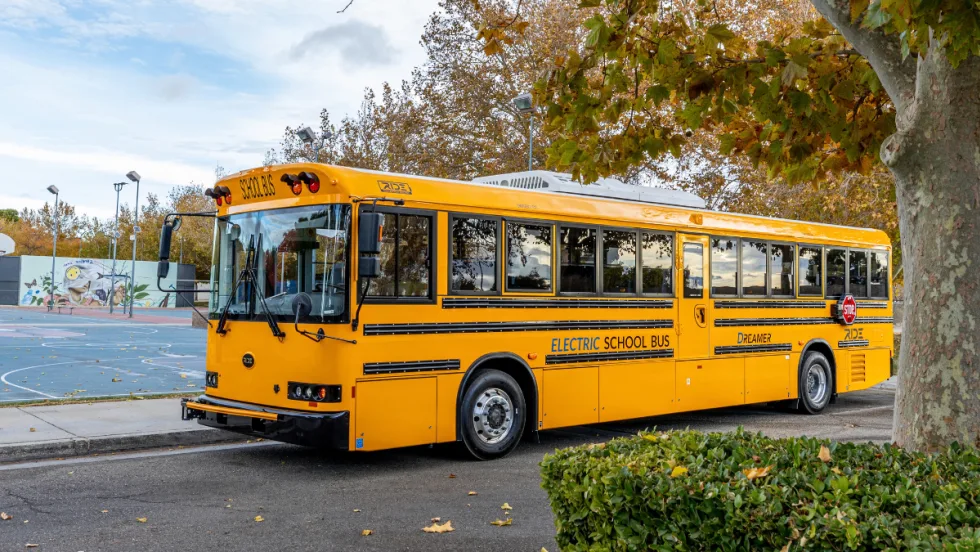
The Secret Life of an Electric School Bus Battery
Batteries change throughout years of daily routes, but degradation doesn’t necessarily mean the end. Here’s what operators should know about performance, safety, and second life.
Read More →
CALSTART and Forth Combine to Form Catalyst Mobility
The new name represents a renewed vision for the nonprofit focused on advancing clean, equitable, and affordable transportation solutions that move people and goods.
Read More →
Alt-Fuel Moves: New Buses, Charging Hubs & Real-World EV Testing
Propane and electric school bus deployments continue to grow as districts add new vehicles, expand charging infrastructure, and gather more real-world operating data.
Read More →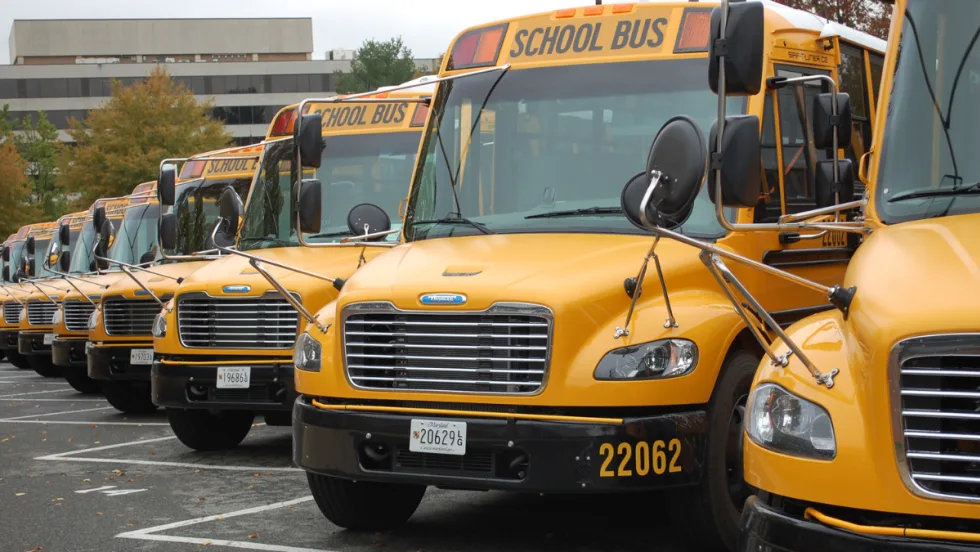
Fewer Electric School Bus Models Reshape the U.S. Market
WRI’s latest buyer’s guide points to a consolidating electric school bus market, but fewer options may reflect a maturing industry rather than fewer meaningful choices for school bus operators.
Read More →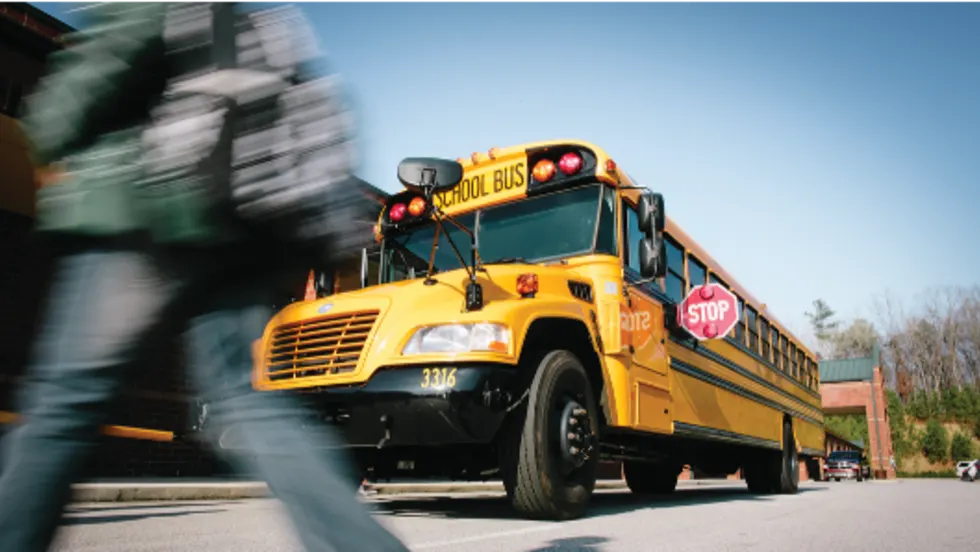
The Fuel Budget You Can Actually Predict: How Propane Autogas Keeps Money in the Classroom
Learn how propane autogas helps school districts manage fuel costs with predictable pricing, lower maintenance, and reduced emissions from former transportation director Joel Stutheit.
Read More →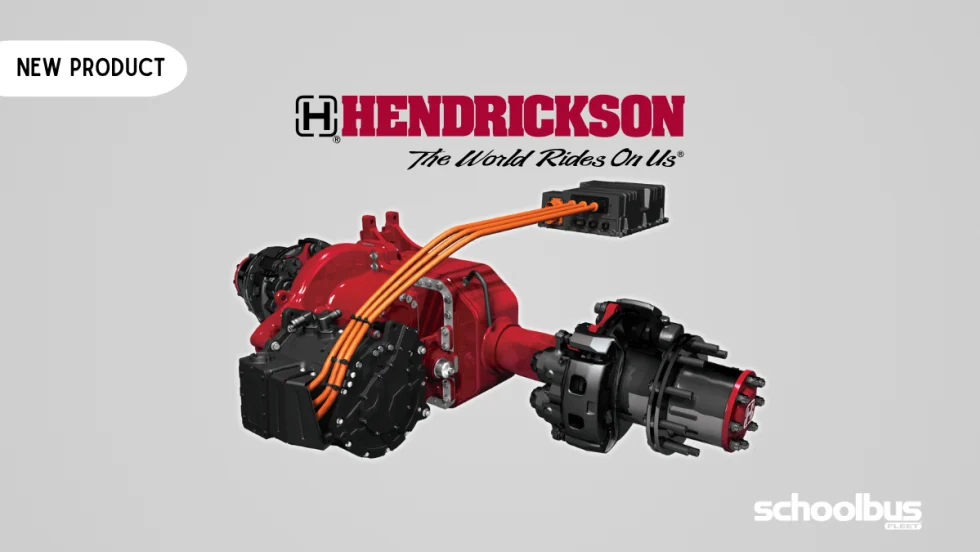
Hendrickson, Driventic Introduce New Electric Powertrain for School Buses
ELECTRAAX, the electrified, lightweight drive axle offers integrated ePowertrain efficiency and modular flexibility for Class 6–7 school bus use.
Read More →