




The Secret Life of an Electric School Bus Battery
Batteries change throughout years of daily routes, but degradation doesn’t necessarily mean the end. Here’s what operators should know about performance, safety, and second life.

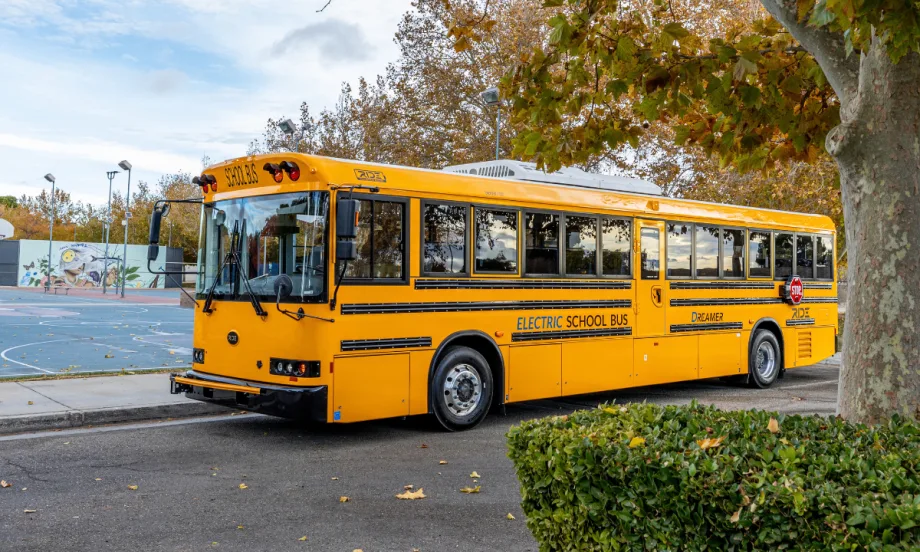
RIDE’s Dreamer is part of a new generation of school buses built around battery-electric technology.
RIDE
- Electric school bus batteries experience natural changes and degradation over years of service.
- The degradation of these batteries does not necessarily signal the end of their usefulness.
- Knowledge about performance, safety, and potential for second life is crucial for operators managing these batteries.
*Summarized by AI
Every school bus must be ready when the first route of the morning rolls around. With an electric school bus, some of that preparation begins hours earlier while the bus is still parked in the yard.
The battery charges, temperatures are managed, and the bus may precondition while it’s still plugged in, using energy from the charging station to heat or cool its systems to an optimal temperature before it rolls out for the day.
Once it leaves the yard, the routine looks familiar. There are students to pick up, traffic to navigate, and schedules to keep. Behind the scenes, though, the battery is constantly responding to conditions that can change from one route to the next. Cold weather, hills, passenger loads, HVAC use, and even driving habits can affect how much energy the bus uses and how far it can travel.
Those day-to-day realities are only one chapter in a battery’s much longer life. Long before it powers its first route, decisions about chemistry, pack design, placement, and testing shape how it performs and stays protected over years of service. Throughout that time, battery management and thermal systems monitor its condition, while technicians and operators learn a new set of maintenance and safety considerations.
Eventually, the bus will run its last route, but its battery may still have work left to do. Depending on its condition, it could find a second life storing energy before its materials ultimately head for recycling.
Following that battery from its earliest days through its final use offers a clearer picture of what electric school bus ownership really involves and what transportation teams should know as more of these buses settle into everyday service.
Building a Battery for the School Bus Duty Cycle
Electric school buses currently use different versions of lithium-ion battery technology, with lithium iron phosphate (LFP) and nickel manganese cobalt (NMC) among the chemistries on the market. Still, chemistry is only one part of battery design.
Cells must be arranged into modules, modules incorporated into packs, and the resulting system integrated into a vehicle that will experience vibration, potholes, changing temperatures, frequent starts and stops, and years of repeated charging.
Proterra, whose batteries are used in commercial vehicle applications including school buses like Thomas Built Buses’ Type C and D buses, described the process as building from the cell level up. Its modules combine cells with electrical connections and sensors that monitor factors such as voltage and temperature.
Those modules are then incorporated into a pack along with its enclosure, high-voltage connections, cooling system, and battery-management components. The company subjects its batteries to electrical, thermal, and mechanical tests, including vibration, impact, and crush testing.
At RIDE, the battery is designed alongside the rest of the vehicle rather than sourced as an independent component. The company’s school buses use LFP chemistry, including BYD’s Blade Battery architecture.
“One of RIDE’s key advantages is vertical integration,” a RIDE spokesperson said. “As the U.S. spinoff of BYD, we have expertise across the battery supply chain, from battery cells and pack design to the electric powertrain and vehicle controls. This allows us to design the battery as part of the complete vehicle rather than as a component added later.”
RIDE said its batteries undergo impact, collision, short-circuit, puncture, and fire testing, while its Blade Battery technology has also been evaluated through nail-penetration, crushing, high-temperature, overcharging, and saltwater-immersion tests. The company backs its school bus batteries with a 12-year warranty.
Battery placement is another consideration. Brad Beauchamp, EV product segment leader for Blue Bird, said the company places its Accelera batteries in a specific location on its Type C and D buses.
“We put the batteries between the frame rails and midship in the bus, so it’s a very safe position,” Beauchamp said. “They’re low — in the frame itself — so they actually add some stability to the bus, center of gravity-wise.”
Blue Bird’s battery technology has also evolved alongside its electric school bus program. Beauchamp said the company has had multiple generations of batteries in its Type A, C, and D buses and is gradually moving from NMC toward LFP technology in parts of its portfolio.
The differences between chemistries matter because each involves trade-offs in energy density, thermal behavior, cost, and cycle life, which tackles the most common question asked by fleets today: “How will that battery perform on a real school bus route?”
When the Battery Meets the Route
A range figure on a specification sheet is a starting point, not necessarily the number a transportation department will see every day.
Temperature, terrain, passenger load, speed, HVAC use, and driver behavior can all affect how much energy a bus consumes. RIDE, for example, lists approximate ranges of 120 miles for its Achiever, up to 170 miles for its Creator, and 155 miles for its Dreamer, depending on configuration.
The company said the more useful consideration is whether the bus has sufficient usable range to complete its assigned route reliably while maintaining an operating reserve. First Student is familiar with that distinction.
Joshua Roberts, First Student’s lead IT application engineer for vehicle electrification, described real-world range as “a bit of a mixed bag.”
“In our experience, range is wildly dependent on a multitude of factors, like the geography of the route, the weather, rural versus city driving, and the habits of the drivers themselves,” Roberts said. “All play a role in what we actually see in daily operations.”
Still, those variables have not made range anxiety a routine operating problem for the company.
“For the most part, we have seen great success operating electric school buses in day-to-day service,” Roberts said. “I think many people assume range anxiety is a daily concern for operators, but we have found that proper route planning paired with right-sized charging infrastructure dissolves those concerns pretty quickly.”
The exceptions have offered their own lessons. Roberts said First Student experienced battery-related operational hurdles involving a combination of extreme cold, inefficient charging infrastructure, and poor battery thermal management. Its OEM partners addressed those issues, he said, and the company has not experienced them since.
That relationship between the battery, charger, weather, and route illustrates why an electric bus battery cannot be viewed as an energy-storage box. Its battery management system, or BMS, is constantly working behind the scenes.
Beauchamp compared part of its role to a thermostat, although the system does considerably more. During charging, the BMS communicates with the charger and manages energy flowing into the battery. When a bus is preconditioned before departure, the system can help manage energy while bringing the battery and passenger compartment to the appropriate temperature. Once the bus is moving, it monitors energy going to the propulsion motor, HVAC, and other accessories.
RIDE’s system similarly monitors temperature, state of charge, individual cell voltage, and overall system performance. Thermal management and vehicle controls help keep the battery within its operating parameters, while regenerative braking can return some of the energy normally lost during braking back to the battery.
Regenerative braking systems are often known for squeezing another mile from a charge, but it’s important to note that they also protect battery health.
What Does Degradation Look Like in the Real World?
Every lithium-ion battery loses some capacity with age and use. For school transportation departments accustomed to tracking engine hours, oil changes, and mechanical wear, battery health introduces a different measurement of aging.
The key question is whether that degradation becomes operationally significant during the bus’s useful life.
For First Student, it hasn’t yet.
“So far, degradation has not been an issue that impacts our daily operations,” Roberts said. “We have trained in-house maintenance personnel who have already replaced EV school bus batteries on some of our vehicles, which has given us the opportunity to stay proactive and avoid interruptions to service.”
Proterra similarly designs its packs with serviceability in mind. The company said fuses, contactors, controllers, and pre-charge circuitry can be accessed inside of their field-accessible ancillary bay without removing the battery from the vehicle, which can reduce downtime and help keep a pack in service rather than replacing it prematurely.
Battery monitoring has changed other parts of fleet management, too. Roberts said the data influences vehicle-to-route assignments, emergency charging planning, and even how new electric bus sites are designed.
There is also reason to be cautious about assuming a battery’s useful life will be short simply because its capacity gradually declines.
Commercial battery manufacturers design around years of cycling and calendar aging. Proterra, for example, uses both calendar testing and cycle aging testing to study how cells degrade while sitting and through repeated charge-discharge cycles.
Beauchamp said Blue Bird typically discusses a 10- to 12-year period before modules might require repair or replacement, while noting that batteries can potentially last longer. However, a battery reaching the point where it no longer meets a school bus’s demanding needs does not necessarily mean the battery is “dead.”
But before it gets to that point, fleets have to manage fire, which has become one of the greatest concerns with electric buses.
Designing Around Thermal Runaway
Lithium-ion batteries store substantial energy, and under certain failure conditions, a cell can enter thermal runaway, a self-sustaining process in which heat triggers reactions that generate more heat. That possibility has made battery fires one of the most visible concerns surrounding electric vehicles.
Manufacturers address the risk through multiple layers rather than a single safeguard. At RIDE, that starts with LFP chemistry, which the company selected in part for its thermal stability. Structural protection, battery monitoring, and electrical safety systems add additional layers.
Proterra takes a similar layered approach. Its battery packs incorporate active systems such as liquid cooling and battery management software alongside passive protections intended to isolate problems. The company says its propagation-resistant design is intended to contain a heat-related event at the individual cell rather than allowing it to spread to neighboring cells.
At Blue Bird, Beauchamp described the battery management system as the “key gatekeeper” monitoring factors including temperature, amperage, and voltage. If the system identifies conditions that could lead to a thermal event, it can respond and provide a warning before the situation progresses.
The engineering, however, does not eliminate the need for training. First Student trains technicians to handle high-voltage charger and battery incidents, while drivers and location technicians learn correct EV and charger operation, how to recognize signs of a thermal event, and what to do if one occurs.
In one incident, Roberts said a First Student driver detected a burning smell and evacuated all children from a bus in about 30 seconds before the vehicle ignited. Investigators later determined the fire was unrelated to the battery.
First Student’s approach is to assume a battery could be involved until responders establish otherwise. In addition to the company’s personnel training, First Student has also responded to an actual battery thermal runaway.
In these events, Roberts said it’s important to note “how a battery can discharge large amounts of energy through the vehicle’s chassis for days afterward."
That is why an EV incident can’t be treated as the electric equivalent of an engine fire. Emergency procedures are vehicle-specific. RIDE, for example, provides a First Responder Emergency Guide that identifies high-voltage components, emergency access points, and shutdown procedures.
The company’s guidance prioritizes securing the scene, evacuating occupants when needed, and involving trained emergency responders. Its buses also provide multiple ways to de-energize the vehicle and isolate the high-voltage system.
In school transportation, that means the safety conversation continues to extend beyond the bus. Drivers, technicians, administrators, and local first responders all need to know what equipment operates in their communities and where to find the manufacturer’s emergency guidance.
When the Bus No Longer Needs Its Battery
Eventually, every electric school bus battery will leave transportation service. What happens next may be one of the least understood parts of the electric school bus life cycle.
A battery no longer suited to moving a full-size bus may still have considerable energy-storage capacity. Instead of being dismantled immediately, it could move into a “second life” in a less demanding application.
“A battery reaching the end of its useful life in a school bus does not necessarily mean it can no longer be used,” RIDE said. Depending on the battery’s condition, the company said, it may be suitable for stationary energy storage. Once reuse is no longer viable, recoverable materials can be sent through recycling.
An electric school bus battery’s “end of life” in a bus can still leave considerable capacity behind. Proterra said batteries moving into second-life applications have historically retained about 70% of their original capacity. For a school, the company said, that could mean repurposing a battery for on-site solar energy storage or backup power.
Blue Bird is also working toward pathways for second life use and recycling.
In a scenario where a bus is damaged beyond repair, Beauchamp said the battery would first need evaluation. If appropriate, it could be decommissioned, properly packaged, and transported to a second-life facility. Potential stationary applications include backup power for communications infrastructure or hospitals. If the complete pack is not suitable, individual modules or cells could potentially be evaluated for reuse.
Importantly, second life does not mean abandoning the systems that protected the battery on the bus. Beauchamp said battery management remains necessary to maintain appropriate temperatures and operating conditions, even when the battery is placed in a less strenuous stationary application.
If reuse isn’t appropriate, recycling becomes the next pathway, allowing recoverable battery materials to be processed rather than treating the entire pack as waste. Proterra, for example, has partnered with Redwood Materials to recover materials including lithium, cobalt, and copper from end-of-life battery packs.
The development of those systems is still evolving. Beauchamp noted that regulations are developing at different rates across jurisdictions and that the industry is still working through standards and partnerships for second life and recycling programs.
For school districts purchasing buses expected to remain in service for a decade or longer, that makes end-of-life planning a question worth asking at procurement.
Who evaluates the battery? Who is responsible for transportation? Does the OEM or battery manufacturer have an established second life or recycling partner? What happens if a battery is damaged in a collision before the bus reaches normal retirement?
The answers may become more important as today’s growing electric school bus fleet ages.
The Next Battery May Look Different
The batteries installed in the next generation of electric school buses will almost certainly improve upon those entering service today.
RIDE expects advances in energy density, charging speed, cold weather performance, and battery management technology over the next five years, along with better health monitoring that gives operators more insight into battery condition, remaining life, and energy consumption.
Beauchamp sees a similar progression. Blue Bird is watching technologies ranging from LFP and sodium-based batteries to semi-solid-state and eventually solid-state designs. Greater energy density could store more energy with less battery weight, while faster charging could reduce one of today’s fundamental differences between an electric bus and its combustion-powered counterpart.
“Today, the tank is still too small,” Beauchamp said of current school bus batteries, pointing to the relationship between capacity, battery weight, and charging time.
For Roberts, one desired advancement is not confined to the battery itself. He wants to see continued improvement in vehicle-to-grid technology. First Student is working with vehicle and charging manufacturers and organizations including Idaho National Laboratory on charge management software, firmware, and interoperability aimed at making more V2G deployments successful.
That could ultimately change the battery’s role yet again. Instead of simply storing enough energy to complete morning and afternoon routes, an electric school bus battery can become an energy asset while the bus is parked, resulting in charging when electricity is advantageous and, where technology and utility programs permit, returning energy to the grid when it is needed.
Then, after years of carrying students, that same battery may move into stationary storage before recycling recovers its materials.
That being said, the most useful way to understand an electric bus battery is not by one range number, one chemistry, or one warranty. It’s a system with its own life cycle.
More Alternative Fuels
EPA Opens $180M DERA Funding Round for Diesel Upgrades
The 2026 Diesel Emissions Reduction Act program seeks applications from eligible organizations to accelerate the retirement of legacy diesel vehicles.
Read More →
CALSTART and Forth Combine to Form Catalyst Mobility
The new name represents a renewed vision for the nonprofit focused on advancing clean, equitable, and affordable transportation solutions that move people and goods.
Read More →
Alt-Fuel Moves: New Buses, Charging Hubs & Real-World EV Testing
Propane and electric school bus deployments continue to grow as districts add new vehicles, expand charging infrastructure, and gather more real-world operating data.
Read More →
Fewer Electric School Bus Models Reshape the U.S. Market
WRI’s latest buyer’s guide points to a consolidating electric school bus market, but fewer options may reflect a maturing industry rather than fewer meaningful choices for school bus operators.
Read More →
The Fuel Budget You Can Actually Predict: How Propane Autogas Keeps Money in the Classroom
Learn how propane autogas helps school districts manage fuel costs with predictable pricing, lower maintenance, and reduced emissions from former transportation director Joel Stutheit.
Read More →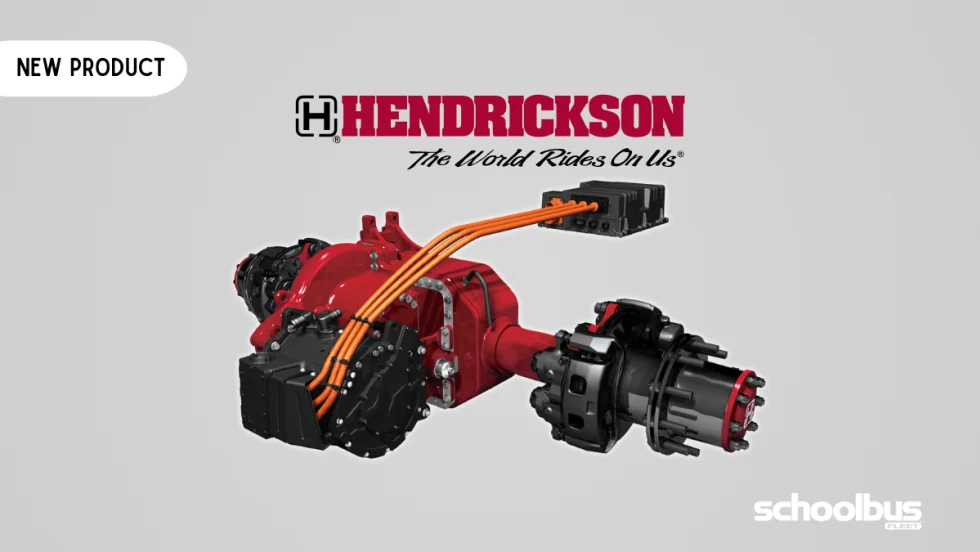
Hendrickson, Driventic Introduce New Electric Powertrain for School Buses
ELECTRAAX, the electrified, lightweight drive axle offers integrated ePowertrain efficiency and modular flexibility for Class 6–7 school bus use.
Read More →
The Mobility House Joins PowerFlex in Fleet Electrification Deal
The acquisition combines intelligent charging software, bidirectional charging expertise, and fleet electrification services to support the growing adoption of electric school buses across North America.
Read More →
Alt-Fuel Moves: Electric School Bus Investments Hit the Road
See which districts across the U.S. are putting electric school buses into service, expanding charging infrastructure, and planning the next phase of fleet electrification.
Read More →
With Fuel Volatility Ahead, School Districts Turn to Propane
While diesel prices peaked above $5 this spring, districts with propane autogas-powered fleets paid under $2 per gallon, according to PERC.
Read More →
EPA Unveils Proposed Changes to 2027 Heavy-Duty Engine Rules
The federal agency has proposed changes to next year’s targets that would eliminate DEF derates, ease warranty requirements, and retain current NOx emissions standards.
Read More →