





Related: Key Trends Shaping The Future of School Transportation: ACT Expo Analysis
You're On Your Own to Pick a Drivetrain [Op-Ed]
After years of federal pressure toward electric school buses, districts are suddenly being told to choose their own path. Let’s explore the risks, realities, and politics behind school bus drivetrain decisions.
May 20, 2026
School districts must rethink long-term fleet strategies as the EPA’s revised Clean School Bus Program expands eligibility for funding beyond electric buses.
Credit:
Josh Sorenson/School Bus Fleet
4 min to read
Growing up in East Texas, most of the big decisions got made for me. And, well, that was fine. I didn't have to think too hard, and for a while it felt like someone had the whole thing figured out. Then I got old enough to realize that when those decisions went sideways, I was still the one left sorting it out.
School district transportation directors are having that moment right now.
For years, while EVs have been in their growing years, governments have felt compelled to make drivetrain decisions. As if you didn’t know enough yourself. And, in an attempt to clearly protect the EV industry investments, EPA's Clean School Bus Program showed it had a preference with $5 billion of incentives. The 2022 and 2023 rounds went to zero-emission buses almost exclusively. So, for districts that wanted federal money, they had to start planning around EVs with vendors, charging infrastructure, fleet transition timelines, and the whole architecture. And, it didn’t matter if it wouldn’t work for them.
Then the 2024 rebate round was cancelled. More than $900 million in applications, no awards. The EPA, under the new administration, paused everything and started over.
I cover fleet strategy and OEM decisions for a living, and I watched districts scramble to trash or rebuild everything they had built. Some had already signed with manufacturers and hired people to run the program. One of the biggest names in electric school buses, Lion Electric, had received roughly $160 million in Clean School Bus Program funding by the time it filed for bankruptcy protection in late 2024. So, many of those buses were never delivered. Districts that had counted on them were left holding contracts, half-built charging infrastructure, and a question nobody had prepared them to answer.
And the 2026 revamp made the question harder.
When February came around, the EPA announced a restructured program that has approximately $2.3 billion to deploy. The big change is that eligible fuel types now include compressed natural gas, liquefied natural gas, propane, hydrogen, and advanced biofuels alongside electric. And, to help out, they removed the zero-emission mandate as a requirement. The Bipartisan Infrastructure Law still directs at least 50% of the funding toward zero-emission buses, but the other half is open. The best part is that districts have five fuel types to evaluate which one fits their routes, their infrastructure, their grid capacity, or their maintenance crews.
So, the final decision is left up to the transportation director and/or district leaders. And that decision will be different in Tuscaloosa compared to Seattle because there is no clear one-size-fits-all answer. The truth is that electric makes sense for shorter, predictable urban routes with available charging infrastructure and utility cooperation. If your district already runs propane and CNG, then it will be cheaper upfront and easier to maintain what you currently have. For everywhere except a few spots in California, hydrogen is still scarce and expensive at scale. And, if you bought diesels last year, biofuels are an excellent option.
The tradeoff, positive or negative, is that you don’t have the decision made for you. I suspect that many districts will appreciate that.
I make decisions for my 2-year-old daughter with varying degrees of success. A while back, I gave her eggs. Best available protein, solid nutritional logic, everything I'd read pointed the same direction. I didn't know she was allergic. Figured that out fast.
In many ways, the EPA was just as certain about electric school buses. The districts that built their fleet plans around that certainty are still sorting out what they actually know versus what they were told. For sure, the $2.3 billion is still there and the window to apply is open. But nobody is going to tell you which drivetrain is right for your district, your routes, your budget, and your mechanics.
The federal government handed the decision back to you. Honestly, it was always yours to make.
This article was authored and edited according to School Bus Fleet editorial standards and style. Opinions expressed do not necessarily reflect that of SBF or Bobit Business Media.
Subscribe to Our Newsletter
More Alternative Fuels
Bipartisan Bill Seeks to Extend Clean School Bus Program Through 2031
The proposed legislation would renew federal support for cleaner school buses as districts navigate funding uncertainty, rising fuel and infrastructure costs, and fleet replacement needs.
Read More →
Alt-Fuel Moves: Electric Bus Rollouts, Bidirectional Charging & Propane Growth
See which fleets are adding electric and propane school buses as districts and operators invest in charging infrastructure, bidirectional technology, and alternative-fuel expansion.
Read More →
Nobody Told Diesel Prices They Were Supposed to Come Down
With diesel prices surging, school bus fleets have new reason to stress-test fuel costs, consider diversification, and calculate what each route really costs to operate.
Read More →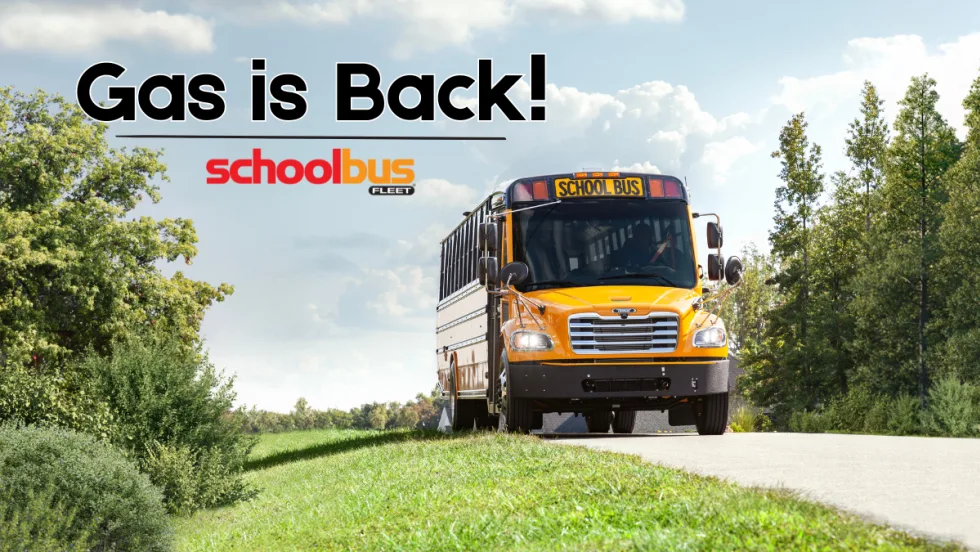
Why Gasoline School Buses Are Making a Comeback
Gasoline is gaining ground in full-size school buses. See how today’s options stack up against diesel on cost, maintenance, emissions, performance, and more.
Read More →
EPA Opens $180M DERA Funding Round for Diesel Upgrades
The 2026 Diesel Emissions Reduction Act program seeks applications from eligible organizations to accelerate the retirement of legacy diesel vehicles.
Read More →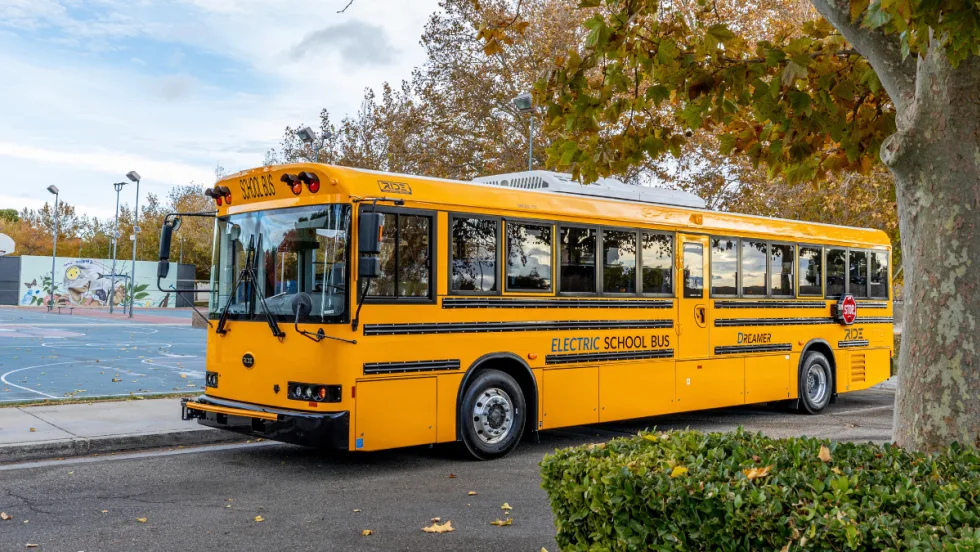
The Secret Life of an Electric School Bus Battery
Batteries change throughout years of daily routes, but degradation doesn’t necessarily mean the end. Here’s what operators should know about performance, safety, and second life.
Read More →
CALSTART and Forth Combine to Form Catalyst Mobility
The new name represents a renewed vision for the nonprofit focused on advancing clean, equitable, and affordable transportation solutions that move people and goods.
Read More →
Alt-Fuel Moves: New Buses, Charging Hubs & Real-World EV Testing
Propane and electric school bus deployments continue to grow as districts add new vehicles, expand charging infrastructure, and gather more real-world operating data.
Read More →
Fewer Electric School Bus Models Reshape the U.S. Market
WRI’s latest buyer’s guide points to a consolidating electric school bus market, but fewer options may reflect a maturing industry rather than fewer meaningful choices for school bus operators.
Read More →
The Fuel Budget You Can Actually Predict: How Propane Autogas Keeps Money in the Classroom
Learn how propane autogas helps school districts manage fuel costs with predictable pricing, lower maintenance, and reduced emissions from former transportation director Joel Stutheit.
Read More →