




Check Out: 10 Things Mechanics Need to Know About School Bus Transmissions
Enhancing School Transportation with Biodiesel: One Company’s Green Journey
Cook-Illinois Corporation, among the largest family owned and operated school-bus contractors in the U.S., has relied on biodiesel to transport children safely and affordably to and from school for more than 15 years.
by Ron Kotrba, Special to SBF
October 14, 2023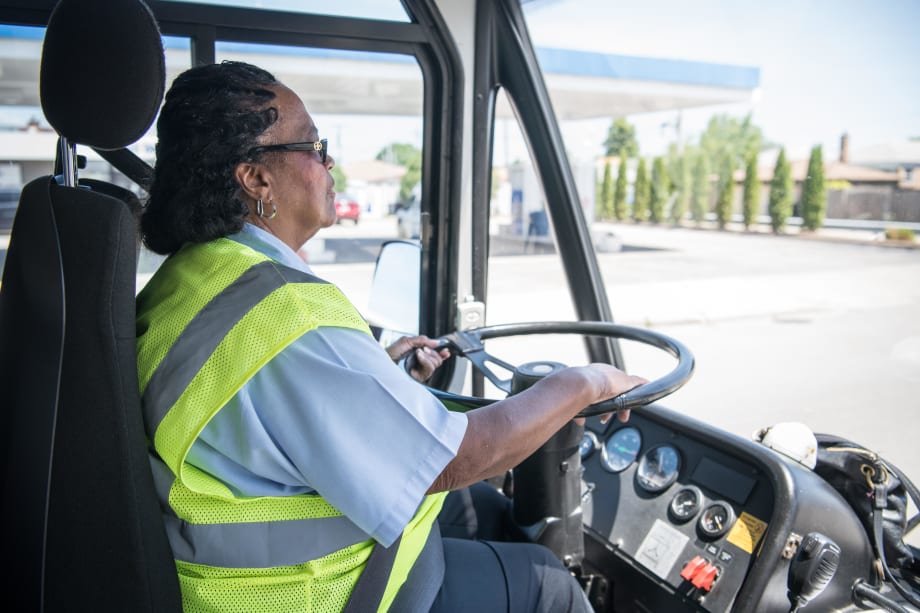
Biodiesel isn’t the first alternative fuel Cook-Illinois Corporation has explored. In the 1970s and ’80s, the company experimented with propane and compressed natural gas (CNG) to fuel its school buses.
Photo: Cook-Illinois Corporation
9 min to read
For more than six decades, Cook-Illinois Corporation has been entrusted with the crucial task of transporting children to and from school.
And for more than 15 years, this family-owned and operated school-bus contractor, among the largest in the nation, has relied on clean-burning biodiesel fuel to ensure the dependable and secure transportation of students while promoting a cleaner environment both within and outside its buses.
Today, 60% of the children transported by Cook-Illinois Corporation’s 2,200 buses under its 18 subsidiaries have special needs, including physical disabilities, learning disorders, autism, and “everything in between,” says John Benish Jr., president and chief operating officer. His late father, John Benish Sr., founded the company 65 years ago.
Since he was a teen, Benish has been immersed in the family business. He came into his own years later with groundbreaking innovations like pioneering Cook-Illinois Corporation’s moves into green transportation. Under Benish’s leadership, the company was the first in Illinois to voluntarily switch an entire bus fleet to biodiesel fuel.
Biodiesel is a low-carbon renewable fuel made from organic materials, wastes and residues like used cooking oil, animal fats, and excess soybean oil. It is six times less toxic than table salt and, in its pure form, can cut CO2 emissions by more than 85% while reducing carcinogenic particulate matter—black soot—by nearly 50%, in addition to lowering many other tailpipe emissions.
Biodiesel isn’t the first alternative fuel Cook-Illinois Corporation has explored. In the 1970s and ’80s, the company experimented with propane and compressed natural gas (CNG) to fuel its school buses. It was also the first to pilot diesel hybrid buses as well as the first to operate electric buses in Illinois.
“When we started using biodiesel [in the 2000s], we wanted to improve the environment and atmosphere—in and out of the bus,” says Benish, adding that the company has begun the 16th year running its diesel buses, which comprise 65% of its overall fleet, on biodiesel. All of Cook-Illinois Corporation’s diesel buses use some amount of biodiesel, whether that’s 11% (B11), 20% (B20) or, in some cases, 100% (B100).
Benish first heard about biodiesel in 2003-2004 when a salesperson supplying diesel fuel to Cook-Illinois Corporation talked with him about the product. Eventually, two of the company’s subsidiaries—Alpha School Bus Company and Illinois School Bus Company— started trials with biodiesel blends.
“Slowly but surely, we started rolling it out to our different bus companies,” Benish says. “It works out great. The state of Illinois is one of the largest producers of soybeans in the country, so it helps farmers—and it’s renewable energy. We like it a lot. Biodiesel gets you going green, and it improves the environment in and out of the bus.”
Unlike other alternative-vehicle technologies, biodiesel blends like B20 are considered “drop-in fuels,” meaning no changes to engines or fuel distribution and storage infrastructure are required to accommodate it.
“To me, when we decided to start using biodiesel, that was the nice thing,” Benish says. “We didn't have to change our existing diesel pumps or engines. One day we were using diesel fuel, and the next we were using biodiesel. The flexibility of the fuel is great. We’d be running diesel fuel anyway, so if we can run a percentage of biodiesel, we are saving that amount of fossil fuel from being produced, purchased, or brought over from a foreign country. We love that it’s renewable and helps make a big difference for farmers.”
Biodiesel helps farmers because it provides a value-added market for their products. Before biodiesel was commercialized in the United States, soybean oil piled up and its value was less than 10 cents a pound. It became a drag on overall soybean prices and hurt farmers. When biodiesel was developed in the early 1990s, this new industrial use for the veritable glut of soybean oil began consuming excess stocks and boosting prices, helping to shore up bottom lines for struggling agricultural producers.
Cook-Illinois Corporation has 11 fueling sites throughout its network and uses biodiesel at each. The company’s bus fleet logs approximately 25 million miles a year, according to Benish. On average, Cook-Illinois Corporation uses between 1.5 million and 2 million gallons of blended biodiesel fuel every year.
Elevating Biodiesel: Cutting-Edge Green Initiatives
The latest innovation in Cook-Illinois Corporation’s long history with biodiesel is a project that began three years ago—trialing 100% biodiesel in a select number of buses.
Benish says the company first got involved with the B100 project with help from Bailey Arnold, program lead for the B20 Club of Illinois, through Cook-Illinois Corporation’s membership in the B20 Club.
The B20 Club recognizes a select group of Illinois-based organizations with strong commitments to run fleets on biodiesel blends of 20% or greater. Since 2014, B20 Club members have consumed more than 88.5 million gallons of B20 and higher biodiesel blends, contributing to cleaner air and more sustainable operations throughout Illinois.
Besides the B20 Club of Illinois, the Illinois Soybean Association and Cook-Illinois Corporation, the B100 project was made possible with participation from the nation’s largest biodiesel fuel producer, Chevron Renewable Energy Group, and Optimus Technologies.
Optimus Technologies is a Pittsburgh-based clean-energy startup and manufacturer of the Vector System, an advanced fuel-system technology that can upgrade any medium- or heavy-duty diesel engine to run on 100 percent biodiesel— even in harsh Midwestern winters.
The B100 project employs Optimus Technologies’ Vector System on five Thomas Built Buses, full-size school buses manufactured in North Carolina, through Cook-Illinois Corporation’s Kickert School Bus subsidiary.
“Cook-Illinois has been an exciting project for Optimus to work on,” says Colin Huwyler, CEO of Optimus Technologies. “This was our first time installing the Vector System on school buses. Bringing cleaner air that benefits the community and the environment is part of Optimus’ core mission. Reducing emissions for school buses that primarily run in neighborhoods with children and families is paramount to improving the health and safety of these communities.”
Benish says these buses work all day every day, and the B100 project was a success. “It involved some slight modifications to the buses, but they still use the same engines,” he explains. “We are happy with the project. For us, it’s just another attempt to use more biodiesel, and we are always looking for ways to improve.”
In fact, the pilot project went so well that Cook-Illinois Corporation is in the process of adding three additional units to its B100 fleet.
Comparing Biodiesel: A Green Alternative to Electric School Buses
Benish says the Kickert School Bus location, where the B100 project is housed, uses a variety of alternative fuels. In addition to B11 and B100, the site is equipped with a propane dispenser and a charging station for the company’s two electric buses.
“It’s nice to have different fuels on one site,” Benish says. “That way, we can compare and contrast what’s working—and what’s not. Biodiesel has held up to all of those fuels. There are no major adjustments needed on the bus or fuel-supply side and no drastic changes to the engines. We can use it every day and switch back to diesel fuel if needed. I think for us, biodiesel—even B100—has been really flexible. It’s an easy product to use.”
Electric vehicles (EVs) have dominated headlines and conversations around alternative fuels recently. Benish says that although EVs likely will “be the future,” he conditions this by saying, “It will be a lot further in the future than people think. We think EVs will be the dominant vehicle 20 years from now, but in the meantime, school buses powered by fuels like biodiesel and propane are going to be needed to fill the gap.”
Benish points out that there are currently two big drawbacks with the early-stage, all-electric heavy-duty vehicles: range and expense. “We’re talking $90,000 for a new diesel-powered bus vs. $400,000 for an electric bus, plus the cost of a charging station, which is upwards of $20,000 apiece,” he says. “Even with all the incentives out there, the upfront cost of purchasing an electric school bus is still too high.”
Until the price of EVs come down and the range goes up, it will be up to alternative fuels like biodiesel—particularly B100—to significantly reduce greenhouse gas (GHG) emissions and cut harmful tailpipe emissions around and inside the bus, Benish points out.
“We can get where we want to be very efficiently and economically by using biodiesel,” he says. “It’s a quick way to get green, and to run and operate a green fleet. We use it almost every day. I wouldn’t promote a product I didn’t stand by. If you use a product long enough, you figure out real quick what works and what doesn’t. We’re a private company and I’m one of the owners. It’s my money on the line, so we wouldn’t be using biodiesel if it didn’t make sense economically. Really, if you take the grant money out, it’s a lot easier to get a good economic story with biodiesel than with electric vehicles.”
With schools now back in session, approximately half a million school buses are hitting U.S. roads once again.
“Given that 99% of the half a million school buses on the road today are powered by internal combustion engines, and the investment in these technologies is continuing, it is safe to conclude that new generations of school buses powered by internal combustion engines and cleaner renewable fuels will continue to provide safe, affordable and available pupil transportation for decades to come,” says Allen Schaeffer, executive director of the Engine Technology Forum (formerly the Diesel Technology Forum).
“Affordable,” “available,” “cleaner” and “safe” are the key words here.
“There’s nothing worse than having a group of first and second graders pulled over on the side of the road in a broken-down bus,” Benish says. “We need—the children need—a product that works, one that can be counted on. There are enough problems in this industry with weather and traffic. We need to rely on our buses to work and take the worry out of it. With so many things that could go wrong, we really don’t want to have to worry about our fuel. Biodiesel works—and it cleans up the environment.”
Cook-Illinois Corporation’s steady and long-term use of biodiesel has not gone unnoticed either. Whether it is students, parents, bus mechanics or drivers, people experience a marked difference in the air—and wear—quality of biodiesel combusted in school-bus engines.
“Mechanics notice for sure,” Benish says. “We do our own engine rebuilds and our mechanics can see a big difference—they really notice the improvement.”
When the nation transitioned to ultra-low sulfur diesel in the 2000s, this helped reduce emissions but stripped lubricity from diesel fuel. Engine components need that lubricity to reduce wear and run properly.
“When we transitioned to biodiesel, it was nice because it added all that lost lubricity back into the fuel, and it’s higher in cetane,” Benish explains. “If you’re around diesel fuel all the time, then you’re familiar with the smoke and haze. We noticed a night-and-day difference using biodiesel. We just don’t have that haze anymore. When the buses are idling and waiting for children, the drivers and the students notice a big difference.”
For school districts or private bus contractors that are hesitant to make the switch, Benish advises them to just try it for six months.
“Talk to the people who are around it all the time, the drivers and mechanics,” he says. “They’ll see an immediate difference. Then tell the story—it’s not a story, but facts—about how it’s a renewable fuel that helps farmers and cleans up the environment in and around the bus, and other pluses like improving the safety and security for students. We are not ‘trying it’ anymore. We rely on the product. We don’t have to sell it—we just tell it. Biodiesel sells itself.”
Ron Kotrba is editor and publisher of Biobased Diesel Daily.
Subscribe to Our Newsletter
More Alternative Fuels

CALSTART and Forth Combine to Form Catalyst Mobility
The new name represents a renewed vision for the nonprofit focused on advancing clean, equitable, and affordable transportation solutions that move people and goods.
Read More →
Alt-Fuel Moves: New Buses, Charging Hubs & Real-World EV Testing
Propane and electric school bus deployments continue to grow as districts add new vehicles, expand charging infrastructure, and gather more real-world operating data.
Read More →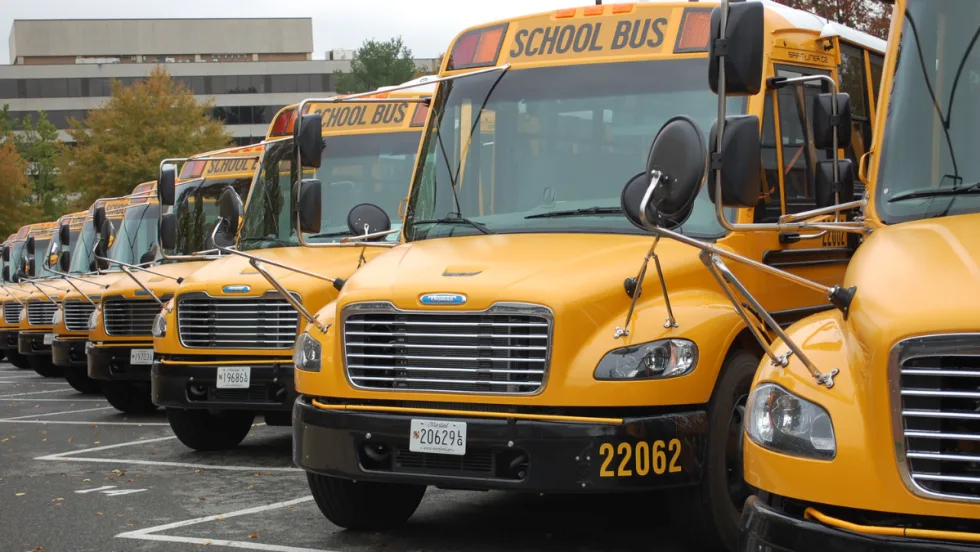
Fewer Electric School Bus Models Reshape the U.S. Market
WRI’s latest buyer’s guide points to a consolidating electric school bus market, but fewer options may reflect a maturing industry rather than fewer meaningful choices for school bus operators.
Read More →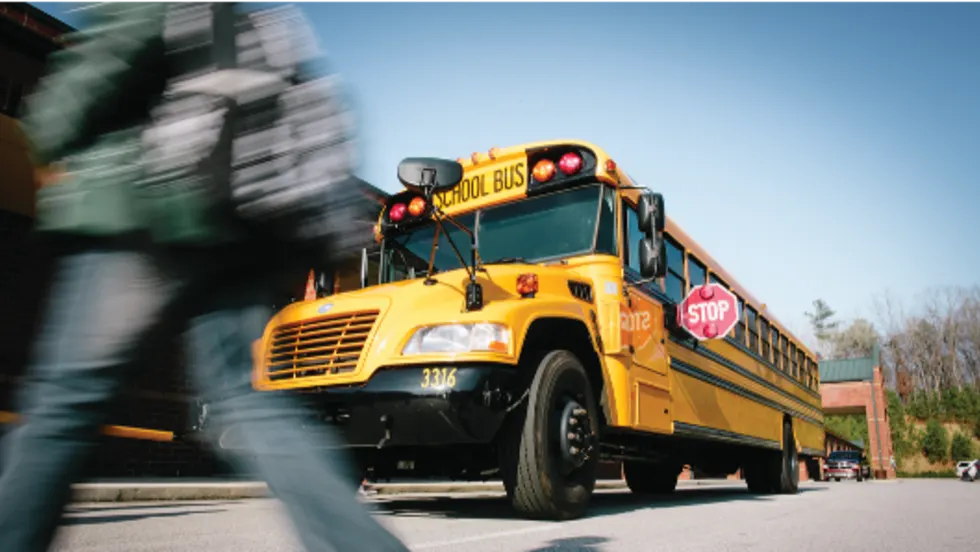
The Fuel Budget You Can Actually Predict: How Propane Autogas Keeps Money in the Classroom
Learn how propane autogas helps school districts manage fuel costs with predictable pricing, lower maintenance, and reduced emissions from former transportation director Joel Stutheit.
Read More →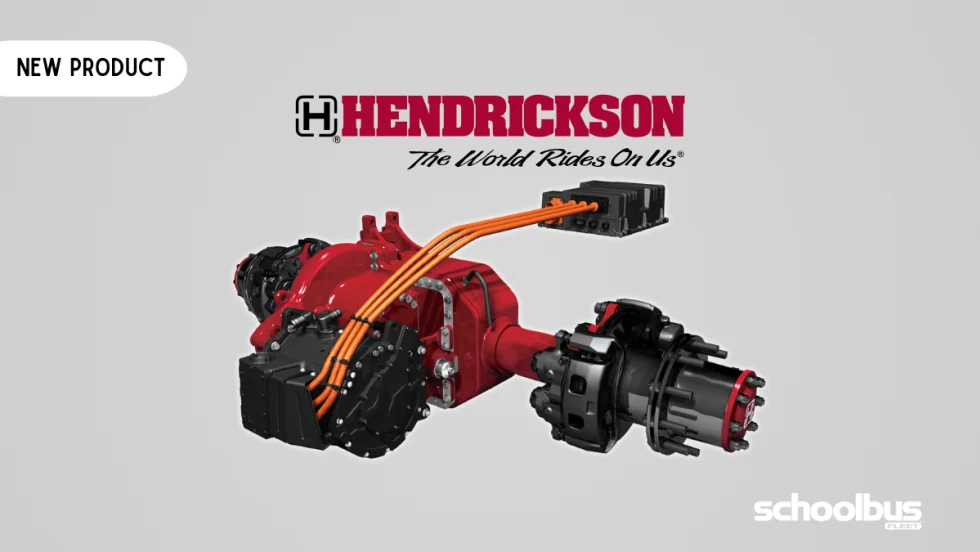
Hendrickson, Driventic Introduce New Electric Powertrain for School Buses
ELECTRAAX, the electrified, lightweight drive axle offers integrated ePowertrain efficiency and modular flexibility for Class 6–7 school bus use.
Read More →
The Mobility House Joins PowerFlex in Fleet Electrification Deal
The acquisition combines intelligent charging software, bidirectional charging expertise, and fleet electrification services to support the growing adoption of electric school buses across North America.
Read More →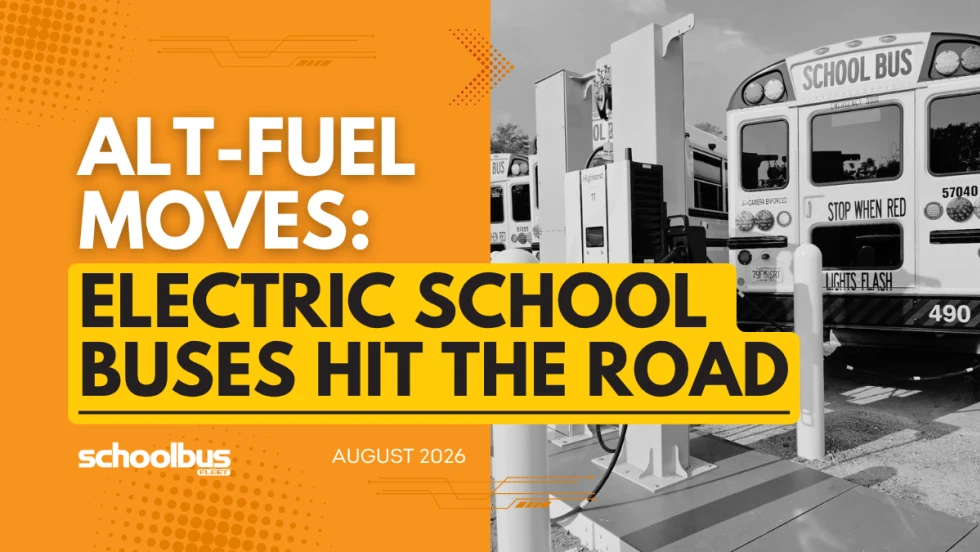
Alt-Fuel Moves: Electric School Bus Investments Hit the Road
See which districts across the U.S. are putting electric school buses into service, expanding charging infrastructure, and planning the next phase of fleet electrification.
Read More →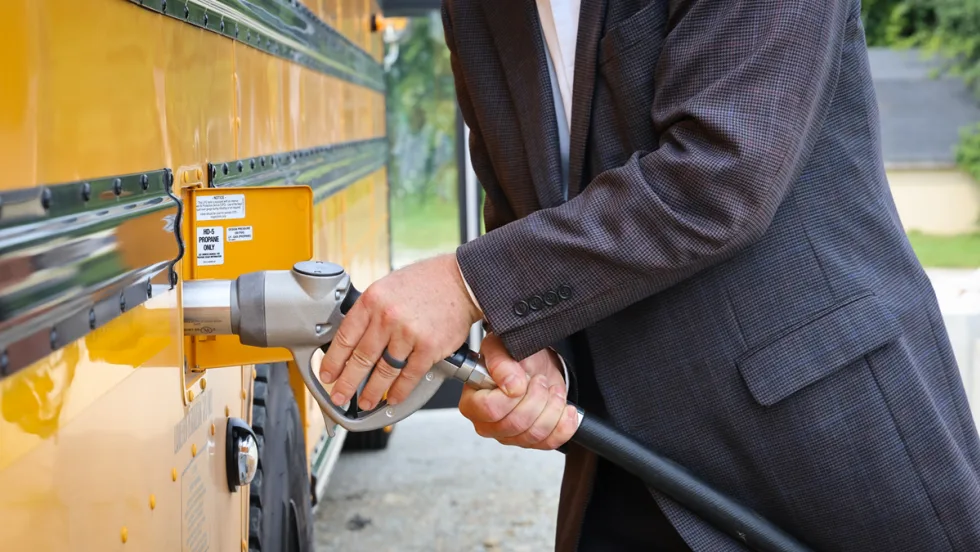
With Fuel Volatility Ahead, School Districts Turn to Propane
While diesel prices peaked above $5 this spring, districts with propane autogas-powered fleets paid under $2 per gallon, according to PERC.
Read More →
EPA Unveils Proposed Changes to 2027 Heavy-Duty Engine Rules
The federal agency has proposed changes to next year’s targets that would eliminate DEF derates, ease warranty requirements, and retain current NOx emissions standards.
Read More →
Alt-Fuel Moves: EV Charging & Infrastructure Projects Gain Momentum
The latest developments include new funding, charging infrastructure, utility investments, and fleet technologies designed to support the transition to electric school buses nationwide.
Read More →