





Previous News: Report: 9 Steps for Equity in Canada's Electric School Bus Transition
Report: Canada's Transition to Electric School Buses Lags Behind Goals
Canada’s first electric school bus report card finds that most provinces are failing the transition away from diesel buses used for student transportation.
March 25, 2026
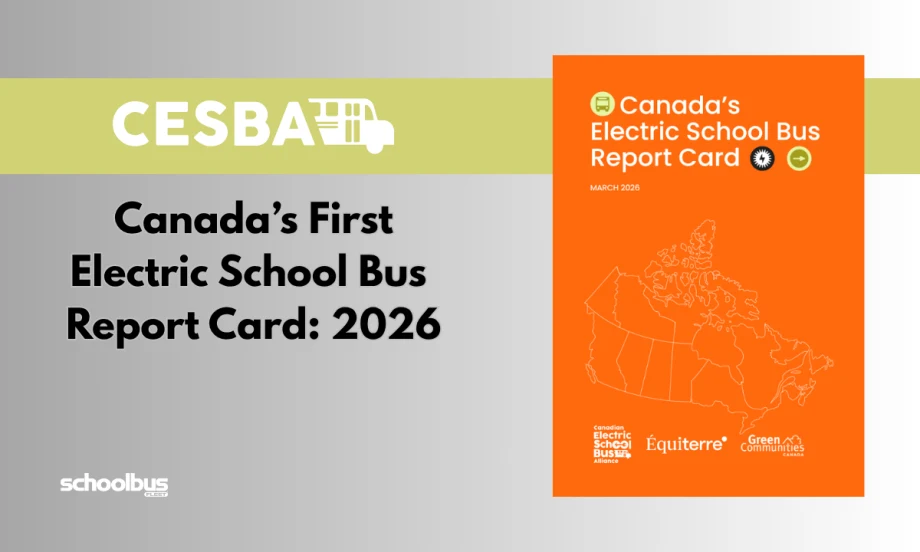
P.E.I. and Quebec lead the way in the transition to electric in the country, and Ontario and Alberta receive failing grades, despite having the country’s largest fleets.
Credit:
CESBA/School Bus Fleet
4 min to read
Canada transports about 2 million to school in a diesel bus each day, concerning several environmental, health, and educational entities about the well-being of those riders.
Yesterday, the Canadian Electric School Bus Alliance (CESBA) released its first-ever Electric School Bus Report Card, which raises the alarm over the slow and uneven progress to electrify these buses. The report calls for dedicated federal funding to accelerate investment in electric buses aimed at improving the county's health and economy.
“More than 30,000 school buses in Canada are approaching end of life and need replacement in the next two to seven years,” said Valérie Tremblay, lead of Sustainable Mobility at Green Communities Canada and coordinator of CESBA. “It is not in our best interest to continue importing diesel school buses from south of the border when we can manufacture electric buses right here in Canada.”
The report ranks provinces across four key areas: fleet electrification, policy commitments, funding, and charging infrastructure. Three factors separate leading provinces from lagging ones: clear policy targets, predictable federal funding, and charging infrastructure readiness. The report highlights major disparities across the country.
- Prince Edward Island leads with 33% of its school bus fleet electrified. P.E.I.’s strengths are its centralized fleet management, clear targets, and early procurement investments.
- Québec is second with 15% of its fleet electrified. With over 1,600 electric school buses, Québec boasts the largest electric school bus fleet in the country. Québec’s transition has been supported by robust incentives and clear targets.
- British Columbia ranks third with 5% of its fleet electrified, B.C. stands out for its innovation (including Canada’s first vehicle-to-grid pilot with electric school buses) and its charging infrastructure.
- New Brunswick is in fourth place, showing leadership with a target to electrify fleets by 2035, but is still early in its transition with only 1% of school buses being electric.
- Failing for now: Ontario and Alberta have the largest fleets in Canada, and both provinces bring up the rear with less than 1% of their fleets electrified and no clear targets or funding.
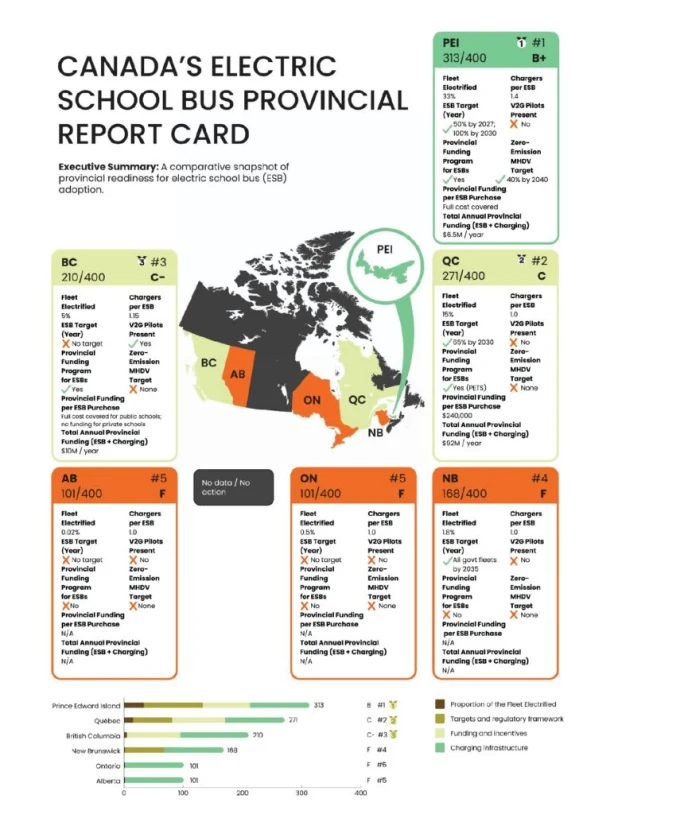
CESBA recommends that the federal government allocate at least $250 million per year exclusively to the electrification of school transportation through the Canada Public Transit Fund (CPTF) to provide stable and predictable funding to school bus consortia, school boards, fleet operators, and provinces.
Credit:
CESBA
There are 1,980 electric school buses in the country currently, according to CESBA, representing just 3.8% of the total Canadian school bus fleet. Electric school bus adoption is a strategic opportunity to reinforce Canada’s industrial autonomy by anchoring domestic manufacturing and scaling homegrown technologies, the organization said in a media release. They added that in Québec, full fleet electrification could improve the provincial trade balance by $50–100 million annually. In Ontario, electrifying 65% of the fleet by 2030 could generate over 10,800 jobs and $1.5 billion in gross domestic product, with additional gains from charging infrastructure.
“We cannot simply hope that the school bus fleet will electrify by magic," said Henri Chevalier, lead author of the report and sustainable mobility advisor at Équiterre. "That a new electric model costs 2.6 times as much as a diesel model is an undeniable reality, but so is political inertia. This report card shows that, where governments decide to act with clear goals, electric buses hit the roads. Now more than ever, we need clear financial commitments from the federal government.”
Companies like Girardin Blue Bird, Lion, and Thomas Built Buses manufacture parts of their electric school buses in Canada, while many of the diesel bus manufacturers serving the Canadian market are based in the United States. But a recent announcement from New Flyer unveiled a new facility in Winnipeg set to manufacture Canadian-built electric transit buses.
Until 2025, most provinces could rely on the Federal Zero-Emission Transit Fund (ZETF) to finance the purchase of electric school buses, though ZETF did not have a stream dedicated exclusively to electric school buses and only a small portion of the ZETF was invested in electric school buses, CESBA explained in its release. Future federal investment in electric school buses is in limbo, it added: "Everyone is waiting in uncertainty to learn how much – if any – of the previously announced CPTF will be dedicated to electric school buses. This lack of clarity, along with a history of insufficient funding, undermines and delays transition planning."
More Alternative Fuels

CALSTART and Forth Combine to Form Catalyst Mobility
The new name represents a renewed vision for the nonprofit focused on advancing clean, equitable, and affordable transportation solutions that move people and goods.
Read More →
Alt-Fuel Moves: New Buses, Charging Hubs & Real-World EV Testing
Propane and electric school bus deployments continue to grow as districts add new vehicles, expand charging infrastructure, and gather more real-world operating data.
Read More →
Fewer Electric School Bus Models Reshape the U.S. Market
WRI’s latest buyer’s guide points to a consolidating electric school bus market, but fewer options may reflect a maturing industry rather than fewer meaningful choices for school bus operators.
Read More →
The Fuel Budget You Can Actually Predict: How Propane Autogas Keeps Money in the Classroom
Learn how propane autogas helps school districts manage fuel costs with predictable pricing, lower maintenance, and reduced emissions from former transportation director Joel Stutheit.
Read More →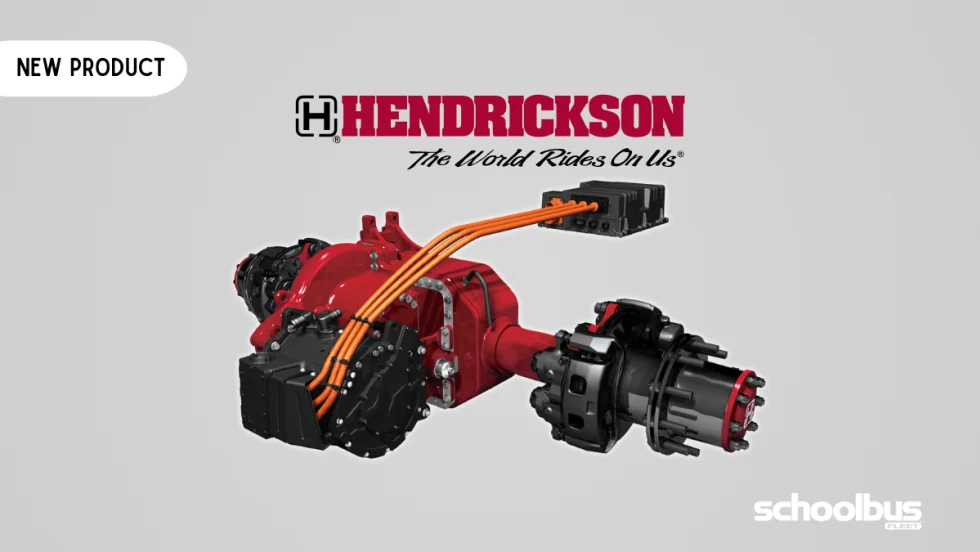
Hendrickson, Driventic Introduce New Electric Powertrain for School Buses
ELECTRAAX, the electrified, lightweight drive axle offers integrated ePowertrain efficiency and modular flexibility for Class 6–7 school bus use.
Read More →
The Mobility House Joins PowerFlex in Fleet Electrification Deal
The acquisition combines intelligent charging software, bidirectional charging expertise, and fleet electrification services to support the growing adoption of electric school buses across North America.
Read More →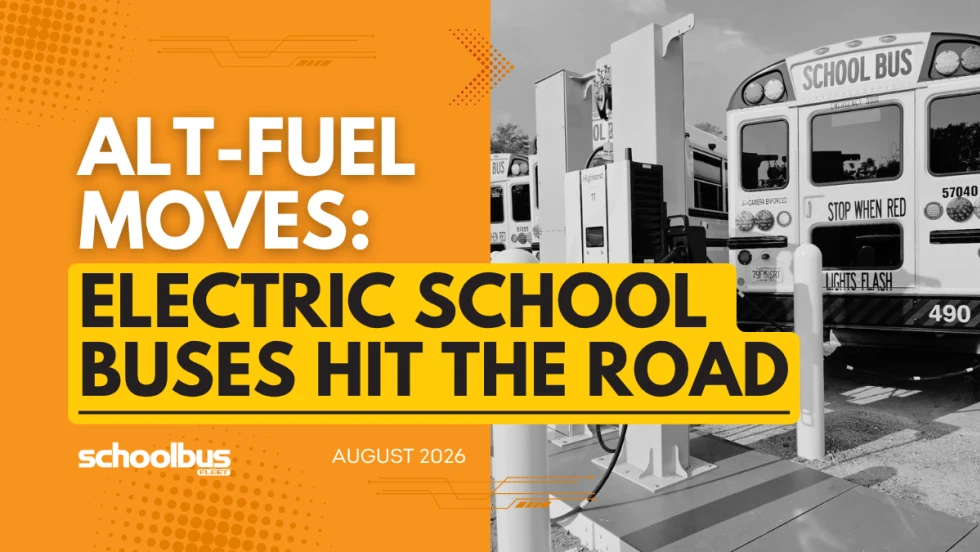
Alt-Fuel Moves: Electric School Bus Investments Hit the Road
See which districts across the U.S. are putting electric school buses into service, expanding charging infrastructure, and planning the next phase of fleet electrification.
Read More →
With Fuel Volatility Ahead, School Districts Turn to Propane
While diesel prices peaked above $5 this spring, districts with propane autogas-powered fleets paid under $2 per gallon, according to PERC.
Read More →
EPA Unveils Proposed Changes to 2027 Heavy-Duty Engine Rules
The federal agency has proposed changes to next year’s targets that would eliminate DEF derates, ease warranty requirements, and retain current NOx emissions standards.
Read More →
Alt-Fuel Moves: EV Charging & Infrastructure Projects Gain Momentum
The latest developments include new funding, charging infrastructure, utility investments, and fleet technologies designed to support the transition to electric school buses nationwide.
Read More →