




Report: 9 Steps for Equity in Canada's Electric School Bus Transition
What challenges and solutions exist as Canada sets its targets on an electric school bus ecosystem? A new report investigates.

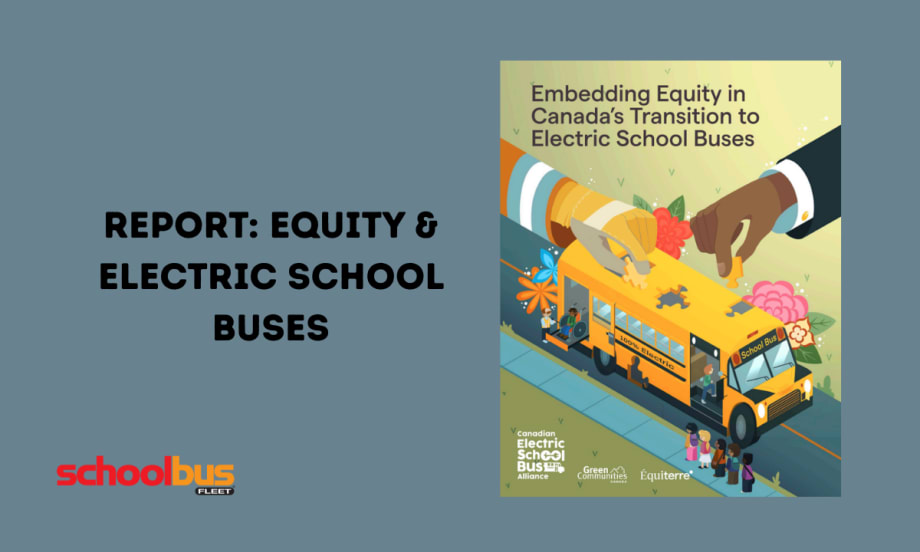
The CESBA report aims to demonstrate that without an equity-centered approach, the shift to ESBs risks exacerbating existing inequalities rather than fostering a more just and sustainable future.
Photo: Canadian Electric School Bus Alliance/School Bus Fleet. Report cover: Bayja Morgan-Banke, Indigenous Marketing Solutions.
Today, the Canadian Electric School Bus Alliance (CESBA) released a report titled “Embedding Equity in Canada’s Transition to Electric School Buses.” It calls on federal and provincial policymakers to ensure the
transition to electric school buses doesn’t leave anyone behind.
Currently, approximately 4% of the country’s school bus fleet is electric; however, a national electrification push is underway. Canada's federal government mandated that 35% of new medium- and heavy-duty vehicle sales be electric by 2030 and 100% by 2040. Meaning, nearly 70% of its 51,000 buses will be replaced in the next two to seven years.
“We’ve been so focused on getting electric buses on the road that we haven’t asked the tough questions,” said Valérie Tremblay, lead author of the report and sustainable mobility lead with Green Communities Canada. “Why do Indigenous communities still lack access, even as they bear the costs of resource extraction? Why aren’t we designing more electric school buses with wheelchair lifts and deploying them on routes that service children with disabilities? Where do diesel and electric buses go at the end of their lifespans? These questions are how we bring intention and equity to this transition.”
About the Report
This report examines the equity impacts of the ESB transition across five lifecycle phases and offers nine recommendations for a just transition, detailing who benefits from it and who is left behind.
Using literature review, desktop research, actor mapping, and interviews, the report highlights how equity-deserving groups — such as Indigenous communities, students with disabilities, and bus drivers — are affected, and presents nine key recommendations to embed equity in the transition.
The report was put together by CESBA, Green Communities Canada, and Équiterre, and funded by the Balsam Foundation, the McConnell Foundation, and the Trottier Family Foundation.
Key Findings: Five Lifecycle Phases
Resource Extraction: While resource extraction is essential to powering Canada’s electric school bus transition, it raises equity concerns, particularly for communities near mining sites and for workers in the mining sector, both in Canada and in the Global South. These impacts include environmental degradation, threats to Indigenous sovereignty, gender-based violence, and unsafe or inequitable labor conditions.
Manufacturing: Electric school bus manufacturing brings jobs, but not always equally. Most manufacturing is based in Quebec and the U.S., limiting access elsewhere. Workers face low wages, job insecurity, and few retraining options, especially as electric buses can require less labor.
Adoption: Electric school bus rollout is uneven across Canada. Students with disabilities, Indigenous and rural communities, small operators, and underfunded school districts face more barriers like high costs, administrative burden, limited vehicle availability, and lack of charging infrastructure.
Use: Electric school buses improve air quality and reduce noise, but they can bring new challenges. Rural drivers, senior staff, and mechanics face technical and training hurdles, while routing and bus design often overlooks equity-deserving communities and students with disabilities.
Disposal: Canada lacks a clear plan for retiring electric school bus batteries and the thermal buses they replace. Recycling facilities are often near low-income or racialized communities, and old diesel buses are sometimes exported to countries with weaker environmental protections, shifting the burden elsewhere.
Nine Recommended Policies
To address these challenges, the report outlines the following policy recommendations:
Ensure all new electric school buses are accessible by updating procurement guidelines and safety standards to support a wider range of models with universal design features.
Improve Indigenous access to electric school bus funding by adapting federal program criteria to community realities, expanding dedicated funding streams, and supporting grant-writing capacity.
Increase school transportation funding for under-resourced communities by revising provincial and federal budgets to cover higher upfront electric school bus costs and support small fleet operators.
Prioritize electric school bus funding for underserved areas by targeting “High-Priority Zones” using air quality and census data to help equalize health outcomes.
Improve wages and working conditions for school transportation staff by increasing operational funding and including Living Wage standards in contracts.
Build a skilled electric school bus maintenance workforce by expanding EV training programs, modernizing apprenticeships, and ensuring mechanics have repair access through procurement contracts.
Enable the safe use of repowered school buses by funding pilot projects, updating safety standards, and allowing extended use of certified converted vehicles.
Regulate the export of decommissioned school buses to countries with weaker protections by updating export controls.
Adopt extended producer responsibility policies for electric vehicle batteries to ensure safe recycling, hold manufacturers accountable, and protect communities from disproportionate environmental harm.
More Alternative Fuels

CALSTART and Forth Combine to Form Catalyst Mobility
The new name represents a renewed vision for the nonprofit focused on advancing clean, equitable, and affordable transportation solutions that move people and goods.
Read More →
Alt-Fuel Moves: New Buses, Charging Hubs & Real-World EV Testing
Propane and electric school bus deployments continue to grow as districts add new vehicles, expand charging infrastructure, and gather more real-world operating data.
Read More →
Fewer Electric School Bus Models Reshape the U.S. Market
WRI’s latest buyer’s guide points to a consolidating electric school bus market, but fewer options may reflect a maturing industry rather than fewer meaningful choices for school bus operators.
Read More →
The Fuel Budget You Can Actually Predict: How Propane Autogas Keeps Money in the Classroom
Learn how propane autogas helps school districts manage fuel costs with predictable pricing, lower maintenance, and reduced emissions from former transportation director Joel Stutheit.
Read More →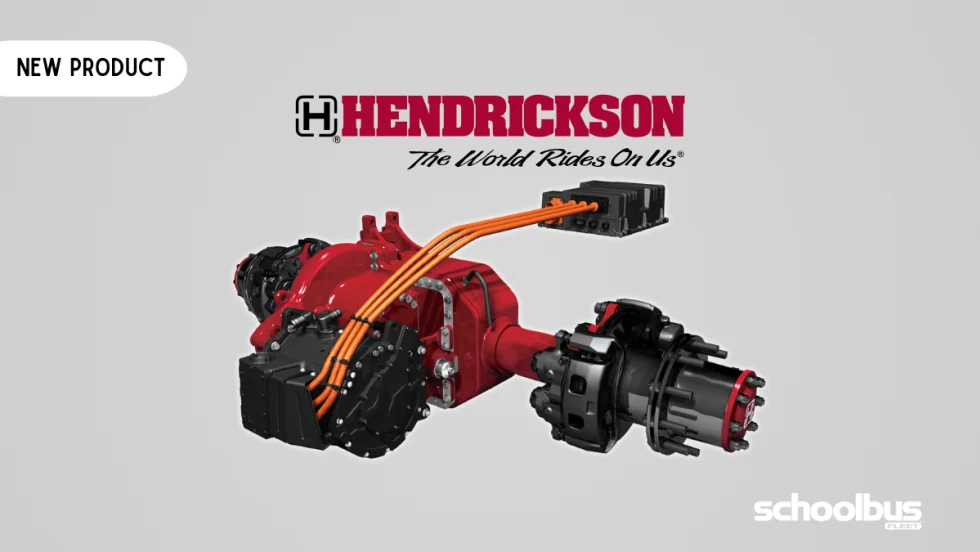
Hendrickson, Driventic Introduce New Electric Powertrain for School Buses
ELECTRAAX, the electrified, lightweight drive axle offers integrated ePowertrain efficiency and modular flexibility for Class 6–7 school bus use.
Read More →
The Mobility House Joins PowerFlex in Fleet Electrification Deal
The acquisition combines intelligent charging software, bidirectional charging expertise, and fleet electrification services to support the growing adoption of electric school buses across North America.
Read More →
Alt-Fuel Moves: Electric School Bus Investments Hit the Road
See which districts across the U.S. are putting electric school buses into service, expanding charging infrastructure, and planning the next phase of fleet electrification.
Read More →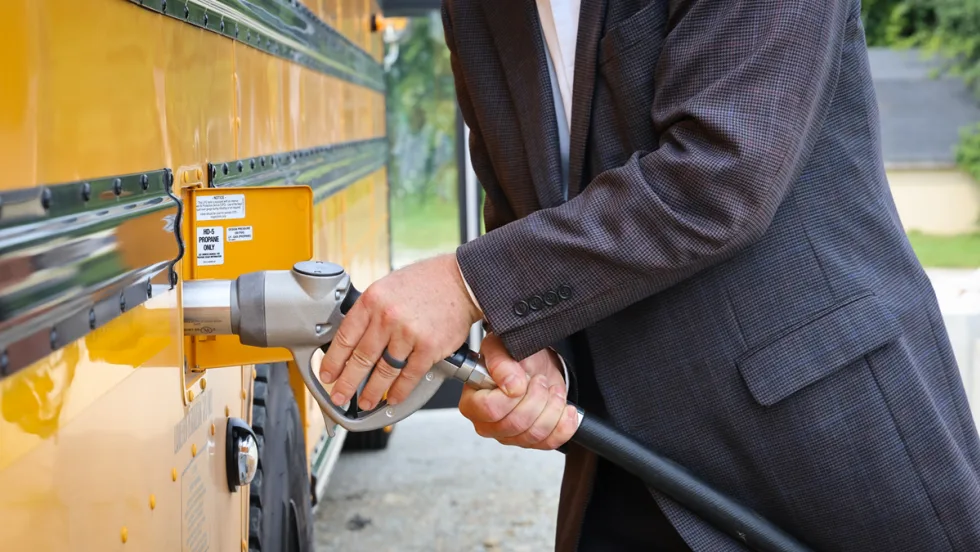
With Fuel Volatility Ahead, School Districts Turn to Propane
While diesel prices peaked above $5 this spring, districts with propane autogas-powered fleets paid under $2 per gallon, according to PERC.
Read More →
EPA Unveils Proposed Changes to 2027 Heavy-Duty Engine Rules
The federal agency has proposed changes to next year’s targets that would eliminate DEF derates, ease warranty requirements, and retain current NOx emissions standards.
Read More →
Alt-Fuel Moves: EV Charging & Infrastructure Projects Gain Momentum
The latest developments include new funding, charging infrastructure, utility investments, and fleet technologies designed to support the transition to electric school buses nationwide.
Read More →