




The Technology Power Combo That Enables EV Charging on Difficult Sites
How to Choose the Right Chargers for Your Electric School Bus Fleet
Optimize your electric school bus fleet with expert tips on charger selection. From AC vs. DC to bidirectional charging, plus tips on power levels, compatibility, and more, this guide has got you covered.
by Taylor Sayward, The Mobility House
December 2, 2024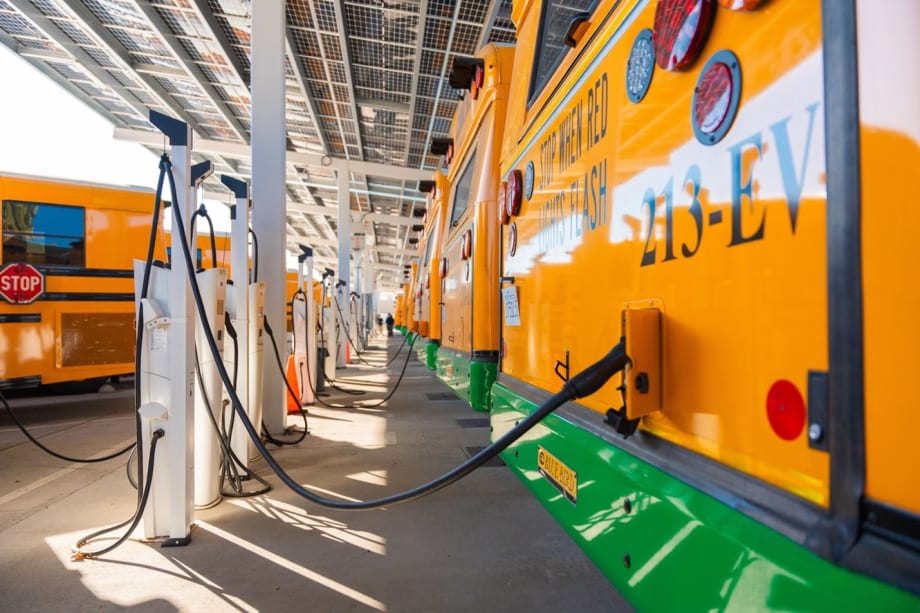
Electric school buses charging at the Modesto City Schools depot.
Photo: The Mobility House
6 min to read
Electric school buses are bringing a cleaner future for students and communities across North America. School districts looking to take advantage of federal funding available for them have a multitude of tough decisions to make when it comes to charging equipment.
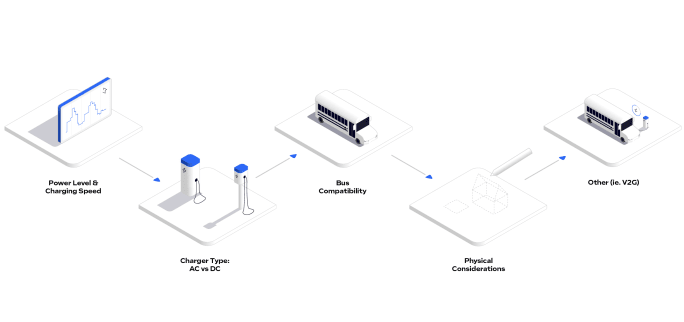
School administrators and fleet managers have a responsibility to procure the best available electric school bus chargers to ensure smooth and efficient operations. With more than five years of experience electrifying school bus fleets behind them, The Mobility House has created the Electric School Bus Charger Selection Guide to summarize the essentials of charger selection, and to help you make informed decisions that will serve your school's transportation needs.
Source: The Mobility House
The guide breaks the charger procurement decision-making process into five simple considerations:
- Power level
- Charger type
- Charger Compatibility
- Physical Considerations
- Bidirectional/Other
Understanding Power Levels and Charging Speed
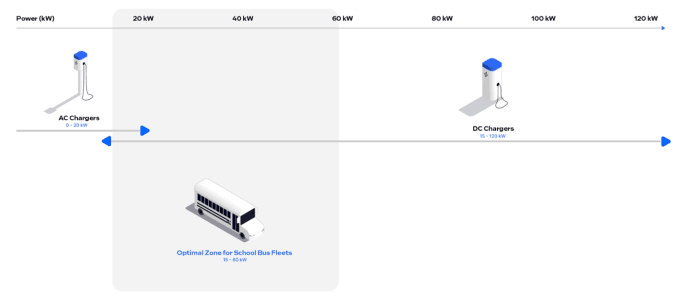
Power output is the most fundamental concept in selecting the right chargers for your electric school buses. Measured in kilowatts (kW), the power level of a charger determines how quickly it can charge a vehicle. For instance, a 50 kW charger will replenish about 50% of a 100 kWh battery in an hour. Understanding your fleet’s schedules and idle times helps determine the required charging speed, which typically ranges from 10 kW to 60 kW for school buses.
Electric school buses designed for shorter routes might not need midday charging, allowing for cost-effective solutions like lower-power AC chargers around 10 kW. However, buses on longer routes may require higher-powered AC or even DC chargers for a quick top-up during the day.
Higher-powered chargers cost significantly more, so estimating whether it is truly needed makes sense. One additional point to consider is that most electric school buses on the market today can’t accept a charge rate higher than 80-100 kW, so there would never be a need for a high-powered charger beyond that. The best way to analyze the unique charging needs of your fleet based on vehicle types, routes, duty cycles, terrain, and other environmental factors is to have a qualified consultant conduct a fleet charging simulation.
Source: The Mobility House
Exploring AC vs. DC Chargers
The type of charger—AC (alternating current) or DC (direct current)—also plays a pivotal role in your charging strategy. Our electrical grid uses AC power, while the batteries that power a bus use DC power. AC chargers, or Level 2 chargers, offer a cost-effective and straightforward installation but come with slower charging speeds, capped at 19.2 kW. They only work with buses that have an "onboard charger" in the vehicle to convert AC to DC power.
Conversely, DC chargers deliver direct DC power to the vehicle's battery, enabling faster charging. DC chargers, sometimes called Level 3, are more expensive and complex to install. Some buses don't come with onboard chargers, and therefore will only charge on DC.
Based on our experience operating dozens of school bus charging sites across North America, and delivering hundreds of charging simulations, we have found that the “sweet spot” for school bus chargers is 19.2 kW AC up to 60-80 kW DC.
Recently, many of our school bus sites have used low-power DC chargers in the range of 20-30 kW per port.
Ensuring Charger Compatibility
Compatibility is key when integrating chargers into your fleet's existing infrastructure. This involves ensuring that the chargers are suitable for both the vehicles and the electrical setup at your site. Most AC chargers connect easily to 208/240V services, common in many facilities, making them simpler and cheaper to install.
School buses use DC power, and thus chargers need to facilitate AC-to-DC conversion, with the location of this conversion defining the charger type. While DC chargers carry out this transformation internally, AC chargers rely on the bus's onboard systems. Knowing the specifications of your buses, such as their maximum acceptance rates for AC and DC charging, ensures compatibility and efficient operation. It would be wise to check with your bus dealer or manufacturer for latest charging compatibilities and maximum charging rates for specific models.
One additional type of compatibility to consider when choosing chargers is the charge management system (CMS). Using an interoperable and open standard CMS is the most effective way to ensure reliable and cost-effective operations. In order to use a CMS with your chargers, be sure to check that the charger uses Open Charge Point Protocol (OCPP) version 1.6J or later, and that the charger has an ethernet port to accept a hardwired connection from the controller, so you don’t need to rely on variable WiFi signals.
Managing Physical Considerations
The shift to electric buses requires strategic planning in physical layout and equipment placement within bus depots. Chargers have varying configurations and features that affect their fit and functionality within your space. Multi-port chargers, for example, maximize space efficiency by serving multiple vehicles simultaneously from one station. Some chargers can be pedestal-mounted or wall-mounted, depending on your site’s layout. Accessories like cable management systems are often well worth the additional investment to maintain equipment integrity, prevent wear, reduce charger errors, and increase uptime.
Evaluating Bidirectional/V2G Chargers
One advanced consideration is bidirectional or Vehicle-to-Grid (V2G) chargers, which allow buses to feed energy back to the grid. This is the guiding vision of The Mobility House, to ultimately make electric vehicles into energy assets that support the grid. While promising, with several pilot programs currently in place, the feasibility of V2G technology depends on local utility programs and is not yet universally viable. Schools should consult their utilities before investing in bidirectional chargers and determine if the potential energy revenue will justify the additional cost.
While utility V2G programs mature, fleet operators can consider interim solutions like unidirectional chargers with smart charge management to take advantage of vehicle grid integration programs such as time-of-use shifting, automated load management, and demand charge avoidance. This will help you prepare for eventual V2G capabilities.
Examples of Commonly Used Chargers
When it comes to practical application, here are some recommended charger types:
- AC Wallbox (19.2 kW): Affordable and simple, ideal for low-cost installations
- DC Wallbox (20-25 kW): Offers low power DC charging, suited for buses limited to DC input
- 30-60 kW Dual Port DC: Optimizes space with dual-port flexibility and varying power distribution
- Multi-port DCFC: Provides high-power charging options, adaptable for multiple buses with flexible configurations
Conclusion
Selecting the right chargers for your electric school bus fleet is crucial for operational success and sustainability. By considering factors like power levels, charger type, compatibility, and physical layout, school districts can implement efficient, forward-thinking charging solutions.
For a deeper understanding and personalized consultation, download the full Electric School Bus Charger Selection Guide and contact The Mobility House for expert guidance on maximizing your energy investment.
Let's drive into a greener future, together.

About the Author:Taylor Sayward leads electric school bus charging for The Mobility House, where he advises school districts on their charging infrastructure programs.
This article was authored and edited according to SBF editorial standards and style. Opinions expressed do not necessarily reflect that of SBF.
Quick Answers
AC chargers convert AC power from the grid to DC power within the vehicle, typically offering slower charges. DC chargers convert AC to DC outside the vehicle, providing faster charging directly into the battery.
*Summarized by AI
Subscribe to Our Newsletter
More Alternative Fuels

CALSTART and Forth Combine to Form Catalyst Mobility
The new name represents a renewed vision for the nonprofit focused on advancing clean, equitable, and affordable transportation solutions that move people and goods.
Read More →
Alt-Fuel Moves: New Buses, Charging Hubs & Real-World EV Testing
Propane and electric school bus deployments continue to grow as districts add new vehicles, expand charging infrastructure, and gather more real-world operating data.
Read More →
Fewer Electric School Bus Models Reshape the U.S. Market
WRI’s latest buyer’s guide points to a consolidating electric school bus market, but fewer options may reflect a maturing industry rather than fewer meaningful choices for school bus operators.
Read More →
The Fuel Budget You Can Actually Predict: How Propane Autogas Keeps Money in the Classroom
Learn how propane autogas helps school districts manage fuel costs with predictable pricing, lower maintenance, and reduced emissions from former transportation director Joel Stutheit.
Read More →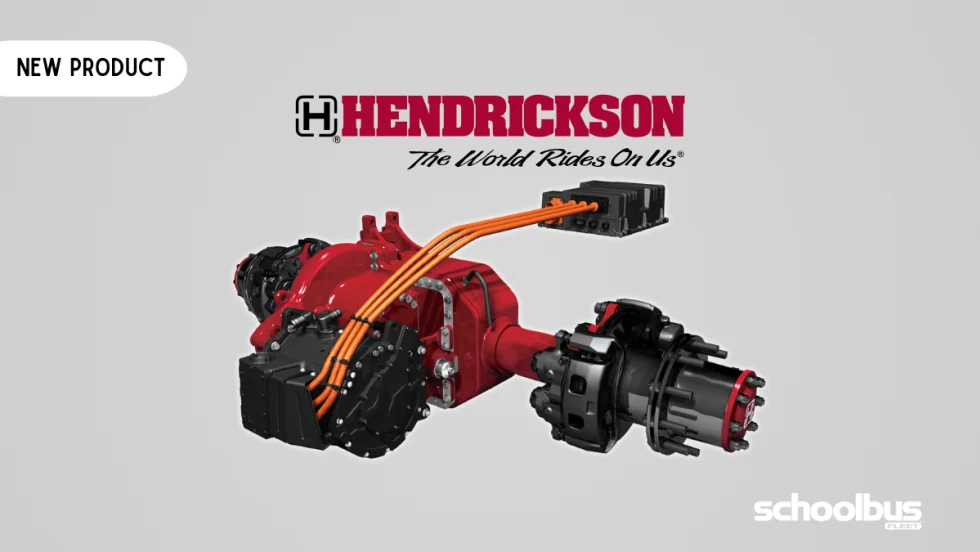
Hendrickson, Driventic Introduce New Electric Powertrain for School Buses
ELECTRAAX, the electrified, lightweight drive axle offers integrated ePowertrain efficiency and modular flexibility for Class 6–7 school bus use.
Read More →
The Mobility House Joins PowerFlex in Fleet Electrification Deal
The acquisition combines intelligent charging software, bidirectional charging expertise, and fleet electrification services to support the growing adoption of electric school buses across North America.
Read More →
Alt-Fuel Moves: Electric School Bus Investments Hit the Road
See which districts across the U.S. are putting electric school buses into service, expanding charging infrastructure, and planning the next phase of fleet electrification.
Read More →
With Fuel Volatility Ahead, School Districts Turn to Propane
While diesel prices peaked above $5 this spring, districts with propane autogas-powered fleets paid under $2 per gallon, according to PERC.
Read More →
EPA Unveils Proposed Changes to 2027 Heavy-Duty Engine Rules
The federal agency has proposed changes to next year’s targets that would eliminate DEF derates, ease warranty requirements, and retain current NOx emissions standards.
Read More →
Alt-Fuel Moves: EV Charging & Infrastructure Projects Gain Momentum
The latest developments include new funding, charging infrastructure, utility investments, and fleet technologies designed to support the transition to electric school buses nationwide.
Read More →