




The Technology Power Combo That Enables EV Charging on Difficult Sites
As the pace of fleet electrification increases and charging infrastructure continues to pose challenges, many fleets find themselves puzzling over the question: how do I install charging infrastructure faster and more cost-efficiently?

Unlocking capacity on existing electrical infrastructure can be the key to turning an unviable site viable.
Source: Canva
As the pace of school bus fleet electrification increases and charging infrastructure continues to pose challenges, many fleets find themselves puzzling over the question: how do I install charging infrastructure faster and more cost-efficiently?
There are many answers to this question, most involving functions of the Charge Management Systems (CMS), but one strategy that is increasingly popular is leveraging a site’s existing electrical infrastructure.
Why Use Existing Infrastructure?
Unlocking capacity on existing electrical infrastructure can be the key to turning an unviable site viable. Some fleets may be under time pressure as they look to rapidly deploy infrastructure to take advantage of a grant with an expiration date, such as the EPA Clean School Bus rebate. Others might simply want to implement an EV pilot at minimal cost to learn about the technology.
For fleets looking to deploy a handful of vehicles, the time and cost of requesting a new service from the utility and constructing that service is likely overwhelming and overkill. For fleets with quick deployment timelines, waiting for a dedicated service for EV charging may be a non-starter.
Many sites have an existing 200–800 amp panel that can be used to support charging infrastructure, with the right load management technology.
How Can I Make the Most of My Existing Panel?
Source: The Mobility House
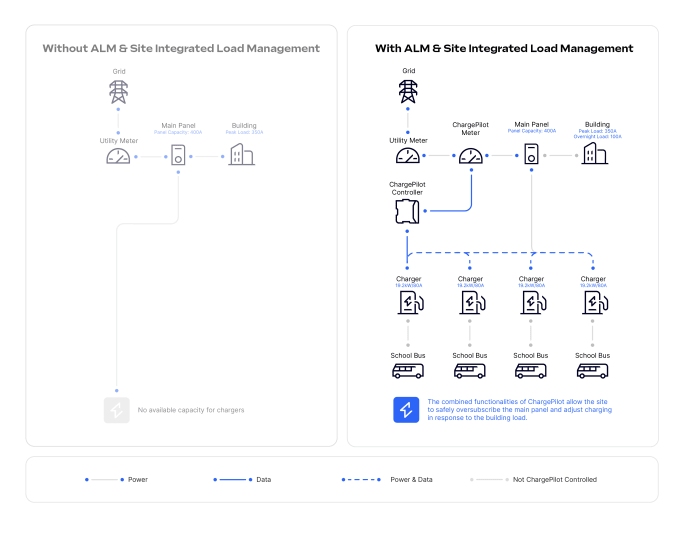
Two features of an advanced CMS enable fleets to maximize the number of chargers that can be installed on an existing panel. The first is Automated Load Management (ALM), which allows the nameplate capacity of chargers to exceed panel capacity. The second is site-integrated load management, whereby the CMS monitors building loads and adjusts charging up and down as the building load changes (e.g., the HVAC turns off), based on real-time available capacity.
If the number of chargers that can be installed is not limited by the nameplate capacity of the panel and uncontrolled loads on site can be monitored, then chargers can be installed and controlled under a required electrical limit, even as building loads change. The result is that chargers can be installed and be code compliant on sites where otherwise no chargers could be added.
An Example
Consider the following scenario:
A school bus fleet wins a state grant to fund four electric buses.
The bus barn has an existing 100% rated, 400-amp main panel.
The electrical load calculations indicate that the panel has no additional capacity.
However, the actual load overnight is significantly under 400 amps, approximately 100 amps.
To ensure each bus can make its route, a 19.2 kW 80-amp AC charger is recommended. The fleet requires each bus to have a plug so that staff does not need to rotate buses overnight.
Modeling shows that, to satisfy charging needs for four bus routes, the total draw will never exceed 250 amps.
At face value, without the combined capabilities of the CMS, the scenario above would require a service upgrade or new service to support any additional charging. However, by leveraging a combination of ALM and site-integrated load management, this fleet can provide a plausible, safe, and effective plan to their utility and local permitting authority to install all four chargers immediately, maintain compliance with the National Electric Code, proceed with the desired pilot, and not have to give any grant money back.
- Sam Hill-Cristol is a manager of strategy and business development at The Mobility House in North America. He oversees the company's school bus segment.
More Blog Posts

The Sound of Summer Starting [Guest Editorial]
That unmistakable school bus rumble? It carries childhood memories, community routines, and a whole lot of unseen work behind the scenes.
Read More →
Trip Sheet: Farewell, Faithful Readers – Keep on Rolling
Executive Editor Wes Platt offers parting thoughts as he parks the School Bus Fleet bus to focus on ultra-local community journalism, making way for someone else to take the wheel as the pupil transportation industry continues to evolve.
Read More →
Trip Sheet: School Transportation Pros Can Champion Children's Mental Health
Children's Mental Health Awareness Day underscores the significance of school bus drivers in fostering supportive environments during students' journeys. SAMHSA's initiatives, including stigma reduction and access to resources, complement the Biden-Harris administration's funding efforts to enhance youth mental health services and workforce development.
Read More →
Trip Sheet: Is It Time for Daylight Saving Time to Clock Out?
How do you think the potential shift to permanent Daylight Saving Time or standard time would impact our daily lives and routines, especially considering the divided approach across various states?
Read More →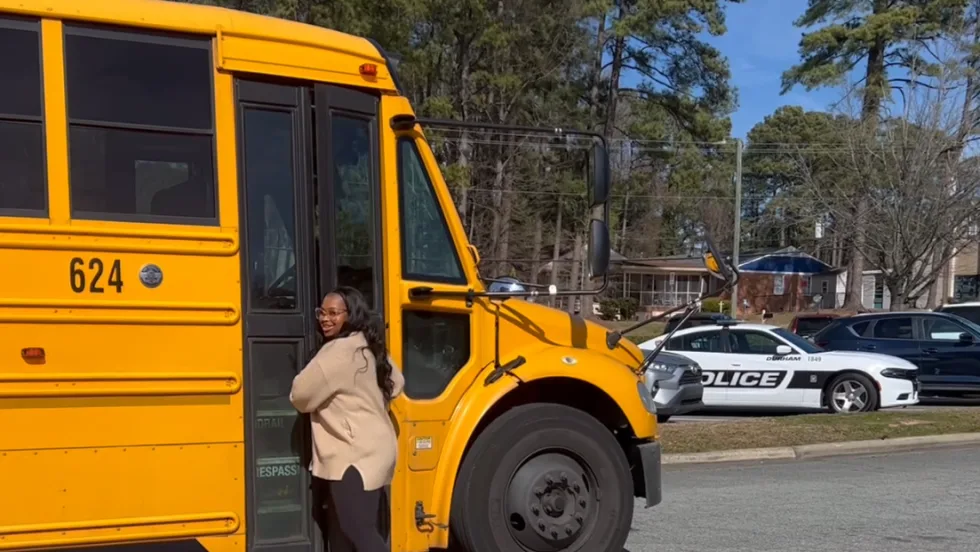
Trip Sheet: Meeting a Hero in My Own Back Yard
I remain impressed by the matter-of-fact heroism that’s often demonstrated by school bus drivers like Deona Washington who are caught in these situations where the best of us might lose our cool and panic. But, then again, bus drivers are a unique breed.
Read More →
Trip Sheet: 3 Takeaways from the EPA Clean School Bus Grant Program
Most applicants sought grant funding to acquire electric school buses, with propane coming in a distant second. No one indicated plans to purchase compressed natural gas (CNG) buses in this round. That’s not terribly surprising, I suppose, given how few school districts listed the inclusion of CNG buses in their fleets for our 2023 top district fleets survey.
Read More →
Trip Sheet: Let's Get Rolling: What's Coming in 2024?
Calendar pages keep flipping toward the mandates set in states like New York and California to transition their school bus fleets from diesel to zero-emission, but there’s plenty of reluctance and pushback.
Read More →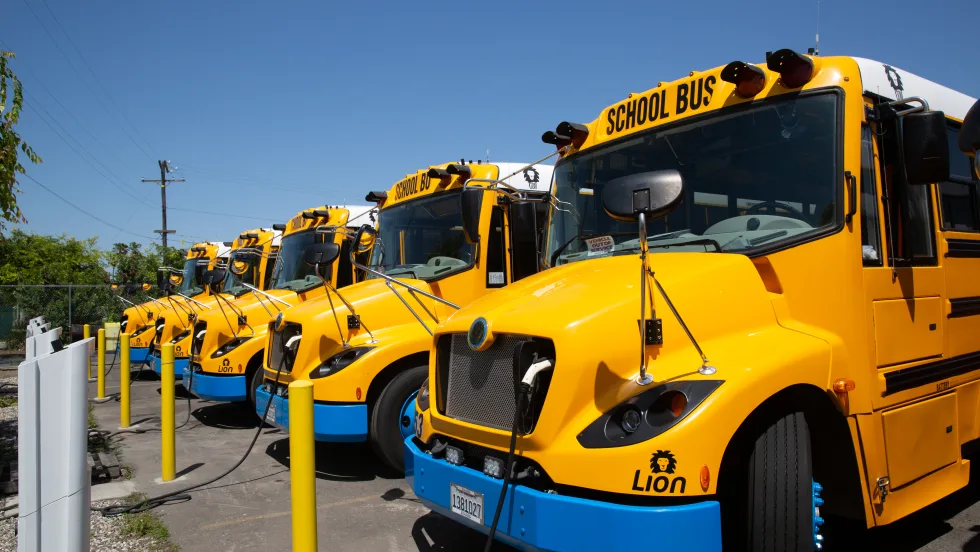
California School Children Ride in Green School Buses
Today, California prides itself on utilizing the most zero-emission (ZE) school buses in the country with over 1,689 being used by California school districts; and while the state is on a positive health trajectory thanks to a decree to eliminate gas and diesel vehicles, more work needs to be done to improve children’s well-being.
Read More →
Behind The Wheel of Childrens’ Safety Aboard the School Bus
Bus drivers are the primary caretakers of children during their commute and thus bear responsibility for their safety. By prioritizing proper operating procedures, maintenance checks, and additional precautions, drivers can help avoid the loss of precious young lives under their care.
Read More →
Trip Sheet: Looking Ahead - Navigating Around Vehicle Automation
FMCSA proposes to amend certain Federal Motor Carrier Safety Regulations (FMCSRs) to ensure the safe introduction of automated driving systems (ADS)-equipped commercial motor vehicles (CMVs) onto the nation’s roadways. The proposed changes to the CMV operations, inspection, repair, and maintenance regulations prioritize safety and security, promote innovation, foster a consistent regulatory approach to ADS-equipped CMVs, and recognize the difference between human operators and ADS.
Read More →