




2026 Trailblazer: Joshua Roberts of First Student
Roberts, 35, serves as the lead IT application engineer for vehicle electrification at First Student, where he helps shape scalable, real-world EV infrastructure to support student transportation.

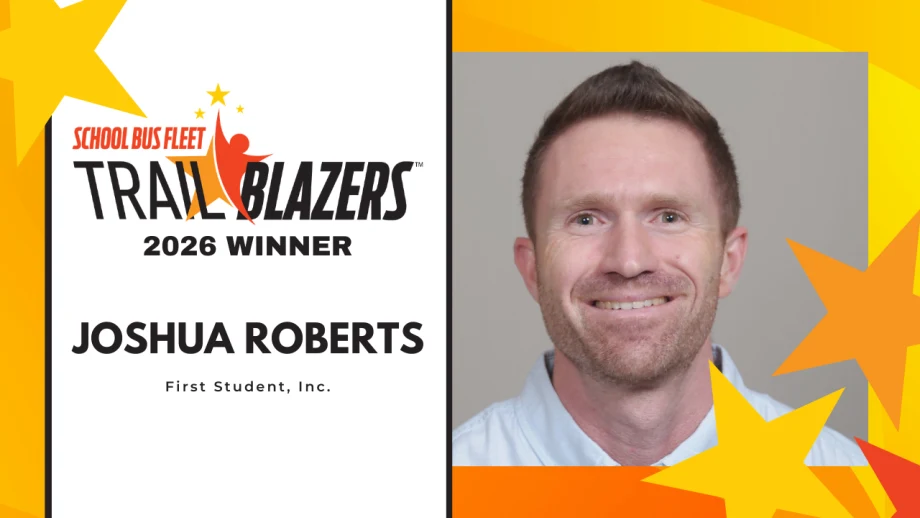
Joshua Roberts believes in the power of electric vehicles to help students' health, keep more drivers, and contribute to clean air. He's been on the frontlines of B2G implementation across the industry.
Joshua Roberts/School Bus Fleet
- Age: 35
- Role: Lead IT Application Engineer – Vehicle Electrification
- Employer: First Student, Inc.
- Location: Cincinnati, OH
Joshua Roberts brings a unique blend of technical expertise and mission-driven focus to student transportation, working at the forefront of vehicle electrification and emerging technology.
Roberts serves as lead IT application engineer for vehicle electrification at First Student, Inc. Based in Cincinnati while working remotely, he plays a key role in advancing electric vehicle infrastructure across the company’s growing fleet. His work connects software, hardware, and vehicle systems, collaborating with partners that include Ampcontrol, IC Bus, Blue Bird, Thomas Built Buses, Autel, ABB, Delta Electronics, Heliox, Samsara, Idaho National Labs, and the Department of Energy.
His path into student transportation was shaped by mentorship and opportunity rather than a traditional industry background. Roberts began his career in healthcare IT, where he developed deep experience in infrastructure and systems management. A pivotal moment came when a trusted leader encouraged him to explore a new direction.
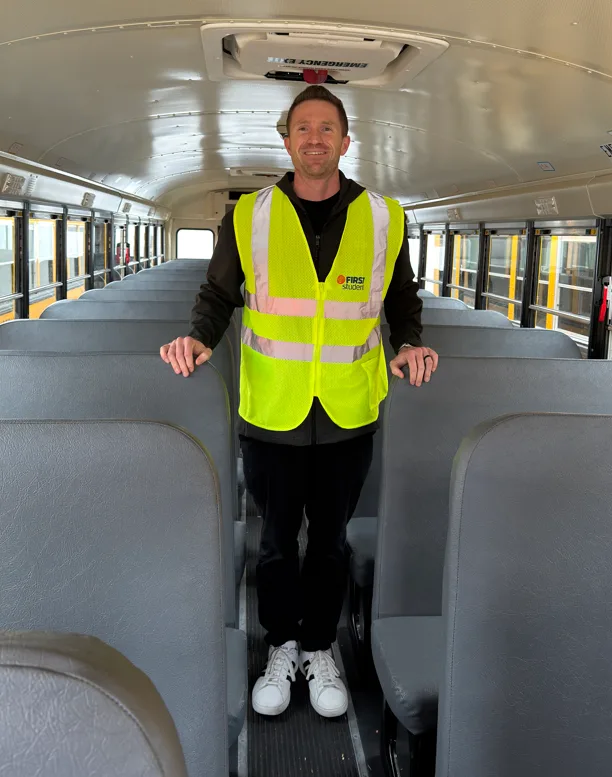
Joshua Roberts
“My path to student transportation was driven by mentorship and opportunity,” Roberts said. “When Jason invited me to join him in this venture, I saw an incredible opportunity to apply my technical skills in a sector that directly impacts students’ lives.”
“Josh is redefining what’s possible in student transportation electrification, establishing himself as a true trailblazer in an industry undergoing its most significant transformation in decades,” said Jason Doiron, IT director, fleet electrification, at First Student.
While the transition may seem unconventional, Roberts sees strong parallels between the two fields. “Both healthcare and student transportation require reliable infrastructure, serve essential community needs, and demand systems that work flawlessly because people depend on them,” he said. What excites him most is contributing to a mission-driven industry while working alongside people he respects, knowing the work directly supports student safety every day.
Roberts’ day-to-day responsibilities center on vehicle-to-grid technology and the deployment of new site infrastructure. He spends much of his time testing V2G capabilities, planning site designs and deployment strategies, and building integrations between First Student and third-party applications. Collaboration is central to the role, particularly when working with internal engineering teams to design and deploy infrastructure for new locations. Translating operational needs into scalable and reliable technical solutions is a constant focus.
“Josh’s most groundbreaking contribution lies in his leadership of first-of-its-kind technology capabilities for vehicle-to-grid (V2G) integration at an unprecedented scale,” Doiron said.
“What I love most is being at the forefront of emerging technology while solving real-world engineering challenges,” Roberts said.
For him, V2G is not theoretical. He is actively testing how electric school bus fleets can support the power grid while maintaining dependable transportation operations. Building new sites from concept through deployment is especially rewarding, knowing the infrastructure decisions made today will shape operations for years to come.
Designing Resilient Systems for the Real World
One of the most significant challenges Roberts has faced is bridging the gap between idealized plans and real-world conditions. Utility capacity constraints, inconsistent technology standards, and non-compliant implementations often require rapid adjustments. “These experiences have taught me to assume variability, verify everything, and design processes that are resilient instead of just idealized,” he said.
The advice Roberts shares with those entering the industry reflects that mindset. He encourages simplicity, consistency, and curiosity. “It’s not who you know; it’s who knows you,” he said, emphasizing the importance of showing up, following through, and earning trust. He also stresses asking questions early and often and approaching challenges with curiosity rather than judgment.
Looking ahead, Roberts hopes the industry continues accelerating toward cleaner, safer transportation. He wants electric buses to become the default choice, not the exception, helping reduce emissions, noise, and long-term costs for communities. He is also optimistic about the role of partnerships and research organizations in shaping smarter policy and infrastructure planning.
Beyond technology, Roberts points to quieter but meaningful benefits of electric buses. He has seen fewer student altercations, reduced asthma symptoms, lower anxiety levels, and improved driver retention.
For Roberts, these outcomes reinforce why the work matters and why exploring what electrification can do is necessary.
More Management

How to Build a Better Driver Training Program
Ready to boost up your school bus instructor training? Here’s how to pick the right talent and improve recruitment, retention, and safety.
Read More →
CALSTART and Forth Combine to Form Catalyst Mobility
The new name represents a renewed vision for the nonprofit focused on advancing clean, equitable, and affordable transportation solutions that move people and goods.
Read More →
What Makes a Great School Bus Driver Trainer?
Choosing the right school bus driver trainer takes more than experience. Learn six keys to selecting and developing trainers and evaluating program effectiveness.
Read More →


School Bus Contractors Expand Through New Deals, Acquisitions & Partnerships
STA's Canadian division acquires Ontario-based G&L Stevenson Transport while Durham School Services adds a new district contract in California, First Student adds a New Jersey contract, and Minnesota Coaches acquires Halo Transportation.
Read More →
Logan Bus Company Rolls Out AI Phone System for NYC School Bus Families
A summer pilot found that AI agents could handle most routine calls, freeing up time for customer service staff to focus on emergencies and complex family concerns.
Read More →
From Intent to Impact: What I Learned About Leadership from TAPT
A Texas transportation supervisor shares lessons on self-awareness, accountability, managing stress and building trust — and why investing in leadership development matters at every stage of your career.
Read More →
NAPT Names 2026 Award Recipients, Hall of Fame Inductee
Who earned national recognition for their work in student transportation? This year, NAPT named five recipients of its 2026 awards for service, safety, and leadership, plus its newest Hall of Famer.
Read More →
2026 State of Student Transportation Report
Driver shortages. Rising costs. Growing safety expectations. More data, but not enough time to act on it. The 2026 State of Student Transportation Report reveals what transportation leaders say is putting the most pressure on their operations—and where they’re investing next. See how your priorities compare.
Read More →
How to De-Escalate an Angry Person: 5 Steps for Handling Workplace Conflict
What makes emotions run high, and how should you handle an angry colleague or parent? Follow these steps for staying calm, listening, showing empathy, and resolving conflict.
Read More →
What Readiness Looks Like This School Year
Learn about the challenges shaping the 2026–2027 school year, from persistent driver shortages and budget pressure to technology and readiness gaps. See how school districts are responding and adapting in Zonar’s 2026 Back-to-School Readiness Report.
Read More →