




Find more ChatGPT examples for school transportation on our website here!
From Overwhelmed to Optimized: How AI Is Transforming School Transportation Leadership
Artificial intelligence is quickly becoming one of the most practical tools in today’s transportation office. Here’s how it is improving parent communication, board reporting, training development, and overall efficiency — without replacing professional judgment.
by Melody Coniglio, West Geauga Local School District
April 20, 2026
AI is helping school transportation leaders save time, communicate better, and lead with greater impact.
Credit:
School Bus Fleet
6 min to read
- Artificial intelligence enhances parent communication and board reporting in school transportation.
- AI contributes to developing effective training and boosts overall operational efficiency.
- The technology supports, rather than replaces, the professional judgment of transportation leaders.
*Summarized by AI
At NAPT ACTS 2025, I presented a session titled “ChatGPT for Beginners.” I expected a modest turnout. Instead, the room was overflowing. Transportation professionals were standing in the back, lining the walls, and spilling into the hallway.
That moment confirmed something important: our industry is curious. We are looking for ways to work smarter, communicate better, and lead more effectively, especially as expectations grow and staffing remains tight.
Artificial intelligence isn’t replacing transportation professionals. It strengthens them. And for me, it has become one of the most practical tools in my leadership toolbox.
Why I Turned to AI
Like many of you, I wear multiple hats. Director. Recruiter. Public relations liaison. Legislative advocate. Trainer. Problem-solver. Cheerleader.
There are days when the emails alone could consume hours of parent concerns, board reports, route adjustments, compliance documentation, and grant narratives. I began exploring AI simply out of necessity. I needed support with drafting and refining communication so I could focus more time on operations and people.
What I discovered was not a shortcut, but a productivity multiplier.
The “Role – Action – Context” Framework When Using AI
One of the core takeaways from my ACTS session was a simple formula for getting meaningful results.
Role + Action + Context
Instead of typing, “Write an email,” try: “As a director of transportation, please write a kind and caring email to a parent explaining why an alternative bus stop cannot be added due to route timing constraints.”
The difference in quality is significant.
When you tell AI who you are (role), what you need (action), and the situation details (context), you unlock its true potential. It becomes less like a search engine and more like an assistant who understands your job.
Real-World AI Applications for Transportation
During the session, I demonstrated a simple example: a road construction route change notification.
Within minutes, AI generated:
- A parent email
- A student-friendly flyer
- A 160-character mass text alert
- A day-before reminder message
- A first-morning reassurance message
All consistent. All clear. All customizable.
What once would have taken an hour or more, especially when formatting and rewriting for tone, was drafted in minutes. Instead of avoiding work, this tactic helps eliminate blank-page paralysis.
How Has AI Helped Me Most as a Transportation Director?
1. Parent Communication
Transportation departments live and breathe communication. When emotions are high, tone matters. AI helps refine language to ensure messages are clear, calm, and professional, especially when delivering difficult news.
It’s also useful for:
- Weather delay notices
- Route consolidations
- Policy explanations
- Incident updates
- Transportation eligibility clarifications
I always review and edit before sending. But starting from a thoughtful draft saves significant time.
2. Legislative & Policy Support
In my state, we operate under detailed sections of code governing pupil transportation. During the session, I showed how AI can summarize legislation into digestible talking points for boards or community stakeholders.
For example, asking: “Summarize ORC 3327.021 enforcement triggers in simple terms,” produces a concise explanation of compliance thresholds — perfect for a superintendent briefing or board discussion.
This tool helps translate complex legal language into operational understanding.
3. Reports & Executive Summaries
Transportation leaders regularly provide updates on:
- On-time performance
- Inspection results
- Budget impact
- Staffing levels
- Fleet status
- Board approvals
AI can also quickly structure:
- Superintendent reports
- Board packet summaries
- Executive dashboards (narrative form)
- Grant narratives
AI has the potential to organize and communicate this data effectively.
4. Training Materials
From pre-trip checklists to troubleshooting guides, AI helps create structured content quickly.
A simple prompt such as “Create a pre-trip checklist for a school bus driver in Ohio,” could produce the first draft of new training materials.
This is especially helpful when developing onboarding materials, substitute guides, or refresher training resources.
Time & Cost Savings
While I haven’t conducted a formal study, I can confidently say AI saves me multiple hours each week.
Consider using AI to:
- Draft and revise communications
- Reformat content for multiple audiences
- Summarize documents
- Create presentation outlines
If a director’s time is valued conservatively at $40 to $60 per hour, even saving three hours weekly translates into thousands of dollars annually in recovered productivity.
More importantly, that time goes back into driver support, route optimization, community engagement, and strategic planning.
That’s the real return on investment.
Tips for ChatGPT Success
1. Be Specific
AI performs best when you provide detailed instructions. If the resulting draft is not quite right, refine the prompt with:
- “Make it shorter.”
- “Add a caring tone.”
- “Rewrite for a broad audience.”
- “Use bullet points.”
- “Ask clarifying questions until you understand what I am looking to convey.”
You can revise until it aligns with your voice.
2. Never Input Sensitive Information
I strongly emphasize this in every training: Do not enter student names, personal data, confidential HR matters, or protected information.
Think of it as a drafting assistant, not a records system.
3. Always Double-Check
AI is powerful, but not infallible. Verify your facts. Always review the tone you intend on using. Most importantly, confirm policy references. Final responsibility remains with us as professionals.
4. Start Small
If you’re hesitant, begin with:
- Rewriting an email
- Drafting a social media post
- Summarizing a meeting note
- Creating a simple checklist
Comfort grows quickly.
Why This Matters for Back-to-School
Back-to-school season is high intensity, due to:
- Route changes
- Parent questions
- Staffing adjustments
- Compliance documentation
- Board presentations
AI helps departments move from reactive to proactive communication. When communication improves, parent trust increases, misunderstandings decrease, staff feel supported, and leadership stress lowers.
That ripple effect matters.
Common Questions from the Session
Will AI replace jobs?
No. It replaces repetitive drafting tasks. It gives leaders more capacity to lead.
What if my district blocks it?
Some districts have policies in place. If yours does not, have a conversation with IT and administration about responsible use guidelines.
Is the free version enough?
For many basic drafting tasks, yes. Paid versions offer enhanced capabilities, but many transportation departments can start using AI without additional cost.
Final Thought
At the end of my ACTS session, I shared this reminder:
The best way to learn is to experiment, explore, and ask questions.
Our industry has always evolved. From paper route sheets to GPS, from handwritten logs to digital compliance systems. AI is simply the next tool.
It will not drive the bus.
It will not inspect the brakes.
It will not calm a nervous kindergartener.
But it will help us communicate better, think more clearly, and operate more efficiently.
And in a profession built on safety, service, and stewardship, that matters.

Source:
Melody Coniglio
About the Author: Melody Coniglio, CDPT, CSNT, is a veteran school transportation leader serving as director of transportation at West Geauga Local School District in Chesterland, Ohio. She is actively involved at the state and national levels, including leadership roles within the National Association for Pupil Transportation (NAPT), where she is president-elect. Coniglio is passionate about operational excellence, legislative advocacy, staff development, and exploring practical innovations — including artificial intelligence — that strengthen safety, communication, and efficiency in pupil transportation.
This article was authored and edited according to School Bus Fleet editorial standards and style. Opinions expressed do not necessarily reflect that of SBF or Bobit Business Media.
Subscribe to Our Newsletter
More Technology
Summit School Services Launches Catalyst to Connect School Bus Technology
By connecting cameras, GPS tracking, telematics, and routing, the new approach aims to improve communication, reliability, and visibility for districts and families.
Read More →
Transfinder Expands School Bus Routing Technology to Ohio & New Jersey Districts
Several school districts in the Buckeye State and Garden State have adopted Transfinder's routing and transportation management solutions, including Routefinder PLUS and Stopfinder.
Read More →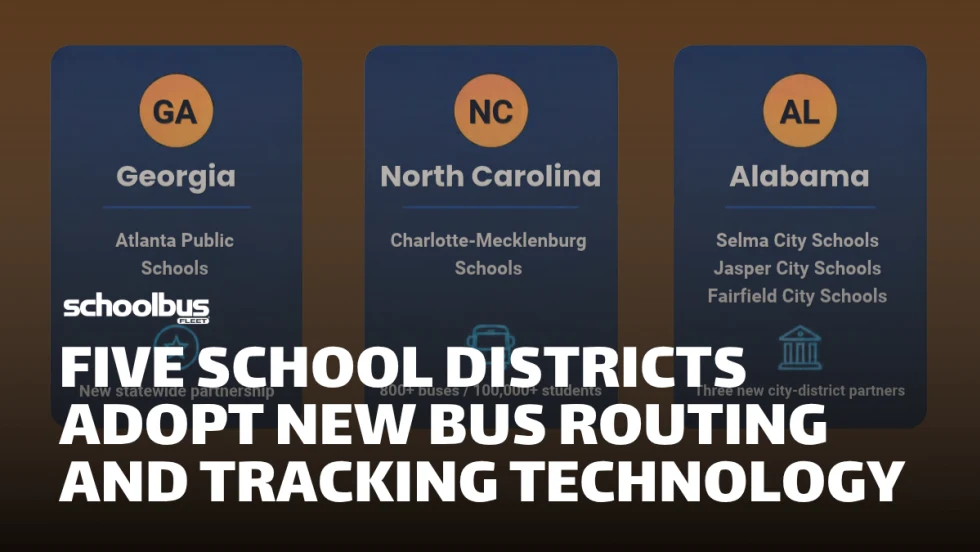
Five Southeast School Districts Adopt New Bus Routing and Tracking Technology
Districts in Georgia, North Carolina, and Alabama are adding routing, GPS tracking, and communication tools from AlphaRoute to improve school transportation operations.
Read More →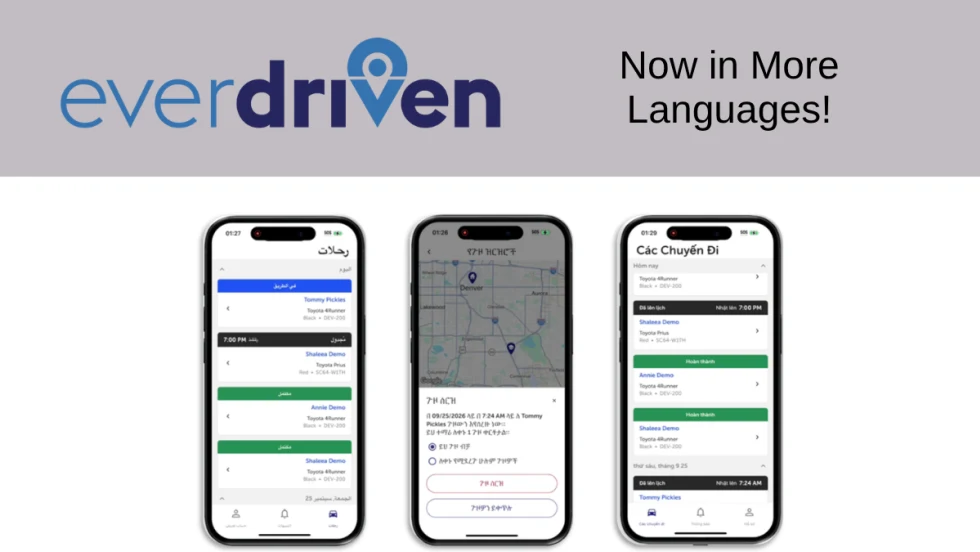
EverDriven Adds More Languages to RideAware App
The alternative transportation company's app now supports nine languages, adding Arabic, Dari, Amharic, Nepali, Somali, French, and Vietnamese to its English and Spanish support.
Read More →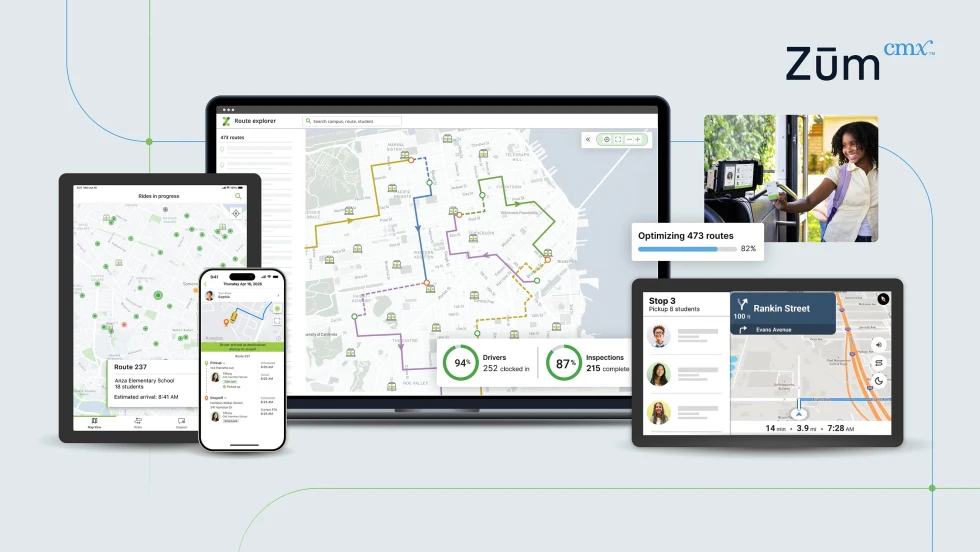
Zum CMX Expands Across Los Angeles Unified
LAUSD deployed Zum's AI-powered technology across its fleet, creating a connected platform across both district- and Zum-operated buses.
Read More →
HopSkipDrive’s CareEngine Targets the ‘Exceptions’ in Student Transportation
The new platform works alongside districts’ existing transportation management systems to coordinate specialized rides, automate last-minute changes, and turn ride data into operational improvements.
Read More →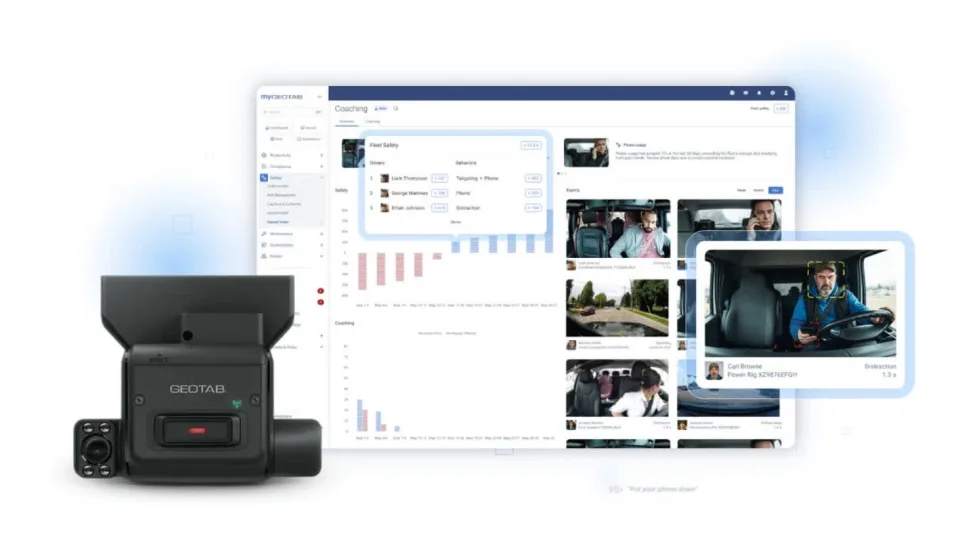
Geotab Expands Fleet Safety Tools With Video Coaching, Risk Insights
New safety and video capabilities aim to help fleet managers assess risk, support drivers, and take targeted action through video coaching, red-light violation detection, and more.
Read More →
Summit School Services to Complete Fleetwide Samsara Technology Rollout
The company said outfitting its entire fleet with AI-powered safety and fleet management technology will strengthen student safety and operational efficiency across its local brands.
Read More →
AI Tools Roundup: New Fleet Tools Aim to Turn Data Into Faster Decisions
The latest AI-powered platforms could help student transportation teams analyze fleet performance, manage maintenance, and uncover operational insights using natural-language queries.
Read More →
How GPS Tracking Helps School Bus Fleets Improve On-Time Performance Without Adding Routes
Struggling with late buses? GPS data can help fleets cut delays, fix route bottlenecks, and improve on-time performance without adding routes.
Read More →