



What More Than Two Million Rides Reveal About School Transit
More than two million student trips. Nearly 28million miles. Here's what that data reveals about the future of alternative student transportation.

iStock image

- Analysis of over two million student trips unveils insights into the efficiency and patterns of school transit systems.
- The extensive data covers nearly 28 million miles, highlighting the scale and reach of alternative transportation options for students.
- Findings from this comprehensive dataset could inform future decisions and improvements in student transportation strategies.
*Summarized by AI
Every school day, thousands of students who can't ride a traditional yellow bus still need a reliable way to get to class. For students with disabilities, those experiencing housing instability, and others with complex needs, transportation is often the deciding factor in whether they show up at all.
Data from EverDriven's most recent Safety and Operations Report, covering 2.6 million trips, 27.7 million miles, and nearly 31,000 students across 37 states, offers a rare ground-level view of what Alternative Student Transportation actually looks like at scale. The findings say less about any one provider than about where the industry is heading and what districts will need to keep up with.
Key Findings from the Data
Across districts, vehicle types, and student populations, five patterns emerged that point to where alternative student transportation is heading, and what districts will need to navigate it well.
1. The Population Driving Demand Has Fundamentally Changed
The growth in alternative transportation is a result of a demographic shift. Sixty-two percent of school districts report an increase in their special education populations. Nearly half report growth in the number of students qualifying under the McKinney-Vento Act. Traditional fixed-route models weren't designed for students whose addresses change mid-semester or whose placements shift without warning.
As districts serve more students with disabilities, students in foster care, medically fragile students, and those experiencing housing instability, the definition of safe student transportation has had to expand with them. A route that works in September may not work in November. That reality is reshaping how districts think about transportation planning from the ground up.
2. Consistency Matters More Than Most Districts Realize
Among students with disabilities in the reporting data, more than 83% of trips were completed by the same driver. More than 41% of those trips included specialized safety equipment or monitors. These details reflect something transportation research has long supported: for students navigating complex circumstances, a predictable ride can be as stabilizing as anything that happens inside the classroom.
Districts that treat driver consistency as a logistical afterthought often underestimate its impact on student anxiety, attendance, and family trust. For students with the most specialized needs, familiarity with a driver is a part of the service.
3. Flexibility and Reliability Are No Longer Trade-Offs
There's a longstanding assumption in student transportation that flexibility comes at the cost of reliability, that adapting quickly means accepting more disruption. The operational data challenges that assumption.
Across more than two million trips, 100% were tracked in real time. More than 90% arrived within five minutes of the scheduled drop-off time. Districts that can onboard new students in as little as one day and adjust routing in real time are demonstrating that responsiveness and consistency can coexist, but only when the underlying system is built for it.
4. Safety at Scale Requires More Than Compliance
State regulations for small-capacity vehicles vary widely and are often less prescriptive than those governing yellow school buses. That regulatory gap puts more responsibility on districts and their partners to fill it.
The reporting data provides one benchmark: 100% of drivers completed pre-service drug testing and multi-layered background checks, including checks against the National Sex Offender Registry. Every vehicle passed annual third-party safety inspections. Across more than two million trips, 99.99% were completed without accident, major or minor.
For districts evaluating alternative transportation providers, those figures offer a useful frame for what rigorous safety standards can produce, and a baseline for the questions worth asking.
5. Technology Is Becoming the Connective Tissue of Transportation Operations
Technology now plays a significant or critical role in transportation strategy for 68% of districts. Real-time GPS, centralized scheduling, parent-facing apps, and AI-powered driver monitoring are moving from pilot programs to operational expectations. One in two vehicles is equipped with AI-powered cameras, with 32% more districts opting into this service over the last year.
The shift matters because it changes what visibility means for families. Rather than calling a transportation office when a ride is late, caregivers can see live ETAs, driver details, and trip status in real time. That kind of transparency doesn't just reduce administrative workload; it changes the nature of the relationship between districts and the families they serve.
What the Data Points To
More than two million trips is a large enough sample to draw some conclusions. Alternative transportation demand is growing and increasingly concentrated among students with the fewest backup options. Consistency, safety, and flexibility aren't competing priorities; they're interconnected. And the districts navigating this well aren't just solving a logistics problem. They're making a commitment to equitable access, one ride at a time.
This article reflects the views of EverDriven and does not necessarily represent the views of School Bus F or Bobit Business Media.
Quick Answers
Analyzing over two million student trips provides valuable insights into travel patterns, efficiency, and areas for improvement in school transportation systems.
*Summarized by AI
More Management
'Our Routes Looked Like Spaghetti': Survey Reveals School Bus Routing Struggles
Transfinder's new data reveals how driver shortages, bell schedules, and community demands are limiting school bus routing efficiency nationwide — and what districts are doing.
Read More →
Not Just ‘Trust Us’ Anymore: Zonar Achieves SOC 2 Certification for Data Protection
The independent validation means that Zonar meets high cybersecurity standards to protect customer data across its fleet management platform.
Read More →
The 20 Largest School Bus Contractors in 2026
See which private school transportation providers made the list of the largest contractors in 2026, with location, fleet sizes, district contracts, and number of students served.
Read More →


School Bus Contracting in 2026: Fleet, Fuel, and Workforce Trends
Shifting fuel strategies, evolving workforce pressures, rising costs, and growing technology adoption define today’s transportation providers. Here’s what the data reveals about key issues shaping the contractor industry.
Read More →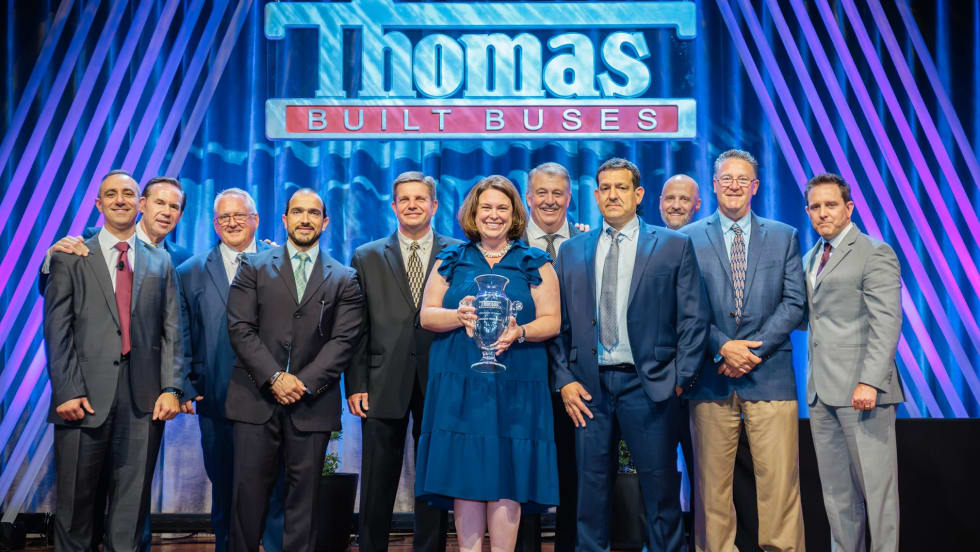
Thomas Built Buses Names Carolina Thomas 2025 Dealer of the Year
The North Carolina-based Thomas dealership is recognized for the second time for its customer support, operational excellence, and industry commitment, as other top-performing dealers were celebrated.
Read More →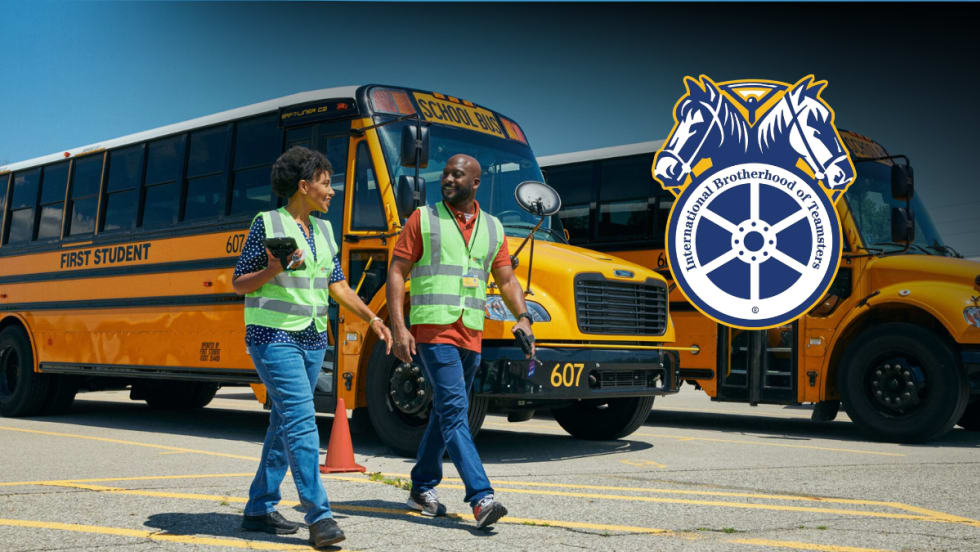
96 Teamsters Locals Ratify Five-Year National Contract with First Student
The agreement covers more than 22,000 school bus workers nationwide, delivering stronger retirement benefits, expanded leave protections, and new safeguards for onboard bus surveillance technology.
Read More →
The Essential Handbook for Safe Alternative Student Transportation
Your district's "exception riders" — students with IEPs, those experiencing homelessness, foster care youth — deserve more than a middleman solution. This handbook breaks down exactly what to look for in a supplemental transportation partner: from driver vetting and regulatory compliance to proactive safety technology. Because getting a ride isn't the same as getting a safe one.
Read More →
How Does Military Logistics Experience Help Keep Students Moving Safely?
See how Army veteran Tracy Voigt went from coordinating construction and logistics in Afghanistan to leading school transportation operations in Minnesota in this National Military Appreciation Month profile.
Read More →
New York School Bus Contractors Association Announces 50th Roadeo Winners
Winners, photos, and highlights from the 2026 NYSBCA School Bus Driver Safety Competition, where drivers across the Empire State showcased safety skills and precision behind the wheel.
Read More →
The BUILD America 250 Act Has Big Implications for School Buses, Too
Buried within a sweeping federal transportation bill are provisions that could affect school bus driver requirements, illegal passing enforcement, and even the future role of autonomous technology in pupil transportation.
Read More →