





Read: 5 Questions: First Student on Driver Recruitment, Retention & Contracting
First Student to Add Samsara AI Technology to Full Vehicle Fleet
Samsara’s video-based safety, telematics, commercial navigation, door monitors, and student ridership insights are soon coming to all of First Student's buses.
September 9, 2025
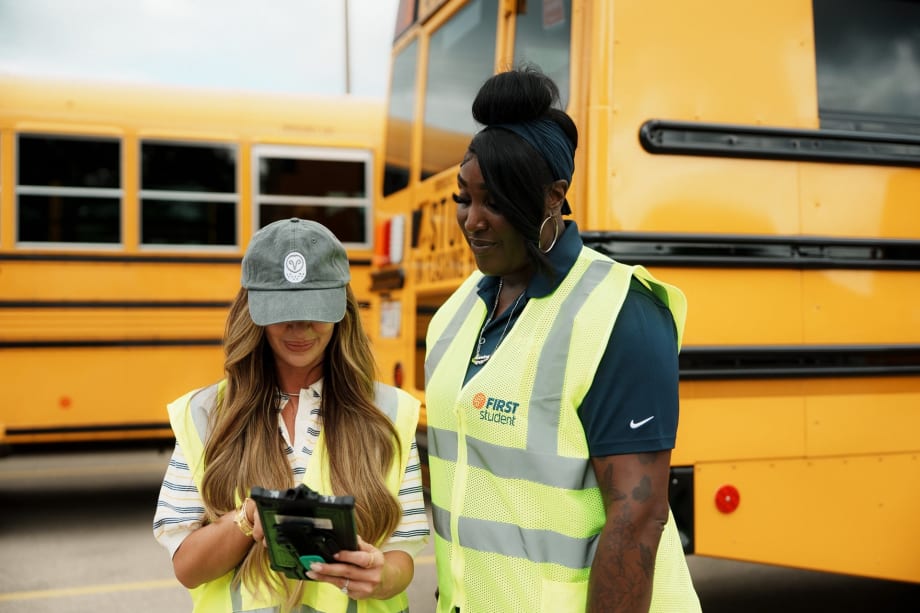
The partnership aims to alleviate some of the "where's my bus calls," prevent incidents, offer driving coaching and directions, and elevate bus safety.
Photo: First Student and Samsara
3 min to read
More safety technology is headed for First Student's buses.
The country's largest school bus contractor today announced it will equip its ~46,000 vehicle fleet with Samsara’s AI technology suite, including video-based safety, telematics, commercial navigation, door monitors, and student ridership insights.
By leveraging real-time data collected from Samsara’s Connected Operations AI Platform, First Student builds on its safety and performance ecosystem, helping drivers, districts, families, and students experience safe, reliable, and efficient student transportation services.
“This partnership between two industry leaders enables us to leverage advanced technology to deliver safer, smarter, and more connected student transportation,” said John Kenning, CEO and president of First Student. “By integrating Samsara’s AI insights into HALO, we are living out our value of setting the highest standards and redefining what student transportation can be. With Samsara’s AI capabilities, predictive analytics, and real-time safety monitoring, we are taking HALO to the next level — anticipating risks, preventing incidents, enhancing driver satisfaction, and advancing our mission to provide every student with the best possible transportation experience so they arrive at school ready to achieve their full potential.”
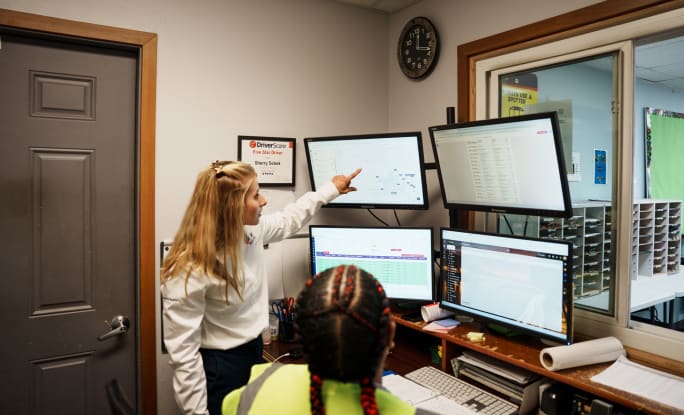
Samsara's solutions will be connected to First Student's HALO platform.
Photo: First Student and Samsara
“We are proud to partner with First Student, which operates at an unmatched scale, serving millions of students daily across North America," said Sanjit Biswas, Samsara CEO and co-founder. "By integrating our AI-powered platform with First Student’s HALO, we are taking innovation to the next level to create a safer, more efficient experience. Together, we're bringing students the best possible transportation experience, powered by data-driven insights."
Partnership Benefits
For Students: Safer, smarter rides powered by AI that can predict risks and help prevent incidents.
For Families: More accurate ETAs and real-time updates through the enhanced First View app, reducing “where’s the bus?” calls and providing greater peace of mind. Ridership insights also allow First Student to share key updates with families, including the time of their student's boarding and disembarking.
For Drivers: Helpful tools that provide turn-by-turn directions and real-time visibility, streamline coaching to support safe driving, and build stronger trust between drivers and their managers.
For Districts: Tech-enabled fleet operations that optimize routes, reduce delays, and streamline maintenance, all while elevating safety standards. Onboard Wi-Fi connectivity enables buses to communicate with one another and with the broader system, strengthening overall fleet coordination and performance.
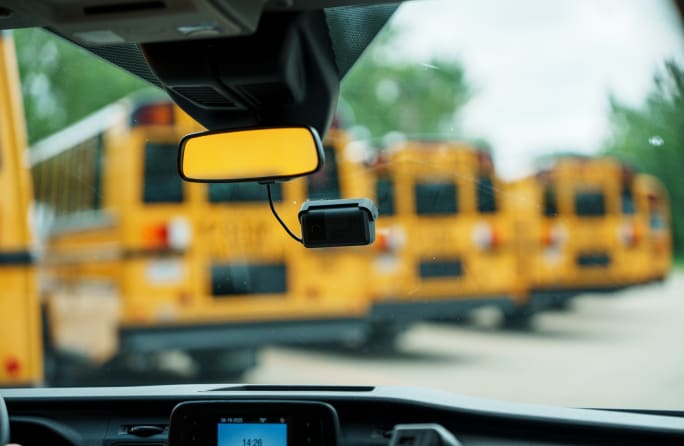
First Student's vehicles will now be equipped with technology to predict risk, prevent incidents, and ensure the well-being of all students on board.
Photo: First Student and Samsara
Key Safety Features Gained
AI Cameras: AI-powered risk detection with in-cab alerts.
Collision Avoidance & Hazard Detection: Alerts drivers to pedestrians, cyclists, motorcyclists, stopped or slowed vehicles, and more.
Predictive Safety Analytics: Combines data from vehicle sensors, AI cameras, and external factors to generate insights. Samsara’s models learn from billions of minutes of video footage to help identify and address risks proactively.
Post-Trip Insights: Gives supervisors visibility into trends and coachable moments to continuously support safe driving.
Tablet-Based Pre- and Post-Trip Inspections: Improves safety checks and maintenance response.
Smart Navigation: School bus-specific routing improves accuracy and efficiency.
Driver Performance Dashboards: Real-time feedback supports recognition, self-correction, and continuous improvement. With Samsara’s AI coaching tools, drivers receive personalized support and training, creating a better overall driver experience and resulting in stronger retention rates.
First Student and Samsara demonstrated the impact of their collaboration through select pilots run last school year at locations across North America. These pilots confirmed how Samsara’s AI platform can be successfully integrated into First Student’s HALO platform. First Student is now deploying the technology across all of its vehicles, bringing the benefits to every student, family, and district served, and to every driver employed.
More Safety

How to Build a Better School Bus Driver Training Program
Is it time to strengthen your driver training? Here’s how to pick the right talent and improve recruitment, retention, and safety. This video is brought to you by IC Bus.
Read More →
Recent School Bus Accidents Leave 2 Dead, 2 Injured
Four school bus crashes in Florida, Illinois, and Georgia highlight risks in transportation lots, at bus stops, and during student loading and unloading.
Read More →
Sponsored•September 8, 2026
When Every Second Matters, Clarity Keeps Routes Moving
From routine delays to urgent incidents, strong communication practices help drivers, dispatchers, schools, and families respond with confidence.
Read More →

What Happens When a School Bus Catches Fire — and What Can Help
School bus fires are rare but can be devastating. Learn how advances in fire suppression and asset protection help fleets detect fires earlier, reduce damage, and improve safety.
Read More →
Geotab Launches Tool to Help Fleets Investigate Road Incidents
Geotab Investigations combines telematics data, video, documents, and other evidence to help fleets reconstruct incidents, resolve claims, and determine what happened.
Read More →
Texas Sixth Grader Wins 2026 National School Bus Safety Poster Contest
Sai Darshana Yekolu of Moseley Middle School in Prosper, Texas, was named the newest winner for her artwork, bringing the theme of “Safe Rides, Everyday Heroes” to life.
Read More →
Sponsored•August 27, 2026
Doing More With Less: How Transportation Directors Can Prioritize Safety Amid Budget Uncertainty
With diesel prices soaring and nearly one-third of transportation directors expecting budget cuts, maintaining student safety has never been more challenging. Download this guide to learn how leading districts are prioritizing risk, funding critical safety technology, and building stronger budget cases with data.
Read More →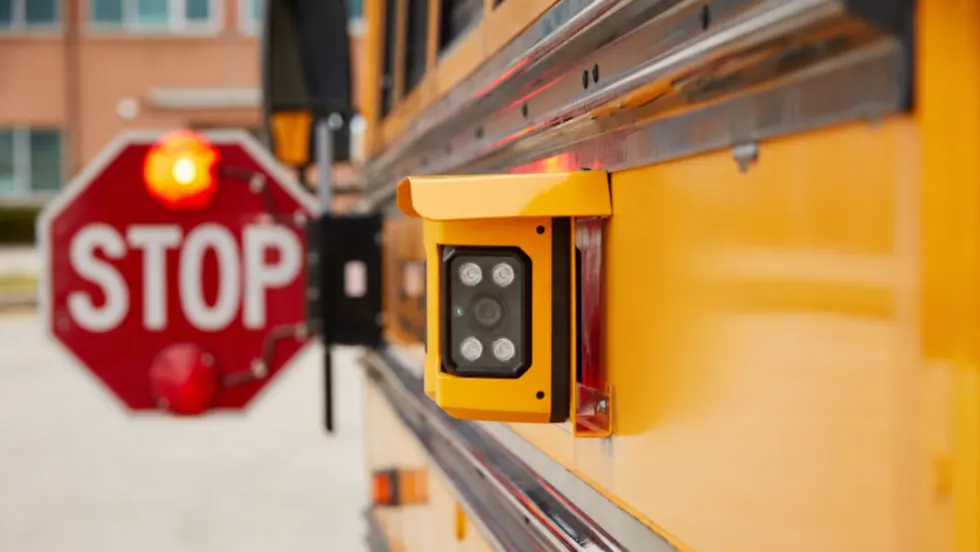
Walton County Schools Adds Gatekeeper Stop-Arm Enforcement System
The Florida district will deploy Gatekeeper’s updated Student Protector technology, which now incorporates AI to improve video evidence.
Read More →
How To Build a More Secure School Bus Yard During and After Hours
As thefts and overnight security threats continue, school transportation leaders are combining stronger operational practices with AI-enabled surveillance to better protect buses, facilities, and staff.
Read More →
FMCSA Names New Chief Safety Officer: What School Bus Operators Should Know
Steve Dowling is set to lead the federal agency's efforts to advance commercial motor vehicle safety and reduce crashes, fatalities, and injuries on the nation's roadways.
Read More →