




Creating a Successful Electric School Bus Ecosystem
Explore the growing trend of zero-emission electric school buses, highlighting the infrastructure, community engagement, and funding strategies essential for successful transition any school bus fleet can learn from.
Steelton-Highspire School District in Pa. replaced six of the school district's seven buses with First Student's electric emissions-free buses last spring, the first district to have a 100% electric school bus fleet — and the first completely solar-powered EV bus fleet.
South Carolina Department of Education
- The transition to electric school buses involves developing robust infrastructure that supports charging and maintenance requirements.
- Successful integration of electric school buses depends on active community engagement and education to garner support and understanding.
- Securing diverse funding sources is crucial to offset the initial costs and ensure long-term sustainability of electric school bus fleets.
*Summarized by AI
It makes perfect sense that the trend toward zero-emission electric school buses is gaining momentum.
In addition to the climate effects from burning fossil fuels, there also is concern about potential health risks young students and drivers face when close to exhaust emissions.
Procuring electric buses is the easy part of the equation. Major manufacturers like Blue Bird, IC Bus, Thomas Built Buses, and others have delivered thousands of electric buses and are working on second- or third-generation vehicles. And federal grants are helping defray the expense.
The real challenge? Creating a comprehensive electric school bus infrastructure “ecosystem.”
When transitioning to a zero-emission bus fleet, what you are really doing is creating an ecosystem that considers the infrastructure demands and seeks support from individuals within an organization and the community.
Operational teams have to become a part of it. Believe in it. They need to come to the table, understand the transition, and provide their input and insights.
Successful ecosystems start with champions who are invested in its success and eager to lead the effort. Champions can push a project forward even when inevitable challenges arise.
Steering committees featuring representatives from every operating element can develop champions. Beyond the usual decisionmakers, this initiative should include bus operators, maintenance personnel, teachers, administrators, parents, and even students. Once comfortable with forthcoming changes, they can help others see the impact and benefits.
One common concern: Fire risk (often called "thermal events"). In fact, the safety record with electric vehicles is better than internal combustion vehicles. Communicating these important details will instill confidence and bring more people on board.
Facility conversion, and whether there is a need to retrofit existing infrastructure or construct new facilities, will likely be one of the biggest hurdles, especially for a major transition, including hundreds of buses.
Early in the planning stages, contact the local utility to evaluate what power is available and develop a positive relationship that can be leveraged as more power needs materialize.
Consider the opportunity to create a microgrid, where the school district creates its own power using solar or another alternative power generation source. Many utilities are interested in helping school districts pursue this option, and collaboration can offset costs.
Utility companies view electric school bus fleets as giant batteries that are not used to their full potential. Since most buses typically only transport in the morning and mid-afternoon — and infrequently during the summer months — it creates an opportunity for “grid buffering,” where the school district and the utility can enjoy mutual benefits by better utilizing the infrastructure.
We have seen utilities help purchase buses, providing a financial solution for school districts. Dominion Energy is one provider that has supported the deployment of many electric buses for schools.
Building a successful ecosystem requires attention to those important little things in-between big decisions, like workforce development, thorough operational planning, public engagement, and finding funding sources.
Federal grant programs can cover some expenses. The Environmental Protection Agency’s (EPA’s) Clean School Bus Program is awarding billions in funding for school districts and school bus contractors to purchase zero-emission buses. The application deadline for the next grant round is Jan. 9, 2025. Start planning now!
Fortunately, the grant process is relatively simple and may not require significant investigation before applying. Demonstrate serious interest in a plan and show school board and administrative support for a bus transition, and you’ll be in a good position to reach the next level of grant consideration.
Partnering with an experienced third party, such as WSP, that has been through the process and has successfully deployed hundreds of zero-emission fleets is recommended. They understand how to properly plan a transition, successfully secure the highest possible grant amounts, procure buses, design facilities, train the workforce, install the necessary infrastructure… and deliver the full ecosystem.
The timeline from planning to implementation can be relatively short for a motivated school district. It’s not unreasonable to move from concept to implementation in under 20 months. A district that starts planning today could introduce an electric bus fleet at the start of the 2026 school year.
But don’t just take my word for it …
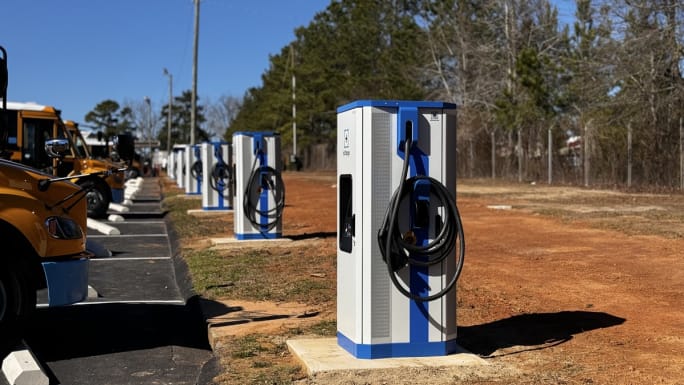
Before old buses were retired from South Carolina’s fleet, they had to meet specific criteria. And, new models added from EPA funding were fully vetted to make sure charging would never be an issue.
Photo: South Carolina Department of Education
Steelton-Highspire School District
The inspiring story of the Steelton-Highspire School District in Southcentral Pennsylvania is a shining example of what electric school bus champions can achieve.
“We are a small, underfunded urban school district … and we are totally electric,” said Dr. Mick Iskric, Steelton-Highspire superintendent.
In August, when students boarded new electric buses for their first day of school, Steelton-Highspire became one of the first U.S. school districts to replace its entire diesel school bus fleet.
“It has been a big win for us, and for our students,” said J.J. Carnes, Steelton-Highspire business manager. “The majority of our students are living at or below the poverty line, and often feel like the forgotten ones. Now they can ride in the Cadillac of school buses. They are part of something important.”
Two champions were created the day Iskric asked Carnes his thoughts about the Clean School Bus Program.
“Electric school buses?” Carnes said. “And I don’t have to buy diesel fuel? And it saves me $20,000? Let’s go!”
Steelton-Highspire contracts its bus service through First Student, and the transportation service firm supported the plan to replace their old buses. But after submitting the grant application, Carnes was skeptical about his small school district’s chances.
He didn’t have to wait long to hear good news: Steelton-Highspire received a $2.1 million grant. And 15 months after their initial conversation, Iskric and Carnes proudly watched Steelton-Highspire students arrive at school in one of six zero-emission buses.
“The EPA made it very easy,” Carnes said. “I have people from other school districts tell me they haven’t applied yet because they’re doing a load study or a route study. Just apply. That’s what we did, and it worked.”
When it came to creating the charging infrastructure and energy generation, Steelton-Highspire had the answer already in place.
Before making the electric bus transition, Steelton-Highspire partnered with McClure Company, the district’s HVAC contractor, to install solar arrays on school property. Through a power purchase agreement, McClure owns the arrays — which generate 1.7MW of electricity — and became the school district energy provider. It receives 100% of its power at a fraction of the cost, saving the district another $20,000 a year.
“We installed six chargers that operate off of the solar arrays,” Iskric said. “Our buses are now conveniently parked close to the solar arrays.”
The biggest challenge they experienced was resistance from some reluctant bus drivers during training. Otherwise, the reaction from the community, staff, and students has been overwhelmingly positive.
“Some people wondered how well they would hold up in winter weather,” Carnes said. “But these buses are already being used in Canada and have performed quite well in those conditions, so I am confident ours will do just fine.”
The health and environmental benefits were another key reason the school district, with an enrollment of about 1,450 students, pursued zero-emission buses.
“We have a number of children with asthma issues here in our community,” Iskric said. “Replacing our diesel buses with electric was one way to address this concern.”
The electric buses are creating hands-on educational opportunities for students to explore career pathways that they may not realize are available to them.
“We are always looking at ways to develop makerspaces for our students,” Iskric said. “Our students have visited the steel mill in our town to learn about electrician careers. We have also used the solar arrays to explore emerging career options.”
With electric buses on the upswing, he hopes that it will give students a head start toward careers where demand is also rising.
Their motivation for why this initiative is so important is as clear as the air surrounding their new zero-emission buses.
“We were both born and raised here,” Carnes said. “We care deeply about this district and the community. This is our home, so we want to do better. We have to do better. This is better.”
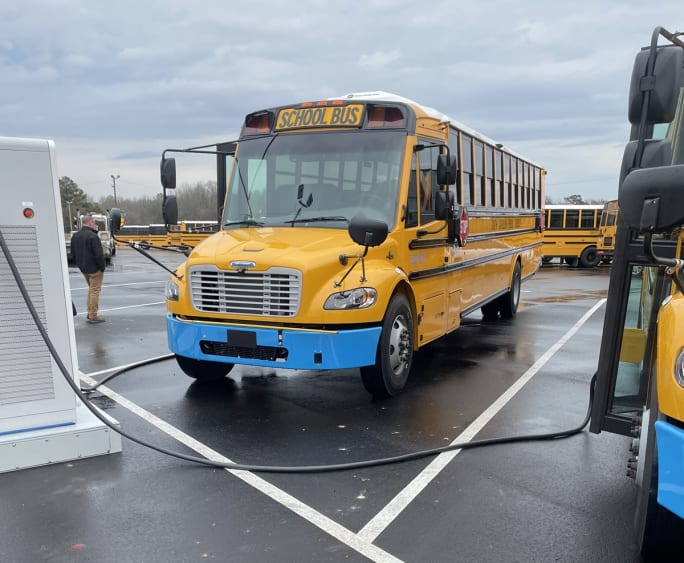
In March 2023, the S.C. DOE secured the nation’s largest EPA-funded electric school bus order, with 160 Thomas Built Saf-T-Liner C2 Jouleys.
Photo: South Carolina Department of Education
South Carolina Department of Education
The South Carolina Department of Education (DOE) initially tested the zero-emission waters with four electric school buses, purchased with an EPA grant.
“After that, we were all in,” said Mike Bullman, head of transportation for the South Carolina DOE. “It was uncharted territory, but after testing the viability of the electric buses, crunching the numbers, and with a very supportive administration, we were comfortable to pursue it in earnest.”
South Carolina is the only state in the U.S. where every school bus – 5,200 in day-to-day operation across 77 school districts – is owned by the state. That gave them the opportunity to take an ambitious approach and evaluate the entire fleet to determine which meet the EPA’s priority criteria.
Bullman said for that first phase of the Clean School Bus Program, South Carolina applied for funding to purchase 375 buses, ultimately qualifying for 160 buses across 17 districts. Eventually, they purchased 20 more buses through the grant program, bringing the total to 184.
While aggressive, he said they limited their requests to 10 to 15% of the total buses in each school district to ensure the supporting infrastructure can keep up with the arrival of the new buses.
“We worked hard to not cross that threshold,” Bullman said. “Preparing the charging infrastructure has been the biggest challenge. Our state has one contract for a charger provider with InCharge, but requires individual contracts to set up the infrastructure at each school district, so the bidding process can take some time. Fortunately, we have worked really well with utility providers … that part has been painless.”
He said part of the criteria was that the buses had to be 2010 or older and used four to five days a week. Most of the qualifying buses were in rural areas classified as underserved.
Before an EV bus entered the fleet, they tested the routes to ensure the bus charge was sufficient. He said buses return from morning routes with at least 25% charge, allowing enough time to return to a full charge before the afternoon route.
While some bus drivers were apprehensive about the new buses, he said electric buses are “about 85%” the same as traditional buses, with key differences being the regenerative braking and the charging requirement.
In fact, bus drivers became their most persuasive champions. “It’s important to get the drivers on your side,” Bullman said. “Once they rode a bus and saw that it was a smooth, quiet ride, they became our ambassadors.”
Bullman said they made a big deal when the new buses arrived at a school district, distributing press releases, inviting the media, parents, students, and the general public to introductory events for the buses, including Q&As and even some rides in the new buses.
It didn’t hurt to remind the public that EV buses cost 20 cents per mile compared to 80 cents per mile for a diesel bus.
“We let everyone know we weren’t replacing diesel buses overnight,” Bullman added. “But there is a place for EVs today in our fleet, and we are proving that.”
Bullman said cost remains the biggest hurdle to a complete overhaul of the state’s bus fleet.
“Without grants, these purchases would be tough,” he said. “We will need a price reconciliation before we can get really aggressive with the buses and the supporting infrastructure.”
Steelton-Highspire and South Carolina DOE are proof that with the right people, a carefully developed plan, and collaboration with knowledgeable partners, you could be on your way to bringing the benefits of zero-emissions buses to your community sooner than you believed possible.
And that is a change that would help a lot of parents — and their kids — breathe easier.

Mike Finnern
About the Author: Mike Finnern is a senior vice president and national zero-emissions fleet lead at WSP, a leading engineering, environment and professional services firm.
More Alternative Fuels

CALSTART and Forth Combine to Form Catalyst Mobility
The new name represents a renewed vision for the nonprofit focused on advancing clean, equitable, and affordable transportation solutions that move people and goods.
Read More →
Alt-Fuel Moves: New Buses, Charging Hubs & Real-World EV Testing
Propane and electric school bus deployments continue to grow as districts add new vehicles, expand charging infrastructure, and gather more real-world operating data.
Read More →
Fewer Electric School Bus Models Reshape the U.S. Market
WRI’s latest buyer’s guide points to a consolidating electric school bus market, but fewer options may reflect a maturing industry rather than fewer meaningful choices for school bus operators.
Read More →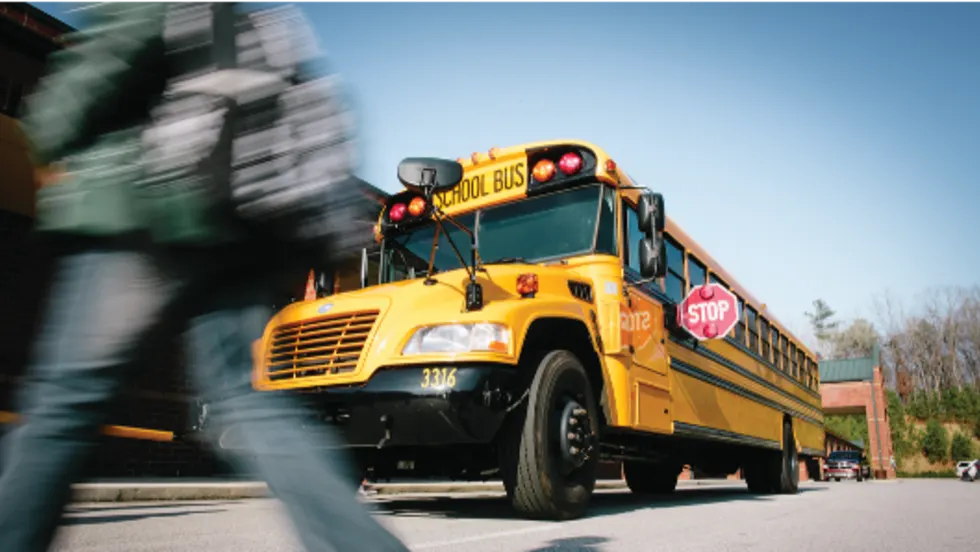
The Fuel Budget You Can Actually Predict: How Propane Autogas Keeps Money in the Classroom
Learn how propane autogas helps school districts manage fuel costs with predictable pricing, lower maintenance, and reduced emissions from former transportation director Joel Stutheit.
Read More →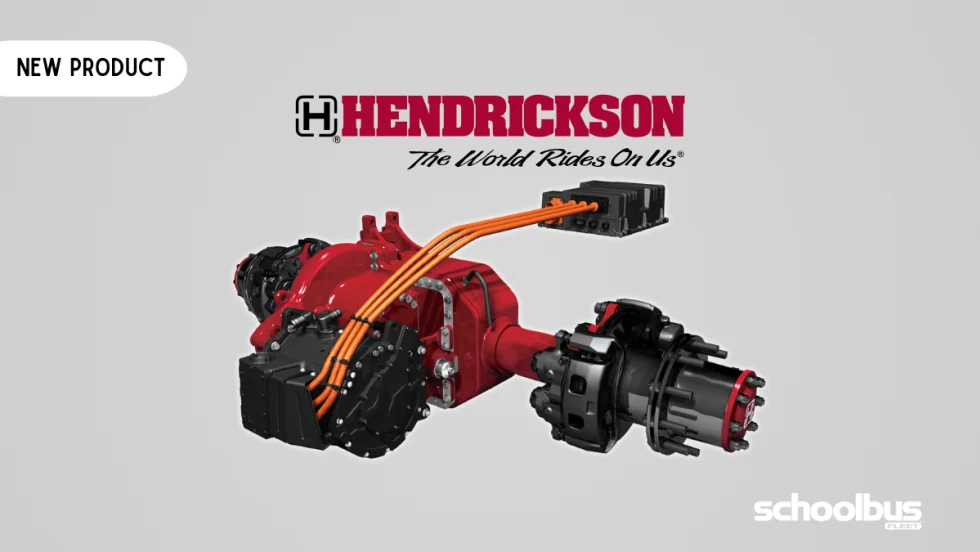
Hendrickson, Driventic Introduce New Electric Powertrain for School Buses
ELECTRAAX, the electrified, lightweight drive axle offers integrated ePowertrain efficiency and modular flexibility for Class 6–7 school bus use.
Read More →
The Mobility House Joins PowerFlex in Fleet Electrification Deal
The acquisition combines intelligent charging software, bidirectional charging expertise, and fleet electrification services to support the growing adoption of electric school buses across North America.
Read More →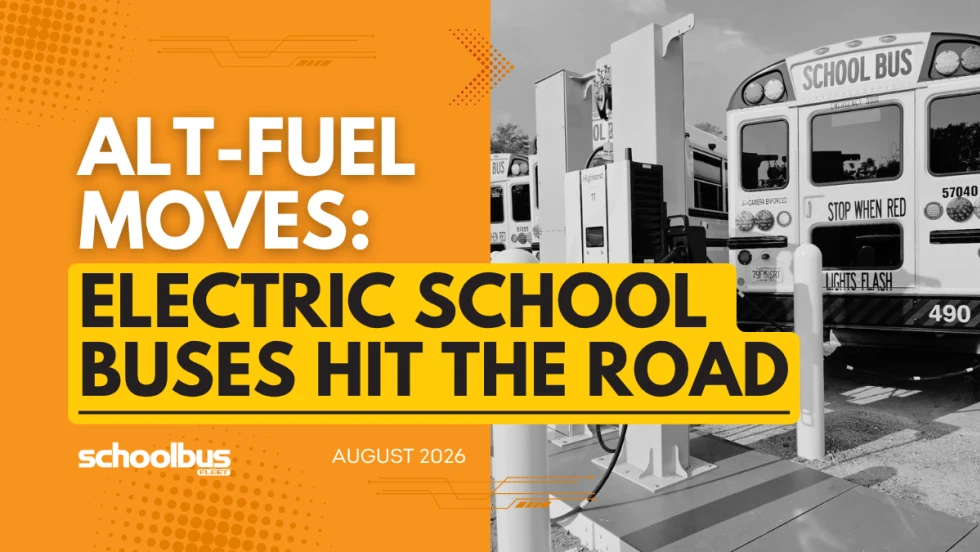
Alt-Fuel Moves: Electric School Bus Investments Hit the Road
See which districts across the U.S. are putting electric school buses into service, expanding charging infrastructure, and planning the next phase of fleet electrification.
Read More →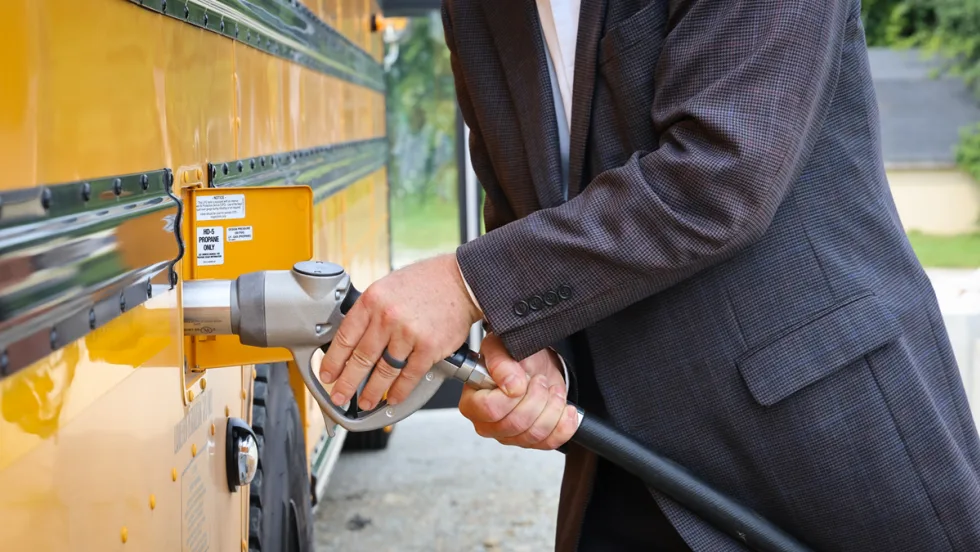
With Fuel Volatility Ahead, School Districts Turn to Propane
While diesel prices peaked above $5 this spring, districts with propane autogas-powered fleets paid under $2 per gallon, according to PERC.
Read More →
EPA Unveils Proposed Changes to 2027 Heavy-Duty Engine Rules
The federal agency has proposed changes to next year’s targets that would eliminate DEF derates, ease warranty requirements, and retain current NOx emissions standards.
Read More →
Alt-Fuel Moves: EV Charging & Infrastructure Projects Gain Momentum
The latest developments include new funding, charging infrastructure, utility investments, and fleet technologies designed to support the transition to electric school buses nationwide.
Read More →