




Bus Electrification Partnership to Drive Cost Savings, Cleaner Air
In this Q and A, Dominion Energy’s Dan Weekley talks about fleet integration plans and dollar and power savings from vehicle-to-grid technology. Meanwhile, Thomas Built Buses offers tips for partnering with a power company.

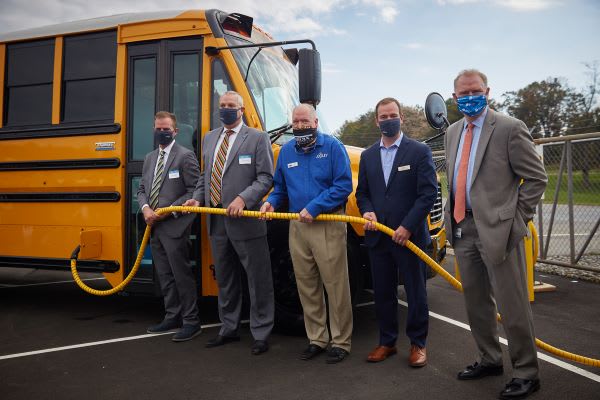
Thomas Built Buses began delivering its Saf-T-Liner C2 Jouley electric school buses for the Electric School Bus Initiative in November. Shown from left: Caley Edgerly, president and CEO of Thomas Built Buses; Dr. Jeff Cassell, superintendent of Waynesboro City Public Schools; Floyd Merryman, president and CEO of Sonny Merryman; Eric Reynolds, Proterra’s senior director of channel sales; and Dan Weekley, Dominion Energy’s vice president of innovation policy and implementation.
Photo courtesy Daimler Trucks North America
Virginia-based power company Dominion Energy teamed up with Thomas Built Buses, the sole provider of the electric school buses allocated for the initial phase of its Electric School Bus Initiative, which aims to support Virginia school divisions as they transition their school bus fleets from diesel to electric.
Through the initiative, the power company and school bus manufacturer will help districts integrate the vehicles into their fleets and explore the battery storage capabilities of electric school buses to provide services on the electric grid. Another goal of the project is to provide cleaner student transportation with zero-emission vehicles.
Dominion started exploring an electric school bus program in early 2019, and by the end of the year had ordered 50 of Thomas Built’s Jouley electric buses, which run on Proterra’s battery and charging system. The buses are going to 15 school divisions in the state. The initiative is reportedly the largest deployment of electric school buses in the U.S.
School Bus Fleet spoke with Dan Weekley, vice president of innovation policy and implementaton at Dominion Energy, to learn more about fleet integration plans, cost and power savings from vehicle-to-grid (V2G) technology, and tips for partnering with a power company on electric bus integration.
SBF: Why did Dominion Energy select school buses for this type of initiative?
Dominion Energy is committed to lowering carbon emissions and helping our customers do the same, and harnessing new, innovative technology resources is a key part of our strategy. The largest source of greenhouse gas emissions in the U.S. is transportation. We are partnering with our customers and stakeholders to expedite the development of innovative, cleaner, more sustainable transportation solutions. This program will provide a wide range of benefits for the customers and communities we serve, including cleaner air both inside and outside of the bus, significant cost savings for school districts, and enhanced grid reliability.
Had Dominion already been working with other types of vehicles on electrification?
While we have several electrification initiatives underway — including goals to electrify our own fleet, providing education and incentives for our customers who want to go electric, and piloting an autonomous electric shuttle — electric school buses presented a unique opportunity to explore battery storage capabilities.
This battery storage component is especially important when coupled with our growing renewable energy efforts. Because school buses run on a fixed schedule, sit idle for multiple hours during the day, and are generally stored in one central location, they are a good fit for the study of V2G technology.
There are other benefits too, including the fact that the customers and communities we serve will benefit directly from cleaner air — thanks to zero-emission electric buses — and that our school districts will get to keep the savings related to reduced operational and maintenance costs for electric buses vs. diesel buses. That’s money they can use for other programs or resources.
Why is a program like this important now?
We’re working to build a clean and sustainable energy future. That means exploring new technologies that will help us reach those goals. We’re adding more renewables to our grid, like solar and wind, but we know the sun won’t always shine or the wind won’t always blow as strong as we’d like, so battery storage technology is very important as we move forward. Battery storage technology such as the V2G technology included on these buses can help to support the integration of renewable energy across Virginia while providing grid stability during periods of high electricity usage.
What factors will determine whether or when the program moves into the second phase?
We have seen strong interest in the program so far, with support from localities and stakeholders around Virginia. The first 50 buses started rolling out in the fall of 2020, and we continue to explore ways to expand the program. Moving into the next phase will require state approval.

Dan Weekley, vice president of innovation policy and implementation at Dominion Energy, says that school bus fleet electrification programs will quickly grow due to cleaner transportation options for children, energy security for power company customers, and savings on power and fuel for schools.
Photo courtesy Dominion Energy
What are the benefits of this program for Dominion Energy customers?
The electric school buses will be on the roads within Dominion Energy’s Virginia service area, so the first benefit to customers is the emissions reduction directly in the communities we serve by replacing diesel buses with electric buses. Replacing one diesel bus with one electric bus is the equivalent of removing 5.2 cars from the road each year. But beyond that, all Dominion Energy customers will benefit from enhanced reliability as the program will also allow us to explore battery storage and V2G technology to provide reliability-related services on the distribution electric grid.
Is there anything else you would like to add about the program?
We have heard from peer utilities, other states, and stakeholder organizations that are eager to learn more about the program and discuss best practices. We believe this may be one of the most popular customer programs Dominion Energy has ever launched. That is probably because most people have a direct connection with school buses, through riding them, putting their children on them, or just seeing them every day in their respective communities.
Transitioning to cleaner transportation benefits for our children and energy security for our customers while also saving schools money are the reasons we believe these types of programs will grow rapidly in the near future.
What are some key tips or pieces of advice that all fleets – school bus, public transit, government, trucks – should keep in mind when partnering with an energy company on running electric buses, charging, and V2G?
It is important to work with your partners early on to ensure success throughout the process, from manufacturing to operation.
For example, with the electric school bus program, we are fortunate to have good partnerships with the Commonwealth of Virginia and the local school divisions that helped determine our needs and expectations for manufacturing. These expectations were helpful in setting baseline requirements for the manufacturers to meet in terms of safety and battery/vehicle performance such as training for technicians.
While Dominion Energy is interested in the battery technology and the value it brings to all our customers, working with our partners to ensure we were also meeting the needs of the buses’ primary role — safe student transportation — was equally important. We encourage all fleet customers to engage with us when they are considering fleet electrification. We have solutions to help them plan and meet their goals.
More Alternative Fuels

CALSTART and Forth Combine to Form Catalyst Mobility
The new name represents a renewed vision for the nonprofit focused on advancing clean, equitable, and affordable transportation solutions that move people and goods.
Read More →
Alt-Fuel Moves: New Buses, Charging Hubs & Real-World EV Testing
Propane and electric school bus deployments continue to grow as districts add new vehicles, expand charging infrastructure, and gather more real-world operating data.
Read More →
Fewer Electric School Bus Models Reshape the U.S. Market
WRI’s latest buyer’s guide points to a consolidating electric school bus market, but fewer options may reflect a maturing industry rather than fewer meaningful choices for school bus operators.
Read More →
The Fuel Budget You Can Actually Predict: How Propane Autogas Keeps Money in the Classroom
Learn how propane autogas helps school districts manage fuel costs with predictable pricing, lower maintenance, and reduced emissions from former transportation director Joel Stutheit.
Read More →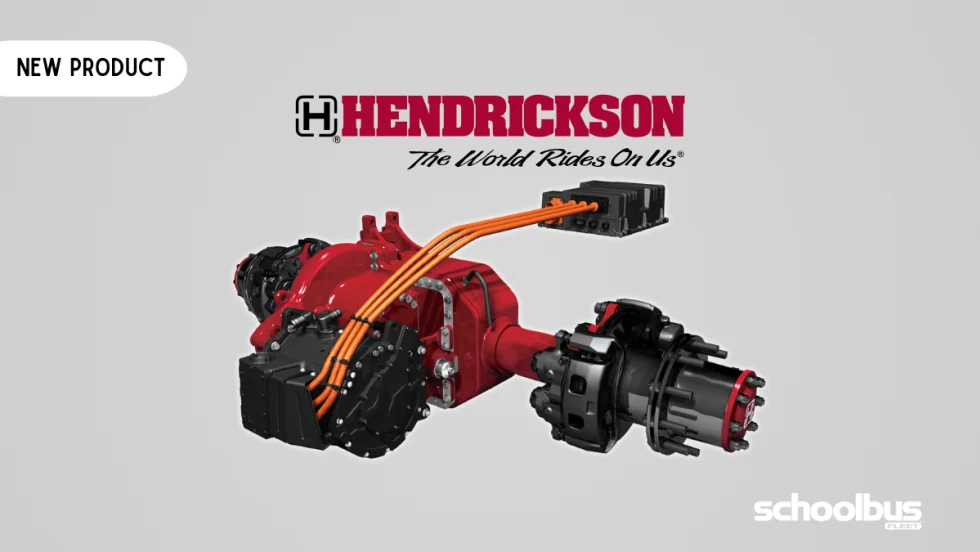
Hendrickson, Driventic Introduce New Electric Powertrain for School Buses
ELECTRAAX, the electrified, lightweight drive axle offers integrated ePowertrain efficiency and modular flexibility for Class 6–7 school bus use.
Read More →
The Mobility House Joins PowerFlex in Fleet Electrification Deal
The acquisition combines intelligent charging software, bidirectional charging expertise, and fleet electrification services to support the growing adoption of electric school buses across North America.
Read More →
Alt-Fuel Moves: Electric School Bus Investments Hit the Road
See which districts across the U.S. are putting electric school buses into service, expanding charging infrastructure, and planning the next phase of fleet electrification.
Read More →
With Fuel Volatility Ahead, School Districts Turn to Propane
While diesel prices peaked above $5 this spring, districts with propane autogas-powered fleets paid under $2 per gallon, according to PERC.
Read More →
EPA Unveils Proposed Changes to 2027 Heavy-Duty Engine Rules
The federal agency has proposed changes to next year’s targets that would eliminate DEF derates, ease warranty requirements, and retain current NOx emissions standards.
Read More →
Alt-Fuel Moves: EV Charging & Infrastructure Projects Gain Momentum
The latest developments include new funding, charging infrastructure, utility investments, and fleet technologies designed to support the transition to electric school buses nationwide.
Read More →