





Miss the Last Installment? Product Innovations & Funding Outlooks
Alt-Fuel Moves: Funding Boosts & Charging Innovations
Check out some of the latest moves where alternative fuels and school buses intersect, including electric bus and charging deployments, new funding opportunities, and a new management system.
February 23, 2026
On top of multiple alternative fuel and charging deployments, read more on funding initiatives from ComEd and the South Coast Air Quality Management District, as well as a product launch from InCharge Energy.
Credit:
InCharge Energy/School Bus Fleet
9 min to read
In this alternative fuel roundup, we take a look at the latest moves, product announcements, and deployments, including news from Orion, Zūm, Weld County RE-5J School District, ComEd, South Coast Air Quality Management District, and Incharge Energy.
New Alternative Fuel Deployments
School districts across the country are accelerating alternative fuel deployments, pairing electric school buses with large-scale charging infrastructure and resilience planning. From Boston’s 105 new DC fast chargers to Colorado’s vehicle-to-grid emergency shelter pilot, leaders are turning electrification into both a transportation and energy strategy.
Orion Announces $4M Project to Install 105 EV Charging Stations for Boston Public Schools
Orion Energy Systems, Inc., a provider of energy-efficient LED lighting, electric vehicle (EV) charging stations, and maintenance services, recently announced an installation project to deploy 105 EV charging stations and related infrastructure in the Boston Public School system. According to a release, the contract is valued at $4 million.
Orion’s Voltrek division is installing 105 DC fast-charging stations and related infrastructure at the Freeport Bus Yard, operated by the Boston Public Schools, one of the company’s largest customers. Like many Orion/Voltrek installations in the district, the new units feature an above-ground mounting method with Jersey barriers.
Orion/Voltrek is a recurring partner in the district’s initiative to electrify 100% of its 750 school buses. Although the effort is one of the largest school-bus electrification programs in the Northeastern United States, Orion/Voltrek is also spearheading numerous fleet-electrification initiatives in the region.
Orion/Voltrek’s electrification and maintenance engagements include multiple-location deployments in municipalities and roll-outs of electric van charging capabilities in school districts. The company’s work is illustrated by the installation of 13 charging stations for the Lower Pioneer Valley School Educational Cooperative, serving the Greater Springfield, MA, area.
“Orion/Voltrek is proud to be a reliable long-term provider of EV charging, infrastructure, and maintenance to BPS, one of the most innovative public school districts in America,” said Orion Chief Executive Officer Sally Washlow. “Fleet managers increasingly rely on Orion/Voltrek to deliver the quality, reliability, and scalability that enterprise fleet managers require.”
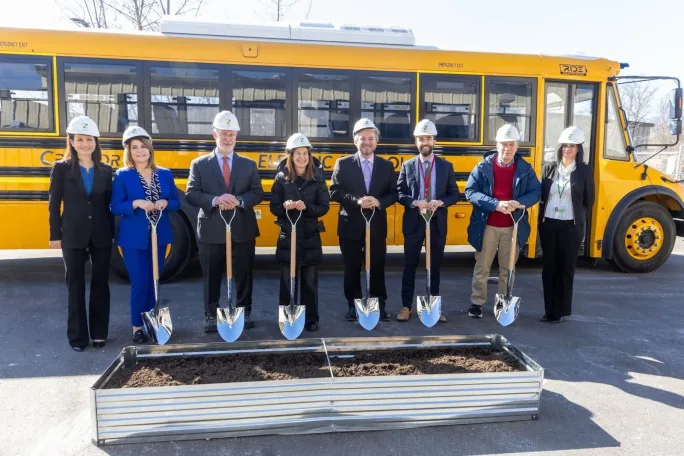
L to R: Sarah Skinner, Zum; Liz Sanchez, Zum; Chairman Peter Berdon; Lieutenant Governor Susan Bysiewicz; Superintendent Tranberg, Branford Public Schools; Blaize Levitan, COO, Branford Public Schools; Jim Finch, Town of Branford; and Charlotte Charbono, Zum.
Credit:
Zum
Zum Launches Its First Fully Electric School Bus Yard on the East Coast
Zūm recently announced it will deploy a fully electric school bus fleet for Branford Public Schools in Connecticut beginning in the 2026–27 school year. All electric buses will be supported by modern charging infrastructure, with built-in bidirectional V2G capabilities.
As one of the largest school districts in the Northeast to fully electrify its school bus fleet, Branford is demonstrating that clean, reliable electric student transportation is not a future ambition but a current possibility for school districts across the country, Zūm wrote in a release.
The electric fleet is designed with the future capability to strengthen grid resilience by enabling school bus batteries to return energy to the local grid at scale when not in use. This vehicle-to-grid capacity transforms what has traditionally been an underutilized asset into a “strategic energy resource.”
Zum and Branford Public Schools announced the initiative on February 13 at Zum's Branford student transportation yard during an event attended by local and state leaders, including Lieutenant Governor Susan Bysiewicz.
In 2024, Branford Public Schools awarded Zum a 10-year student transportation contract with the goal of transitioning the district to a 100% electric school bus fleet within five years. Through its partnership with Zum, Branford Public Schools is now on track to achieve this transition within the first two years of the contract, three years ahead of schedule.
Colorado District Secures $2.5M for Electric School Buses and Emergency Energy Pilot
Weld County RE-5J School District in Colorado recently announced the receipt of multiple grants totaling more than $2.5 million to bring electric school buses and emergency energy infrastructure to the district’s community.
Through an electric school bus resilience pilot project in Colorado, Weld RE-5J has been selected by Xcel Energy to help reimagine how school transportation can serve not only students but also the broader community during emergencies.
As part of this award, the district will receive:
- Six Blue Bird Vision Electric School Buses, funded by Xcel Energy’s Transportation Electrification Plan (valued at up to $400,000 per bus).
- Bidirectional charging infrastructure capable of powering an emergency shelter using stored energy from the buses’ batteries (valued at up to $100,000).
- Six electric bus chargers and full infrastructure installation.
- Free technical assistance from the World Resources Institute’s Electric School Bus Initiative.
The district will also receive additional funding through the Clean Fleet Vehicle and Technology grant from the Colorado Department of Public Health and Environment ($877,542 towards the cost of buses) and the Fleet-ZERO grant from the Colorado Energy Office ($56,000 for additional charging ports).
This opportunity was available only to districts meeting specific criteria, including being served by Xcel Energy, operating in wildfire-prone areas, and having a school facility capable of serving as an emergency shelter. The district plans to place the bus order this spring, aiming to have the new fleet operational by the second semester of the 2026–2027 school year.
New EV Funding Opportunities
New funding streams are opening doors for districts pursuing electric school bus deployments and charging infrastructure upgrades. From Illinois utility rebates to California clean air grants, millions of dollars are now available to help offset vehicle, charger, and site-preparation costs, especially in communities disproportionately impacted by air pollution.
ComEd Announces $70 Million in EV Rebates for Illinois
During the recent Chicago Auto Show, ComEd announced approximately $70 million in electric vehicle rebates available for residential, business, and community customers in 2026. ComEd offers a suite of programs covering residential EV chargers and installations, electric fleet vehicles, and business and public-sector make-ready charging infrastructure.
ComEd EV rebates are made possible through the Beneficial Electrification program, approved by the Illinois Commerce Commission (ICC). According to a release, the programs prioritize funding for low-income customers and equity-eligible communities and, since launching in 2024, have delivered more than $160 million in EV funding for projects across northern Illinois, more than 80% of which has been directed to Equity Investment Eligible Communities (EIEC).
ComEd’s rebates include substantial funding opportunities for EV fleets, including support to school districts. In facilitating partnerships with EV manufacturers and school districts, ComEd helps districts achieve their electrification goals, especially in “communities disproportionately impacted by air pollution.” Districts located in EIECs continue to qualify for higher rebate amounts for fleet EVs.
“We are proud to partner with ComEd to bring electric school buses to districts across northern Illinois,” said Josh Williams of Highland Electric Fleets. “Electric school buses not only improve air quality for children and communities, but they also have the potential to export energy to help support the local grid when not performing their critical role of safely transporting students.”
ComEd’s 2026 EV rebate programs include the following offerings for customers:
- The Residential EV Charger and Installation Rebate Program: More than $4 million available for rebates of up to $2,500 per household to support the purchase and installation of residential Level 2 electric vehicle chargers.
- The Business and Public Sector EV Purchase Rebate Program: More than $35 million available for rebates supporting the purchase or lease of new and pre-owned fleet EVs of all weight classes, ranging from $7,500-$240,000 per vehicle.
- The Business and Public Sector Make-Ready Rebate Program: More than $29 million available for rebates to cover costs to make sites ready for public and private Level 2 and DC Fast Charging, ranging up to $5,000 to $7,500 per port for sites with Level 2 chargers and up to $450 to $675 per kW for sites with DC Fast Chargers.
$30 Million Now Available for Zero-Emission School Buses and Charging Infrastructure
On February 6, the South Coast Air Quality Management District (South Coast AQMD) Governing Board approved $30 million to help communities disproportionately impacted by air pollution replace older school buses with new, zero-emission models and install supporting charging infrastructure.
South Coast AQMD's Assembly Bill (AB) 617 Clean Community School Initiative is an incentive program supporting school-related projects in overburdened communities identified through the AB 617 Program. Applicants must be the operators of privately owned school buses contracted with and serving public school districts within the identified communities.
According to a release, the initiative is expected to significantly reduce air pollution, including smog-forming nitrogen oxides (NOx) and particulate matter (PM10), which are tiny particles that can penetrate deep into the lungs. Zero-emission school buses help create cleaner air around schools and along bus routes, supporting “healthier learning environments and improving long-term health outcomes for students and surrounding communities.”
Eligible existing school buses must be diesel-, compressed natural gas-, or propane-fueled; have a gross vehicle weight rating (GVWR) greater than 8,501 lbs; be currently registered with the California Department of Motor Vehicles; and comply with the California Air Resources Board's (CARB) Truck and Bus Regulation. Buses must also have a valid California Highway Patrol (CHP) certificate at the time of application, and must have held a continuous CHP safety certificate for at least the past two years. Existing buses must be crushed or dismantled upon replacement.
Replacement buses must be CARB-certified, zero-emission vehicles with a GVWR greater than 8,501 lbs and in the same weight class as the existing school bus, unless otherwise approved by South Coast AQMD. Replacement buses are required to maintain valid CHP certificates throughout the contract.
Application Deadline: Tuesday, April 7, 2026, at 11:59 p.m. PST.
To apply, visit South Coast AQMD's AB 617 Community Action Plan Incentives page at: www.aqmd.gov/cleancommunityschools.
New EV Products
As electric school bus adoption grows, providers are expanding beyond hardware to deliver smarter service and uptime solutions. New platforms are leveraging real-time data, remote diagnostics, and AI-driven field service management to help fleets support electrification at scale.
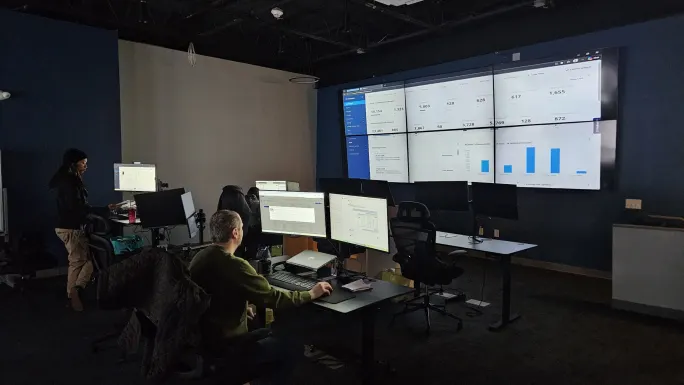
In the new service management system, the ServiceMax integration allows InCharge to route technicians based on skill, proximity, and parts availability, ensuring each visit is efficient and effective.
Credit:
InCharge Energy
InCharge Energy Launches an Enhanced Service Management System
InCharge Energy recently announced the launch of a new service management system, integrated with the ServiceMax field service management platform and strengthened by data‑powered enhancements. According to a release, these advancements elevate InCharge’s ability to diagnose issues, dispatch technicians, complete maintenance and repairs, and close service cases.
The ServiceMax integration allows InCharge to route technicians based on skill, proximity, and parts availability, ensuring each visit is efficient and effective. This significantly reduces repeat dispatches, accelerates issue resolution, and minimizes disruptions for fleet, commercial, and enterprise charging operators. These benefits extend across integrated energy systems, including lighting, solar, and battery solutions.
The center of the service’s ecosystem is InControl, InCharge’s cloud-based charger management and maintenance platform. InControl provides real‑time performance visibility, remote diagnostics, and automated fault detection.
InControl also supports tiered licensing, from Charger Management & Maintenance System (CMMS) to Maintenance System to Service Connection, linking each asset to InCharge’s Network Operations Center (NOC) and Support Operations Center (SOC) for remote monitoring and rapid intervention.
“We are building a service ecosystem that leads the industry in intelligence, reliability, and customer value,” said Rich Mohr, chief executive officer. “Our InControl platform, combined with new ServiceMax and AI capabilities, gives customers the performance, visibility, and uptime they need to operate with confidence across their entire electrified and renewable‑energy infrastructure.”
More Alternative Fuels
Bipartisan Bill Seeks to Extend Clean School Bus Program Through 2031
The proposed legislation would renew federal support for cleaner school buses as districts navigate funding uncertainty, rising fuel and infrastructure costs, and fleet replacement needs.
Read More →
Alt-Fuel Moves: Electric Bus Rollouts, Bidirectional Charging & Propane Growth
See which fleets are adding electric and propane school buses as districts and operators invest in charging infrastructure, bidirectional technology, and alternative-fuel expansion.
Read More →
Nobody Told Diesel Prices They Were Supposed to Come Down
With diesel prices surging, school bus fleets have new reason to stress-test fuel costs, consider diversification, and calculate what each route really costs to operate.
Read More →
Why Gasoline School Buses Are Making a Comeback
Gasoline is gaining ground in full-size school buses. See how today’s options stack up against diesel on cost, maintenance, emissions, performance, and more.
Read More →
EPA Opens $180M DERA Funding Round for Diesel Upgrades
The 2026 Diesel Emissions Reduction Act program seeks applications from eligible organizations to accelerate the retirement of legacy diesel vehicles.
Read More →
The Secret Life of an Electric School Bus Battery
Batteries change throughout years of daily routes, but degradation doesn’t necessarily mean the end. Here’s what operators should know about performance, safety, and second life.
Read More →
CALSTART and Forth Combine to Form Catalyst Mobility
The new name represents a renewed vision for the nonprofit focused on advancing clean, equitable, and affordable transportation solutions that move people and goods.
Read More →
Alt-Fuel Moves: New Buses, Charging Hubs & Real-World EV Testing
Propane and electric school bus deployments continue to grow as districts add new vehicles, expand charging infrastructure, and gather more real-world operating data.
Read More →
Fewer Electric School Bus Models Reshape the U.S. Market
WRI’s latest buyer’s guide points to a consolidating electric school bus market, but fewer options may reflect a maturing industry rather than fewer meaningful choices for school bus operators.
Read More →
The Fuel Budget You Can Actually Predict: How Propane Autogas Keeps Money in the Classroom
Learn how propane autogas helps school districts manage fuel costs with predictable pricing, lower maintenance, and reduced emissions from former transportation director Joel Stutheit.
Read More →