





How to Choose the Right Chargers for Your Electric School Bus Fleet
Electric School Buses Put to the Test: V2G Charging Pilot Launches in 3 Illinois Districts
The pilot aims to test bidirectional charging technology, enhancing energy optimization for customers and supporting the grid. It will be deployed at three local northern Illinois schools.
September 11, 2025
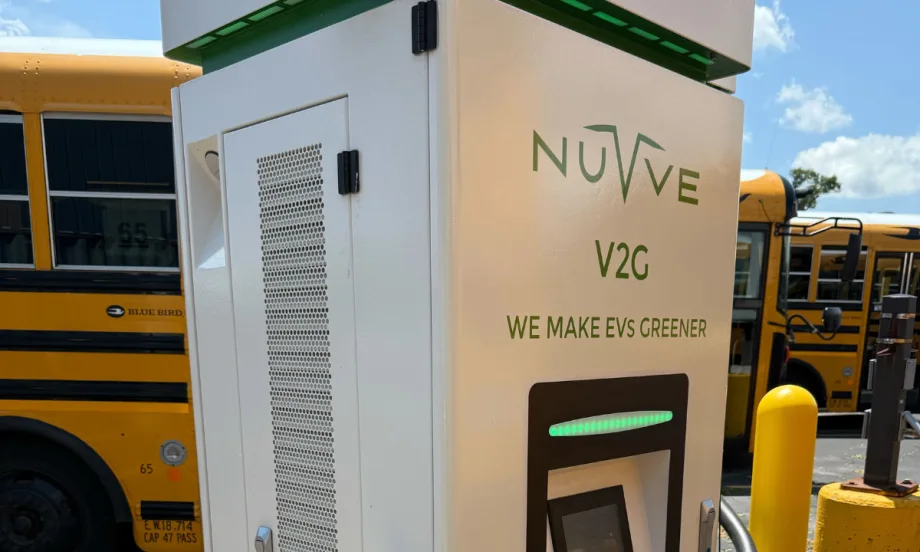
Wauconda School District is one of the three northern Illinois districts participating in the pilot. Pictured here are its charging station and buses.
Photo: ComEd
3 min to read
ComEd, a Chicago-based utility company, announced the start of its vehicle-to-grid (V2G) charging pilot’s testing phase with three Illinois school districts.
According to a release, the pilot is the first of its kind in northern Illinois. Running through the end of Q4 2025, ComEd will leverage data collected from these advanced, bidirectional chargers to examine the technology that could unleash the possibility of discharging energy stored in electric school buses safely and effectively back to the grid. Bidirectional charging could allow school districts in the future to reduce their load during peak energy demand periods, helping customers lower both energy usage and costs.
The project will power more than 4.3 million ComEd customers and three school districts across northern Illinois. V2G testing began recently with River Trails, Troy, and Wauconda School Districts.
“Troy CCSD 30-C is proud to partner with ComEd on this innovative Vehicle-to-Grid pilot. Our district is committed to pursuing sustainable solutions that enhance student learning and transportation while safeguarding taxpayer resources,” said Ben Hettel, executive director of operations, Troy Community Consolidated School District 30-C. “By helping advance vehicle-to-grid technology, we are investing in strategies that will deliver long-term benefits for our district and the stakeholders we serve.”
ComEd worked with Resource Innovations and charging vendor Nuvve to identify pilot participants and test V2G capabilities utilizing electric school buses. Each of the three school districts were Nuvve charging customers with a V2G-capable electric school bus and charger prior to the start of the pilot, making them ideal participants for this study.
"As one of the early adopters of electric buses in Illinois, we've faced our share of challenges over the past three years. We're hopeful that, with the continued support of the ComEd and Nuvve teams, we are finally turning a corner toward realizing the full potential of our electric bus program,” said Rick Strauss, director of transportation, Wauconda CUSD 118.
“Together with River Trails, Troy, and Wauconda school districts, we are showing how electric school buses can lower operating costs for schools, provide real support to the grid during peak demand, and create a scalable model for communities across Illinois," said Hamza Lemsaddek, COO, Fermata Energy — a Nuvve Company. "Looking ahead, we see applications that extend beyond school fleets to other customer segments, turning parked EVs into flexible, reliable energy resources.”
The V2G pilot is one of eight pilots outlined in ComEd’s multiyear Beneficial Electrification (BE) Plan with a goal of reaching 1 million EVs on the roads by 2030. ComEd announced its recently approved second BE plan, which continues investments started as part of BE Plan 1 and prioritizes funding for V2G as part of its BE Research and Development Program for the years 2026-2028. The plan has helped fund the expansion of EVs and charging projects in over 340 ZIP codes across Illinois.
ComEd is seeking input from other Illinois school districts to better understand how future V2G opportunities could support their needs. School districts can share their interest by submitting this Interest Form. As the pilot progresses, the company plans to host informational webinars and surveys to explain V2G technology.
Editor's Note: This article was originally published on Feb. 6, 2025, and was updated on Sept. 11, 2025.
More Alternative Fuels
Bipartisan Bill Seeks to Extend Clean School Bus Program Through 2031
The proposed legislation would renew federal support for cleaner school buses as districts navigate funding uncertainty, rising fuel and infrastructure costs, and fleet replacement needs.
Read More →
Alt-Fuel Moves: Electric Bus Rollouts, Bidirectional Charging & Propane Growth
See which fleets are adding electric and propane school buses as districts and operators invest in charging infrastructure, bidirectional technology, and alternative-fuel expansion.
Read More →
Nobody Told Diesel Prices They Were Supposed to Come Down
With diesel prices surging, school bus fleets have new reason to stress-test fuel costs, consider diversification, and calculate what each route really costs to operate.
Read More →
Why Gasoline School Buses Are Making a Comeback
Gasoline is gaining ground in full-size school buses. See how today’s options stack up against diesel on cost, maintenance, emissions, performance, and more.
Read More →
EPA Opens $180M DERA Funding Round for Diesel Upgrades
The 2026 Diesel Emissions Reduction Act program seeks applications from eligible organizations to accelerate the retirement of legacy diesel vehicles.
Read More →
The Secret Life of an Electric School Bus Battery
Batteries change throughout years of daily routes, but degradation doesn’t necessarily mean the end. Here’s what operators should know about performance, safety, and second life.
Read More →
CALSTART and Forth Combine to Form Catalyst Mobility
The new name represents a renewed vision for the nonprofit focused on advancing clean, equitable, and affordable transportation solutions that move people and goods.
Read More →
Alt-Fuel Moves: New Buses, Charging Hubs & Real-World EV Testing
Propane and electric school bus deployments continue to grow as districts add new vehicles, expand charging infrastructure, and gather more real-world operating data.
Read More →
Fewer Electric School Bus Models Reshape the U.S. Market
WRI’s latest buyer’s guide points to a consolidating electric school bus market, but fewer options may reflect a maturing industry rather than fewer meaningful choices for school bus operators.
Read More →
The Fuel Budget You Can Actually Predict: How Propane Autogas Keeps Money in the Classroom
Learn how propane autogas helps school districts manage fuel costs with predictable pricing, lower maintenance, and reduced emissions from former transportation director Joel Stutheit.
Read More →