Servicing School Buses for Present and Future Generations
As we push for more sustainable roadways, school buses are no exception. The move toward environmentally friendly bus transportation began before battery-electric consumer vehicles hit the roads.
by Joe George, Special to SBF
August 21, 2024
There's a large push for electric buses, but have you ever paused to think about who performs the maintenance to keep them running and ensure our kids get to school daily?
Photo: Cox Automotive
7 min to read
For many of us, seeing that big yellow bus brings up the nostalgia of childhood:
Riding to school in the morning
Hanging out with friends on the journey home
The excitement of the occasional field trip
Ad Loading...
As adults, we realize that these aren't just regular transportation vessels. They are carrying our community's most precious cargo.
As we push for more sustainable roadways, school buses are no exception. The move toward environmentally friendly bus transportation began before battery-electric consumer vehicles hit the roads.
For example, in 2023, the shift towards electric school buses gained significant momentum across the United States, with nine additional states enacting legislative measures, bringing the total to eleven.
California and Delaware set new statewide targets for zero-emission vehicles, joining other states like Connecticut, Maine, Maryland, and New York. Additionally, Michigan and Minnesota allocated substantial funding to support electric school bus adoption, prioritizing underserved communities in their initiatives.
There's a significant push for electric buses, but have you ever paused to think about who performs the maintenance to keep them running and ensure our kids get to school daily? Fleet Services by Cox Automotive is doing just that. Let's take a closer look at some of the important work our team is doing.
Ad Loading...
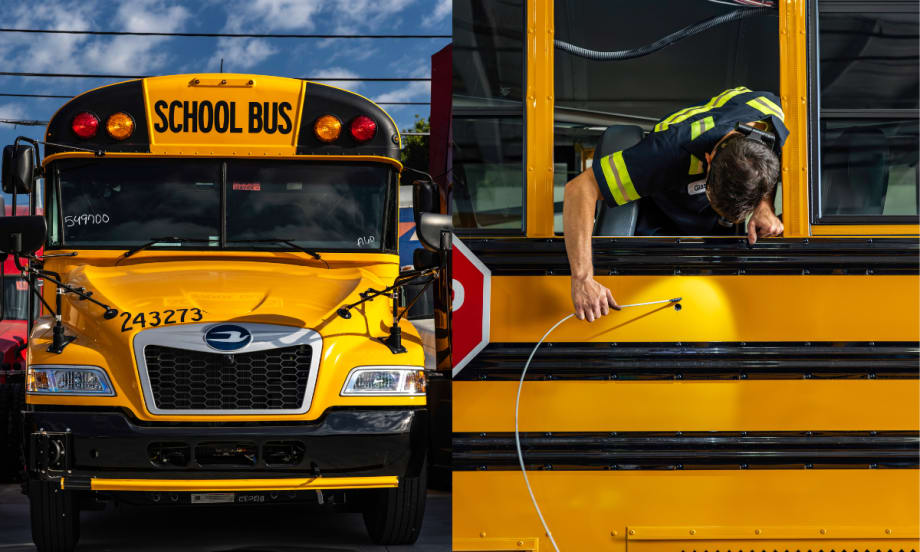
In Louisiana, our team maintains electric buses in five school districts in Baton Rouge and the surrounding areas. Seven Cox Automotive technicians currently work full-time, providing preventative and unscheduled maintenance.
To date, Fleet Services has serviced more than 1,000 school buses in Baton Rouge, ensuring the safe transportation of over 70,000 students. Not only is the team performing maintenance on buses today, but they are also leading the charge to keep them moving safely and sustainably tomorrow.
"I've worked on a lot of heavy-duty trucks, and it's always felt great to help our customers. But, the service we're doing on school buses is rewarding on another level. I have friends and family whose kids get on these buses each day — they are now my customers, too. It gives me a great sense of purpose knowing I'm making an impact on my community that hits so close to home," JT Williams, Lead Mobile Technician, Fleet Services by Cox Automotive
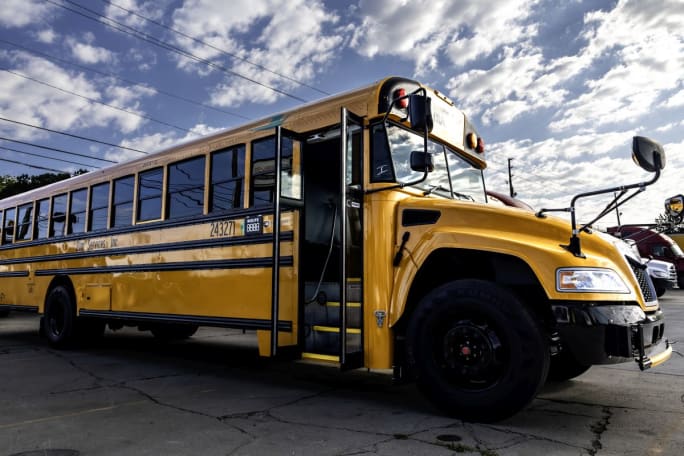
The absence of a loud diesel engine makes for a quieter ride, reducing noise pollution—an often-overlooked aspect of environmental health.
Photo: Cox Automotive
Four Benefits of Electric School Buses
From improving air quality and reducing operating costs to providing a quieter and safer ride, electric buses offer a range of advantages over traditional diesel buses. Check out these four benefits:
1. A Breath of Fresh Air
Traditional diesel buses have long been the backbone of student transportation, but they have significant drawbacks. Diesel exhaust contains pollutants that harm the environment and human health — not something we want around our kids! Children are especially vulnerable to these pollutants, which exacerbate asthma and other respiratory conditions.
Ad Loading...
Electric school buses solve this problem by eliminating tailpipe emissions. This switch significantly reduces greenhouse gas emissions and helps improve air quality around schools and communities. The benefits extend beyond just the students on the bus, affecting entire neighborhoods by contributing to a healthier environment.
2. Cost-Effective in the Long Run
While the upfront costs of electric school buses can sometimes be higher than those of their diesel counterparts, grants can help these costs, and the long-term savings are substantial. Electric buses are cheaper to operate, have lower fuel costs, and require less maintenance. Electric motors have fewer moving parts than internal combustion engines, leading to fewer mechanical issues and breakdowns.
Cox Automotive recently participated in the Electric Mobility Summit at the University of Georgia. During this summit, Justin Ellis, a Program Manager at UGA's Office of Sustainability, discussed the university's integration of EVs into their fleet, explaining, "It costs about five dollars a day to charge an electric bus to run its entire route, all across UGA's campus. In comparison, the same bus running the same route costs over a hundred dollars a day on diesel."
School districts, colleges, and more can reinvest the savings from operational costs into other critical areas, such as educational programs or further environmental initiatives, making it a financially sustainable option in the long term.
3. Quiet Yet Powerful
The absence of a loud diesel engine makes for a quieter ride, reducing noise pollution—an often-overlooked aspect of environmental health. This quieter environment allows drivers to better focus on the road. It facilitates clearer communication between students and bus staff, creating a safer and more pleasant journey and significantly reducing the potential of bullying.
Ad Loading...
Albert Burleigh, the Vice President of Alternative Power at Bluebird, says that once drivers overcome initial apprehensions regarding the new technology, they become staunch advocates for the electric buses due to their better performance and quieter operation. The absence of a traditional transmission and the placement of batteries also contribute to a smoother ride and better handling.
"The great thing about these buses is that they perform better than their diesel counterparts," explains Burleigh. "Plus, it's quiet, so they don't have to scream over a diesel engine. It improves the working environment for the drivers and enhances safety, as drivers can hear more and maintain a calmer atmosphere inside the bus. The kids better behave because you can hear what they're doing. It just makes for a better experience for school bus drivers."
4. Technological and Safety Advancements
Electric school buses are equipped with the latest technology to ensure safety and efficiency.
Dan Nicholls, AVP of Environmental Health and Safety at Cox Automotive, emphasizes the safety benefits: "Electric school buses are not only cleaner for the environment but also safer for our kids. The advanced telematics systems provide real-time insights into vehicle performance, allowing technicians to proactively address any issues before they become problems."
Furthermore, the low center of gravity due to the battery placement enhances the stability of electric buses, improving handling and reducing the risk of accidents.
Ad Loading...
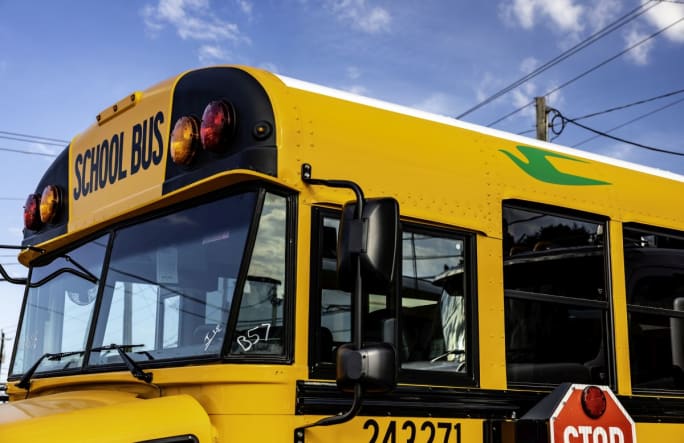
Electric school buses are equipped with the latest technology to ensure safety and efficiency.
Photo: Cox Automotive
Leading Technological Training
However, the shift to EVs isn't just about deploying them but also maintaining them. This is where Cox Automotive's specialized EV Training Team, operating through FleeTec Academy, comes into play. Our trainers travel directly to technicians in the field across the United States to ensure a steady pipeline of skilled technicians capable of handling the nuances of EV technology.
Jack Jenkins, an EV Level 3-certified technician with Cox Automotive who services the electric trams at Nashville International Airport, shares what it took to get there:
"Getting my Level 3 certification was tough but worth it. I went through 80 hours of training to learn how to safely handle all the high-voltage stuff. Now, I can tackle the really complex tasks and keep these trams running smoothly," Jack Jenkins, Lead Mobile Diesel Tech, Fleet Services by Cox Automotive
Cox Automotive's EV-certified technicians have three different levels of certification, each with its own specific focus and depth:
Level 1: Basic EV Maintenance and Safety
At Level 1, technicians receive foundational training, which includes extensive hands-on work. They learn the basics of EV systems, safety protocols, and general maintenance tasks.
Ad Loading...
Level 2: Intermediate Component Replacement and Maintenance
At Level 2, the training gets more advanced, and technicians start replacing components. They might work on systems like air conditioning, where they learn to replace the AC compressor or maintain and replace the air compressor for the air brakes.
Level 3: Advanced High-Voltage Systems
Level 3 is the most advanced certification, focusing strictly on high-voltage tasks. Technicians at this level handle the complex and critical high-voltage systems that power EVs. They undergo rigorous training to manage these systems safely and effectively, ensuring they can diagnose and repair high-voltage issues without compromising safety.
We also provide online training in addition to having trainers come directly to techs in the field or in shops across the country.
As more school districts adopt EV buses and companies like Amazon and Kroger continue to add EVs to their fleets, the demand for knowledgeable technicians will only grow.
Photo: Cox Automotive
A Bright Road Ahead
As more school districts adopt EV buses and companies like Amazon and Kroger continue to add EVs to their fleets, the demand for knowledgeable technicians will only grow. In this quiet revolution, every electric bus humming along a school route and every silent emergency vehicle speeding to a call is a signpost for the future. This future promises cleaner air, quieter streets, and safer communities.
Cox Automotive is proud to be part of this change for this generation and the next, aligning with our Cox Conserves mission.
Ad Loading...
Launched in 2007, Cox Conserves focuses on reducing waste and energy consumption, embracing renewable forms of energy, conserving natural resources, and inspiring eco-friendly behavior. With over $165 million invested in more than 500 sustainability and conservation projects, we are committed to creating a positive environmental impact and a strong foundation for future generations.
Your district's buses carry students to school every day. This guide shows how predictive maintenance powered by fleet data helps keep buses reliable, drivers accountable and students safer from the first bell to the last stop.
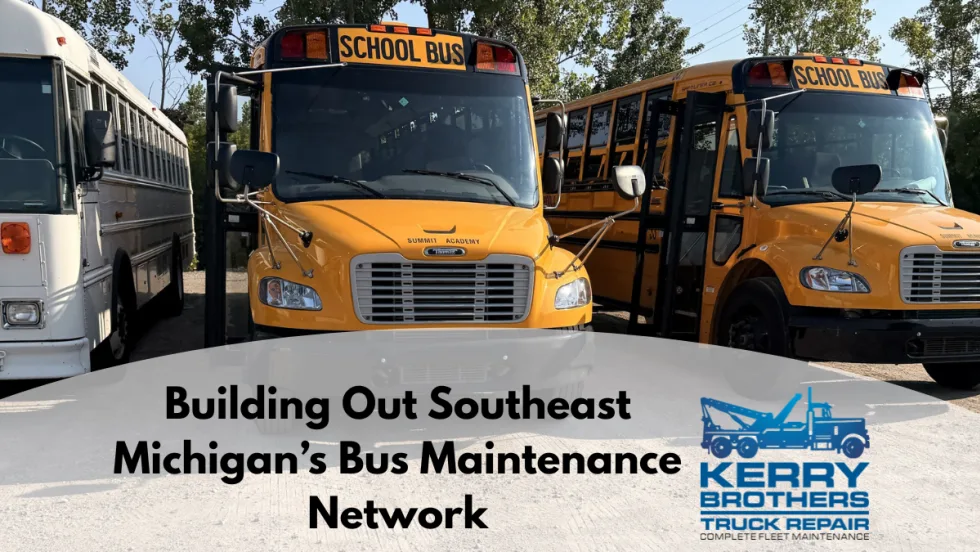
The acquisition of Downriver Truck and Bus expands Kerry Brothers’ school bus maintenance footprint across southeast Michigan, adding repair capacity, diagnostic resources, and state inspection support.
CAN Mentor and the latest JPRO update aim to simplify vehicle network diagnostics and improve repair efficiency for technicians of all experience levels.
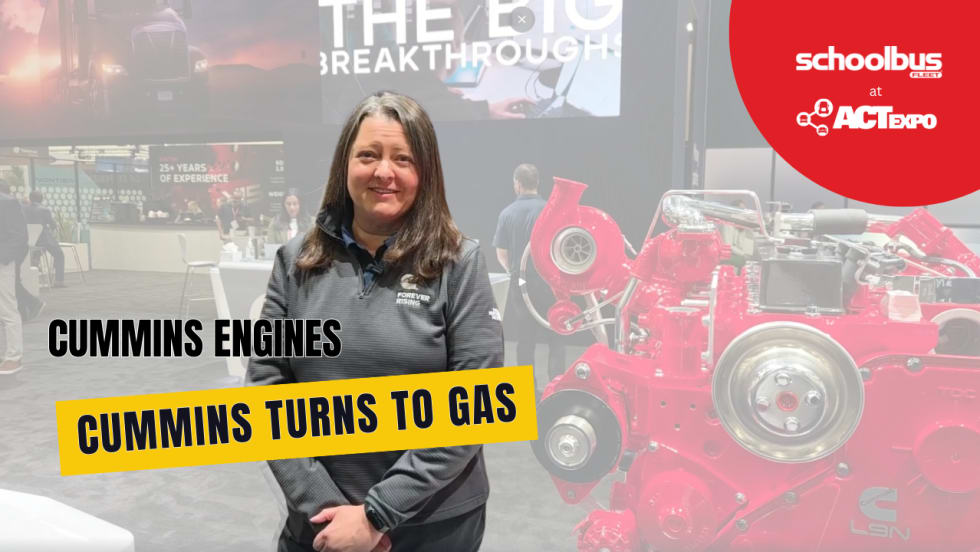
Cummins discusses its first-ever gasoline engine for school buses, EPA 2027, and why bus fleets still want durable, simpler internal combustion options.
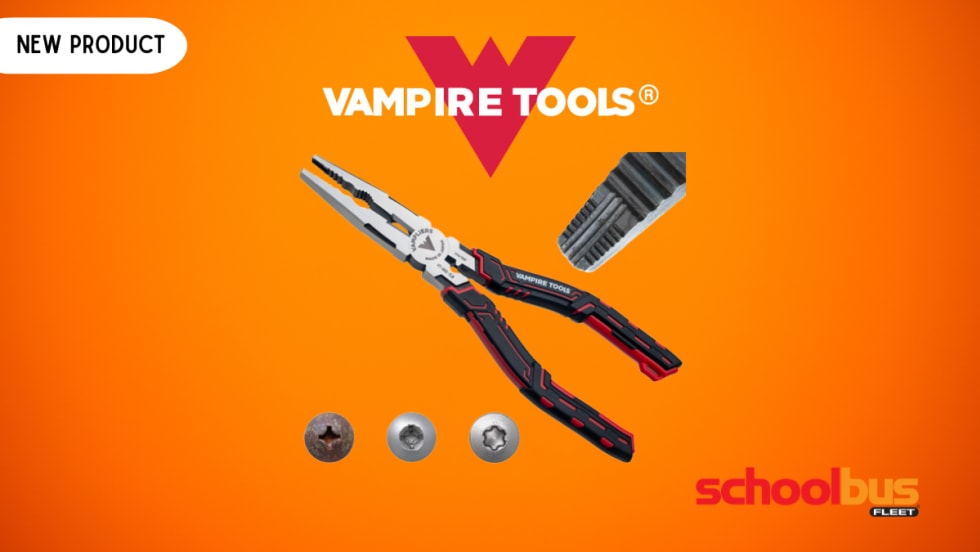
Vampire Tools introduced the VAMPLIERS Caiman 7.5-inch multi-purpose pliers, combining screw extraction, cutting, crimping, and gripping functions into a single tool designed for fleet maintenance professionals.
Chat with Noregon’s Kevin Smallhorn at ACT Expo about bus diagnostic tools, telematics integration, CNG maintenance support, and strategies to help reduce downtime and improve uptime.
Don’t let bus downtime wear you down. Here’s how bus operators are shifting from manual processes to AI-powered, data-driven maintenance systems for improved reliability and safety.
Covering 38 routes on a Friday afternoon. Buses idling while routes overlap. Parents calling nonstop about late arrivals. Sound familiar? This whitepaper explores how district transportation leaders solved these exact problems — and what measurable results followed.