





Dig deeper in this coverage from our sister brand, Heavy Duty Trucking.
EPA Unveils Proposed Changes to 2027 Heavy-Duty Engine Rules
The federal agency has proposed changes to next year’s targets that would eliminate DEF derates, ease warranty requirements, and retain current NOx emissions standards.
July 11, 2026
The proposal keeps nitrogen oxide (NOx) emissions standards in place while rolling back previous compliance requirements that manufacturers argued would increase costs and reduce reliability. Among the biggest changes: eliminating mandatory diesel exhaust fluid deratements for new heavy-duty vehicles and reducing emissions warranty requirements.
Credit:
School Bus Fleet
5 min to read
- The EPA has proposed eliminating DEF derates in its 2027 heavy-duty engine rule changes.
- Proposed changes include easing warranty requirements for heavy-duty engines.
- The current NOx emissions standards would be retained under the new proposal.
*Summarized by AI
As the federal administration has already rolled back several environmental regulations and clean energy standards affecting the sale and use of heavy-duty vehicles, including school buses, one question loomed: What changes would we see to the EPA’s 2027 engine requirements?
Yesterday, the U.S. Environmental Protection Agency (EPA) and Administrator Lee Zeldin released details on its proposal, which would amend certain compliance and tests for model-year 2027 and beyond highway engines. Essentially, it would eliminate diesel exhaust fluid (DEF) speed deratements triggered by system failures and scale back warranty requirements.
The changes reverse the Biden administration's 2023 rulings and aim to give fleet operators more flexibility, make systems easier to repair, and save operating costs.
About the Proposed Changes
In short, the EPA isn't changing the 2027 NOx emissions limits. Instead, it proposes changing how diesel engines comply with them, eliminating DEF-related speed derates, scaling back warranty requirements, and giving manufacturers more flexibility.
In August 2025, EPA issued new guidance calling on engine and equipment manufacturers to revise DEF system software in existing vehicles and equipment.
Now, it seeks to completely remove deratements and vehicle speed restrictions for newly manufactured highway engines and vehicles. Under the proposal, new heavy-duty vehicles would no longer be required to enter severe power derates or speed restrictions following certain DEF system failures. Instead, drivers would receive audible and visual warnings so repairs can be scheduled without immediately sidelining the vehicle.
“EPA understands that sudden speed losses and shutdowns caused by DEF system failures compromise safety and productivity and are unacceptable,” it said in a press release.
They estimate a total of $12 billion in potential savings, including up to $6,000 per new vehicle, for vehicle operators from the change.
The agency is also proposing to scale back the emissions warranty requirements. Specifically, it would shorten the expanded emissions warranty periods that were scheduled to begin under the 2023 rule, arguing the previous requirements would increase costs without corresponding benefits.
The EPA does intend to maintain the underlying emission standards, including nearly 90% of the nitrogen oxide (NOx) reductions. These standards require heavy-duty commercial vehicles to limit emissions to 0.035 grams per horsepower-hour during normal operation and 10.0 grams at idle.
Additionally, EPA is proposing additional lead time before the longer regulatory useful life requirements from the Biden-era rule take effect. The proposal delays the longer useful life requirements until MY 2030. It says this will allow manufacturers to ensure new technologies perform reliably under real-world conditions rather than rushing products to market.
Additionally, EPA is proposing longer regulatory useful life requirements (the number of years and miles for which manufacturers certify that their emissions systems will continue to meet federal standards). The agency believes the additional lead time will give manufacturers more time to validate new technologies before the stricter durability requirements take effect.
There would be nonconformance penalties for certain heavy-duty diesel engines that temporarily cannot meet the new NOx standards, it said. “This will provide flexibility to comply and allow sales to continue, helping prevent supply disruptions and supporting a stable transition to new technologies,” EPA said.
However, the EPA notes that it still expects companies “to work expeditiously to meet requirements within a reasonable timeframe.”
Industry Reactions to the Proposal
The transit bus and motorcoach industry celebrated the proposal.
As for the school bus industry, International (IC Bus' parent company) said it prepared for this in March 2026 by providing customers with necessary software calibrations on International and Cummins diesel powertrains to ensure seamless operation. The company raised the DEF derate speed from 5 mph to 25 mph, stretching the penalty from 4 hours to 160 hours. It says that customers can now experience greater uptime with the EPA’s recommendation. "We are evaluating the new guidance for derates and will make adjustments to future programs in 2027 in accordance with that guidance," a company rep told us.
International also said that the proposal's warranty requirement of a five-year, 100,000-mile warranty for engine emissions systems allows customers flexibility to select warranty coverage that best suits their needs. They offer additional options for warranty coverage and extended service contracts.
According to School Bus Fleet’s March 2026 maintenance survey, repairing and maintaining emissions and electrical components was the second-highest challenge in school bus shops. This update will likely ease some of that burden.
But not everyone agrees that the proposal strikes the right balance.
CALSTART expressed concern over the uncertainty this would create, urging the EPA to reconsider the amendments and work with the industry to address concerns. “EPA’s decision to retain the current stringency of the NOx emissions program for heavy-duty vehicles is a strong testament to the hard work the agency undertook in 2022,” said CEO Michael Berube. “Unfortunately, EPA’s latest proposed changes risk introducing confusion and additional market uncertainty for the heavy-duty truck and engine manufacturers and the fleets that depend on reliable vehicle operation. Weakening the durability, warranty, and inducement provisions that support real-world performance could jeopardize long-term emissions reductions, increase danger to public health, and undermine confidence in the technologies needed to deliver cleaner freight today.”
School Bus Fleet reached out to several industry manufacturers and groups to gauge their reaction to the news. As more share their take on the impact of the proposal, we’ll update this page.
On July 23, 2026, Cummins announced its updated product plan. The company’s next-generation B platform is expected to launch in January 2028, with the current B6.7 available through 2027 to support customer production schedules and a smooth transition to the new platform.
"Cummins will continue working closely with OEMs, dealers, fleets and other partners to align product availability and launch timing," it said in a press release. "...The updated product plan is based on Cummins’ preliminary assessment and the language currently included in EPA’s proposed rule. Cummins will continue monitoring development of the final rule and will carefully evaluate the rule to ensure it maintains the flexibilities Cummins is counting on. Product plans and timing may be adjusted if the final rule differs materially from the current proposal, including potential changes to the proposed transition provisions."
Got Comments on the Proposal?
EPA will hold a 45-day public comment period and a public hearing on its new proposal. Written comments are due by August 29, 2026. Reference Docket ID No. EPA-HQ-OAR-2026-0728.
Learn more on EPA’s website on how to share your input.
Editor's Note: This item was originally published on July 10, 2026, and updated on July 23, 2026, to include Cummins' comments.
Quick Answers
The EPA has proposed changes that include eliminating DEF derates, easing warranty requirements, and maintaining the current NOx emissions standards.
*Summarized by AI
More Alternative Fuels
Alt-Fuel Moves: Electric Bus Rollouts, Bidirectional Charging & Propane Growth
See which fleets are adding electric and propane school buses as districts and operators invest in charging infrastructure, bidirectional technology, and alternative-fuel expansion.
Read More →
Nobody Told Diesel Prices They Were Supposed to Come Down
With diesel prices surging, school bus fleets have new reason to stress-test fuel costs, consider diversification, and calculate what each route really costs to operate.
Read More →
Why Gasoline School Buses Are Making a Comeback
Gasoline is gaining ground in full-size school buses. See how today’s options stack up against diesel on cost, maintenance, emissions, performance, and more.
Read More →
EPA Opens $180M DERA Funding Round for Diesel Upgrades
The 2026 Diesel Emissions Reduction Act program seeks applications from eligible organizations to accelerate the retirement of legacy diesel vehicles.
Read More →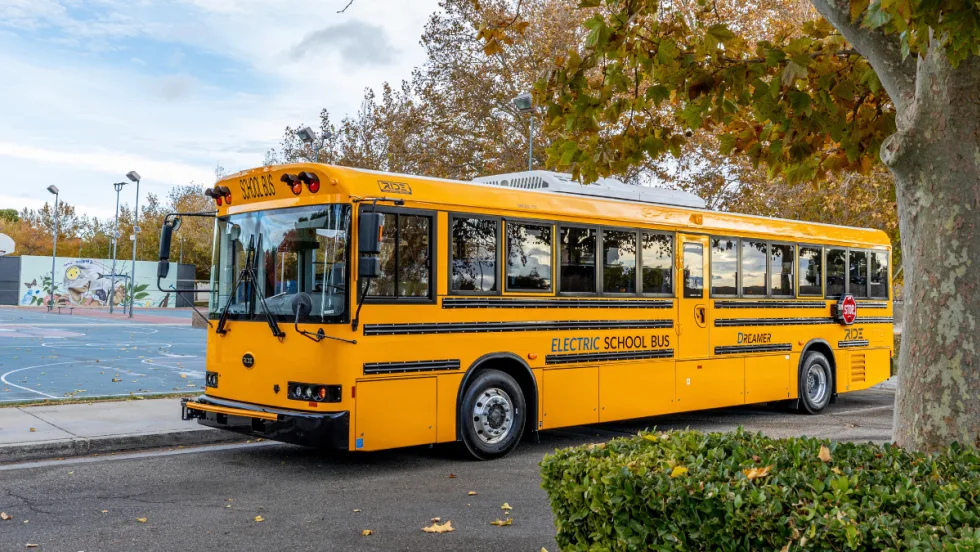
The Secret Life of an Electric School Bus Battery
Batteries change throughout years of daily routes, but degradation doesn’t necessarily mean the end. Here’s what operators should know about performance, safety, and second life.
Read More →
CALSTART and Forth Combine to Form Catalyst Mobility
The new name represents a renewed vision for the nonprofit focused on advancing clean, equitable, and affordable transportation solutions that move people and goods.
Read More →
Alt-Fuel Moves: New Buses, Charging Hubs & Real-World EV Testing
Propane and electric school bus deployments continue to grow as districts add new vehicles, expand charging infrastructure, and gather more real-world operating data.
Read More →
Fewer Electric School Bus Models Reshape the U.S. Market
WRI’s latest buyer’s guide points to a consolidating electric school bus market, but fewer options may reflect a maturing industry rather than fewer meaningful choices for school bus operators.
Read More →
The Fuel Budget You Can Actually Predict: How Propane Autogas Keeps Money in the Classroom
Learn how propane autogas helps school districts manage fuel costs with predictable pricing, lower maintenance, and reduced emissions from former transportation director Joel Stutheit.
Read More →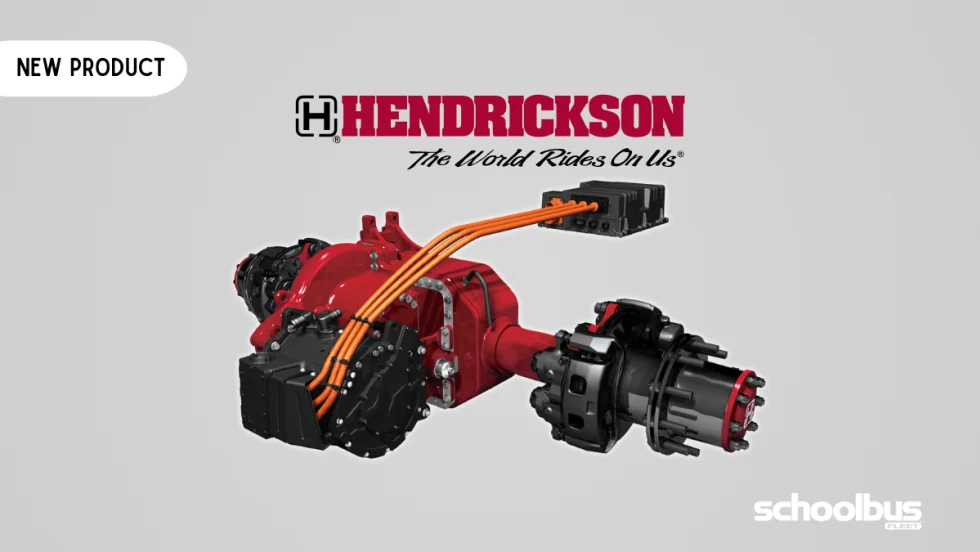
Hendrickson, Driventic Introduce New Electric Powertrain for School Buses
ELECTRAAX, the electrified, lightweight drive axle offers integrated ePowertrain efficiency and modular flexibility for Class 6–7 school bus use.
Read More →