





The New Era of Electric School Buses: V2G, Bidirectional Chargers & More
Alt-Fuel Moves: EV Charging & Infrastructure Projects Gain Momentum
The latest developments include new funding, charging infrastructure, utility investments, and fleet technologies designed to support the transition to electric school buses nationwide.
July 10, 2026

School districts, utilities, and technology providers are investing in charging infrastructure, renewable energy, and grid solutions to support the growing adoption of electric school buses.
Credit:
InCharge Energy/School Bus Fleet
8 min to read
- New funding initiatives are being launched to support electric vehicle charging infrastructure.
- Utility companies are making investments aimed at bolstering EV infrastructure.
- Advancements in fleet technologies are being implemented to facilitate the transition to electric school buses.
*Summarized by AI
Fleet electrification is becoming an infrastructure story. From utility-backed charging projects and solar-powered bus depots to new investments in EV charging technology and state planning grants, these announcements underscore how school districts and their partners are building the systems needed to support electric school buses at scale.
In this alternative fuel roundup, we take a look at the latest news from the California Air Resources Board, InCharge Energy, Con Edison, Porterville Unified School District, and Xos.
California Awards Millions for Community Transportation Planning Projects
The California Air Resources Board (CARB) has awarded nearly $7.3 million to support 16 community-driven transportation planning and capacity-building projects across the state. The grants, funded through California Climate Investments, were selected from 84 applications requesting nearly $38 million and are intended to help communities improve mobility, reduce pollution, and expand access to clean transportation.
The selected projects cover a range of transportation priorities, including rural Tribal transit planning, safer routes to schools, workforce development and zero-emission mobility. Examples include the Karuk Tribe's Clean Transportation Pathways initiative, a zero-emission community bus planning project serving students and seniors at Cherokee Point Elementary School, and transportation planning efforts in Imperial County and Southern California Tribal communities.
"Communities across California know best what they need to improve mobility, reduce pollution, and protect public health," said CARB Chair Lauren Sanchez. "These planning and capacity building grants empower local leaders — especially in overburdened and underserved neighborhoods — to design clean transportation solutions that reflect their priorities. This work is how we build a healthier, more resilient California for everyone."
CARB said this year's funding cycle attracted unprecedented demand, with applications exceeding available funding by nearly 5-to-1. The agency also credited expanded technical assistance for helping more applicants submit competitive proposals and noted that removing the Tribal Limited Waiver of Sovereign Immunity contributed to the selection of three Tribal-led projects and one additional Tribal-serving initiative.
The grants support early-stage planning that can position communities to compete for future infrastructure and clean transportation funding. According to CARB, the projects are designed to improve access to jobs, schools, healthcare and other essential services while advancing transportation equity, climate resilience and public health in communities disproportionately affected by pollution.
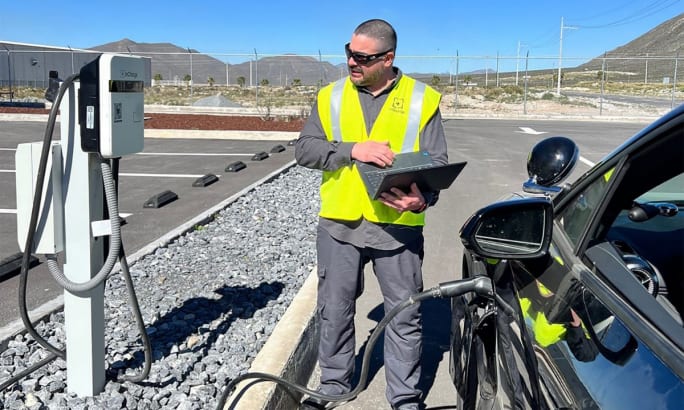
The new funding will be used to expand its technician workforce, increase field service coverage in key markets, and enhance software capabilities,
Credit:
InCharge Energy
InCharge Energy Secures $46M to Expand EV Charging, Energy Services
InCharge Energy has secured a $46 million strategic investment led by S2G Investments to accelerate its expansion beyond EV charging into broader energy infrastructure and services. In a release, the company said the funding will support growth of its national field service organization, further development of its InControl software platform, and expansion into electrical infrastructure and distributed energy resources.
The investment comes as EV charging networks continue to grow and fleet operators face increasing demands for charger reliability and maintenance. InCharge currently manages more than 30,000 charging assets across North America, serving customers including school districts, transit agencies, municipalities, and commercial fleets. Its InControl platform provides charge management, remote diagnostics, asset monitoring, and maintenance tools, with the company estimating that about 80% of charger issues can be resolved remotely.
"EV charging was the entry point, but our customers increasingly need help operating more complex energy infrastructure," said Rich Mohr, CEO of InCharge. "This investment from S2g accelerates our evolution into a full energy solutions provider and allows us to advance smarter technology and strengthen our service capabilities nationwide."
According to the company, the new funding will be used to expand its technician workforce, increase field service coverage in key markets, and enhance software capabilities that help organizations manage EV charging equipment alongside other electrical infrastructure. The platform also tracks warranties, service contracts, preventative maintenance, and asset performance to help maximize uptime and reduce operating costs.
"Demand for reliable, tech-enabled network operations will only intensify as the installed base of chargers and distributed energy resources continues to expand and mature," said Bala Nagarajan, managing director at S2G. "We believe InCharge is exceptionally well-positioned to capture that shift and move the industry from reactive, break-fix maintenance to proactive, performance-driven management. We're looking forward to supporting the team on its next chapter of growth."
Con Edison Powers New York’s Largest Electric School Bus Fleet
Con Edison has energized what it says is the largest fleet of electric school buses in New York state, supporting the deployment of 45 electric buses operated by GVC, a family-owned company that has transported students with special needs in the Bronx for more than 30 years.
GVC installed 23 dual-port chargers with support from Con Edison, replacing diesel buses that serve approximately 800 students. The utility also upgraded the site's electric service, while a $450,000 incentive through its Medium- and Heavy-Duty Make-Ready Pilot program helped offset charging infrastructure costs.
The project highlights the growing role utilities are playing in school bus electrification. GVC's depot is located along a two-mile corridor where roughly 20% of New York City's school buses are dispatched. Con Edison said it is prioritizing grid upgrades in the area to support broader electrification of school buses and other commercial fleets. Additional funding came through the New York School Bus Incentive Program, which helped fund 20 of GVC's electric buses and the charging infrastructure.
"The children we transport are especially vulnerable to air and noise pollution," Michael Townsend, compliance officer at GVC, said. "Transitioning our fleet to electric is making a difference in people's lives. […] I look forward to seeing more fleets along Zerega Avenue electrify as Con Edison's grid upgrades progress." Con Edison said the new fleet will prevent the emission of 1 million pounds of carbon each school year.
"Driving an electric school bus has completely changed the experience for both drivers and students," Christian Martinez, electric school bus driver at GVC, said. "The buses are quieter, cleaner, and much more comfortable, which makes a real difference for the children we transport, especially students with autism who can be sensitive to noise and fumes. Since switching to an electric bus, I've seen kids happier, calmer, and more excited to ride to school. As both a driver and a parent of a child with autism, that means everything to me."
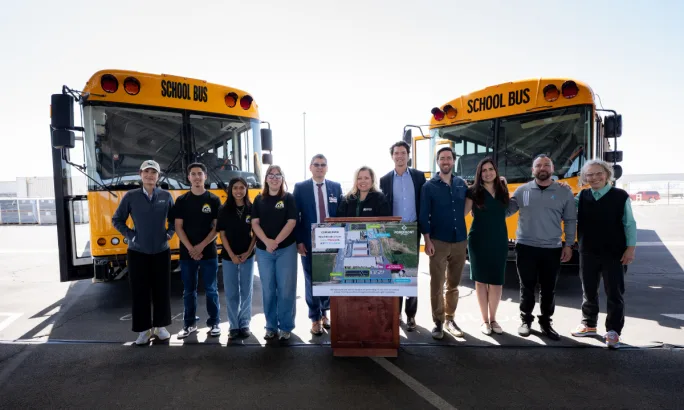
This project is designed to improve energy resilience during Public Safety Power Shutoff events while reducing operating costs through on-site renewable generation, battery storage, and V2G technology.
Credit:
David JY Park, courtesy of CALSTART
California District Advances Electric Bus Transition With Solar Microgrid Project
Porterville Unified School District (PUSD) is moving forward with a renewable energy and electric school bus infrastructure project that combines solar power, battery storage, a microgrid and EV charging to support its planned transition to a fully electric school bus fleet by 2035. The district is partnering with ForeFront Power and The Mobility House on the project, which is supported in part by a U.S. EPA Clean School Bus Program grant.
The project includes a 763-kilowatt solar array, a 408-kW/1,632-kWh battery energy storage system, and a microgrid that can operate independently from the utility grid during outages. The system will support 35 DC fast-charger ports for electric school buses and eight charging ports for the district's light-duty fleet, including two bidirectional chargers capable of vehicle-to-grid (V2G) operation. District officials estimate the energy system will offset about 80% of facility electricity use, including bus charging, while avoiding approximately 37,000 metric tons of carbon dioxide emissions over 30 years.
"We are excited to advance this important infrastructure project, which supports the district's long-term goals for sustainability, energy resiliency, and responsible stewardship of public resources," said Brad Rohrbach, assistant superintendent of business services at Porterville Unified School District. "This project represents a significant investment in our students, schools, and community, while helping position the district for a more efficient and sustainable future."
Beyond fleet electrification, the project is designed to improve energy resilience during Public Safety Power Shutoff events while reducing operating costs through on-site renewable generation, battery storage, and V2G technology.
PUSD serves more than 13,000 students across 22 campuses in California's San Joaquin Valley, where poor air quality has made reducing diesel emissions a priority. The district also plans to use the infrastructure as a hands-on learning tool through its Climate Action Pathways for Schools initiative, giving students exposure to clean energy and zero-emission transportation technologies.
Xos Report Examines Charging Options for Electric School Buses During 2028 Olympics
Xos Inc. has released a white paper, “Powering the Games: A Fleet Charging Solution for LA 2028,” examining how electric vehicle charging could support transportation for the 2028 Olympic and Paralympic Games in Los Angeles, including an estimated 500 electric school buses expected to be part of the event's transportation network. The company argues that mobile battery energy storage may be a more practical solution than permanent charging infrastructure at temporary venues.
According to the report, the LA28 transportation ecosystem will require about 588 megawatt-hours of charging each day, with school buses joining LA Metro buses and rideshare vehicles in supporting the Games. Xos contends that utility interconnection timelines for permanent DC fast chargers make it unlikely that many temporary venues could install fixed charging infrastructure before the event.
The company proposes using its Xos Hub mobile battery energy storage system, which can provide both AC and DC charging without requiring utility interconnections or major construction. Xos said the units can be deployed in days, moved between venues, and scaled to support multiple electric vehicles.
"Delivering energy to every venue on the Games' timeline is a specific infrastructure challenge, and it is the one this white paper addresses. Permanent charging cannot be permitted and built fast enough at many temporary sites, while mobile energy storage deploys in days, redeploys between venues, and leaves lasting infrastructure for the region afterward," said Dakota Semler, chief executive officer of Xos.
More Alternative Fuels
Bipartisan Bill Seeks to Extend Clean School Bus Program Through 2031
The proposed legislation would renew federal support for cleaner school buses as districts navigate funding uncertainty, rising fuel and infrastructure costs, and fleet replacement needs.
Read More →
Alt-Fuel Moves: Electric Bus Rollouts, Bidirectional Charging & Propane Growth
See which fleets are adding electric and propane school buses as districts and operators invest in charging infrastructure, bidirectional technology, and alternative-fuel expansion.
Read More →
Nobody Told Diesel Prices They Were Supposed to Come Down
With diesel prices surging, school bus fleets have new reason to stress-test fuel costs, consider diversification, and calculate what each route really costs to operate.
Read More →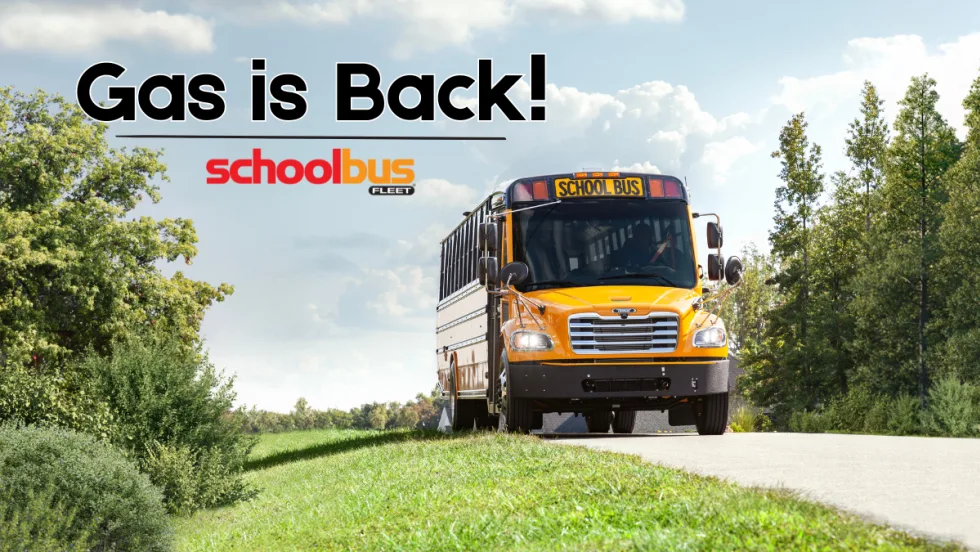
Why Gasoline School Buses Are Making a Comeback
Gasoline is gaining ground in full-size school buses. See how today’s options stack up against diesel on cost, maintenance, emissions, performance, and more.
Read More →
EPA Opens $180M DERA Funding Round for Diesel Upgrades
The 2026 Diesel Emissions Reduction Act program seeks applications from eligible organizations to accelerate the retirement of legacy diesel vehicles.
Read More →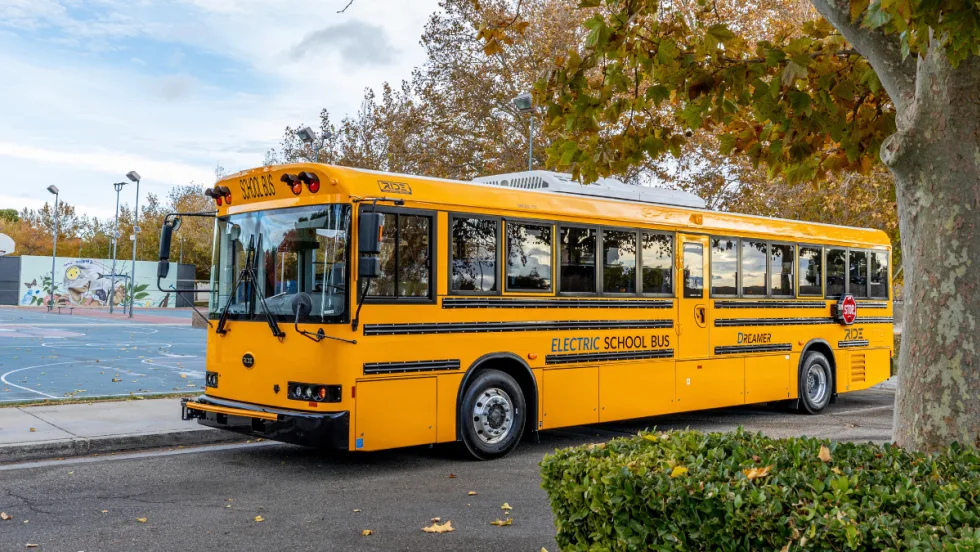
The Secret Life of an Electric School Bus Battery
Batteries change throughout years of daily routes, but degradation doesn’t necessarily mean the end. Here’s what operators should know about performance, safety, and second life.
Read More →
CALSTART and Forth Combine to Form Catalyst Mobility
The new name represents a renewed vision for the nonprofit focused on advancing clean, equitable, and affordable transportation solutions that move people and goods.
Read More →
Alt-Fuel Moves: New Buses, Charging Hubs & Real-World EV Testing
Propane and electric school bus deployments continue to grow as districts add new vehicles, expand charging infrastructure, and gather more real-world operating data.
Read More →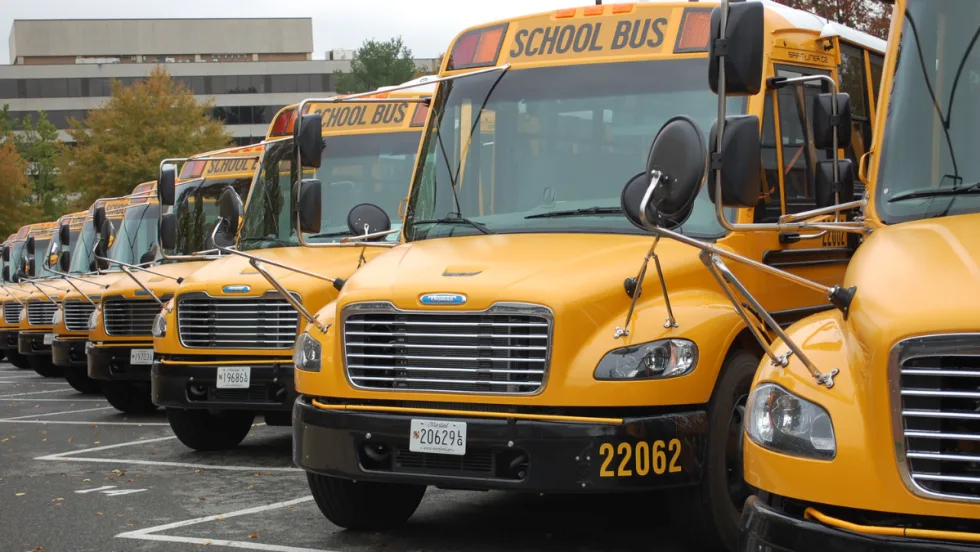
Fewer Electric School Bus Models Reshape the U.S. Market
WRI’s latest buyer’s guide points to a consolidating electric school bus market, but fewer options may reflect a maturing industry rather than fewer meaningful choices for school bus operators.
Read More →
The Fuel Budget You Can Actually Predict: How Propane Autogas Keeps Money in the Classroom
Learn how propane autogas helps school districts manage fuel costs with predictable pricing, lower maintenance, and reduced emissions from former transportation director Joel Stutheit.
Read More →