





Earlier V2X: Blue Bird, Georgia District Complete V2X Deployment With Audi
NYC School Buses Go Solar with Vehicle-to-Everything Tech
First Student is deploying 12 solar-topped electric school buses and designing a solar-powered bus depot with a unique microgrid in Brooklyn, N.Y. using V2X. How does it work?
October 23, 2024
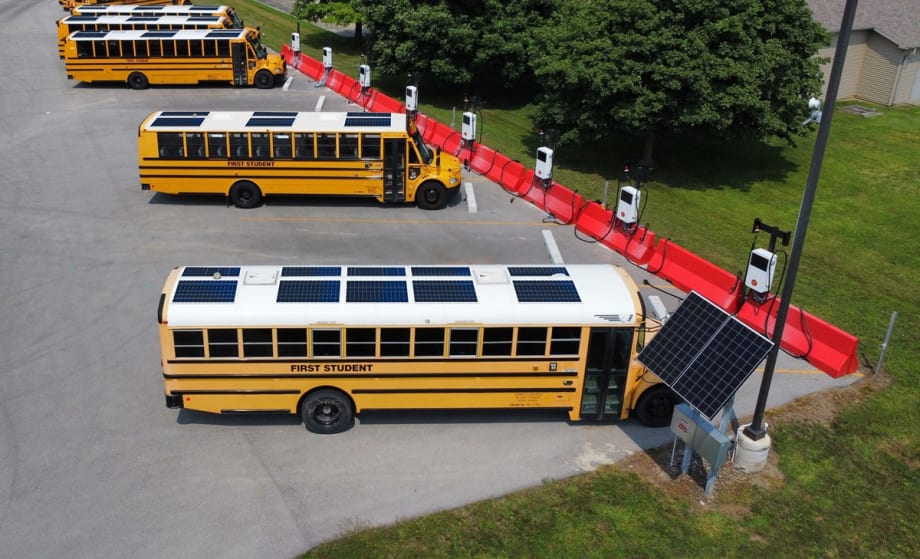
First Student's electric school buses feature rooftop solar panels at a charging depot (photo for illustrative purposes only).
Photo: First Student
3 min to read
Brooklyn is getting charged up! The latest charging tech is now being deployed for school buses thanks to a partnership between First Student and Con Edison, one of the world’s largest energy delivery systems serving New York City and Westchester County.
The pairing brings a transformative change to electrified buses and medium-heavy duty trucks. The two groups have launched an innovative demonstration project: a smart energy hub that will support the quick and cost-efficient electrification of school buses in the neighborhood. This will deliver a scalable, cost-optimized solution.
The project includes a fleet of 12 electric school buses for Brooklyn schools, which will be topped with solar panels and will replace diesel buses at First Student’s location on Malta Street. The panels, along with solar arrays on the rooftop of the facility, will create a unique energy generation, battery storage, and power delivery system.
The plan is for First Student to use First Charge, a trenchless power deployment.
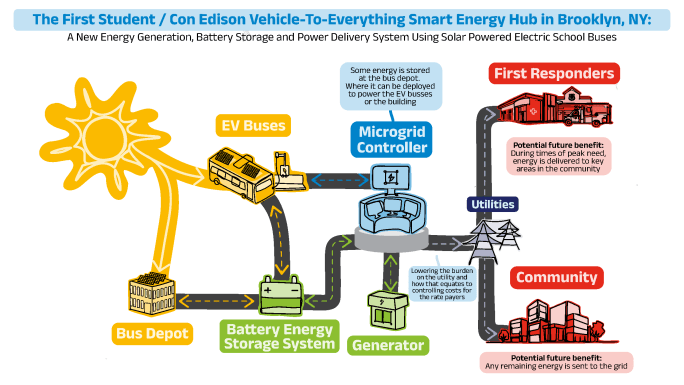
The smart energy hub allows Con Edison to generate, store, and deliver energy from solar and ESB batteries anywhere on the grid.
Photo: First Student
Learn more in this explainer video.
The project marks an interesting shift, with the potential to boost local grids while simultaneously storing and generating clean energy, then delivering that power at moments when and where it’s needed most. It can also be a cost-saver for rate payers.
The project surpasses traditional vehicle-to-grid (V2G) technology, creating a new era of power sourcing, First Student said in its announcement. Vehicle-to-Everything (V2X) goes beyond plugging electric school bus batteries back into the grid, expanding to include the capacity to direct electricity delivery where it is needed. In summer months when the buses are idle and energy needs soar, or during emergencies, the smart energy hub increases capacity, generating additional power.
“Harnessing electricity from First Student electric school bus batteries to create an emissions-free smart energy hub that can serve a community during peak demand while turbocharging America’s fight against climate change is truly revolutionary,” said First Student CEO and President John Kenning. “First Student’s unparalleled battery storage capacity and pioneering First Charge technology solves an immediate need in many American communities: affordable, clean electricity supply that expands the capabilities of existing power grids.”
“Beyond providing healthy, clean transportation for kids, electric school buses represent an opportunity to build energy resilience in communities – which is critical in the face of natural and other emergencies,” said Sue Gander, director of World Resources Institute’s Electric School Bus Initiative. “By leveraging solar panels and integrated charging technologies, electric school buses can act as giant, mobile batteries, able to store and discharge clean power when not being used for transportation. We’re eager to see this project between First Student and Con Edison bring stronger, more resilient grids – as well as a clean ride for kids – to Brooklyn, NY and serve as an example for others.”
First Student has approximately 2,000 electric school buses in school districts across the U.S. and more than 360 EVs. The company co-designed the system using several advanced charging technologies that can deliver megawatts of power instantaneously, enough to power 5,000 houses for a year.
The technology will allow for significant growth at First Student, building on the company’s operations in 43 states and in partnership with more than 3,000 utilities. The company has committed to transitioning 30,000 fossil fueled school buses to electric by 2035.
More Alternative Fuels

CALSTART and Forth Combine to Form Catalyst Mobility
The new name represents a renewed vision for the nonprofit focused on advancing clean, equitable, and affordable transportation solutions that move people and goods.
Read More →
Alt-Fuel Moves: New Buses, Charging Hubs & Real-World EV Testing
Propane and electric school bus deployments continue to grow as districts add new vehicles, expand charging infrastructure, and gather more real-world operating data.
Read More →
Fewer Electric School Bus Models Reshape the U.S. Market
WRI’s latest buyer’s guide points to a consolidating electric school bus market, but fewer options may reflect a maturing industry rather than fewer meaningful choices for school bus operators.
Read More →
The Fuel Budget You Can Actually Predict: How Propane Autogas Keeps Money in the Classroom
Learn how propane autogas helps school districts manage fuel costs with predictable pricing, lower maintenance, and reduced emissions from former transportation director Joel Stutheit.
Read More →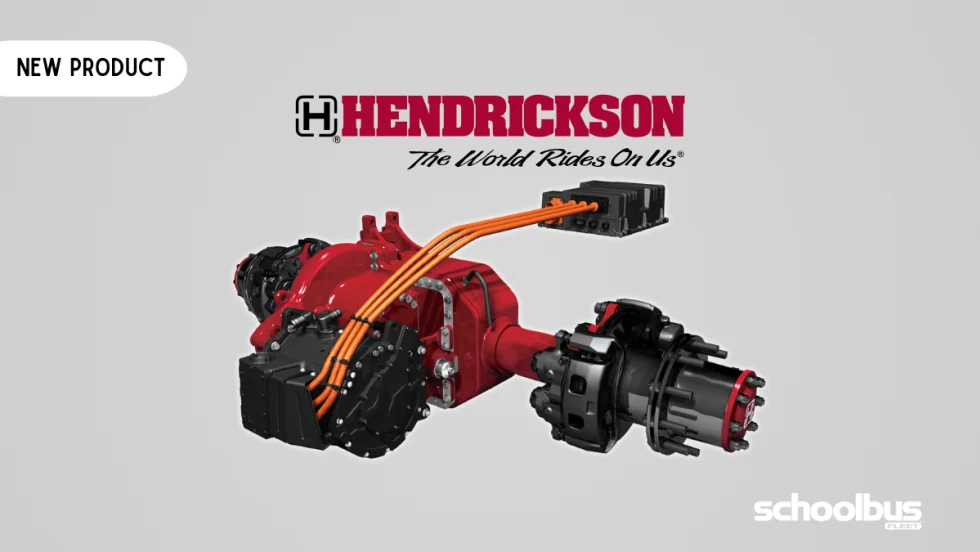
Hendrickson, Driventic Introduce New Electric Powertrain for School Buses
ELECTRAAX, the electrified, lightweight drive axle offers integrated ePowertrain efficiency and modular flexibility for Class 6–7 school bus use.
Read More →
The Mobility House Joins PowerFlex in Fleet Electrification Deal
The acquisition combines intelligent charging software, bidirectional charging expertise, and fleet electrification services to support the growing adoption of electric school buses across North America.
Read More →
Alt-Fuel Moves: Electric School Bus Investments Hit the Road
See which districts across the U.S. are putting electric school buses into service, expanding charging infrastructure, and planning the next phase of fleet electrification.
Read More →
With Fuel Volatility Ahead, School Districts Turn to Propane
While diesel prices peaked above $5 this spring, districts with propane autogas-powered fleets paid under $2 per gallon, according to PERC.
Read More →
EPA Unveils Proposed Changes to 2027 Heavy-Duty Engine Rules
The federal agency has proposed changes to next year’s targets that would eliminate DEF derates, ease warranty requirements, and retain current NOx emissions standards.
Read More →
Alt-Fuel Moves: EV Charging & Infrastructure Projects Gain Momentum
The latest developments include new funding, charging infrastructure, utility investments, and fleet technologies designed to support the transition to electric school buses nationwide.
Read More →