





Last Year's Results: Parts, Pay, and Propane: What’s Changing in School Bus Maintenance
School Bus Maintenance in 2026: Costs, Tech & Workforce Gaps
As gasoline use rises, maintenance teams face tighter budgets, limited training, and slow wage growth. This and more trends and analysis in our annual survey report. Survey sponsor: Dayton Parts.
February 23, 2026
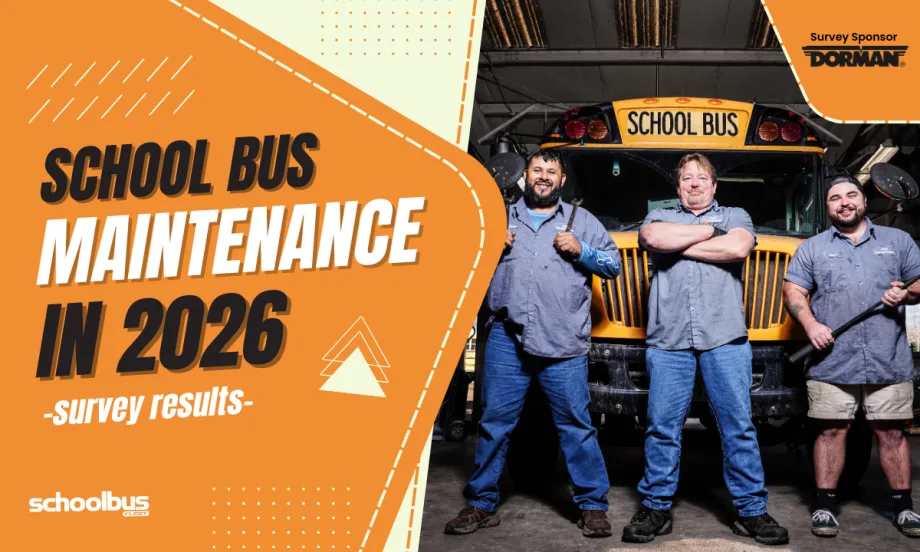
Small fleets lead the way again. More than half of survey respondents this year maintain fewer than 50 vehicles, reinforcing that most school bus maintenance operations are lean by necessity.
Credit:
Dinh Tran via Sulphur Springs ISD/School Bus Fleet
3 min to read
- Maintenance teams reports rising gasoline usage amid limited training opportunities and budget constraints.
- School Bus Fleet's annual survey report highlights the issue of slow wage growth impacting school bus maintenance.
- Analysis reveals significant trends affecting the efficiency and effectiveness of bus maintenance operations in 2026.
*Summarized by AI
Keeping school buses running reliably in 2026 is about far more than turning wrenches. We asked around school bus shops across North America to share these results that reveal a growing squeeze on operations as technicians and managers struggle to keep pace with demand, budget, and daily needs.
TLDR: Top Takeaways from This Year’s Maintenance Survey
- Cost pressure has overtaken parts availability as the top maintenance challenge, followed closely by emissions and electrical components. This shift could signal that inflation, the complexity of technology, and compliance are weighing heavier on shops these days.
- Type C buses are unsurprisingly the majority of school vehicles on the road, with Type A buses and vans/SUVs also widely used. Yet, OEM diversification increased this year, with our highest number maintaining five or more makes.
- Diesel still dominates, but every fuel type saw increased use this year. Gasoline jumped a notable 42% year over year!
- The average age of yellow buses dipped below nine years for the second year in a row. The modest increase from 2025 may indicate fleets are balancing replacement with budget realities rather than accelerating purchases. This coincides with buying intent: More fleets have plans to buy new soon, aligning with the trend of younger fleets.
- Administrative disconnect is compounding maintenance challenges. One respondent expressed district leadership that seemingly believes that buses last forever, technology never changes, and electronics and emissions are easy. This leaves shop staff under-supported where it matters most.
- Staffing shortages are forcing alternative maintenance models. Shops with no in-house techs often have to rely on mobile mechanics, contracted labor, or dealership support (and cost) when things go wrong.
- The training and resource gap is real. Multiple respondents noted the desire for access to technical information or service bulletins, while another suggested public-speaking development for maintenance staff to present to others with more confident in front of people instead of under buses.
- Other respondents noted ongoing quality control issues on new buses and the constant budget squeeze on transportation departments.
Note: All data was compiled and averaged from qualified survey respondents representing transportation directors and fleet managers at public school districts and contractors in North America in January 2026.
To see your voice represented in these results next year, watch for announcements about 2027 survey dates and share your insight to help us identify challenges, opportunities, and accurately report on the state of school bus maintenance.
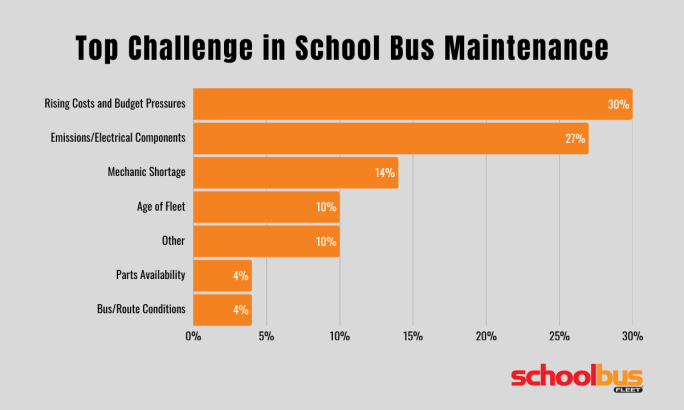
“Other” answers included driver’s treatment of buses, limited bay and shop space, mechanics having to drive due to the driver shortage, and having to outsource inspections and repairs. Last year, parts availability was the top challenge.
Credit:
School Bus Fleet & BBM Research Dept.
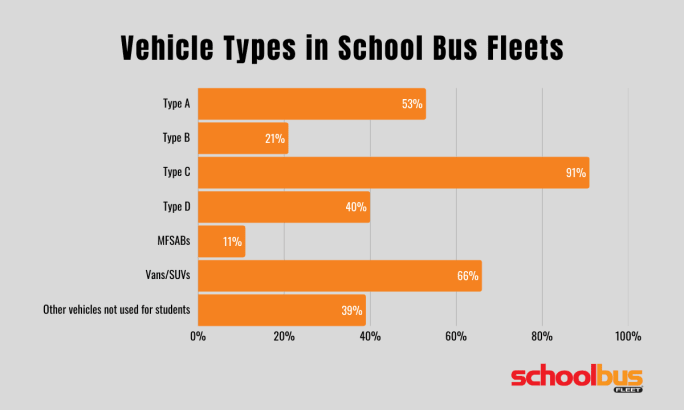
Not surprisingly, conventional buses are in nearly every fleet, followed by Type A buses and vans as most popular. Type Bs and Ds declined in popularity compared to last year’s respondents.
Credit:
School Bus Fleet & BBM Research Dept.
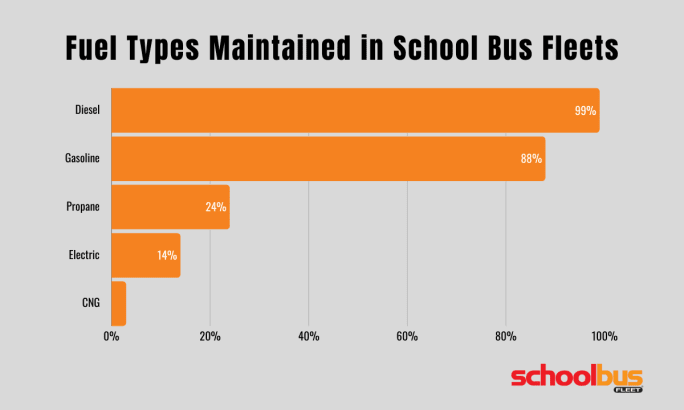
Diesel’s usage is nearly unchanged from last year, and all fuel types jumped in use this year. Gasoline saw the biggest gains, increasing by 42% compared to last year.
Credit:
School Bus Fleet & BBM Research Dept.

For the second year in a row, the average age of yellow fleet buses is under 9 years, continuing a younger trend over the past 15 years.
Credit:
School Bus Fleet & BBM Research Dept.
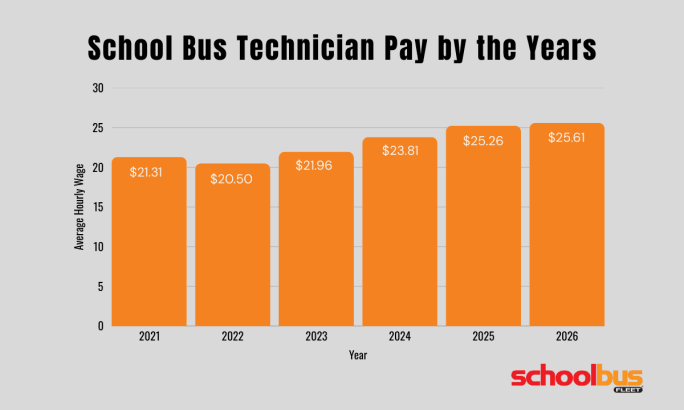
The average starting wage for school bus technicians rose just 35 cents per hour compared to last year. A much less steep increase from the $1.56 rise from 2024 to 2025. Converted to an annual salary, that’s about $53k/year.
Credit:
School Bus Fleet & BBM Research Dept.
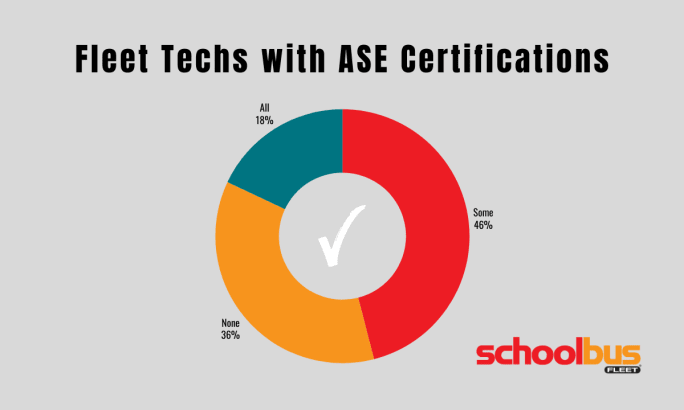
There’s a slight increase in certified technicians this year. In 2025, 14% of fleets had at least one certified, and 41% had some certified technicians.
Credit:
School Bus Fleet & BBM Research Dept.
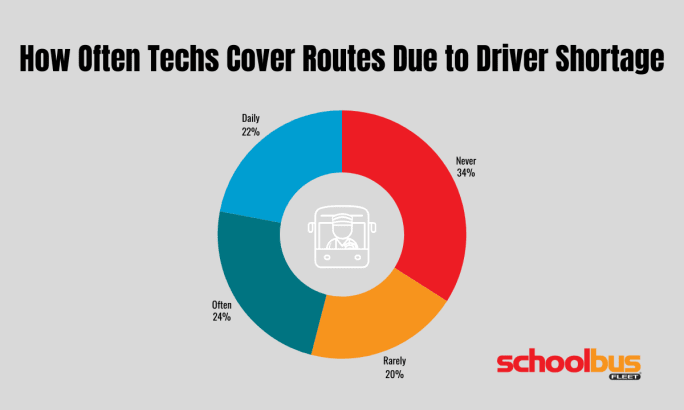
The driver shortage is barely better according to respondents this year, with 6% fewer having their techs covering any route over the school year.
Credit:
School Bus Fleet & BBM Research Dept.
More School Bus Maintenance Stats & Trends
Average school bus retirement age
- Small (Type A/B): 13 years
- Large (Type C/D): 14.5 years
Average annual miles per bus: 2,587,058
Average number of maintenance bays per shop: 4.5
Percentage of school bus techs who are women or non-binary: 1.7%
Watch for the full results in our March 2026 print issue!
Quick Answers
Limited training restricts mechanics' ability to tackle modern technological advancements in school buses, leading to potential inefficiencies and longer repair times.
*Summarized by AI
Subscribe to Our Newsletter
More Maintenance
ASE Highlights School Bus Technician Certification Requirements
ASE is encouraging school bus maintenance professionals to maintain their certifications, highlighting seven specialized tests and five-year renewal requirements.
Read More →
International Adds E-Commerce Capabilities to Fleetrite.com
IC Bus customers can now browse, buy, and track shipments for more than 400,000 aftermarket parts online.
Read More →
The Most Expensive Thing You Do Before Selling a School Bus: Wait
When should you sell an aging school bus? Learn how maintenance, mileage, corrosion, specifications, and timing can affect resale value long before the auction.
Read More →
The Evolution of DEF Header Technology: What School Bus Operations Should Know at Replacement Time
See what school bus fleets should consider when replacing DEF headers to improve reliability, reduce repeat repairs, and control maintenance costs.
Read More →
Sponsored•September 8, 2026
The Essential Guide to School Bus Maintenance and Student Safety
Your district's buses carry students to school every day. This guide shows how predictive maintenance powered by fleet data helps keep buses reliable, drivers accountable and students safer from the first bell to the last stop.
Read More →
Kerry Brothers Grows Michigan School Bus Repair Network
The acquisition of Downriver Truck and Bus expands Kerry Brothers’ school bus maintenance footprint across southeast Michigan, adding repair capacity, diagnostic resources, and state inspection support.
Read More →
Noregon Introduces CAN Bus Diagnostic Tool, Expands JPRO Features
CAN Mentor and the latest JPRO update aim to simplify vehicle network diagnostics and improve repair efficiency for technicians of all experience levels.
Read More →
Cummins on Smarter, Simpler Engine Innovation
Cummins discusses its first-ever gasoline engine for school buses, EPA 2027, and why bus fleets still want durable, simpler internal combustion options.
Read More →
Report: 72% of Diesel School Buses Now Use Advanced Low-Emission Engines
New data shows advanced low-emission diesel technology continues expanding across school bus fleets, even as electric bus adoption gains momentum.
Read More →
Vampire Tools' CAIMAN 7.5-Inch Multi-Purpose Screw Extractor Long-Nose Pliers with Crimper
Vampire Tools introduced the VAMPLIERS Caiman 7.5-inch multi-purpose pliers, combining screw extraction, cutting, crimping, and gripping functions into a single tool designed for fleet maintenance professionals.
Read More →