





2024 Survey Results: STILL ROLLING: School Bus Maintenance Workers Get Improved Pay
Parts, Pay, and Propane: What’s Changing in School Bus Maintenance
This school year, parts availability remains a top challenge, propane makes gains, buses get younger, software usage grows, tech pay increases, and the driver shortage lessens. This and more survey results here, sponsored by Dayton Parts.
February 19, 2025
The driver shortage is easing, keeping more mechanics in the shop rather than behind the wheel.
Photo: Durham School Services
2 min to read
- Parts availability continues to challenge school bus maintenance.
- Usage of propane and maintenance software is on the rise.
- Higher tech salaries coincide with a reduced driver shortage.
*Summarized by AI
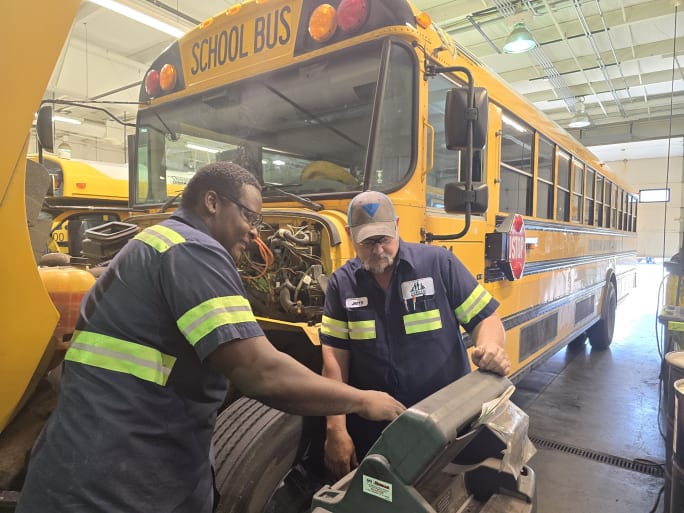
The driver shortage is easing,keeping more mechanics in the shop rather than behind the wheel.
Photo: Durham School Services
Is the driver shortage easing? Are maintenance costs stabilizing? How is tech pay tracking? School Bus Fleet’s 2025 survey reveals the latest trends in school bus maintenance as operators spoke out about what’s happening in and out of their shop for the 2024-25 school year.
Top Takeaways from This Year’s Maintenance Survey
Propane is gaining popularity, as it grew 46% in usage from previous years. This points to increased alt-fuel adoption.
Fleet buses are getting younger, with 8.3 years old the average age reported this year (it hasn’t been that low in 15 years!), and the average retirement age dropping by one year, too.
Diversified fleets are on the rise: All bus types (A-D) and number of bus makes maintained increased this year. And, more school districts are maintaining a mix of fuel types and bus models.
In line with other recent data, the driver shortage is lessening, at least in terms of maintenance techs having to step in and cover routes. This year, 32% of fleets said their techs said they never had to get behind the wheel, up from 25% last year.
One completely unchanged data point from previous years are parts and equipment prices, with no respondents witnessing any relief in cost. Not surprisingly, parts prices and availability also made the top concern reported.
Technician pay sees another boost, with hourly wages 18.5% higher than last year’s average.
The staffing shortage, maintaining older buses, and costs were some of the other pain points noticed.
Technology adoption is growing, with nearly 60% of fleets now using maintenance software.
We saw a drop in women maintenance techs this year — 6% down to 1% — but that may be an anomaly based on respondents this year and not necessarily a larger trend.
All data presented was compiled and averaged from about 140 qualified survey respondents, including transportation staff at districts and contractors collected in January 2025.
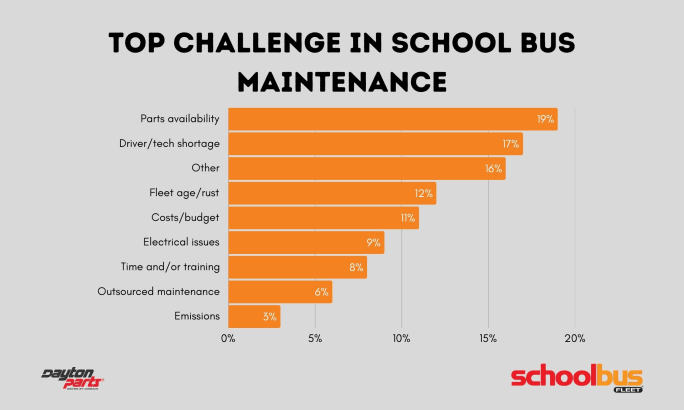
Parts availability and the driver and tech shortage rank top on most fleets' lists of concerns. “Other” answers included A/C, unscheduled downtime, driver communication, software updates, fuel, keeping up with modern systems, EV buses, and weather.
Source: SBF
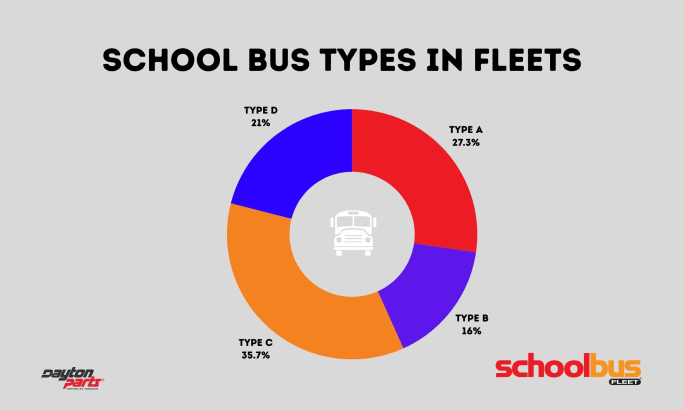
More fleets added Type B buses than any other type this year; last year’s respondents reported 21%. However, all bus types are up this year.
Source: SBF
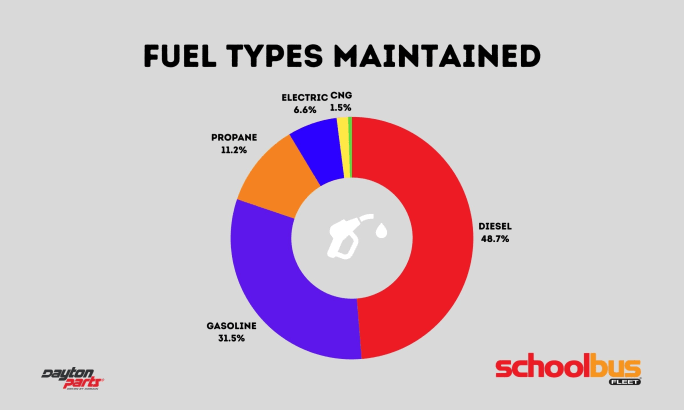
Diesel’s usage is unchanged from last year, but nearly all other fuel types jumped in popularity this year — with propane seeing the biggest gains — demonstrating a potential rise in diversified fleets. “Other” fuel types mentioned were B100 biodiesel and R99 renewable diesel.
Source: SBF
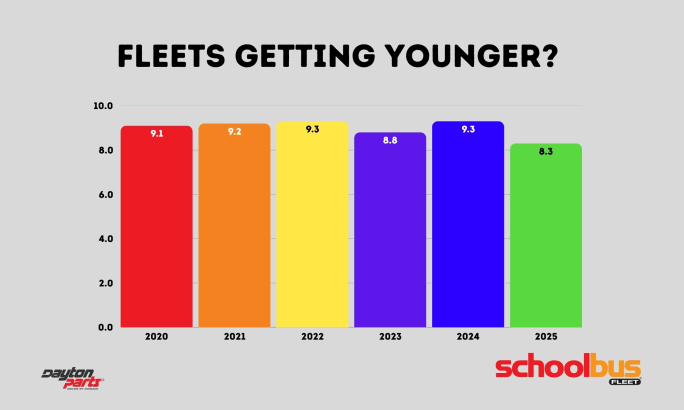
Buses are trending younger, with this year’s average bus age the lowest we’ve seen in at least 15 years. 2011 was the most recent year the average age was 8.5 or under. Since then it’s been slowly increasing until 2023.
Source: SBF
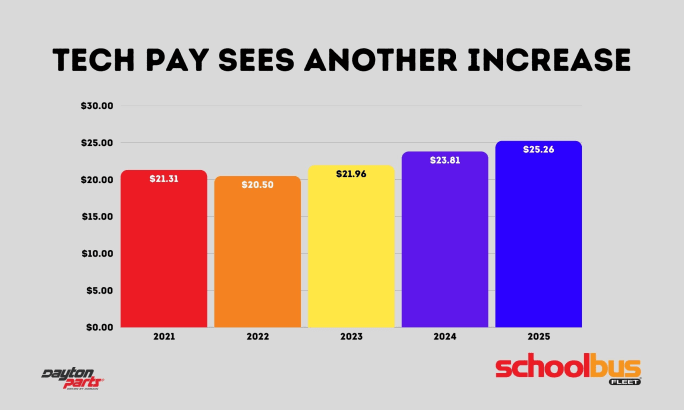
The average starting wage for school bus technicians rose $1.45 per hour compared to last year’s survey — an increase of 18.5% over the past five years. Respondents who reported annual salaries paid an average of $49,701.
Source: SBF
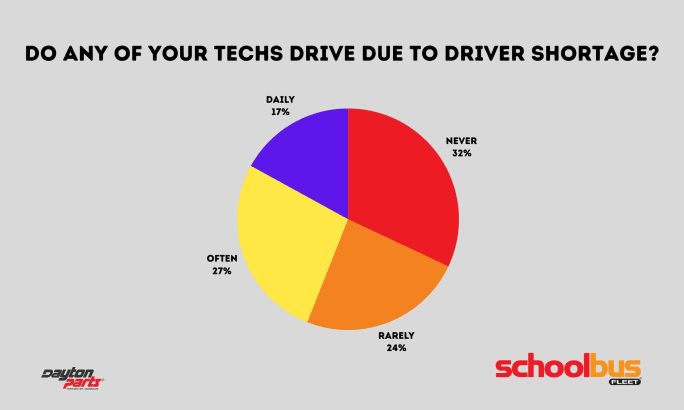
The driver shortage is getting better, as 44% of techs regularly got behind the wheel to help with routes compared to last year’s 50%.
Source: SBF
Other Survey Insights
Average fleet composition
School buses 74%
Other vehicles 26%
Average school bus retirement age
Small (Type A/B): 13 years
Large (Type C/D): 14 years
Average annual miles per bus: 15,811
Average number of maintenance bays: 9
Average number of buses per bay: 28
Average buses per technician: 19
Percentage of fleets employing at least one female tech: 1%
Find the full report in the March 2025 edition of School Bus Fleet magazine!
Subscribe to Our Newsletter
More Maintenance
Sponsored•September 8, 2026
The Essential Guide to School Bus Maintenance and Student Safety
Your district's buses carry students to school every day. This guide shows how predictive maintenance powered by fleet data helps keep buses reliable, drivers accountable and students safer from the first bell to the last stop.
Read More →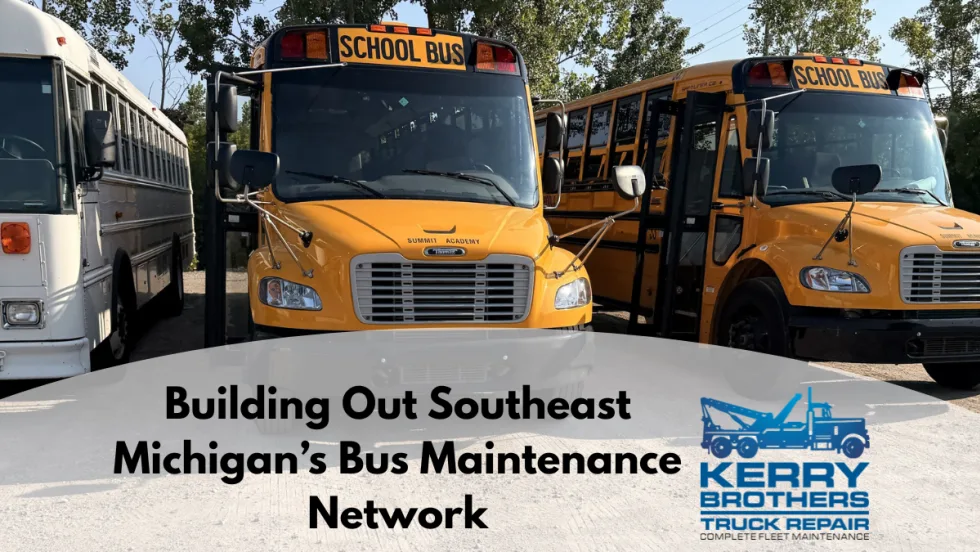
Kerry Brothers Grows Michigan School Bus Repair Network
The acquisition of Downriver Truck and Bus expands Kerry Brothers’ school bus maintenance footprint across southeast Michigan, adding repair capacity, diagnostic resources, and state inspection support.
Read More →
Noregon Introduces CAN Bus Diagnostic Tool, Expands JPRO Features
CAN Mentor and the latest JPRO update aim to simplify vehicle network diagnostics and improve repair efficiency for technicians of all experience levels.
Read More →
Cummins on Smarter, Simpler Engine Innovation
Cummins discusses its first-ever gasoline engine for school buses, EPA 2027, and why bus fleets still want durable, simpler internal combustion options.
Read More →
Report: 72% of Diesel School Buses Now Use Advanced Low-Emission Engines
New data shows advanced low-emission diesel technology continues expanding across school bus fleets, even as electric bus adoption gains momentum.
Read More →
Vampire Tools' CAIMAN 7.5-Inch Multi-Purpose Screw Extractor Long-Nose Pliers with Crimper
Vampire Tools introduced the VAMPLIERS Caiman 7.5-inch multi-purpose pliers, combining screw extraction, cutting, crimping, and gripping functions into a single tool designed for fleet maintenance professionals.
Read More →
How Advanced Diagnostics Helps Bus Fleets Stay Ahead of Repairs
Chat with Noregon’s Kevin Smallhorn at ACT Expo about bus diagnostic tools, telematics integration, CNG maintenance support, and strategies to help reduce downtime and improve uptime.
Read More →
How School Bus Fleets are Getting Ahead of Breakdowns
Don’t let bus downtime wear you down. Here’s how bus operators are shifting from manual processes to AI-powered, data-driven maintenance systems for improved reliability and safety.
Read More →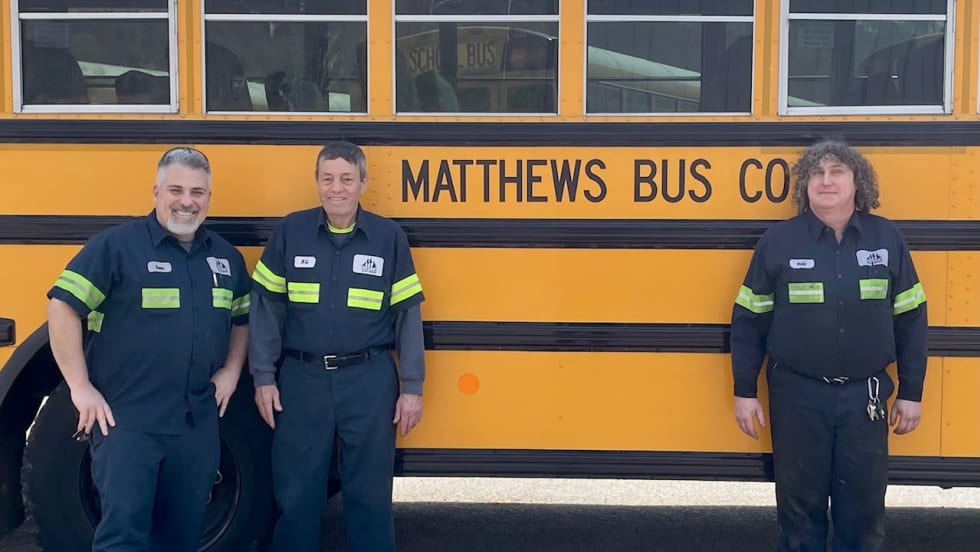
Pennsylvania School Bus Maintenance Team Praised for Dedication to Safety
Matthews Bus Company’s West Jefferson received a letter of commendation from the Pennsylvania State Police for their fleet inspections.
Read More →
Sponsored•April 16, 2026
From Chaos to Clarity: How School Districts Are Running Leaner Transportation Operations
Covering 38 routes on a Friday afternoon. Buses idling while routes overlap. Parents calling nonstop about late arrivals. Sound familiar? This whitepaper explores how district transportation leaders solved these exact problems — and what measurable results followed.
Read More →