





Annette Brown Always Takes the Extra Time: Meet Our 2026 School Bus Driver Hero
School Transportation’s Biggest Pressures and Opportunities: SBFX Attendees Weigh In
School bus operators point to rising costs, staffing, and vehicle prices as immediate pressures while identifying technology, training, and routing as opportunities for growth.
September 28, 2026
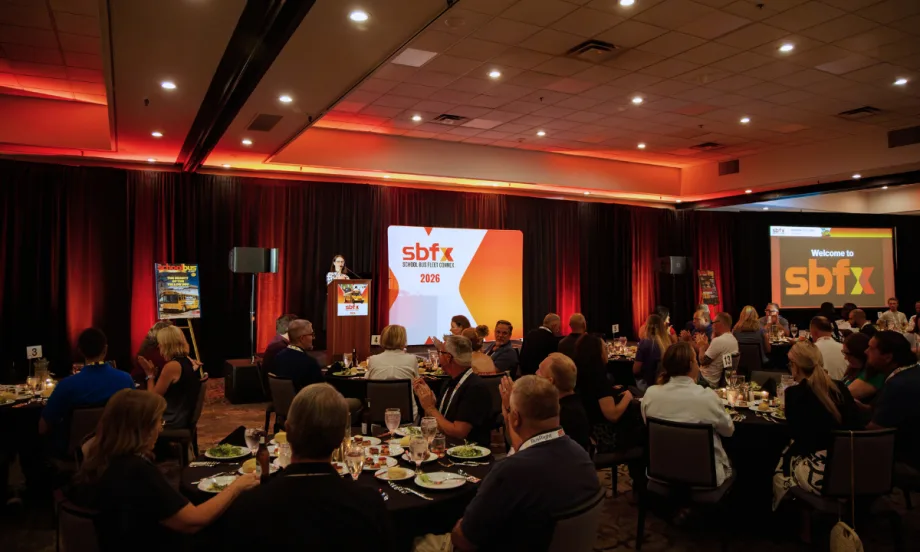
Live polls at the 2026 School Bus Fleet ConneX (SBFX) event found that rising costs and workforce challenges are weighing on operations, while attendees identified routing, staff development, and technology as leading opportunities for improvement.
Credit:
School Bus Fleet
4 min to read
- School bus operators are facing significant pressures from rising costs, staffing challenges, and increased vehicle prices.
- Technology advancements, enhanced training, and efficient routing present viable growth opportunities for school transportation.
- Addressing these pressures and opportunities could significantly impact the efficiency and effectiveness of school bus operations.
*Summarized by AI
What’s weighing most heavily on school transportation operations, and where do industry leaders see room for improvement?
We conducted a series of live polls during School Bus Fleet ConneX (SBFX) in Scottsdale, Arizona, on September 22, 2026, to capture the priorities shaping transportation professionals’ decisions today and over the next several years.
Across three questions, respondents consistently returned to cost. Budget and rising operating expenses ranked as the top source of pressure, while vehicle purchase price was the most frequently selected factor influencing respondents’ next vehicle or fuel decision.
However, when attendees looked ahead, their answers broadened a bit. Routing and scheduling, staff training and development, and technology and data use tied as the leading opportunities for operational improvement over the next two to three years.
Rising Costs Put the Most Pressure on Operations
When asked where their transportation operation is feeling the most pressure right now, 38% of respondents selected budget and rising operating costs, making it the clear leading response.
Workforce issues followed. Recruiting, retaining, and training staff drew 26% of responses, while student behavior and management accounted for 15%.
Other challenges ranked considerably lower:
- Serving students with specialized transportation needs: 8%
- Routing and service efficiency: 5%
- Fleet/fuel transition: 5%
- Other: 3%
The discussion surrounding the poll showed how those pressures can overlap. When attendees were asked about the “other” challenges affecting their operations, one participant pointed to employee absenteeism, particularly callouts at the end of the workweek or “Yellow Fever Friday,” and the challenge of building a workplace culture where employees recognize the importance of consistently showing up.
The results suggest that although school transportation departments continue navigating a wide range of operational challenges, financial and workforce pressures are particularly prominent among the SBFX attendees surveyed.
Purchase Price Leads Vehicle and Fuel Decisions
Cost concerns also carried over into fleet planning. When asked about the biggest factor shaping their next vehicle purchase or fuel decision, 32% of respondents selected vehicle purchase price, the largest share of any listed factor.
During the discussion, one attendee illustrated the scale of the increases some operations are confronting, saying the price of a school bus had risen from approximately “$106,000 to $150,000” due to certain OEM fines or penalties.
Maintenance and reliability and available funding or incentives tied for second at 18% each, followed by fuel and energy costs at 15%. Maintenance concerns weren't limited to the age of a fleet, either. One attendee described having different experiences with two buses purchased at the same time. One vehicle consistently broke down, while the other rarely needed maintenance.
Emissions and regulatory requirements received 9%, while familiarity with the technology received 3%. Infrastructure requirements received no votes.
Taken together, the results put upfront economics at the center of the purchasing conversation. Respondents were more likely to point to acquisition price, maintenance, funding, and ongoing energy costs than infrastructure or familiarity with a particular technology.
Technology, Training, and Routing Seen as Opportunities
While cost dominated questions about current pressures and purchasing decisions, attendees identified a wider set of opportunities when asked where their operations could improve over the next two to three years.
Routing and scheduling, staff training and development, and technology and data use each received 24% of responses, creating a three-way tie for the leading opportunity.
Those answers also connect back to the challenges attendees identified earlier. If recruiting, retention, and attendance are pressuring transportation departments today, respondents appear to see workforce development as one area where their operations can make progress, rather than accepting staffing difficulties as a fixed constraint.
Fleet and fuel strategy followed at 11%, while student behavior and safety and specialized transportation each received 5%. Another 8% selected “Other.”
What the Poll Tells Us About School Transportation Priorities
Across the three questions, a few themes emerge.
Cost is influencing both day-to-day operations and long-term fleet decisions. Rising operating expenses were the most commonly cited source of pressure, while purchase price led the factors shaping future vehicle and fuel choices.
People remain central to the equation. Staffing was the second-most common source of current pressure, and staff training and development tied for the top future improvement opportunity.
Technology may be viewed more as an operational tool than an end goal. Technology and data use tied for the leading improvement opportunity, while familiarity with vehicle technology ranked near the bottom of factors shaping vehicle and fuel decisions.
Despite the industry's ongoing discussions around alternative fuels and electrification, fleet/fuel transition ranked relatively low as an immediate operational pressure, at 5%. Fleet and fuel strategy attracted greater interest as a future improvement opportunity, at 11%.
With just under 40 responses to each question, the findings aren't intended to represent the school transportation industry as a whole. Instead, they offer a snapshot of what was top of mind among transportation operators who participated in the polls at SBFX.
Subscribe to Our Newsletter
More Management

STA Acquires Sunrise Transportation
Student Transportation of America expands in Illinois and Connecticut through Sunrise's fleet of nearly 1,000 vehicles.
Read More →
EPA Opens $180M DERA Funding Round for Diesel Upgrades
The 2026 Diesel Emissions Reduction Act program seeks applications from eligible organizations to accelerate the retirement of legacy diesel vehicles.
Read More →
HopSkipDrive’s CareEngine Targets the ‘Exceptions’ in Student Transportation
The new platform works alongside districts’ existing transportation management systems to coordinate specialized rides, automate last-minute changes, and turn ride data into operational improvements.
Read More →


The Right Ride for Every Student: Navigating the New Student Transportation Ecosystem
How should districts blend school buses with small-vehicle transportation and other options? EverDriven CEO Mitch Bowling discusses safety, costs, partnerships, and strategy.
Read More →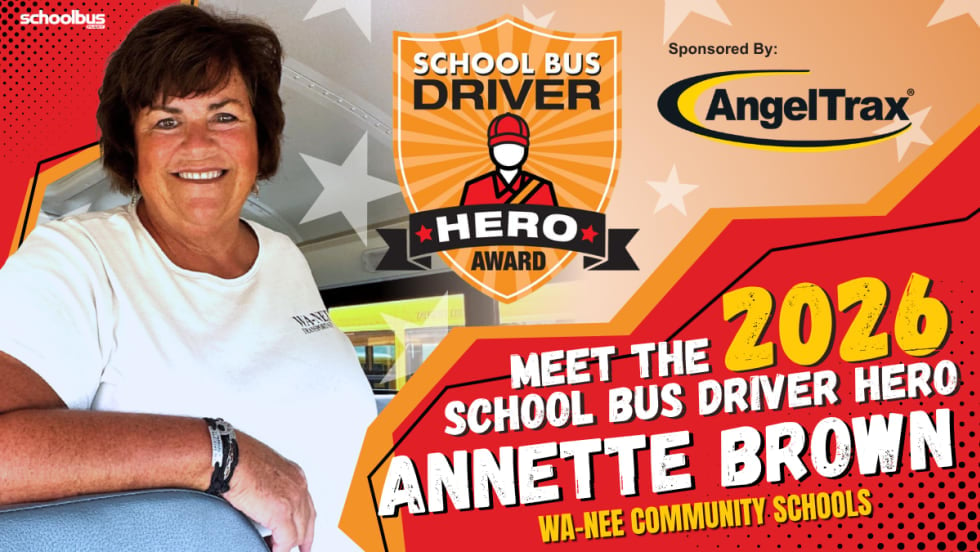
Annette Brown Always Takes the Extra Time: Meet Our 2026 School Bus Driver Hero
For more than 30 years, the Wa-Nee Community Schools driver has treated students like family, combining safety, compassion, and servant leadership to make a lasting difference on and beyond the school bus.
Read More →
How to Build a Better Driver Training Program
Ready to boost up your school bus instructor training? Here’s how to pick the right talent and improve recruitment, retention, and safety.
Read More →
CALSTART and Forth Combine to Form Catalyst Mobility
The new name represents a renewed vision for the nonprofit focused on advancing clean, equitable, and affordable transportation solutions that move people and goods.
Read More →
What Makes a Great School Bus Driver Trainer?
Choosing the right school bus driver trainer takes more than experience. Learn six keys to selecting and developing trainers and evaluating program effectiveness.
Read More →
School Bus Contractors Expand Through New Deals, Acquisitions & Partnerships
STA's Canadian division acquires Ontario-based G&L Stevenson Transport; Durham School Services adds a new district in California; First Student expands in New Jersey; and Minnesota Coaches rebrands and acquires Halo Transportation.
Read More →
Logan Bus Company Rolls Out AI Phone System for NYC School Bus Families
A summer pilot found that AI agents could handle most routine calls, freeing up time for customer service staff to focus on emergencies and complex family concerns.
Read More →