





Empowering Your Transportation Team: Fostering A Positive Work Environment
Solving the School Bus Driver Shortage: 8 Recruitment & Retention Strategies That Work
Driver shortages won’t fix themselves. Here’s how districts can build a culture that drivers trust and never want to leave.
March 25, 2026
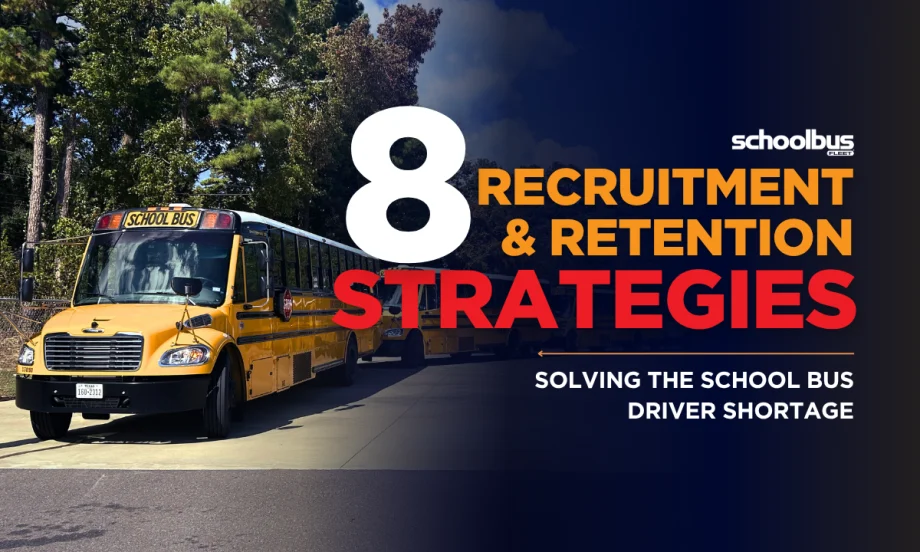
A line-up of Nacogdoches ISD school buses reflects the coordination and teamwork behind daily student operations in Texas.
Credit:
Summer Adams/School Bus Fleet
8 min to read
- School districts need proactive strategies to address the persistent shortage of bus drivers.
- Fostering a trustworthy work culture is essential for retaining current drivers and attracting new ones.
- Building appealing employment conditions can ensure drivers remain committed to their roles.
*Summarized by AI
Let’s face it. The driver shortage isn’t new. It’s not a passing problem or a headline that fades. For many school districts and contractors across the country, it's a daily reality that affects bus schedules and parent trust.
Hear me out: Solving this challenge isn’t just about filling vacancies. The industry needs to build transportation environments that people want to be part of, and ultimately stay part of. In a time where part-time and gig work is plentiful and public-facing jobs come with rising stress, school transportation leaders must think comprehensively.
Recruitment and retention, those twin pillars of workforce health, require more than reactive fixes. Moving forward, these elements should require human-centered design and a deep understanding of what motivates and oftentimes frustrates the people behind the wheel.
In interviews with transportation professionals across the country, it’s apparent that what retains employees lies in culture and consistent leadership, but can also take the form of open communication and workplace benefits. The key is figuring out what works for your operations.
1. Recruitment Is a Community Conversation
You can’t out-hire a bad reputation, and you shouldn’t wait until you’re desperate to build an applicant pool. Step outside the mindset of recruitment as a human resources function and into the perspective of transportation leaders who view recruitment as a form of community engagement.
Mike Dallessandro, a longtime school transportation director turned recruiter at Student Transportation of America, emphasized the importance of staying connected to local circles that are often overlooked, such as senior centers, booster clubs, and parent associations.
“Most of your schools send out newsletters to parents,” Dallessandro said. “If you can get your ongoing need for drivers and monitors into that newsletter, that’s often far more effective than putting an ad in a local newspaper.”
Another underleveraged resource? Your own staff. Drivers may be your most honest and persuasive recruiters.
“They’re not going to bring somebody in the door that they feel is going to flop 30 days down the road and make them look bad,” Dallessandro added.
However, as Bernando Brown, director of student transportation at the DeKalb County School District in Georgia, put it during a 2025 NAPT workshop, the next best leader in your department is already driving one of your buses. That insight applies equally to recruiting, where the best candidates might already be in your circles, or they might know the right person to refer.
2. People Stay for Culture, Not Just Compensation
If pay were the only issue, the solution would be simple, but the data and lived experience tell a different story. Drivers want to be respected for what they do.
“People don’t need to be treated the same; they need to be treated fairly,” said Chris McLeod, director of transportation services for Henry County Schools in Georgia.
That fairness starts with consistent expectations, follow-through, and leadership presence. “Even small changes, when communicated clearly, show staff that their voice matters,” McLeod added. “And that leadership is paying attention.”
Dustin Winter, regional recruiter for Palmer Bus Service, described how the company balances its five core values, including dignity and integrity, across 28 Minnesota locations, all while allowing local sites to adapt and reflect their own personalities.
“Each site has the autonomy to have its own version of culture that aligns with or falls within the overall company culture,” Winter said. That flexibility, coupled with recognition and community-building events, helps create a sense of ownership and connection.
3. Feedback Only Matters if It Goes Somewhere
One of the most deflating experiences for drivers and aides is voicing a concern and hearing nothing back. Whether it’s a student behavior issue or a routing problem, unresolved concerns become emotional weight that staff carry into every shift.
“If a concern is brought up, I make it a point to communicate what was done, what couldn’t be done, and why,” said Summer Adams, director of transportation at Nacogdoches ISD in Texas. “Even small updates matter. Silence can be interpreted as inaction.”
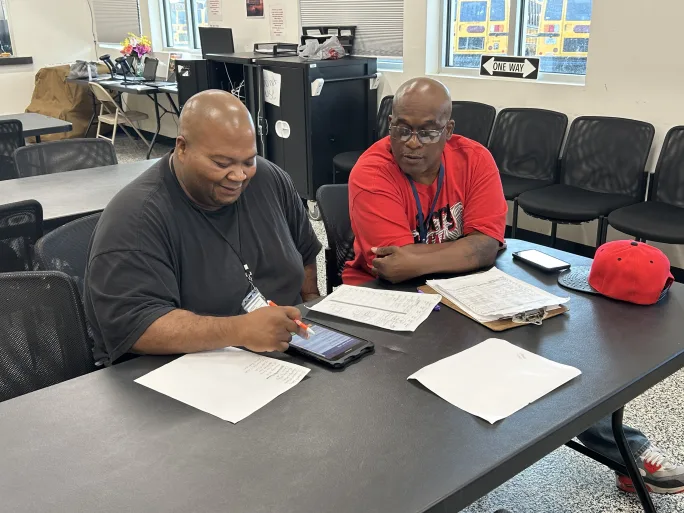
When it comes to recruitment, the best candidates may already be in your circles or know the right person to refer.
Credit:
Summer Adams
One of the smartest strategies Adams shared is deceptively simple: help your staff document concerns clearly and professionally. When drivers and aides can present accurate, actionable information, their concerns are more likely to lead to meaningful outcomes.
“Training on time-centered, clarity, fact-based reports without opinions, tone, and professional language helps paint a clearer picture for administration,” Adams said. “It has been very rewarding to see drivers and monitors apply these skills and recognize that their efforts are leading to conversations and interventions.”
McLeod shared a similar approach: “One of the quickest ways to lose trust is to dismiss concerns. That doesn’t mean we will always agree… but people deserve to know they were heard.”
Sometimes, the feedback is hard to act on. But explaining the limits of what’s possible, and why, is better than saying nothing at all.
4. Invest in Leaders Before You Need Them
In many transportation departments, leadership roles don’t open frequently. That doesn’t mean leadership development should wait. Really, it’s the complete opposite. Waiting until you need a supervisor or dispatcher to start building one is a guaranteed way to create a scramble.
“The up-and-comers always seem to be that person who’s willing to do extra,” said Dallessandro. “That one person who jumps on the radio to help a lost driver, or volunteers to let a trainee ride along.”
Identifying these informal leaders early allows time for mentoring and confidence-building. For example, McLeod makes a habit of telling staff when he sees leadership potential.
“Sometimes that confidence boost matters,” he said.
Palmer Bus Service is formalizing that pathway through a new internal development program. “We are currently developing training courses that introduce different types of full-time careers across Palmer, but more specifically, hope to develop more managers in training as we continue to grow,” Winter said.
Even when upward mobility is limited within a district, investing in people pays off. When your staff grows into roles in other districts, the entire region benefits, and your department earns a reputation as a place where careers are launched.
5. Build Bridges Across Generations
School bus operations are among the few work environments where retirees, 20-somethings, and second-career parents might all work side by side. The best leaders know how to meet those groups where they are, especially when it comes to turning differences into strengths.
“Communication styles, motivations, and even definitions of ‘support’ can look very different,” McLeod acknowledged.
Adams takes a collaborative approach, encouraging cross-generational mentorship and highlighting the value of diverse perspectives. “Pairing those up who are confident with technology to help their fellow co-worker helps them feel empowered rather than overlooked,” she explained.
In practical terms, this might mean offering updates via both printed notices and digital channels, adjusting training formats, or being mindful of how new tools are introduced. Respecting what each generation brings (without assuming everyone needs the same thing) goes a long way in making staff feel seen and supported.
6. Don’t Let Role Confusion Ruin Morale
When staff tension arises, it's rarely about personality clashes alone. More often than not, it’s about mismatched expectations.
Dallessandro put it this way: “Conflict and tension come from where individuals feel that somebody is getting into an area that is their responsibility, or where somebody feels that they’re doing all of the work and someone else isn’t carrying their load.”
Setting clear roles and being transparent about who’s responsible for what can defuse misunderstandings before they escalate. Don’t forget: when conflict does arise, early intervention matters.
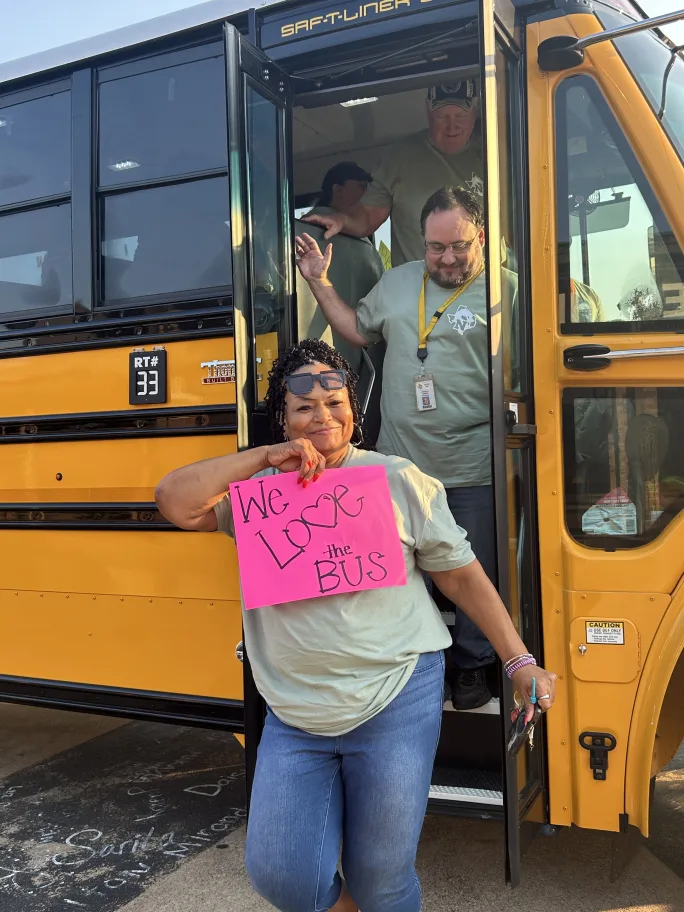
In school transportation, it's important to encourage cross-generational mentorship and highlight the value of diverse perspectives.
Credit:
Summer Adams
“I address issues early, privately, and directly,” McLeod shared. “The goal isn’t to ‘win’ an argument. It’s to restore trust and keep the team moving forward.”
Intention also plays a huge role in addressing workplace mishaps or squabbles, making it important that leadership communication always holds staff development in the forefront.
“If you’re going to give feedback, positive or corrective, it needs to be aligned with their goals and growth,” said Keith Terry, director of transportation for the Orangeburg County School District in South Carolina.
Plus, don’t deliver feedback only when something goes wrong. Creating a space for ongoing, trust-based conversations builds accountability in a way that feels genuinely supportive. That kind of support turns employees into invested members of your team.
7. Celebrate Wins, Especially Small Ones
In an industry defined by early mornings, long routes, and shifting schedules, little things can go a long way. Whether it’s popcorn in the breakroom, birthday shoutouts, or school-year wrap-up parties, meaningful recognition helps people feel connected and valued.
“We’ve got sites that host weekly social hour before their afternoon routes,” Winter said. “There are usually treats on the breakroom tables.”
Managers at Palmer are given discretionary funds to support staff appreciation in ways that fit their team’s vibe. “I’ve seen sites host school end-of-year appreciation parties, celebrate birthdays, anniversaries, holiday dinners, and potlucks,” Winter said.
These moments build loyalty, camaraderie, and emotional investment in the workplace. All the best ingredients to keep employees coming back.
8. Belonging is the Endgame
At the heart of every strong recruitment and retention strategy is a simple truth: people stay where they feel like they matter. That feeling comes from a combination of policy and leadership.
“You can have strong accountability and also be empathetic,” McLeod said. “When staff feel seen for who they are and what they bring to the table, they’re far more likely to stay engaged and invested.”
That starts from the top. “The person who is in charge of the organization... they kind of have a mindset of how they want the organization to function. I think it’s important to set the tone for what you’re going to expect,” Dallessandro said.
Recruitment may begin with visibility, but retention begins with trust. Build both. You’ll not only keep the wheels on the bus turning, but also the people driving them.
Subscribe to Our Newsletter
More Management
Annette Brown Always Takes the Extra Time: Meet Our 2026 School Bus Driver Hero
For more than 30 years, the Wa-Nee Community Schools driver has treated students like family, combining safety, compassion, and servant leadership to make a lasting difference on and beyond the school bus.
Read More →
How to Build a Better Driver Training Program
Ready to boost up your school bus instructor training? Here’s how to pick the right talent and improve recruitment, retention, and safety.
Read More →
CALSTART and Forth Combine to Form Catalyst Mobility
The new name represents a renewed vision for the nonprofit focused on advancing clean, equitable, and affordable transportation solutions that move people and goods.
Read More →

What Makes a Great School Bus Driver Trainer?
Choosing the right school bus driver trainer takes more than experience. Learn six keys to selecting and developing trainers and evaluating program effectiveness.
Read More →
School Bus Contractors Expand Through New Deals, Acquisitions & Partnerships
STA's Canadian division acquires Ontario-based G&L Stevenson Transport; Durham School Services adds a new district in California; First Student expands in New Jersey; and Minnesota Coaches rebrands and acquires Halo Transportation.
Read More →
Logan Bus Company Rolls Out AI Phone System for NYC School Bus Families
A summer pilot found that AI agents could handle most routine calls, freeing up time for customer service staff to focus on emergencies and complex family concerns.
Read More →
From Intent to Impact: What I Learned About Leadership from TAPT
A Texas transportation supervisor shares lessons on self-awareness, accountability, managing stress and building trust — and why investing in leadership development matters at every stage of your career.
Read More →
NAPT Names 2026 Award Recipients, Hall of Fame Inductee
Who earned national recognition for their work in student transportation? This year, NAPT named five recipients of its 2026 awards for service, safety, and leadership, plus its newest Hall of Famer.
Read More →
Sponsored•September 2, 2026
2026 State of Student Transportation Report
Driver shortages. Rising costs. Growing safety expectations. More data, but not enough time to act on it. The 2026 State of Student Transportation Report reveals what transportation leaders say is putting the most pressure on their operations—and where they’re investing next. See how your priorities compare.
Read More →
How to De-Escalate an Angry Person: 5 Steps for Handling Workplace Conflict
What makes emotions run high, and how should you handle an angry colleague or parent? Follow these steps for staying calm, listening, showing empathy, and resolving conflict.
Read More →