





Speaking of Minnesota... An Inside Look at St. Francis Area Schools [PHOTOS]
Palmer Bus Celebrates New Princeton Location
The Minnesota contractor held an open house for its brand-new facility serving Princeton Public Schools. Take a peek with this inside look!
August 13, 2025
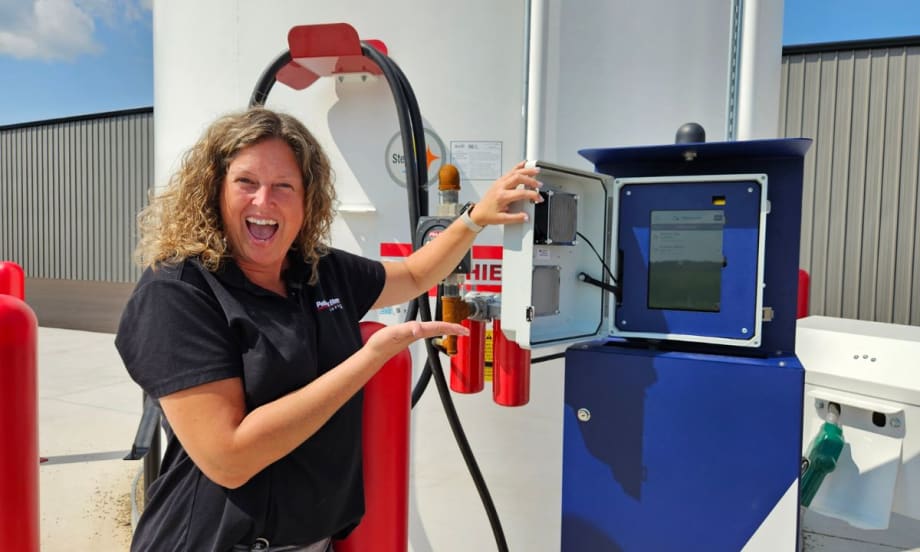
Bethany Vaale shows off the company's on-site fueling system for its diesel and gasoline vehicles. They use FuelCloud, which is a smart fueling tool that simplifies refilling and tracks usage with touchscreen management.
Photo: Amanda Huggett
2 min to read
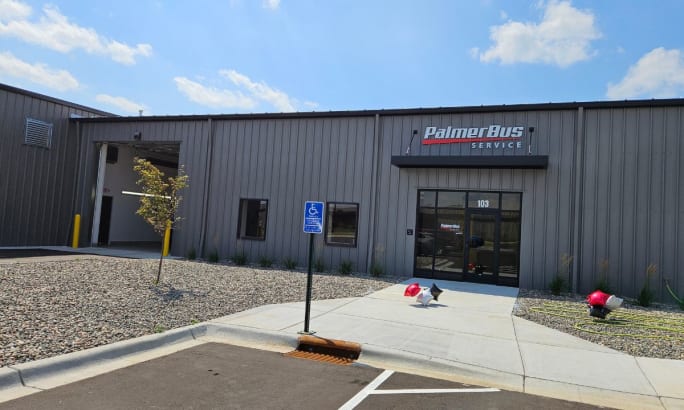
Moving on from Palmer's former temporary Princeton location, they hosted an open house for its brand-new building on August 13.
Photo: Amanda Huggett
Today, Minnesota-based school bus contractor Palmer Bus celebrated its new location for its Princeton office with a grand opening and open house, and School Bus Fleet was on site to see the new digs.
Previously, the team worked out of a rented temporary location with its office in a work trailer. They moved into the new building mid-July and is gearing up for the soon-to-start new school year.
"We are very excited to have a drive-through wash bay and on-site fuel," said Jenna Fromm, CEO and co-owner. "We can be more efficient and have our vehicles be shiny and represent the Princeton Tigers! We can also have all of our vehicles strategically staged in our indoor storage for optimized flow during route times."
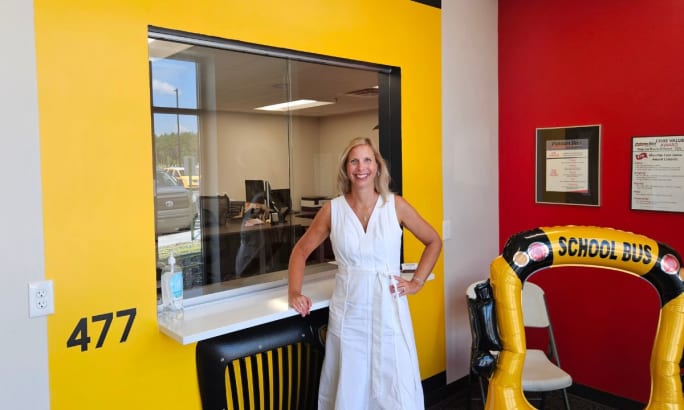
Jenna Fromm, CEO and co-owner, poses at the front desk, welcoming drivers and visitors with a nod to the yellow bus.
Photo: Amanda Huggett
The 8,300 square foot office and shop space features:
Room for its 59 vehicles: 26 regular route buses, 10 trip buses, five SPED buses, and 15 vans.
An attached 30,000 sq ft cold storage.
A break room and space for its 80 drivers.
A 2-bus wash bay.
A 3-bay maintenance shop with dedicated restrooms.
4 acres of land for room to grow if needed.
On-site fuel station for diesel and gas with a smart system called FuelCloud.
"We are excited for the new year to start and all the things that come with it," said Bethany Vaale, Princeton location manager. "The kids' smiles and stories and having our fleet back on the road, the kids laughing and having a good time going to and from school."
Palmer Bus has been partnering with Princeton Schools since around 2012. With district growth, Palmer Bus is providing transportation for over 3,000 students for the 2025-26 school year.
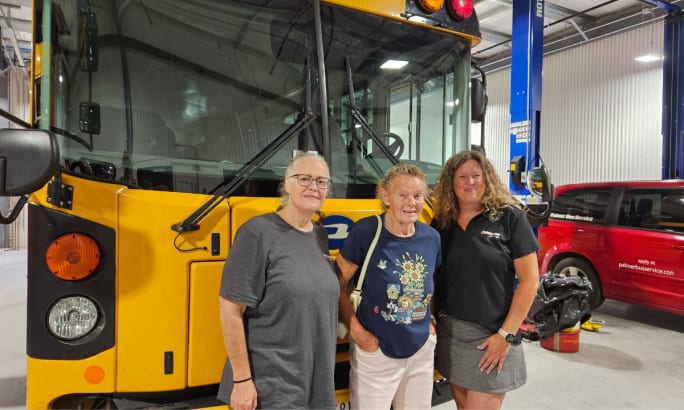
(L to R) Sandy Gaslin, assistant manager, stands with Connie Duff and Bethany Vaale. Duff is Palmer's longest driver with an impressive 52 years behind the wheel!
Photo: Amanda Huggett
The city's mayor and the district's leadership attended the open house to support the partnership and see the new space up close.
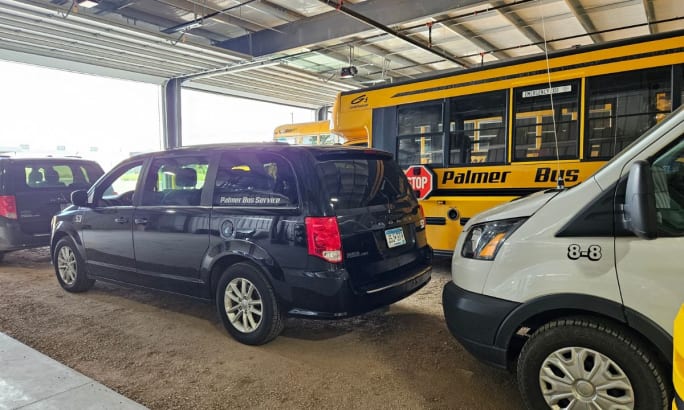
Palmer's Princeton office runs 59 vehicles in total, including buses and vans.
Photo: Amanda Huggett
See more and hear from a local driver in this video!
More Management

How to Build a Better Driver Training Program
Ready to boost up your school bus instructor training? Here’s how to pick the right talent and improve recruitment, retention, and safety.
Read More →
CALSTART and Forth Combine to Form Catalyst Mobility
The new name represents a renewed vision for the nonprofit focused on advancing clean, equitable, and affordable transportation solutions that move people and goods.
Read More →
What Makes a Great School Bus Driver Trainer?
Choosing the right school bus driver trainer takes more than experience. Learn six keys to selecting and developing trainers and evaluating program effectiveness.
Read More →

School Bus Contractors Expand Through New Deals, Acquisitions & Partnerships
STA's Canadian division acquires Ontario-based G&L Stevenson Transport while Durham School Services adds a new district contract in California, First Student adds a New Jersey contract, and Minnesota Coaches acquires Halo Transportation.
Read More →
Logan Bus Company Rolls Out AI Phone System for NYC School Bus Families
A summer pilot found that AI agents could handle most routine calls, freeing up time for customer service staff to focus on emergencies and complex family concerns.
Read More →
From Intent to Impact: What I Learned About Leadership from TAPT
A Texas transportation supervisor shares lessons on self-awareness, accountability, managing stress and building trust — and why investing in leadership development matters at every stage of your career.
Read More →
NAPT Names 2026 Award Recipients, Hall of Fame Inductee
Who earned national recognition for their work in student transportation? This year, NAPT named five recipients of its 2026 awards for service, safety, and leadership, plus its newest Hall of Famer.
Read More →
Sponsored•September 2, 2026
2026 State of Student Transportation Report
Driver shortages. Rising costs. Growing safety expectations. More data, but not enough time to act on it. The 2026 State of Student Transportation Report reveals what transportation leaders say is putting the most pressure on their operations—and where they’re investing next. See how your priorities compare.
Read More →
How to De-Escalate an Angry Person: 5 Steps for Handling Workplace Conflict
What makes emotions run high, and how should you handle an angry colleague or parent? Follow these steps for staying calm, listening, showing empathy, and resolving conflict.
Read More →
Sponsored•September 1, 2026
What Readiness Looks Like This School Year
Learn about the challenges shaping the 2026–2027 school year, from persistent driver shortages and budget pressure to technology and readiness gaps. See how school districts are responding and adapting in Zonar’s 2026 Back-to-School Readiness Report.
Read More →