




What Makes a Great School Bus Driver Trainer?
Choosing the right school bus driver trainer takes more than experience. Learn six keys to selecting and developing trainers and evaluating program effectiveness.

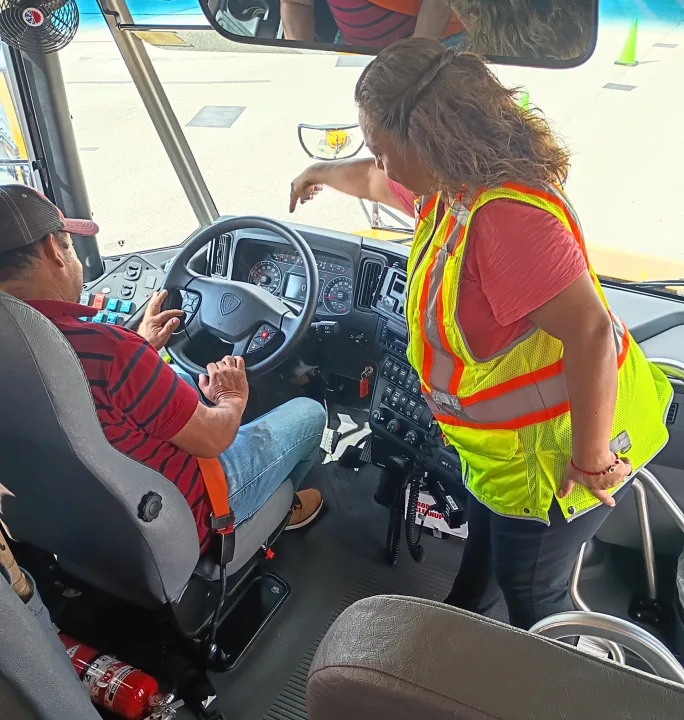
Pictured: Stephanie Oliver from the California Department of Education walks state conference attendees through driving maneuvers at California's state association conference.
- Effective school bus driver trainers require a mix of skills beyond just driving experience.
- Six essential factors are important in the selection and development of trainer candidates.
- Evaluating the effectiveness of the training programs is crucial to ensure quality and safety.
*Summarized by AI
When you need to hire a driver-trainer in your district or company, who do you turn to? If it’s based solely on who’s been on your team the longest or who is liked the most, you could be making a key mistake.
Neither experience nor personality makes someone qualified to take on an instructing role. And that misstep of promoting the wrong person is something Bret Brooks sees often.
Brooks is the founder of Gray Ram Tactical, a training and consulting company for the school transportation industry. He sat down with us to talk about how to avoid those mistakes and how to identify a great driver with potential to train others.
“Just because we have an empty seat doesn't mean we need to put anybody in it,” Brooks said. “We gotta put the right people in it.”
6 Keys to Building Strong School Bus Driver Trainers
1. Start With Someone Who Wants to Teach
The person selected as your new trainer should want to do it. If you hire within, never force someone into something they’re not willing or able to take on.
“What we have to do is put that person that wants to do it in a role where they can assist the current trainers, give them a little bit of opportunity to get in front of people under some supervision and see how well it's received,” Brooks said.
Pro tip: Look for that one person who seems to be already taking on that role informally, the one who others just seem to go to for help. A person who’s got some years of experience plus the personality that draws others in and coaches effectively has the right base to build on.

Zum’s Susan Moorehead (right) works with aspiring bus drivers, instructors, and trainers to prepare them for the responsibility behind the wheel.
Zum
2. Know Your State’s Trainer Requirements
Because there is no national standard for school bus driver trainers, each state determines how to certify the trainers. Know what this is where you live, whether someone simply needs to be identified or if they must have a certain number of years of experience or hours taught.
3. Look for Teaching Skills, Not Just Driving Skills
Know who can effectively teach with a strong grasp of adult learning theories and the right people skills. That means that a phenomenal elementary teacher may struggle to connect with how an adult learns versus a child.
The selection process of who you pick for the trainer role is critical to success, Brooks reminds.
4. Make Professional Development Ongoing
Make sure that person keeps up with professional development, training, and certifications — especially if they’re transportation students with disabilities or using special needs equipment.
Training is never one and done.
5. Make Documentation Part of the Job
A good trainer also needs to have good documentation habits. Paperwork may be the least favorite part of the job for someone who’s in it for the people, but it’s imperative for legal and compliance reasons.
Recordkeeping and maintaining sign-in sheets is just as much a part of the job as demonstrating a good pre-trip for a new driver.
After all, “We all know if you didn't write it down, it didn't happen,” Brooks said.
6. Create Spaces for Trainers to Learn From Each Other
Instructors need to have the right mix of experience, communication, and organization to be most effective assisting other drivers.
Anthony Shields
Unlike directors, there is no national association or conference for school bus driver instructors. Brooks thinks it’s time that changed and hopes to see a day where there is a community for trainers to connect with each other and learn together — much more than a track at an existing conference or something just on a local level.
Aside from the natural information sharing it would allow, it would move the role from an assigned duty to one that is professional and distinguished in and of itself, he said. And that kind of forum makes for better trainers across the country and beyond.
How to Build and Evaluate Your Training Program
If Brooks could build his own train-the-trainer program (aside from Gray Ram’s existing one-day course), he’d start with a 40-hour class over four or five days that covers your states’ legal requirements and specifications, adult learning principles, and testing to ensure a strong grasp of the material.
Now just as much as a trainer needs to maintain their knowledge with evolving industry standards, is that directors need to maintain metrics on the effectiveness of the training program.
Brooks recommends asking drivers to evaluate the training at the end of a program to offer a score and/or feedback on how relevant and engaging the instruction was. To take it a step further, consider inviting other districts in for an outside perspective.
“If I'm in district A and my trainers are really good, and I do my evaluations and everybody's giving them a good thumbs up, I may have blinders on,” he said. “When I reach over to district B and say, ‘could you have your trainer come over and just evaluate my trainer unofficially, give us some feedback on what you think.’ That goes a long way and it really does pay dividends.”
Strong Training Leads to Strong Drivers and High Retention
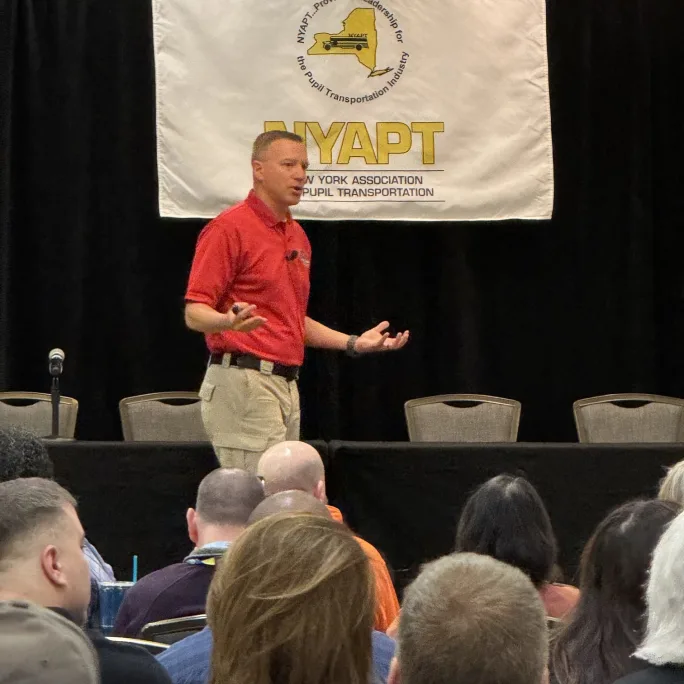
Bret Brooks trains school bus drivers in New York.
Bret Brooks
Brooks says one thing differentiates teams that have a shortage of drivers versus ones that have a full pool or even a waiting list. And that is that they take care of their people, meaning they invest in them and don’t do the bare minimum.
“It's not always about money,” he said. “One of the ways we take care of people is we give them the information that they need.”
He challenges districts to go above the minimum required training in your state to show that you care about someone and their success. “
To get a baseline of where you’re at right now, do an anonymous survey to get a wide swath of feedback on where you excel and where you have room to improve. Ideally, this includes not just your current drivers, but other district administrators, parents, students, and teachers, to see all the perspectives you may be missing.
“When we look at driver training, don't look at it as a requirement or a box to check,” Brooks advised. “What we have to do is have the mindset that the training that we're providing is part of a larger system to safely transport students.”
When you do that, you’ve got a darn good formula to having happy, safe drivers who are confident in what we’re here to do: serve students and drive them to a promising future.
Quick Answers
A school bus driver trainer should hold a CDL, possess experience in driving heavy-duty vehicles and bring a thorough understanding of safety protocols and effective communication skills.
*Summarized by AI
More Management

School Bus Contractors Expand Through New Deals, Acquisitions & Partnerships
STA's Canadian division acquires Ontario-based G&L Stevenson Transport while Durham School Services adds a new district contract in California, First Student adds a New Jersey contract, and Minnesota Coaches acquires Halo Transportation.
Read More →
Logan Bus Company Rolls Out AI Phone System for NYC School Bus Families
A summer pilot found that AI agents could handle most routine calls, freeing up time for customer service staff to focus on emergencies and complex family concerns.
Read More →
From Intent to Impact: What I Learned About Leadership from TAPT
A Texas transportation supervisor shares lessons on self-awareness, accountability, managing stress and building trust — and why investing in leadership development matters at every stage of your career.
Read More →


NAPT Names 2026 Award Recipients, Hall of Fame Inductee
Who earned national recognition for their work in student transportation? This year, NAPT named five recipients of its 2026 awards for service, safety, and leadership, plus its newest Hall of Famer.
Read More →
2026 State of Student Transportation Report
Driver shortages. Rising costs. Growing safety expectations. More data, but not enough time to act on it. The 2026 State of Student Transportation Report reveals what transportation leaders say is putting the most pressure on their operations—and where they’re investing next. See how your priorities compare.
Read More →
How to De-Escalate an Angry Person: 5 Steps for Handling Workplace Conflict
What makes emotions run high, and how should you handle an angry colleague or parent? Follow these steps for staying calm, listening, showing empathy, and resolving conflict.
Read More →
What Readiness Looks Like This School Year
Learn about the challenges shaping the 2026–2027 school year, from persistent driver shortages and budget pressure to technology and readiness gaps. See how school districts are responding and adapting in Zonar’s 2026 Back-to-School Readiness Report.
Read More →
Changing Lanes: Executive Moves at Summit School Services, Zum, STA, Cummins, Transit Technologies, Driventic, & Cadex
See who's been hired, promoted, and appointed to leadership positions at various school transportation industry suppliers and private contractors.
Read More →
Industry Moves: Companies Expand Fleet Service & EV Infrastructure Footprints
The new facilities and regional hubs could mean faster access to shop equipment, charging support, and transportation technology for fleet operators.
Read More →
Doing More With Less: How Transportation Directors Can Prioritize Safety Amid Budget Uncertainty
With diesel prices soaring and nearly one-third of transportation directors expecting budget cuts, maintaining student safety has never been more challenging. Download this guide to learn how leading districts are prioritizing risk, funding critical safety technology, and building stronger budget cases with data.
Read More →