




Building Leaders Who Last: Creating a Successful Mentorship Program in Student Transportation
Four Lessons Learned from My Own ‘Mount Rushmore’ of Leaders
What makes a great leader? Shannon Barnett shares what he's learned from influential mentors and why leaders should seek wisdom and pass it on.
by Shannon Barnett, KWRL Transportation Cooperative
November 11, 2026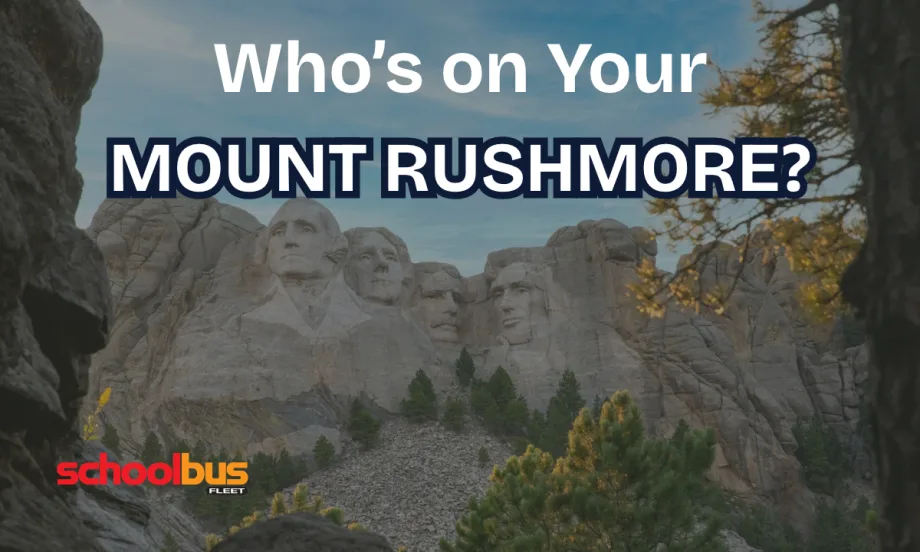
Current industry leaders should serve as a source of wisdom for others around them. Like our nation’s founding fathers, leaders can build strong foundations to inspire others for generations to come.
Credit:
School Bus Fleet
6 min to read
- Shannon Barnett emphasizes the importance of seeking wisdom from influential mentors to enhance leadership skills.
- Great leaders are defined by their ability to share learned wisdom and experiences with others.
- The lessons from Barnett's mentors highlight the transformative impact that thoughtful guidance can have on personal and professional growth.
*Summarized by AI
Have you ever asked yourself how or why each of the four presidents on Mount Rushmore were chosen? I love history, and I didn't know the answer to that question.
The four presidents carved into Mount Rushmore were chosen because each represents a distinct pillar of our nation’s history: foundation, growth, development, and preservation. George Washington symbolizes our foundation as a new republic. Thomas Jefferson represents our growth, marked by the Declaration of Independence and the 1803 Louisiana Purchase. Abraham Lincoln embodies preservation, having guided the nation through the Civil War to maintain the Union. Theodore Roosevelt symbolizes development, celebrated for constructing the Panama Canal and taking bold strides in conservation, antitrust enforcement, and foreign policy.
Together, their leadership spanned different eras to shape the trajectory of the United States.
Neither leadership skills nor operational expertise develop overnight. They are refined over time, much like the enduring legacy of these four presidents. When I was flying home from SBFX in Arizona last September, I found myself flying home with a heavy heart due to the recent death of some people who had a profound influence on me. As I thought about their influence, it reminded me of what I had recently learned about Mount Rushmore, which led me to ponder who would be on my Mount Rushmore.
Throughout my career, I have been fortunate to be mentored by four remarkable men who serve as my personal Mount Rushmore. I directly attribute much of my leadership approach and operational philosophy to them, and their influence remains visible in how my transportation department operates every day.
While each offered countless insights, a single defining takeaway from each continues to guide my work.
1. Eliminate Points of Pain with a Three-Legged Stool Approach
Donald Eugene Petersen, my wife's great-uncle and the former CEO of Ford Motor Company, published A Better Way in 1991. The book details the cultural and leadership transformations he led at Ford during the 1980s, emphasizing employee empowerment, teamwork, and quality improvement. When I transitioned from the private sector to public education, I reached out to him after reading his book. Although we never met in person, we became regular pen pals, and his letters were full of practical wisdom.
Donald’s key lesson was the necessity of identifying operational "points of pain" and developing structured solutions to remove them. He explained that effective strategies require the balance of a three-legged stool: every effort must be preventative, responsive, and restorative. If any leg is missing, the strategy fails, and you risk squandering collaborative capital with your partners.
I applied this lesson to our operations through an "A=B=C" framework. Recognizing that our high volume of customer phone calls stemmed from route inaccuracies and weak communication, we aligned three core elements: the operational model we built (A), what we communicated and published to families (B), and how our drivers executed the routes in practice (C).
Bringing A, B, and C into total alignment improved service quality and drastically reduced call volume. We developed strong tools to measure success and validate that A, B, and C are in alignment daily. We then used the three-legged stool concept to guide our communication and student management practices.
By balancing our initiatives to be preventative, responsive, and restorative, operational performance improved substantially — and the reduction in complaints was a clear sign of systemic health. We decreased our need to respond because we prevented them from happening and restored the relationships to prevent them from recurring.
Prevention, response, and restoration create symbiotic operations.
2. Anchor Decisions in a Consistent Moral Compass
While serving as president of the Kalama School Board, I had the privilege of meeting Major Lynn "Buck" Compton, a World War II veteran who served as a paratrooper in "Easy Company" (506th Infantry Regiment, 101st Airborne Division), later portrayed in the HBO miniseries Band of Brothers.
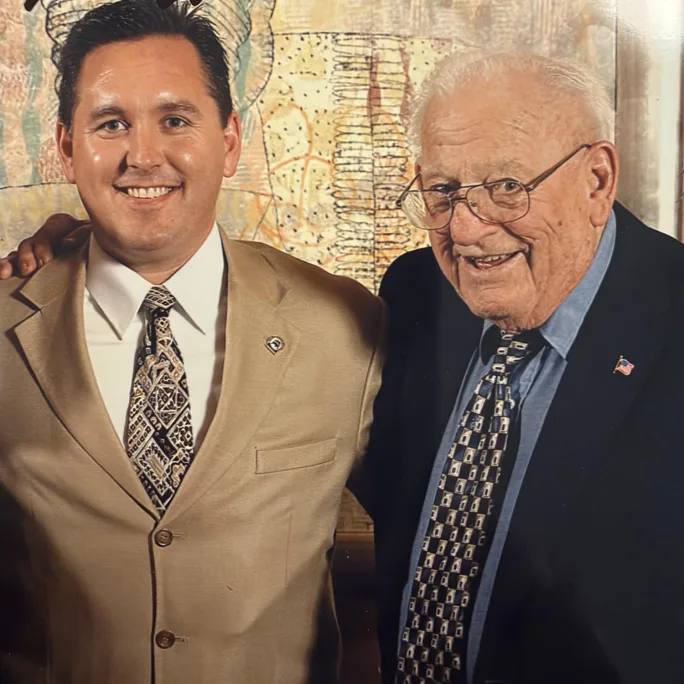
Barnett and Major Lynn "Buck" Compton from "Band of Brothers" fame.
Credit:
Shannon Barnett
Buck lived an extraordinary life: he was a dual-sport athlete at UCLA alongside Jackie Robinson, a decorated war hero, the prosecutor of Sirhan Sirhan following the assassination of Robert F. Kennedy, and eventually a federal judge appointed by Ronald Reagan. I initially offered to drive Buck to speaking events simply to hear his wartime stories. However, our conversations quickly turned toward his deep commitment to the law, the Constitution, and principled leadership.
Buck emphasized that real success — whether as a judge, parent, leader, or athlete — requires consistent application of a moral "magnetic north" rather than situational ethics. Decisions driven by short-term convenience or a desire to avoid discomfort often compromise long-term well-being. Leading with integrity is rarely the easiest path, but anchoring decisions in principled truth eliminates the need to second-guess your actions.
Managing people and organizations is hard on the front end, but easier in the long run when you lead with a compass instead of situational ethics. Find your compass early. For Buck, his compass was the Constitution, and it seemed like he was always handing me a pocket copy of the Constitution prior to each trip we took. A stack of those cherished pocket constitutions sits on my desk to this day as a symbolic reminder to me every time I see them.
3. Understand That the "Why" Is as Vital as the "What" and "How"
As a young college student studying architecture, I paid my expenses by washing dump trucks on weekends for J.L. Storedahl & Sons. One day, the owner, Jerry Storedahl, brought me into his office and offered me a higher-level role in his front office. Knowing I was inexperienced, Jerry explained that he valued a "blank slate" he could train in his specific methods.
Jerry was an intimidating figure, but after working with him for some time, I gathered the courage to ask him to explain not just *what* to do and *how* to do it, but *why* we did it. Jerry warmly welcomed the question and took the time to explain the broader rationale behind our work.
Understanding the underlying purpose gave me clarity, confidence, and ownership over my responsibilities. While I understood that being viewed as a “blank slate” was not in itself a compliment, the compliment he was really offering was in the form of access to opportunity and learning.
4. Model the Standards You Expect
Some of the most valuable lessons are caught rather than taught. Working alongside my father during my early years — and later having him work with me — showed me the power of leading by example. He demonstrated that professionalism, punctuality, and genuine care require no capital, only effort and discipline. People constantly observe and mirror the behavior modeled by leadership.
If you do not actively model the standards you expect, you undermine your organization's culture as a contaminant instead of a catalyst.
Looking back, these four perspectives form a cohesive foundation for leadership. Applying these lessons has strengthened our operational performance, which directly improves service to the families and children who rely on our transportation system every day. For emerging leaders, actively seek out experienced mentors. The risk of reaching out is minimal, but the wisdom gained can shape your career and life.
Find Your "Mount Rushmore"
For seasoned leaders, take the time to share your experience and mentor others. Be the foundation that helps someone else grow.
Just as the leaders on Mount Rushmore founded, grew, preserved, and developed a nation, we should strive to do the same within our organizations and communities.
Credit:
Shannon Barnett
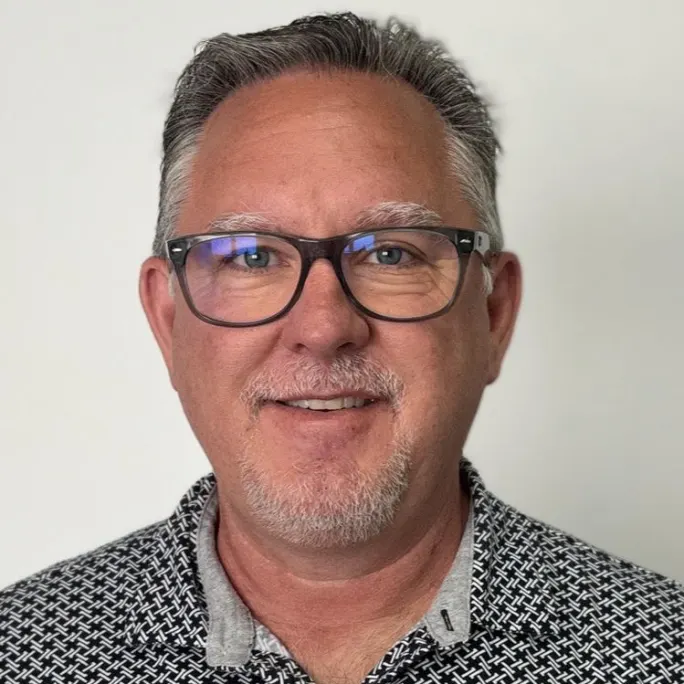
About the Author: Shannon Barnett has served for 22 years in the fleet transportation industry in the private sector, including 14 years as a transportation director managing a transportation cooperative that serves four school districts in southwest Washington, and eight years as president of a local school board.
Subscribe to Our Newsletter
More Management
Changing Lanes: Catalyst Mobility, Netradyne, School Bus Logistics, Verra Mobility, Zonar
Get the rundown on who's been hired, promoted, and appointed to leadership positions at school transportation nonprofits, advisory companies, and tech providers.
Read More →
2027 School Bus Fleet Administrator of the Year: Nominations Now Open
Know a state or district-level transportation director who inspires others, leads by example, and goes above and beyond? Tell us about them for their chance to be recognized in this School Bus Fleet award!
Read More →
5 Questions: How CharterUP Brought a Marketplace to Student Transportation
What does it take to bring a transportation marketplace into K-12? Hear firsthand what CharterUP has learned about the unique needs of schools and bus operators.
Read More →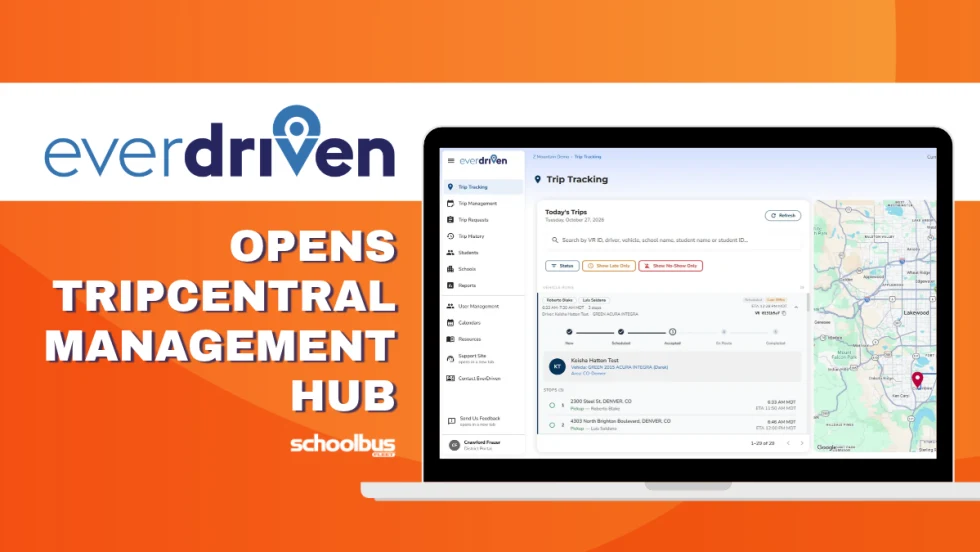
EverDriven Expands TripCentral Transportation Management Platform to All Partner Districts
The platform provides school districts with real-time trip tracking, student transportation scheduling tools, and pickup and drop-off management capabilities.
Read More →
6 School Transportation Trends to Watch: 2026 District Survey Results
School bus buying is up, fuel choices are shifting, and driver shortages persist. This and more in the latest K-12 public school survey, plus the largest fleets in the U.S.
Read More →
The 100 Largest School Bus Fleets in America: 2026 Rankings
Which public K-12 school districts are the largest in the nation in terms of bus fleet size? Here are the new standings of the top 100 district fleets.
Read More →
EverDriven Launches Route Consolidation Calculator to Estimate Diesel Savings
As diesel prices hit record highs, the largest alternative transportation provider says a 10% route consolidation could save a 120-route district more than $78,000 a year in fuel alone.
Read More →
Zum Secures Continued Financing Support for School Bus Expansion
Generate Private Credit has financed approximately $75 million in school bus deployments across three states, supporting more than 500 buses as Zum expands across the county.
Read More →
Beyond Discipline: A Different Approach to Student Behavior on the Bus
After implementing a dean of students program in Oregon, North Clackamas is seeing positive improvements. Here’s how it worked. The Route is brought to you by IC Bus.
Read More →
A Dean of Transportation's Different Approach to Student Behavior on the School Bus
After implementing a dean of students program in Oregon, North Clackamas is seeing positive improvements on the bus. Here’s how it worked.
Read More →