Check out the stories of other veterans in the series:
- Thomas Gray, Dayton Public Schools, Ohio
- Dawnett Wright, Peninsula School District, Washington
- Tracy Voigt, Pierz School District, Minnesota
 MENU
MENU SEARCH
See how Martin Staples applies decades of mission-focused leadership and operational experience to helping school districts keep students safe in this National Military Appreciation Month profile.
In this month-long series, we’re highlighting how military and school transportation careers intersect, now including Martin Staples.
Martin Staples/School Bus Fleet
Martin Staples still remembers the moment he looked up from his radar and saw the aircraft’s lights flashing against the canyon walls, and how close he was to the terrain.
He was flying low through the Cascade Mountains in an A-6 Intruder, navigating at night, just a few hundred feet above the ground and traveling at 500 knots. The mission required absolute precision: deliver weapons on target within 10 seconds of the assigned window and keep the aircraft safe through terrain that left no room for error.
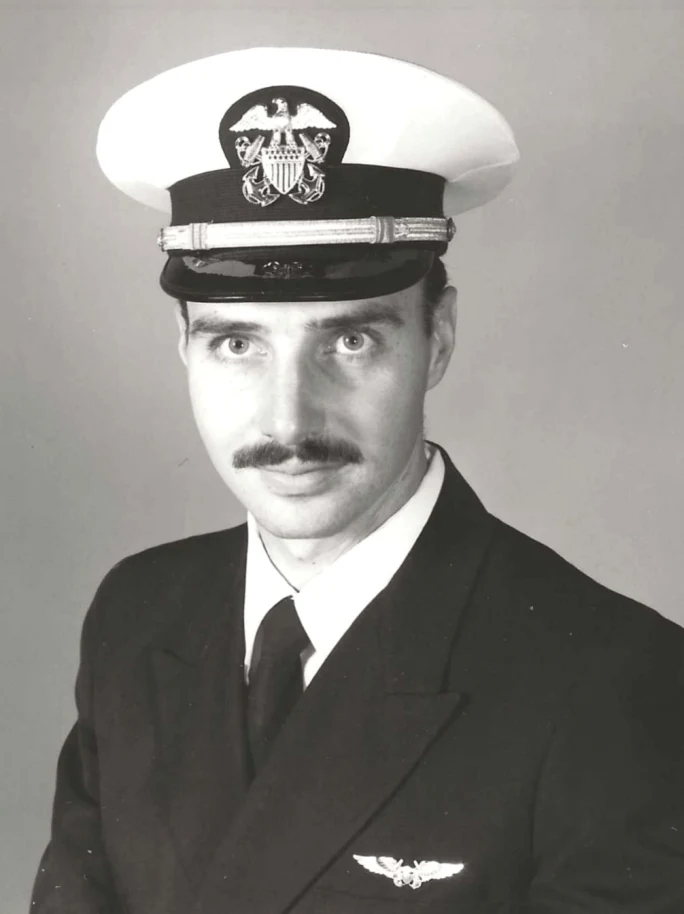
A portrait of Martin Staples as a lieutenant, taken at the Defense Mapping Agency (currently the National Geospatial-Intelligence Agency) in St. Louis, 1990.
Martin Staples
“You don't forget moments like that,” Staples said, reminiscing on moments that defined much of his eight years in the U.S. Navy.
In the United States, May is National Military Appreciation Month, a time dedicated to honoring the contributions, sacrifices, and service of all members of the U.S. Armed Forces, past and present. In this month-long series, we’re highlighting how military and school transportation careers intersect.
From 1983 to 1991, Staples served in naval aviation after entering through Aviation Officer Candidate School, the same demanding program made famous in “An Officer and a Gentleman.” He eventually became a bombardier/navigator in the Navy’s A-6 Intruder attack aircraft, stationed at NAS Whidbey Island and assigned to the USS Enterprise.
Over the course of his military career, Staples logged more than 1,000 flight hours and completed more than 300 carrier landings, including roughly 100 at night. He completed two deployments in the Indian Ocean, monitoring activity in the Strait of Hormuz and Persian Gulf during a period of escalating tensions with Iran.
“Back in 1988, we had our own conflict with Iran that was named Operation Praying Mantis,” Staples said.
The operation came after Iranian sea mines damaged a U.S. ship in the Strait of Hormuz, threatening tanker traffic in one of the world’s most strategically important waterways. “A situation that carries striking parallels to what we see in that region today,” Staples said. The Navy responded with a direct military operation against Iranian naval forces.
“When a U.S. ship struck a mine, Praying Mantis was the response,” Staples said. “It was a swift operation, under 48 hours, and it was effective.”
Years later, with tensions in the region once again making headlines, Staples sees familiar patterns.
But his military career wasn’t solely spent in combat aviation. Toward the end of his service, he transitioned into a different operational role at the Defense Mapping Agency in St. Louis, managing multiple military mapping products, including moving maps used in military aircraft and escape-and-evasion maps developed during the first Gulf War.
“That role was my first real experience as a product manager,” Staples said. “Looking back, it was my first step into something that looked like business leadership.”
After leaving the Navy, Staples earned his MBA from Washington University before taking on an entirely different challenge: helping businesses navigate the transition from communism to market economies in Eastern Europe.
Through volunteer work with MBA Enterprise Corps, he moved to Slovakia, where he eventually built a long international business career with Emerson Electric. Over more than a decade overseas, he held global manufacturing and operations leadership roles, overseeing facilities worldwide.
By 2019, Staples believed that chapter of his life was winding down. Retirement seemed like the logical next step. Then he attended a startup pitch.
Transportant, a student transportation technology company focused on safety and operational visibility, immediately caught his attention. Staples had ridden a school bus growing up and understood how central those rides were to a child’s day.
“The mission — making students safer — resonated with me,” he said.
He became one of the company’s earliest investors. But in 2021, after the company’s founding CEO passed away unexpectedly, Transportant co-founder Alan Fairless asked Staples to step into the leadership role.
“I said yes without hesitation,” Staples said.
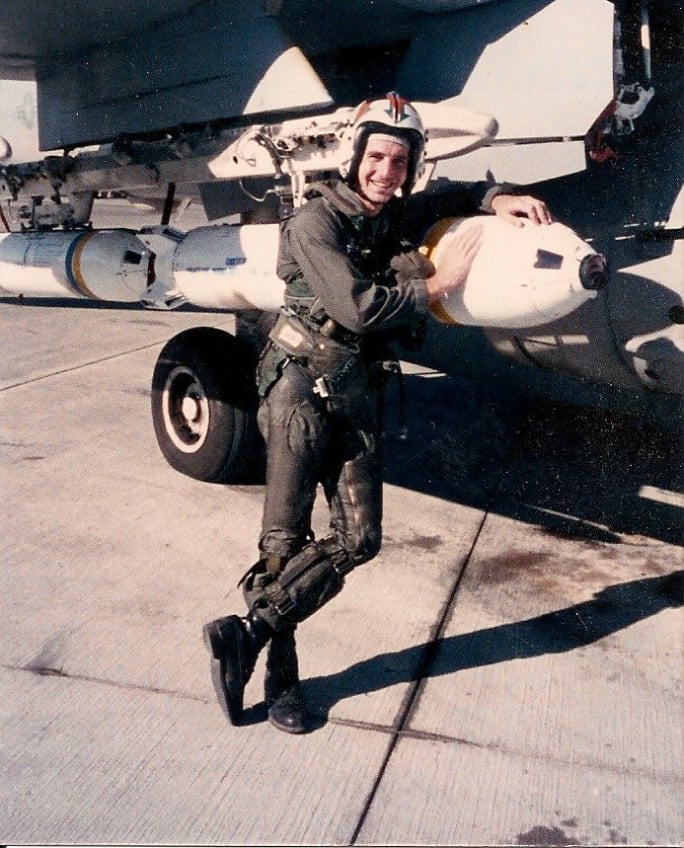
Lieutenant JG Staples on the USS Enterprise in the Persian Gulf, 1986.
Martin Staples
For Staples, one of the biggest surprises about the school transportation industry was how familiar the culture felt.
“The men and women working in student transportation are genuinely committed to the kids, to their communities, and to being responsible stewards of taxpayer dollars,” he said. “That kind of mission-driven culture is something I recognized immediately. It reminded me of the military.”
That perspective now shapes how he leads Transportant as CEO. While the environment looks very different from an aircraft carrier, Staples sees strong parallels between military operations and managing modern student transportation systems. One of the clearest connections is maintenance culture.
Part of Staples’ Navy experience involved aircraft maintenance operations, where preventive maintenance wasn’t optional, and small failures could quickly turn into disaster.
“In aviation, deferred maintenance can be catastrophic,” Staples said. “In school transportation, the stakes are different in scale but not in spirit.”
These sentiments influence how Transportant approaches fleet technology and operational tools. Staples believes transportation directors need clear situational awareness, reliable systems, and the ability to identify problems before they escalate.
“We make the problems visible,” he said.
The school bus industry mirrors the command-and-control environments Staples experienced in naval aviation. Leaders weren’t expected to micromanage every individual decision. Instead, they needed systems that surfaced issues quickly so the right people could respond.
Today, Staples sees that same approach reflected in student transportation dashboards that allow transportation directors to monitor buses in real time, identify concerns, and coordinate responses efficiently.
“The scale is different, but the principles are the same,” he said.
Another lesson Staples carried from the military is the importance of honest evaluation.
In naval aviation, every mission began with a briefing and ended with a debrief. Basically, a candid discussion about what went right, what went wrong, and what needs to improve.
“No ego. No glossing over mistakes,” Staples said. “The debrief is where you actually improve.”
The debriefing practice still shapes how he approaches leadership today. At Transportant, the company’s Customer Advisory Board meets twice a year specifically to discuss what is not working.
“We ask the hard questions, and we listen to the uncomfortable answers,” Staples said. “That’s where the real improvement lives.”
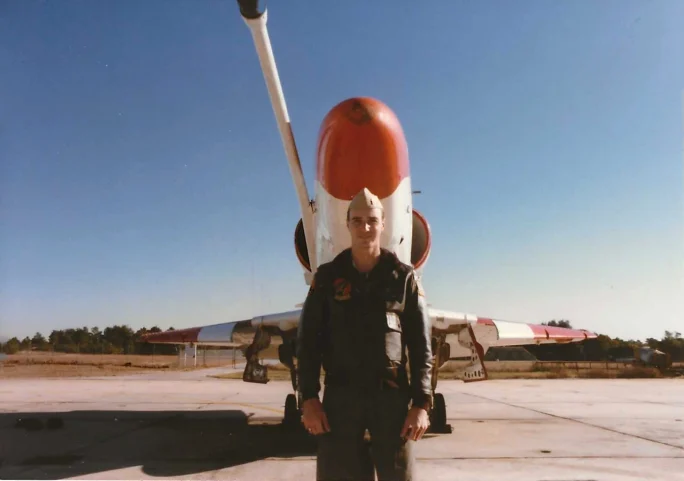
Staples in flight school posing in front of an A-4 Skyhawk, Pensacola, Florida, 1984.
Martin Staples
For Staples, the definition of service has evolved over time, but it has never disappeared.
“In the military, service meant protecting the country,” he said. “Student transportation sits closer to the military end of that spectrum for me.”
There is a similar responsibility that school districts and transportation providers carry every day.
“These are children at the very beginning of their lives,” Staples said. “The experience they have on that bus — whether they feel safe, whether they arrive calm and ready to learn, whether they're treated with dignity — sets the tone for their entire school day.”
That sense of purpose is also why he believes veterans are particularly well-suited for careers in school transportation.
“Veterans bring discipline and a mission-first orientation,” Staples said. “In the military, there is no ‘that’s not my job.’ When the mission requires something, you do it.”
And while school transportation may not always attract headlines or recognition, Staples clearly understands its importance.
“Student transportation isn’t glamorous,” he said, “but it’s important, and veterans understand the difference between the two.”
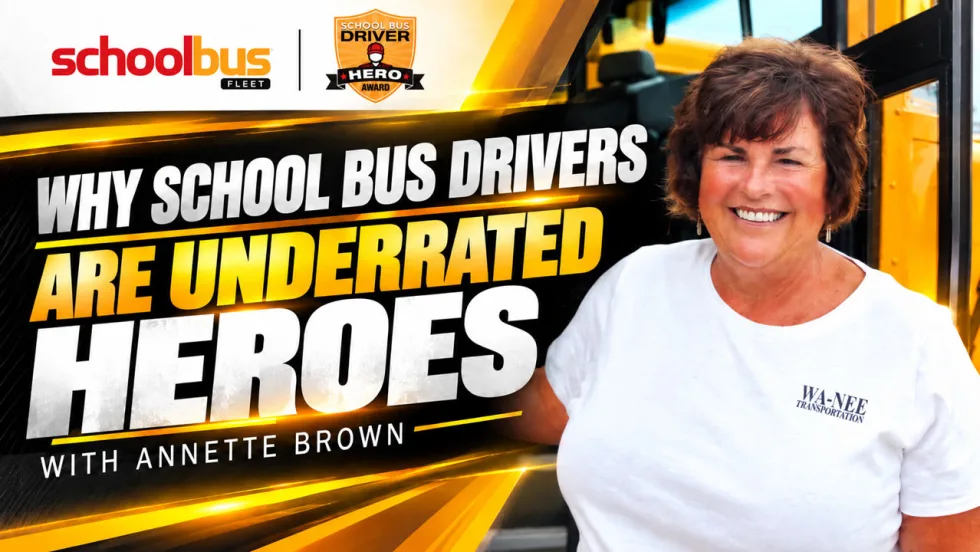
We caught up with Wa-Nee Community Schools' Annette Brown on site at SBFX, where she was named the 2026 School Bus Driver Hero Award winner. Hear about her reaction, what she loves most about being a school bus driver, and more!
Read More →
To students, a different school bus can feel like a full-blown crisis. One driver reflects on why familiar routines, showing up on time, and being reliably boring matter more than we think.
Read More →
The new Driver Perks program gives eligible professional drivers access to discounts and offers without adding a cost for participating fleets.
Read More →
Let’s explore school bus financing options, including municipal leases, vendor payable accounts, and balloon payments, and how they can help stretch fleet budgets.
Read More →
We’re searching for the next generation of leaders making an impact across the K-12 student transportation industry to recognize as SBF’s 2027 Trailblazers. Nominations are open now!
Read More →
Check out who's been hired, promoted, and appointed to leadership positions at various school transportation suppliers, contractors, and manufacturers.
Read More →
When should you sell an aging school bus? Learn how maintenance, mileage, corrosion, specifications, and timing can affect resale value long before the auction.
Read More →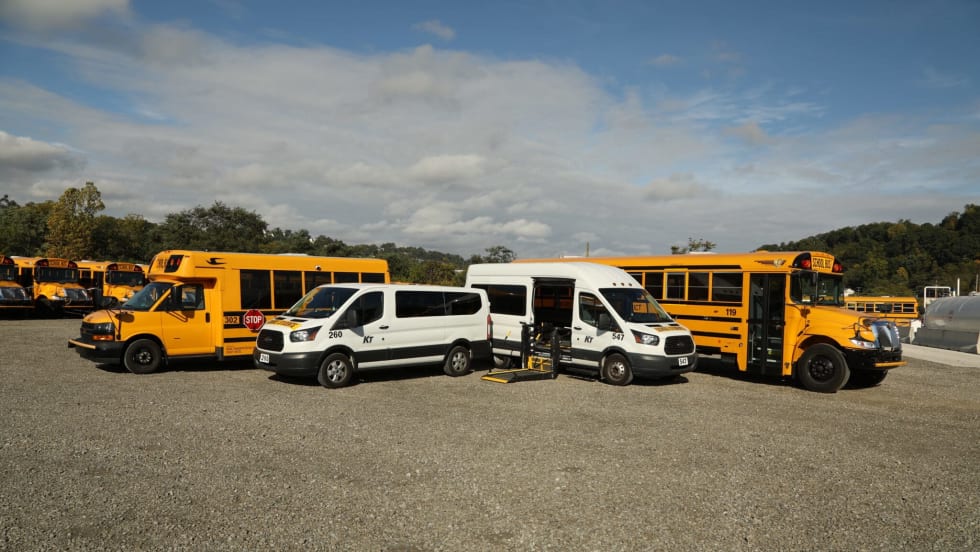
A new deal brings a 75-year Pennsylvania student transportation provider into one of the nation’s largest private school bus contracting groups.
Read More →
Who could lead your transportation operation tomorrow if you couldn't? Bernando Brown explores succession planning, mentorship, and preparing emerging leaders to step up.
Read More →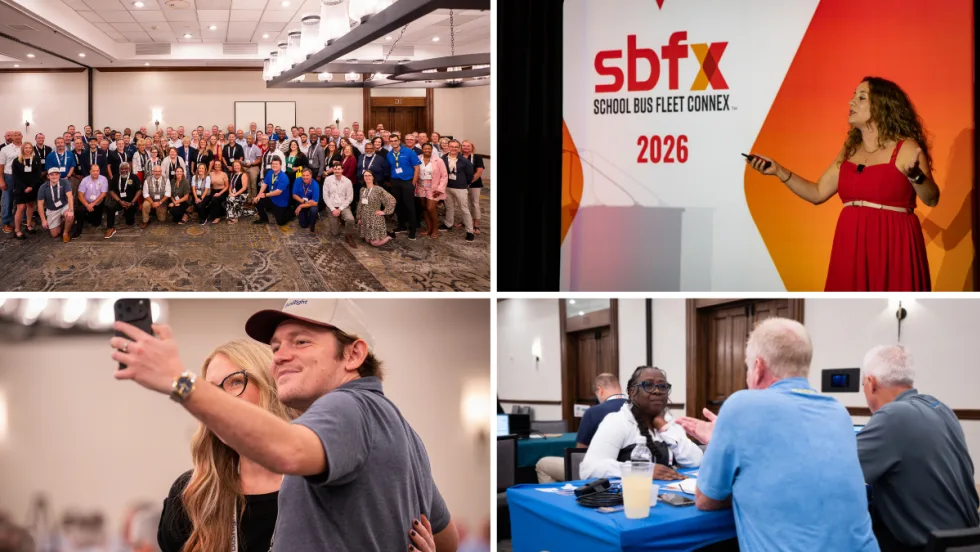
See highlights from SBFX 2026 in Arizona, where school bus operators and suppliers gathered for meetings, education, networking, awards, and more.
Read More →