Check out the stories of other veterans in the series:
- Thomas Gray, Dayton Public Schools, Ohio
- Martin Staples, Transportant
- Tracy Voigt, Pierz School District, Minnesota
 MENU
MENU SEARCH
Dawnett Wright found a second calling in student transportation, one rooted in flexibility, family, and service. See how that mission still drives her in this National Military Appreciation Month profile.
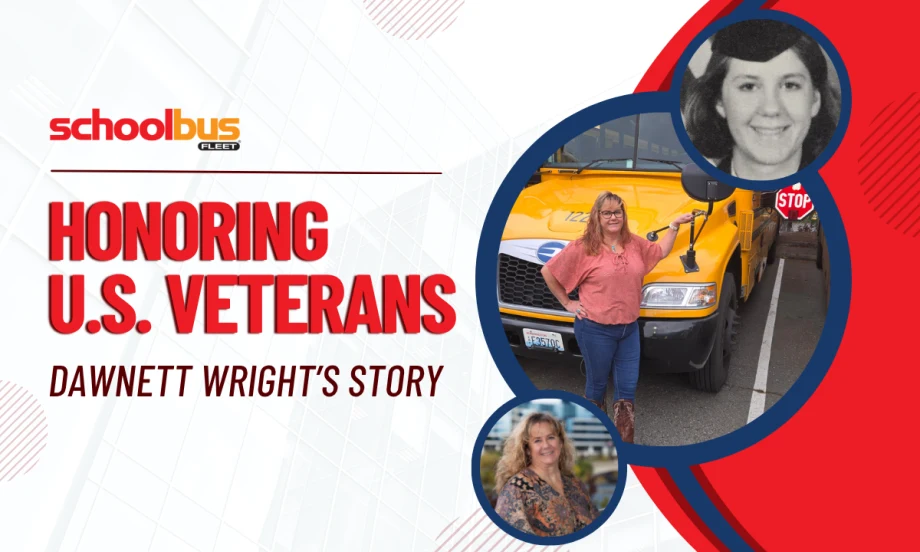
In this month-long series, we’re highlighting how military and school transportation careers intersect, now including Dawnett Wright.
Dawnett Wright/National Association for Pupil Transportation/School Bus Fleet
Dawnett Wright didn’t set out to build a decades-long career in student transportation. Like many in the industry, she found it through a practical life decision. One that just so happened to stick.
After serving in the U.S. Air Force, Wright was ready for a different kind of chapter. She wanted to raise a family, be present for her kids, and continue working and contributing to her community.
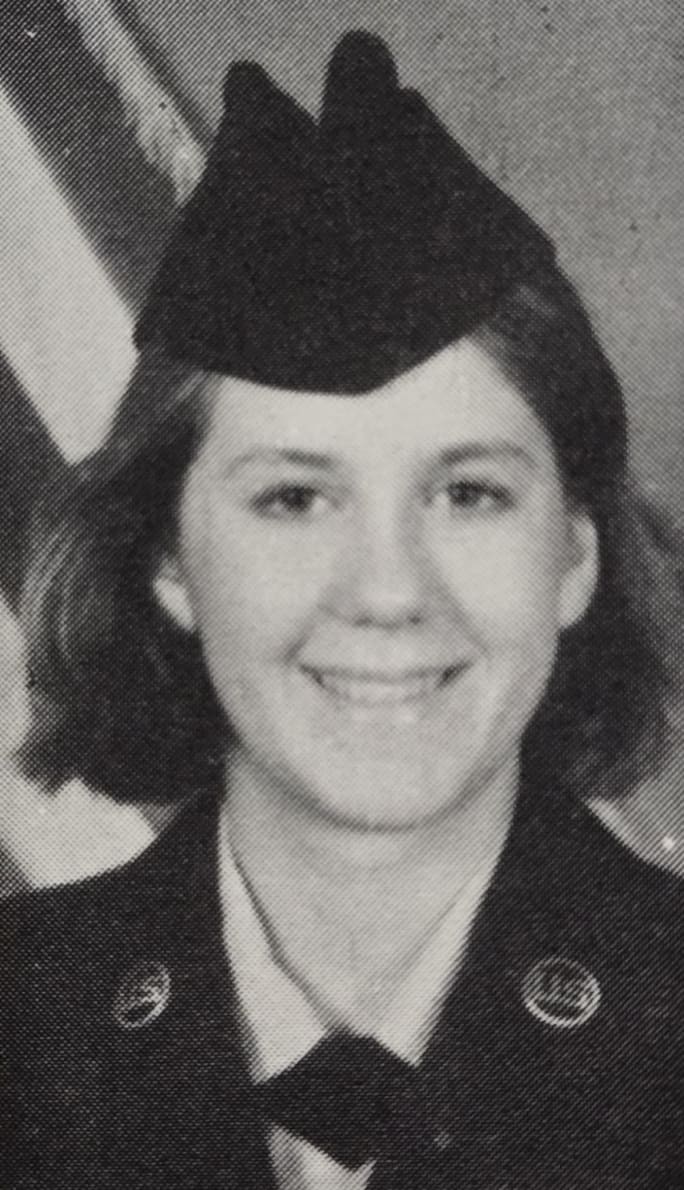
Basic training portrait of Dawnett Wright, taken in Lackland AFB, Texas, 1989.
Dawnett Wright
“I realized that driving a school bus would give me the flexibility to raise my children while still serving my community,” she said. “It turned out to be the best ‘mom job’ ever.” More than 30 years later, she’s still in the industry, now leading transportation for Washington’s Peninsula School District.
In the United States, May is National Military Appreciation Month, a time dedicated to honoring the contributions, sacrifices, and service of all members of the U.S. Armed Forces, past and present. In this month-long series, we’re highlighting how military and school transportation careers intersect.
So, if Wright’s path into transportation didn’t start with school buses, where did it really start? She enlisted in the Air Force right out of high school in 1989 and worked in transportation roles at Travis Air Force Base in California. There, she drove aircrew buses, operated base shuttles, and worked in dispatch. She was also deployed during Operation Desert Shield, with a temporary assignment in Riyadh, Saudi Arabia. One highlight of her service was driving the Air Force Band of the Golden Gate throughout California for its performances.
“It was an honor to represent the Air Force in that way and to be part of something that fostered pride and morale both on base and in the community,” Wright said. “My time in the Air Force taught me honor, respect, and the importance of the chain of command, as well as the value of hard work and pride in a job well done.
Overall, the work required structure, attention to detail, and the ability to stay focused when things changed quickly. Skills that are strikingly familiar in pupil transportation. Even now, those habits show up in how she approaches her job: planning ahead, staying organized, and keeping a level head when things don’t go as expected.
When Wright started driving a school bus, it was out of a need for flexibility, but over time, it understandably became more personal. Her two daughters rode her bus from kindergarten through high school, giving her a front-row seat to their daily lives that few parents get to see.
Wright drove them to school every day, took them on field trips, and got to know their teachers, friends, and principals along the way. That kind of connection is hard to replicate in any other profession, and it shaped how she views the role of transportation in a student’s day.
“It’s incredibly rewarding to know that my work helps students get to school safely, ready to learn and grow,” she said.
So, a flexible job became a meaningful way to stay connected, not just to her own children, but to the broader community.
Her career progressed the way many in student transportation do: steadily, through experience and trust. Wright didn’t jump straight into leadership. She grew into it, carrying with her a practical understanding of the job that still informs her decisions today. That background shapes how she approaches her team.
“I believe in leading by example, being clear and consistent in expectations, and recognizing that every team member plays a vital role in our success,” she said.
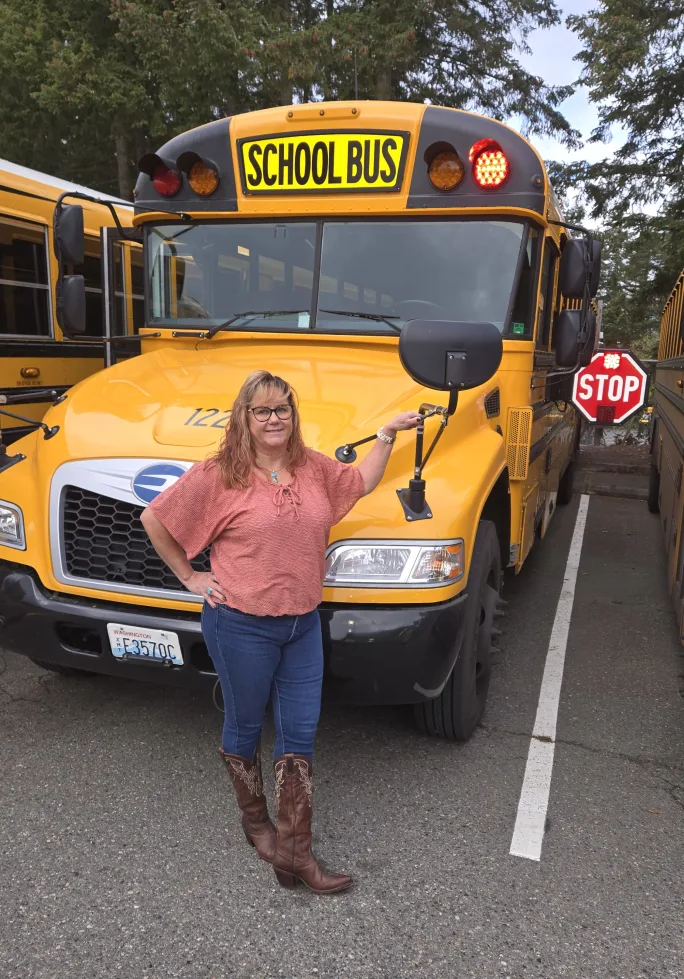
In addition to her role as director of transportation at the Peninsula School District, Wright is the Region 5 Director on the Board of Directors of the National Association for Pupil Transportation and the president of the Washington Association for Pupil Transportation.
Dawnett Wright
In an operation where success depends on coordination across drivers, dispatchers, mechanics, and administrators, that mindset matters. Wright focuses on clear communication and consistency, making sure expectations are understood and that everyone sees how their role fits into the bigger picture.
Ask Wright what matters most, and the answer is immediate: safety. That focus traces directly back to her time in the military, where precision and accountability were non-negotiable.
“In both the military and student transportation, safety is everything,” she said. For her, safety isn’t just policies sitting on paper. It’s grounded in the habits people build every day. Doing the checks, following procedures, and paying attention to the details are what keep operations running safely. That approach becomes especially important when conditions are less than ideal.
Wright recalls a major storm that disrupted multiple routes, the kind of situation that can quickly escalate without clear leadership. Instead of reacting emotionally, she relied on the structure she had learned years earlier: assess the situation, set priorities, communicate clearly.
“My Air Force training kicked in immediately,” she said. “That structured, mission-focused mindset ensured every student was accounted for and got home safely.”
That same structure is one reason Wright believes student transportation is a natural fit for veterans. The industry relies on many of the same qualities developed in military service and a sense of responsibility to something larger than yourself.
“Veterans bring discipline, a sense of duty, teamwork, and reliability,” she said. Those traits show up across every role in transportation, from drivers following safety procedures to dispatchers managing complex operations to leaders making decisions under pressure. It’s also an industry grounded in purpose; something many veterans continue to look for after their service.
While Wright’s role has changed over the years, the idea of service has remained constant. In the Air Force, her work supported a national mission. In student transportation, it’s local, but no less meaningful. “In the Air Force, my service was to my country,” she says. “Now, my service is to the children and families in my community.” It’s a different setting, but the same mindset.
And in many ways, that’s what defines the industry. People showing up every day to do work that matters, even if it often happens behind the scenes. After 34 years, Wright still sees her career through that lens.
“I’ve loved every chapter of it,” she said. “This career isn’t just about buses; it’s about people, community, and the quiet, steadfast service that keeps everything moving.”

We’re searching for the next generation of leaders making an impact across the K-12 student transportation industry to recognize as SBF’s 2027 Trailblazers. Nominations are open now!
Read More →
Check out who's been hired, promoted, and appointed to leadership positions at various school transportation suppliers, contractors, and manufacturers.
Read More →
When should you sell an aging school bus? Learn how maintenance, mileage, corrosion, specifications, and timing can affect resale value long before the auction.
Read More →
A new deal brings a 75-year Pennsylvania student transportation provider into one of the nation’s largest private school bus contracting groups.
Read More →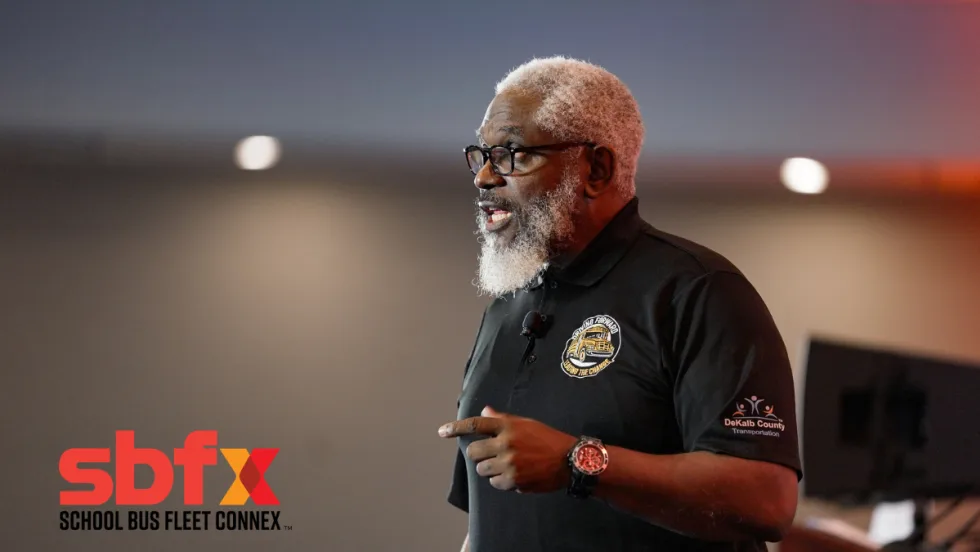
Who could lead your transportation operation tomorrow if you couldn't? Bernando Brown explores succession planning, mentorship, and preparing emerging leaders to step up.
Read More →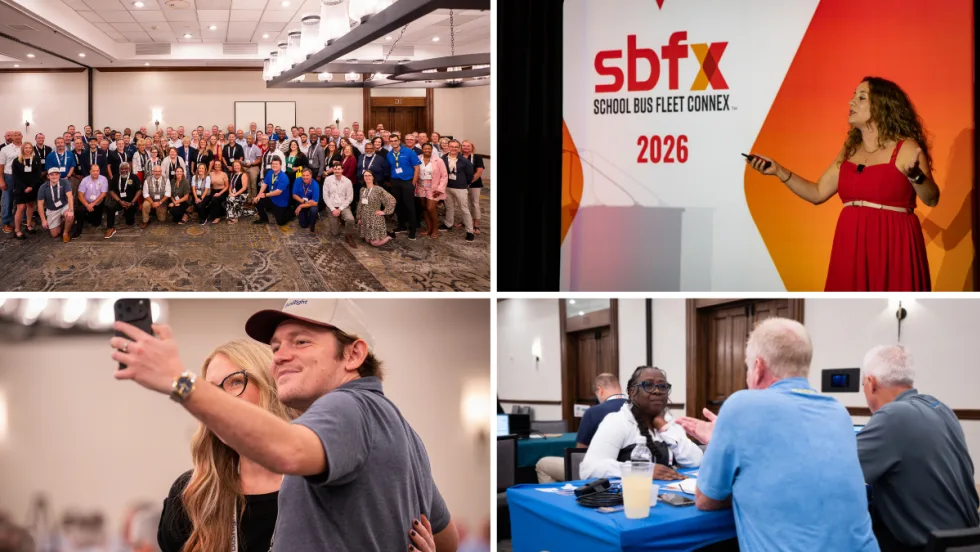
See highlights from SBFX 2026 in Arizona, where school bus operators and suppliers gathered for meetings, education, networking, awards, and more.
Read More →
School bus operators point to rising costs, staffing, and vehicle prices as immediate pressures while identifying technology, training, and routing as opportunities for growth.
Read More →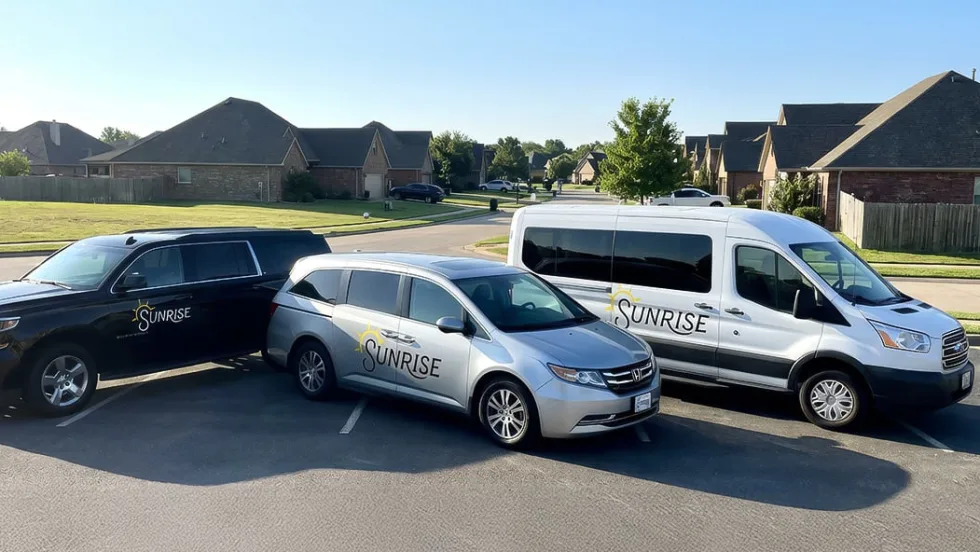
Student Transportation of America expands in Illinois and Connecticut through Sunrise's fleet of nearly 1,000 vehicles.
Read More →
The 2026 Diesel Emissions Reduction Act program seeks applications from eligible organizations to accelerate the retirement of legacy diesel vehicles.
Read More →
The new platform works alongside districts’ existing transportation management systems to coordinate specialized rides, automate last-minute changes, and turn ride data into operational improvements.
Read More →