




Don't Miss: School Bus Safety & Severe Weather: Florence USD’s Monsoon Response
Lessons Learned from Hurricane Helene for School Transportation
How student transportation became both a service and a signal in community recovery.
by Amanda Rigsby, Asheville City Schools
April 30, 2026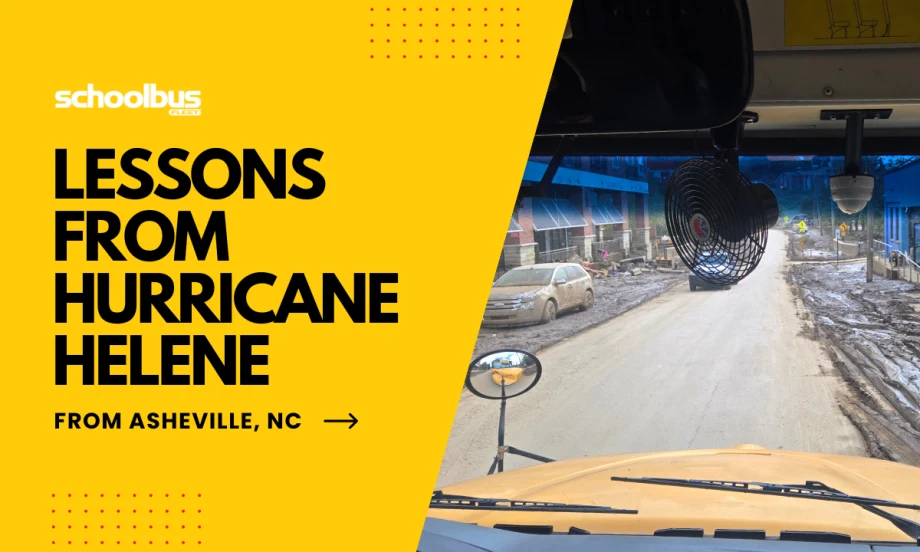
Hurricane Helene's damage made travel treacherous, and sometimes, downright dangerous, in areas of North Carolina.
Credit:
Amanda Rigsby/School Bus Fleet
5 min to read
- The role of school buses in disaster recovery is twofold, acting as both an essential service and a communicative signal of community resilience following Hurricane Helene.
- Schools' rapid adaptation in reorganizing transportation plans highlighted their importance in facilitating a return to routine and restoring normalcy.
- Collaborative efforts between school boards and transportation providers were crucial in overcoming logistical challenges and ensuring student safety during the recovery process.
*Summarized by AI
In western North Carolina, school systems are accustomed to making weather-related decisions. Historically, those decisions center on winter conditions: snow, ice, and road temperatures. The question is typically straightforward: Can we safely open schools and operate school buses?
Hurricane Helene presented a very different challenge. A challenge no one could have predicted. It was not a question of whether buses could run; rather, it was whether entire neighborhoods still existed within the transportation network.
The storm fundamentally shifted the role of school transportation. Often viewed as background, logistical operations quickly became a frontline function for assessment, communication, and community recovery.
When Access Mattered More Than Movement
In the immediate aftermath of Hurricane Helene, transportation priorities changed overnight. Movement was no longer the primary objective; access was.
Transportation teams focused on which roads were still passable and which neighborhoods could even be reached. Crews worked closely with emergency management and public works to establish real-time situational awareness across the district. With limited connectivity, teams often relied on manual dispatch systems while making staffing and safety decisions in real time.
What emerged was an unexpected reality: transportation became an essential information network. Drivers and staff served as the district's eyes and ears, identifying where students and families live, and where access was no longer possible.
Where Inequity First Appeared
The storm’s impact on students and families was immediate. School transportation services was one of the first places where those disparities became visible.
Student displacement and housing instability increased rapidly. Families moved more frequently between temporary shelters and communities. Special education populations faced heightened challenges in maintaining consistent service, while McKinney-Vento students experienced increased vulnerability as access points shifted or disappeared entirely.
Access to education became inseparable from physical access to roads and safe pickup locations. In a crisis, transportation services are often where inequity surfaces first, because access is not always evenly distributed.
The Moment the Buses Returned
As recovery began, one moment stood out above the rest: the return of school buses to neighborhoods. This was more than a logistical milestone. It was a signal.
A signal of safety. A signal of routine. A signal that the district — and the broader community — was stabilizing.
Families did not measure recovery solely by cleared roads or restored utilities. They looked for signs of normalcy. In Asheville, that sign was the school bus.
Students recognized the familiar sight of the “big yellow bus” and understood that daily routines were returning. For families, it represented trust. Trust that systems were coming back online and that their children would once again have reliable access to their education.
At that moment, transportation was no longer just about moving students. It became a visible symbol of community recovery.
More Than Dispatch: Coordination and Communication
The response to Hurricane Helene required sustained coordination across multiple agencies and departments, with transportation serving as a central hub for both logistics and communication.
Key partnerships included emergency management at the county and district levels, the Department of Transportation and public works, school district leadership, and Buncombe County Schools’ mechanic teams, shop operations, and fuel vendors.
Communication challenges were significant. With limited to no cellular service and Internet access, transportation teams relied on daily emergency management briefings on local radio stations for real-time updates and on in-person communication through drivers and staff.
Families turned to transportation not just for service, but for information. Questions shifted from academics to access: Can you reach our neighborhood?
Transportation teams delivered more than routes. Drivers delivered food, supplies, reassurance, and whatever information was available to pass along.
Transportation became a source of continuity in times of uncertainty. Communities knew the big yellow bus would show up to bring much-needed supplies, hugs, smiles, and a listening ear. In maintaining a consistent schedule and continuing to show up in neighborhoods — even under modified operations — they supported the rebuild of trust at a time when certainty was unknown.
Strengths Revealed Under Pressure
Despite the challenges, Hurricane Helene revealed several strengths within the transportation system. GIS tools, supported by BusPlanner, played a key role in damage mapping and route adjustment, along with drivers’ deep knowledge of local roads, which proved invaluable when technology failed.
Special education routing expertise ensured continuity for vulnerable populations. Mechanics and fueling operations showed remarkable resilience, keeping fleets operational under difficult conditions thanks to their historical knowledge of the industry and of the community.
Strong cross-agency collaboration — particularly with Buncombe County Schools — was critical.
One lesson was clear: systems may fail, but people and local knowledge remain essential. Ensuring that transportation staff understand the broader service area, not just individual routes, proved vital during recovery.
What Broke and What Changed
The storm also exposed gaps that require increase attention moving forward.
Clear staff reporting expectations during emergencies were often lacking. Emergency pay policies need a definition. Backup communication systems—particularly radio coverage—proved insufficient compared to the loss of cellular service. Contractor support gaps became evident when they were unreachable, as did challenges in tracking data required for reimbursement. Opportunities to strengthen mutual aid agreements surfaced quickly.
Hurricane Helene reinforced several hard truths:
- Infrastructure damage dictates operations.
- Recovery timelines rarely align with instructional calendars.
- Student stability must remain a priority.
- Transportation is critical infrastructure, not a secondary service.
- Emergency management planning must explicitly include pupil transportation.
Carrying the Lessons Forward
Hurricane Helene not only tested established operational systems; it uncovered issues within them. For the transportation industry, the lessons are enduring.
Transportation is a resilience function within school systems. The visibility of school buses serves as a powerful signal of community recovery. Post-disaster access is not guaranteed for every student. Relationships built before a crisis determine effectiveness during and after it. Capacity is not created during an event; it is revealed.
The Asheville City Schools transportation department became more than a school bus service. It became a stabilizing force, connecting students, reassuring families, and signaling that recovery was underway.
When the big yellow buses returned to full operational status, so did a sense of normalcy, signaling that during a time of profound uncertainty, recovering was happening, and that made a difference.
About the Author: Amanda Rigsby is the transportation director for Asheville City Schools in North Carolina, overseeing nearly 50 school buses.
This article was authored and edited according to School Bus Fleet editorial standards and style. Opinions expressed do not necessarily reflect that of SBF or Bobit Business Media.
Quick Answers
Transportation served as both a critical service for mobility and a symbol of recovery, helping re-establish routines and reassure communities of normalcy returning.
*Summarized by AI
Subscribe to Our Newsletter
More Disaster Response
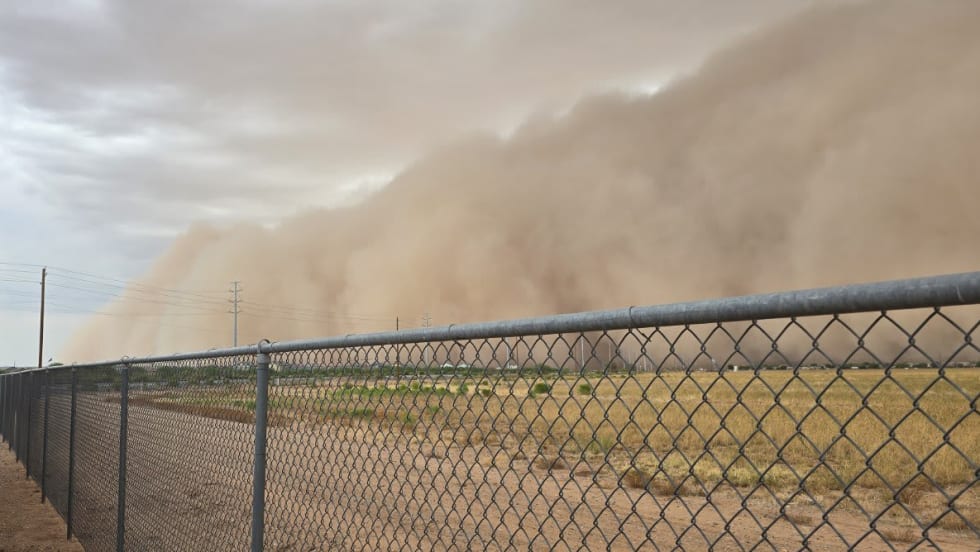
School Bus Safety & Severe Weather: Florence USD’s Monsoon Response
A late-fall monsoon tested Florence USD’s emergency preparedness. Here’s how training, communication, and teamwork kept 2,700 students safe.
Read More →
What To Do When Natural Disaster Strikes: Tips & Stories from School Transportation Teams
Mother Nature sometimes has her own plans, and transportation teams must be ready to fight back against whatever disaster she has in store. Review best practices for emergency preparedness and learn what others advise from recent experience.
Read More →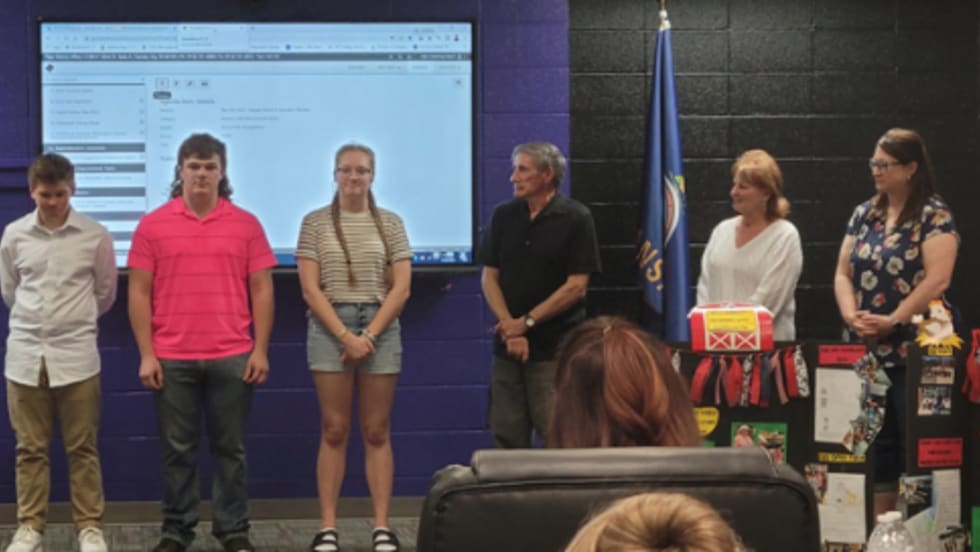
School Bus Driver Navigates Choir to Safety During Tornado Outbreak
DS Bus Lines driver Roger Smith was transporting 30 students from Piper High School in Kansas City, Kansas to a choir competition in Wichita, nearly three hours away, when they found themselves in the middle of a severe weather outbreak.
Read More →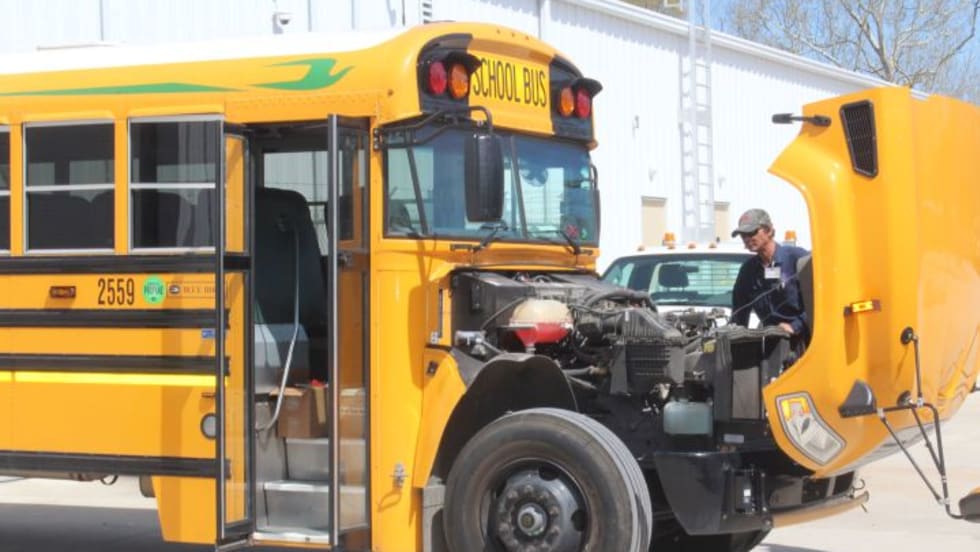
Louisiana Fleet Finds Opportunity After Flooding
Following a 2016 flood that devastated the state, East Baton Rouge Parish Schools saw a chance to replace its damaged diesel buses while shifting to a propane fleet.
Read More →
School bus drivers take students to shelter during tornado
Many of Harrison County (Ky.) Schools' buses were in a tornado warning area, and the bus drivers safely took students inside nearby buildings.
Read More →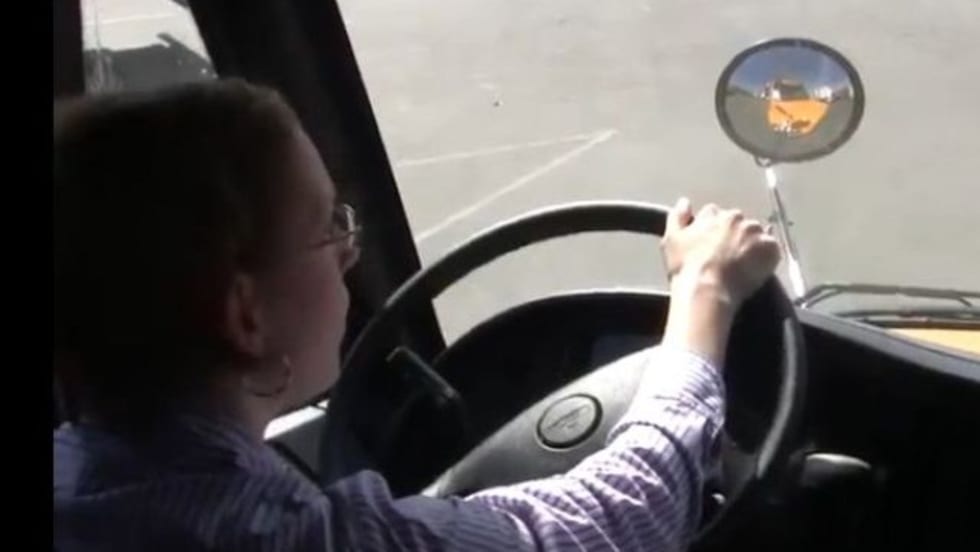
District honored for school bus routing after tornado
The transportation department at Missouri's Joplin Schools receives the 2014 Public Sector Excellence Award from Tyler Technologies for its creative use of the Versatrans transportation management system following a May 2011 tornado, including identifying students affected by the disaster and creating new routes around the damaged areas. Two more school districts are among the seven other award recipients.
Read More →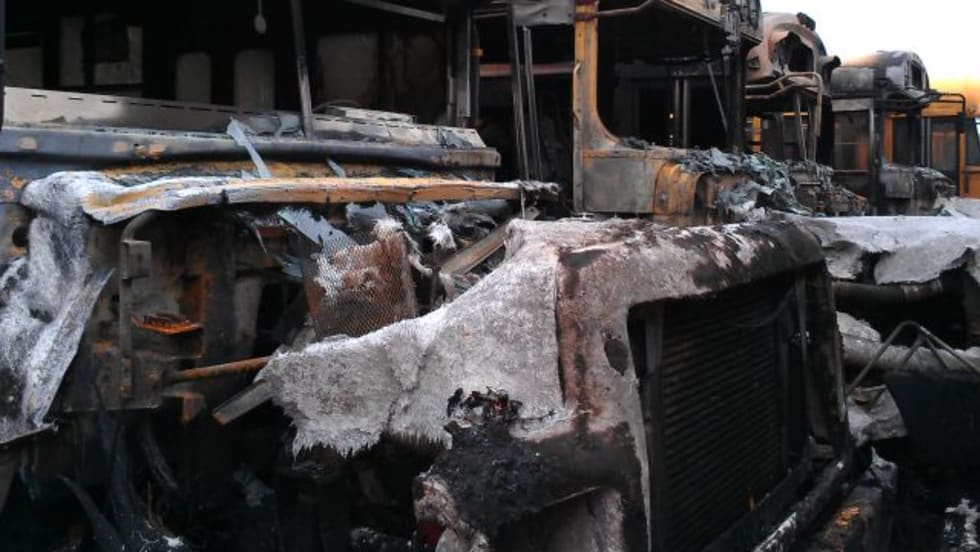
Hurricane Sandy: the impact on NYC's school bus fleets
Last fall's massive storm on the East Coast created a surge of challenges for student transportation in New York City, from flooded bus yards and offices to fuel and equipment shortages. Here's an overview of the crisis and how the city's Office of Pupil Transportation responded.
Read More →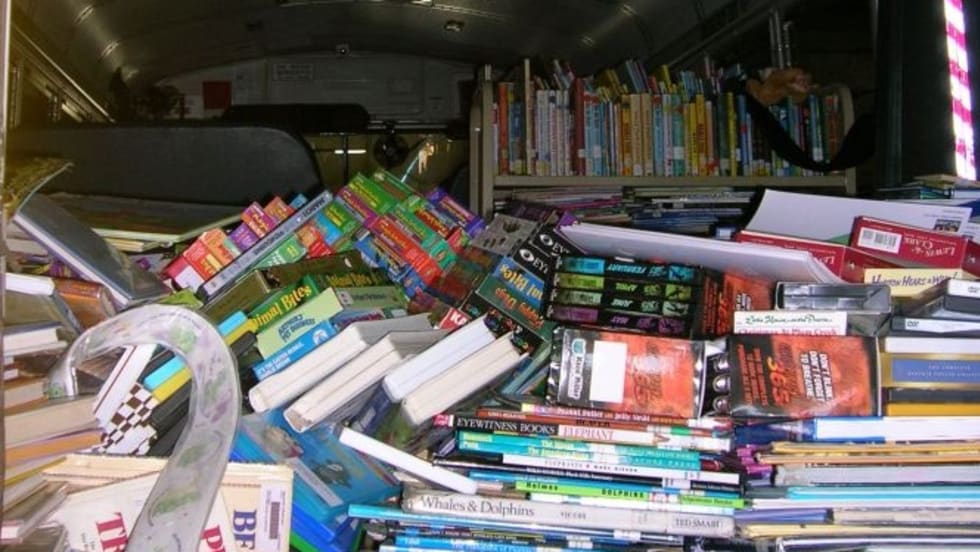
North Dakota operation takes action during massive flood
When the water began to affect the area around Minot Public Schools last month, transportation department personnel and other district employees emptied seven schools, transporting books and other supplies and equipment to the transportation facility. Director of Purchasing and Transportation Barry Brooks tells SBF about the experience.
Read More →Florida buses brake for hurricane season
The first day of school came late for many Florida school districts as hurricanes swept through the state last month.
Read More →Be Prepared for the Unexpected
Unexpected phenomena such as riots, strikes, tornadoes, earthquakes, snowstorms and other natural disasters can pose a threat to your operations. Here's how to prep.
Read More →