




What To Do When Natural Disaster Strikes: Tips & Stories from School Transportation Teams
Mother Nature sometimes has her own plans, and transportation teams must be ready to fight back against whatever disaster she has in store. Review best practices for emergency preparedness and learn what others advise from recent experience.

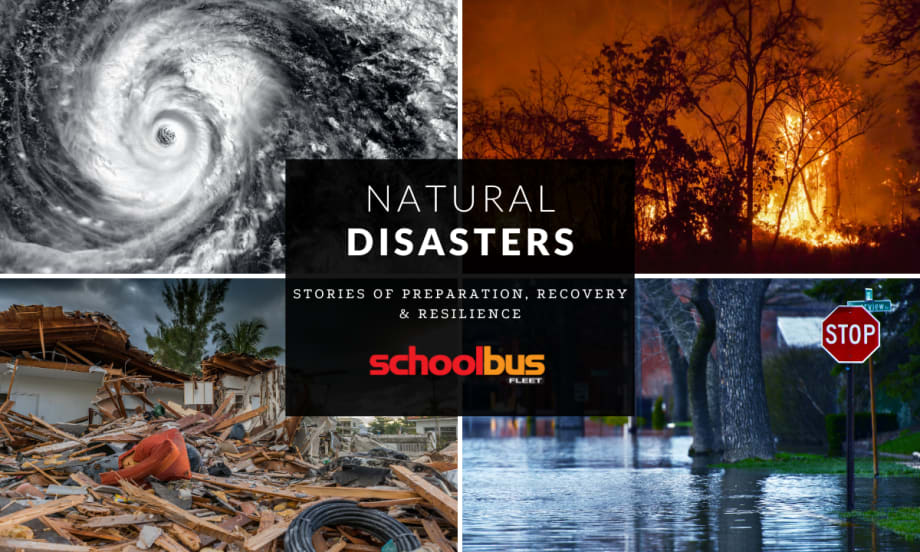
Above all else, to stay prepared for the worst, have plans and procedures in place, and place the safety of your people first.
School Bus Fleet
- School transportation teams should have robust emergency preparedness plans to tackle unforeseen natural disasters.
- Learning from recent experiences and advice from other teams can enhance readiness and response strategies.
- Being proactive and prepared is crucial for ensuring safety during natural disasters.
*Summarized by AI
We all know the importance of making plans. But sometimes, nature has a plan of its own. When we’re lucky, we have plenty of warning. Other times, disaster strikes on a moment’s notice and we’re left in the wreckage trying to figure out what to do.
Regardless of how much notice we are given, we can and should always be prepared for a natural disaster. Because it’s no longer a “what if,” it’s a “when.”
Multiple studies show that they are becoming more common. According to the International Disaster Database, disaster events have increased from 100 per year in the 1970s to around 400 events per year worldwide in the past 20 years.
Having a well-thought-out emergency plan can save a lot of headache — and sometimes heartache — regardless of what may be heading your way. Here’s how to prep.
Emergency Plans are Key
The first step in preparing for a natural disaster is establishing and keeping up-to-date emergency plans.
For transportation, this means understanding the roads in your district and plotting alternative routes ahead of time, especially if your buses travel on roads that are at high risk of being closed when a disaster hits.
If impassable roads prevent students from returning to their families, have sites where students can be transported. If your district already has multiple sites, moving students between them can be an option; however, some situations may require cooperation with other entities in your community.
It is always good to have backup locations in case a disaster requires evacuation of your safe spots.
Regardless of if or where you are transporting students and staff, having clear and accessible lines of communication is essential. Parents will need to be updated on what is going on, and bus drivers may need to radio back in case they get stuck due to the weather.
Keep in mind that major disasters can often cause power outages, so having a reliable way to communicate when the grid goes down is critical in keeping everyone safe.
Knowing what types of disasters may affect your region is important when planning ahead, as each storm type brings different dangers. While a wind storm or tornado may make traveling on roads difficult, a flood is much more likely to waylay your entire fleet.
Plan for general severe weather, plus potential flooding, wildfires, earthquakes, hurricanes, and/or blizzards. And, pay attention to nearby sites that could lead to manmade disasters, such as nuclear power plants.
Don’t overlook what you think is a low-risk area!
“Even if your area doesn’t typically see extreme weather, have a plan,” said Teri Mapengo, director of transportation at Prosper Independent School District in Texas. “Things change fast. Practice your emergency procedures regularly, and make sure your dispatch and transportation teams know how to adapt on the fly. Most importantly, think about your most vulnerable students — those with special needs or those who may not have support at home. Your plan has to work for everyone.”
Know what accommodations your special needs students will need and how to arrange transportation for them in an emergency quickly. Consistently practice your emergency plans. Hold drills that require staff to quickly relocate students so everyone is familiar with the process.
Natural Disaster Stories & Recovery
With these tips in mind, let’s examine some common disasters in the U.S. and how industry pros responded.
Flooding
Floods can happen almost anywhere — and with little warning. Districts near rivers and other water sources should always be on their toes when extreme storms roll in; however, dangerous floods can happen in low-risk areas simply from what comes from the sky.
Before taking her position at Prosper Independent School District, Mapengo experienced a sudden flood at Mesquite Independent School District in Texas in 2022. A torrential downpour hit the city, flooding it citywide and burying highways.
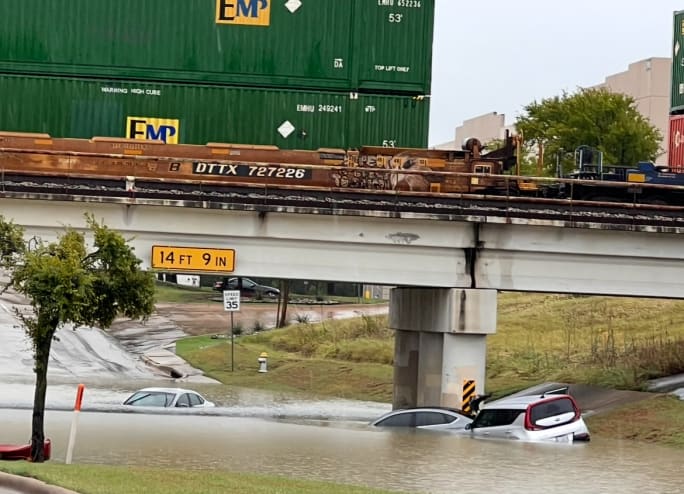
The storm in Mesquite, Texas, rolled in right in the middle of morning routes.
Photo: Teri Mapengo
“We followed an Emergency Operations Plan that covered everything from preparation to response and recovery,” Mapengo said. “It outlined who does what during emergencies, and we worked closely with city departments and first responders to make sure we were all in sync. The district would even have tabletop exercises with all key stakeholders on different scenarios that could happen to give us the tools we needed to be successful in our plans. From a transportation standpoint, that meant we had contingency plans for extreme weather.”
Even with the preparation, the storm’s sudden arrival during morning routes proved to be a routing nightmare. Buses needed to be quickly rerouted away from where the flooding was the worst and guided to the nearest safe school, where they would be held until the storm passed.
“One of those campuses even opened its doors to the driver and students, brought them inside, and gave them snacks because they couldn’t safely reach their original school,” Mapengo said. “That kind of response — quick thinking and kindness — really showed the heart of our team and our district.”
Due to the unpredictable and widespread nature of the flooding, major roads and side streets would be submerged at a moment’s notice. Dispatchers needed to keep a close eye on road closures to keep up with the ever-changing conditions. Ultimately, the decision was made to have all buses hold at the nearest school due to the dangers posed by the flooding.
The district also had special needs routes on the road when the storm hit, providing a completely different challenge. Drivers and aides must remain calm in these situations so they can keep the students entertained and manage their emotions.
“If you’ve ever been on a special needs bus stuck in traffic or held in place for safety, you know those moments can be incredibly tough,” Mapengo said. “The students may feel like it’s time to get off — they’re ready to arrive — but the reality is we have to keep them on board until we know it’s safe. That means our drivers and aides have to stay calm, keep the students entertained, and manage emotions in a high-stress, high-stakes situation. It was one of the hardest parts of the day — knowing families were relying on us and trying to balance care, patience, and safety under pressure.”
Keeping calm in high-risk situations like this can be difficult. However, it is an important part of making sure everyone stays safe. Quick thinking and creative routing can also help keep buses off of the most dangerous roads and in safe locations.
High Winds
Many storms roll through with no risk of flooding. But, high winds can be just as dangerous.
Scott Wing, transportation manager at Cedar Rapids Community School District in Iowa, experienced a derecho in 2020 that damaged his district. With gusts peaking at 125 mph, the storm wiped out 60% of trees in the city and surrounding areas.
Thankfully, it passed through before the start of the school year. However, due to the $50,000,000 in damages across the district’s 31 buildings, classes had to be delayed by one month. Even then, several buildings remained closed or partially closed due to repairs.
This creates another challenge for transportation, as routes need to be reworked to ensure students get to the correct building. Normally, this would be easy thanks to routing software, but the damaged server this district’s software was stored on was inaccessible. This led to the district setting up the software for remote access.
“We used to have our routing software on a district server, and when the derecho struck, this prevented us from preparing for fall routing,” Wing said. “Now we can access our routing software virtually from anywhere since we moved our routing software to a cloud-hosted service.”
Hurricanes
Preparedness in Miami
Miami is pretty experienced when it comes to hurricanes. One step Miami-Dade County Schools takes when an emergency is declared is corralling its buses. There, they use older buses to protect newer ones, parking them close together with roof hatches secured, all windows closed, and stop-arms and crossing arm secured only the buses at the perimeter of the corral.
The district uses a similar method to protect its garage doors by using older buses as a shield.
"This process has helped us reduce the damage caused by high winds during a hurricane," Administrative Director Orlando Alonso writes to FAPT. "We have seen some damage to the units in the perimeter units but literally no damage to those beyond the perimeter."
Hurricane Helene
When early news about Hurricane Helene began to spread, Asheville City Schools in Buncombe County, North Carolina, got ready. But what happened was well beyond anything they imagined.
Amanda Rigsby, director of transportation, said that her team anticipated a 22-foot flood at worst, which is par for the course there. Being by a river and in a flood plain, they are well-versed in which roads to avoid in flood conditions. The department reminded drivers of normal flood protocol as per usual. And then everything changed — and went silent.
Communication was completely cut off, and anything that came through was in bits and pieces, Rigsby recalls. “We did not prepare for a 500-year flood,” she said. “You don't hear of hurricanes in the mountains.”
“A lot of people don’t understand how we weren't prepared. We did prepare for a flood of some magnitude, but what we weren't prepared for and had no way of knowing was the intensity. We were already at a flood stage, and then you get into the hurricane winds, then mudslides. It looked like tornadoes had touched down everywhere and just snapped trees.”
The damage was devastating, and the path of debris was enormous. “It just happened fast and furious,” Rigsby said. “And it not only happened in Buncombe County, it impacted all the counties around us, so the whole Western region was experiencing devastation.”
School was cancelled quickly when they realized things were going to be worse than expected.
Due to the geographical landscape, the waters came down from the top of the mountain reservoir, where the city’s radio towers are, which were impacted by the devastating loss of trees and mudslides where they were located. Everyone lost power, cell service, and drinkable water, bridges were gone, and many people were trapped.
Buncombe County Schools takes care of Asheville’s buses, and none received any damage due to the garage’s elevation.
During the worst of the storm, the school used its buses to transport food and resources to people in the community.
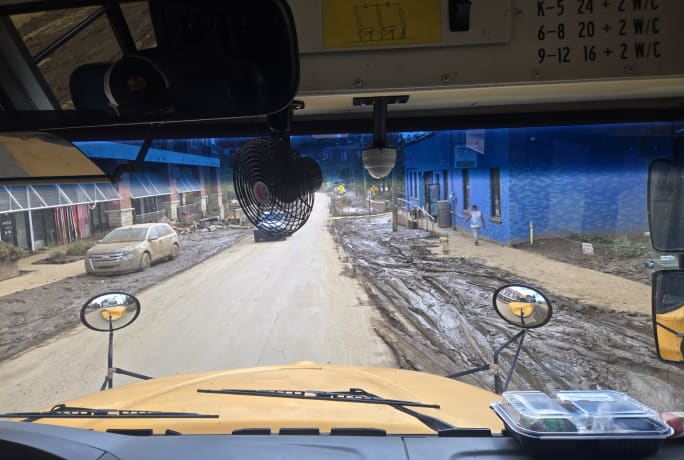
Hurricane Helene's damage made travel treacherous, and sometimes, downright dangerous, in areas.
Photo: Amanda Rigsby
After the hurricane passed, communication was still limited, and Rigsby went around town to assess. “You could just visually tell that this meant a whole new routing system,” she said. “We shifted to how we're going to get kids back to school. We can't get down most of our roads. There was nowhere to turn buses around.”
Then, a call from routing provider BusPlanner saved the day. “I'm sitting over here all by myself, trying to figure out how in the world I'm going to get 2,000 children to school on 22 buses and do it in a reasonable time,” she said. “They set me up with a hurricane team, and I was able to take a breath at that point. Because of that support, we were able to completely reroute every bus we had within a week.”
Then, the next hurdle was getting the drivers comfortable with a new route. “It was a big change, it was like starting school all over again, a complete clean slate,” she said.
Rigsby didn’t sugarcoat the situation, telling her drivers that things were bad, but that they’d get through it together. She took time to make sure they were OK and had someone to listen.
“We’ve not been out of COVID long, and people’s mental health has been difficult because we’re behind almost two years,” she said. “And so here we are just a short time after that, seeing this again.”
It was seeing the community rally together and the human spirit prevail that powered them through the darkest times.
The downed tree debris impacted operations through January, Rigsby said, but now, they know what to do next time.
The team’s safety specialist now pays close attention to the weather and rates incoming storms on a scale that determines how they prepare. They’re planning more pre-season drills for the transportation staff and mental health support. They’ve established clear communication pathways with the state and local emergency departments so they have a team they know and trust.
And most of all, they learned the need for a strong communication plan when there is no phone, email, or TV, and how to check on each other, as well as sharing alternate transportation plans with parents proactively based on the situation.
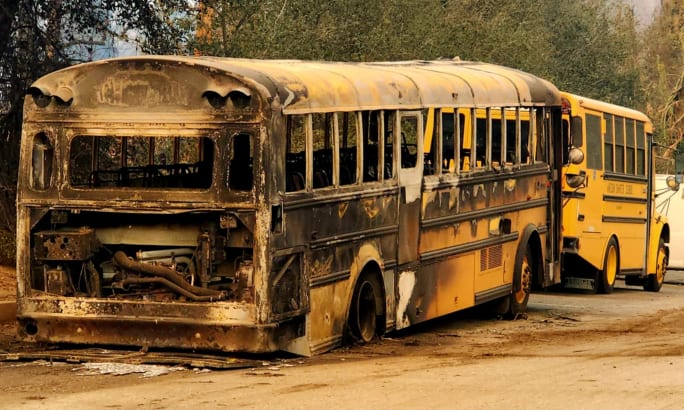
Damage from January’s fires in southern California are still being felt today, with schools and buses decimated and hundreds, if not thousands, of people displaced.
Photo: Max Sterling
Wildfires
Fires are most likely to hit the Western part of our continent, and unfortunately, our friends in California are the most experienced in battling the flames. In 2018, Paradise Unified School District’s buses sustained significant damage from prolonged exposure to Camp Fire, the state’s most deadly fire.
This past January, LA experienced another devastating blow as the Eaton and Palisades fires ravaged southern California and made the top five deadliest and top three most destructive lists.
Two Los Angeles Unified charter schools were severely damaged and are still closed; another sustained 40% damage. Other area schools were damaged or lost their homes.
Orange Unified School District was not directly impacted this time, but has been near other fires in the past. There, district policy requires each school to develop a comprehensive school safety plan that addresses emergency preparedness, including responses to natural disasters, which are updated annually. Plans include site-specific procedures, coordination with first responders, and regular safety drills to maintain a safe environment.
For any wildfires, the school’s incident commander and/or the district’s emergency operations center (EOC) director assess whether an off-campus evacuation is necessary based on real-time information on fire behavior and its potential impact on student and staff safety.
Christina Celeste-Russo, director of transportation, said that in high-wind warnings, district buses are strategically staged near high-risk areas where conditions may increase the threat of wildfires. "This proactive approach enables a swift response and ensures the safe and efficient relocation of students and staff, should the need arise," she said.
To determine if a wildfire is a risk to school sites, the district monitors multiple indicators, including high-wind activity, air quality levels, and emergency alerts. When conditions warrant, the EOC is activated and coordinates closely with local emergency services.
“Given our region’s periodic wildfire activity, we also draw on our experience to understand fire behavior patterns, identify which school sites are most vulnerable, and anticipate the typical paths of travel for fires during Santa Ana wind events,” explained Heriberto Angel, executive director of student and community services.
Early morning safety walkthroughs at each site evaluates hazards, monitors air quality, and stages buses at key locations in case of evacuation. Modified schedule guidance details adjustments such as moving activities indoors and changes to drop-off and pick-up procedures.
And of course, the district website, messaging, and social media are used to communicate with families and staff. All Orange County School Districts also use a student transportation services agreement, known as the OC Mutual Agreement. This establishes that mutually interested districts in Orange County assist each other with special education routes, athletic trips, field trips, and special event activities during peak demand periods. For emergencies and natural disasters, this agreement ensures services to districts in need.
Support Beyond the Bus
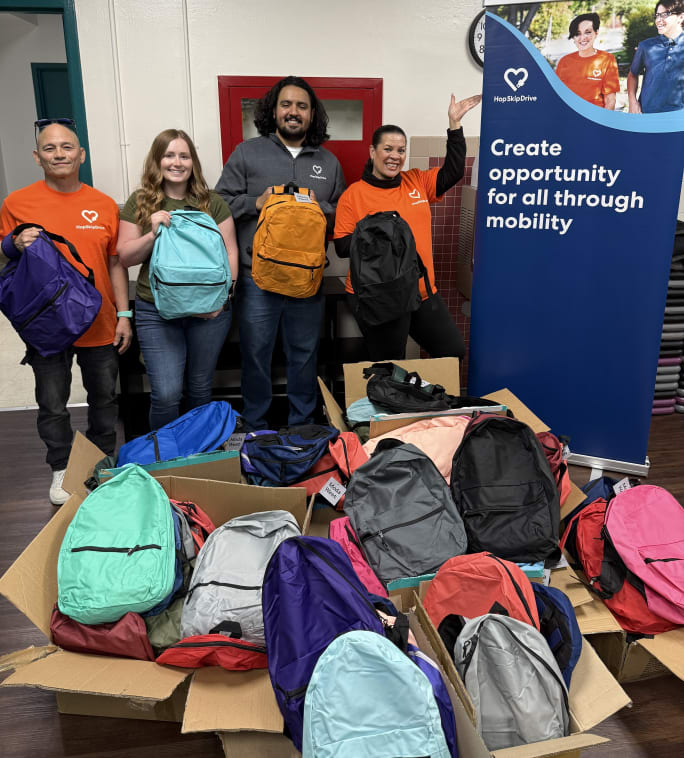
HopSkipDrive partnered with the YMCA on relief efforts and coordinated two supply drives to help students displaced by California wildfires. Here, two CareDrivers and two staff stuff backpacks with school supplies.
Photo: HopSkipDrive
Alternative transportation providers can also step in to help in times of emergency. HopSkipDrive, headquartered in California, leverages its six-hour response time to respond quickly to changes in a crisis situation, including the most recent LA fires.
The company expedited vehicle assistance for its CareDrivers whose cars were impacted by the crisis, ensuring performance metrics wouldn’t be impacted, and distributed resources to help. For its LA-area employees, it established financial support programs.
“We know the path to recovery for schools, staff, families, and communities in California will be long, and we’re committed to being a part of the solution,” said Trish Donahue, senior VP, legal and policy. “Our mission to provide opportunity for all through mobility drives us every day. We have built technology and solutions that meet district needs every day, and we are proud that what we have built enables us to help our partners.”
Top Tips to Stay Prepared
- Know what disasters are most likely for your region but be ready for anything, anytime.
- Have clear policies and procedures for what your team is expected to do — especially if communication systems are lost. Train your team, host tabletop exercises, and update documentation often.
- Designate someone to monitor weather and emergency alerts and inform leadership of threats as appropriate.
- Maintain strong partnerships with local departments and agencies for coordinated response and to share real-time updates.
- Take care of your people first, including their overall well-being and mental health. Provide resources and forums for processing traumatic events.
- Have a plan to protect your vehicles and assets, including how buses are moved to higher ground or enclosed areas if needed. Be especially aware of how electric vehicles may react if batteries come in contact with rising water.
- If your buses are used for evacuation, resource delivery, or cleanup, be clear on who should and can help and how.
- Use as much cloud-based software as possible for easier remote access.
- Use your resources. In addition to local, state, and federal emergency response groups, find out if your transportation vendors can offer any support and leverage nearby districts that may be able to lend a helping hand — or wheels.
Quick Answers
Key best practices include having a well-documented emergency response plan, conducting regular drills and training for staff, ensuring clear communication channels, and maintaining up-to-date contact information for all stakeholders.
*Summarized by AI
More Disaster Response
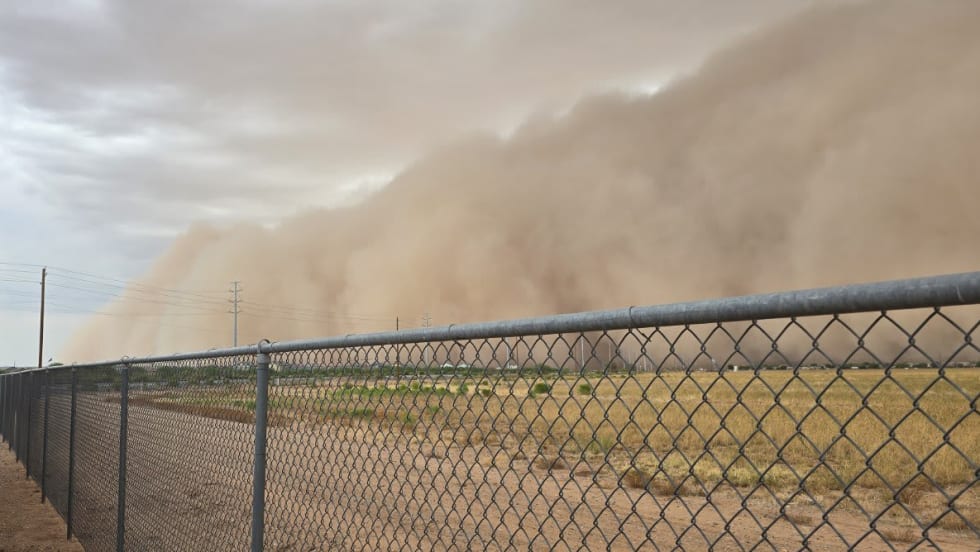
School Bus Safety & Severe Weather: Florence USD’s Monsoon Response
A late-fall monsoon tested Florence USD’s emergency preparedness. Here’s how training, communication, and teamwork kept 2,700 students safe.
Read More →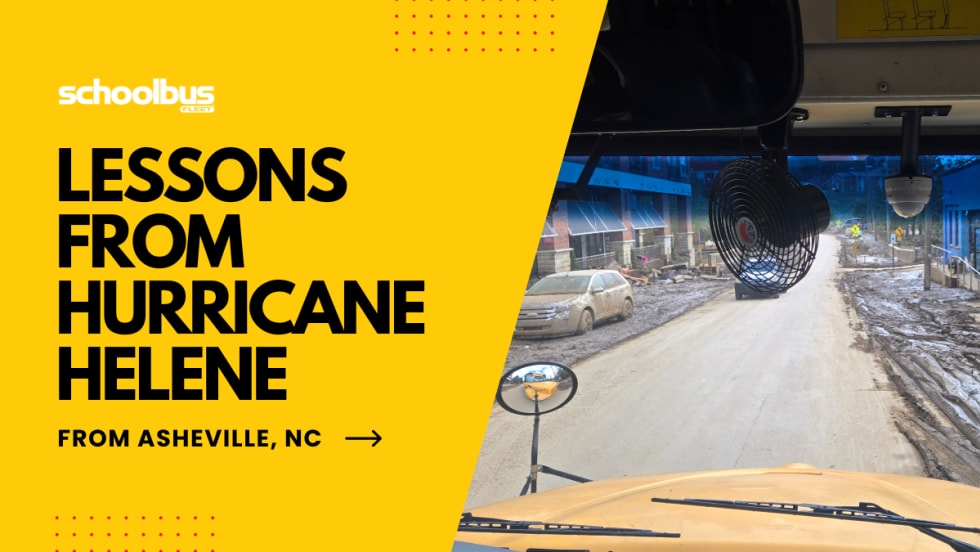
Lessons Learned from Hurricane Helene for School Transportation
How student transportation became both a service and a signal in community recovery.
Read More →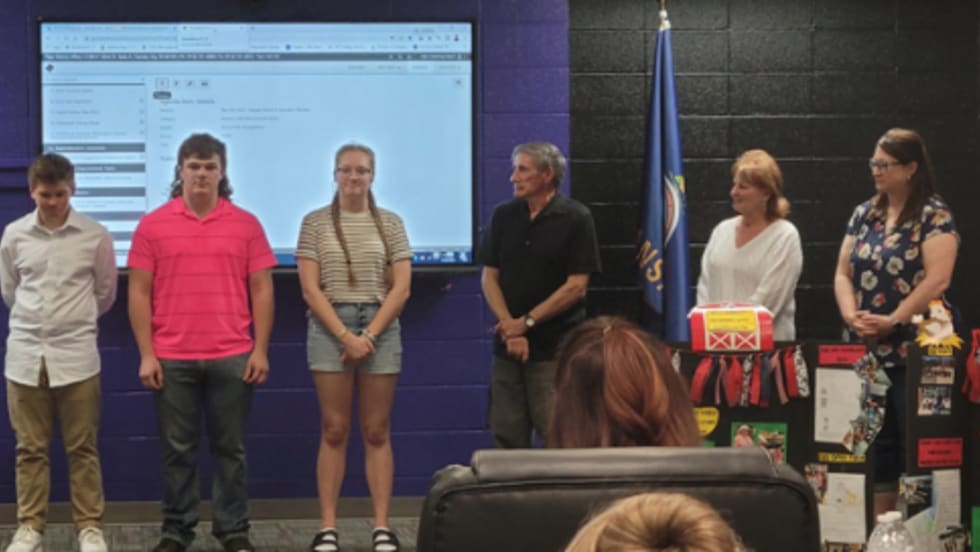
School Bus Driver Navigates Choir to Safety During Tornado Outbreak
DS Bus Lines driver Roger Smith was transporting 30 students from Piper High School in Kansas City, Kansas to a choir competition in Wichita, nearly three hours away, when they found themselves in the middle of a severe weather outbreak.
Read More →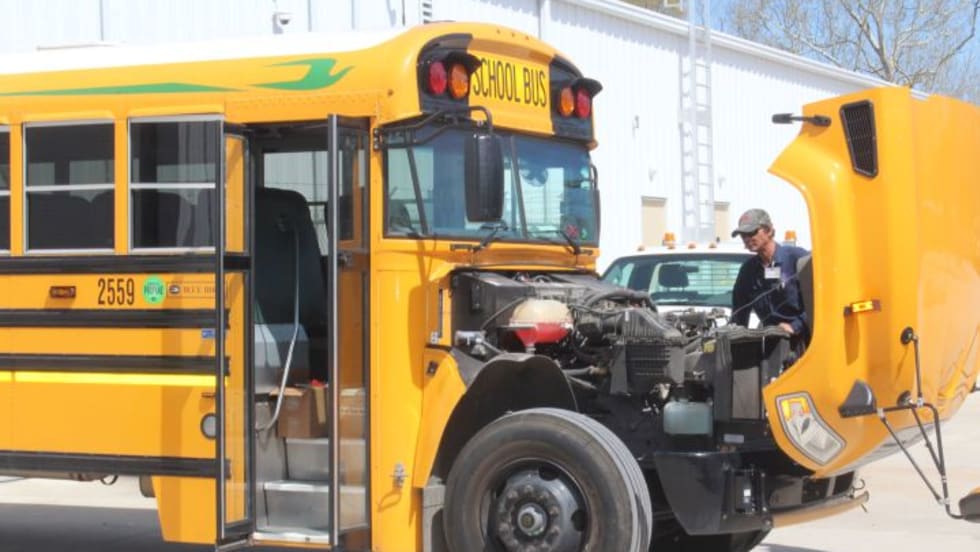
Louisiana Fleet Finds Opportunity After Flooding
Following a 2016 flood that devastated the state, East Baton Rouge Parish Schools saw a chance to replace its damaged diesel buses while shifting to a propane fleet.
Read More →
School bus drivers take students to shelter during tornado
Many of Harrison County (Ky.) Schools' buses were in a tornado warning area, and the bus drivers safely took students inside nearby buildings.
Read More →
District honored for school bus routing after tornado
The transportation department at Missouri's Joplin Schools receives the 2014 Public Sector Excellence Award from Tyler Technologies for its creative use of the Versatrans transportation management system following a May 2011 tornado, including identifying students affected by the disaster and creating new routes around the damaged areas. Two more school districts are among the seven other award recipients.
Read More →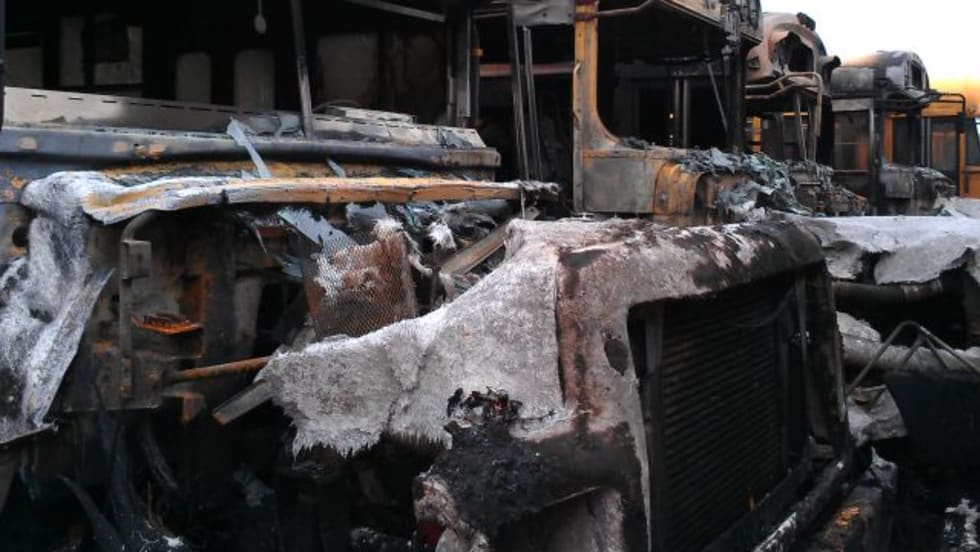
Hurricane Sandy: the impact on NYC's school bus fleets
Last fall's massive storm on the East Coast created a surge of challenges for student transportation in New York City, from flooded bus yards and offices to fuel and equipment shortages. Here's an overview of the crisis and how the city's Office of Pupil Transportation responded.
Read More →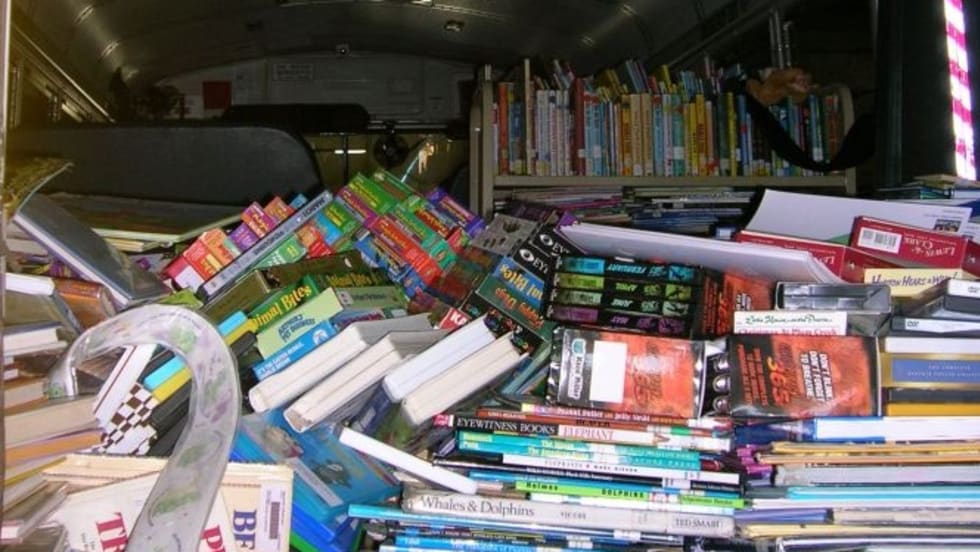
North Dakota operation takes action during massive flood
When the water began to affect the area around Minot Public Schools last month, transportation department personnel and other district employees emptied seven schools, transporting books and other supplies and equipment to the transportation facility. Director of Purchasing and Transportation Barry Brooks tells SBF about the experience.
Read More →Florida buses brake for hurricane season
The first day of school came late for many Florida school districts as hurricanes swept through the state last month.
Read More →Be Prepared for the Unexpected
Unexpected phenomena such as riots, strikes, tornadoes, earthquakes, snowstorms and other natural disasters can pose a threat to your operations. Here's how to prep.
Read More →