




Don’t Miss: School Transportation Data Is Only as Powerful as the Story It Tells
The Back-to-School Checklist Every Director Should Complete Before the First Bell
Help your transportation team start the school year strong with these tips for contingency planning, communication, fleet visibility, technology, and trip management.
by Nick Parsa, CharterUP
August 20, 2026
Strong planning before the buses start running ensures a smooth start to the new school year.
Credit:
School Bus Fleet
5 min to read
Back-to-school season is here, and transportation teams are working through the usual scramble: finalizing routes, getting drivers ready, locking in field trips and athletic schedules, and making sure parents have the information they need.
Then school starts, and reality hits.
A vehicle breaks down, a field trip changes dates, a driver calls out sick, a game gets rescheduled because of bad weather, and so on.
Most districts have the big pieces covered. But it’s the smaller things around communication and contingency planning that cause problems once the year is underway.
Here are a few things worth checking before the first bell rings.
1. Plan for the Things That Will Change
Routes may look perfect on paper, but they rarely stay that way for long.
A student moves classes or schools, a field trip gets rescheduled, weather impacts a game, a vehicle goes for maintenance. What happens next?
The important thing is having a plan for those changes.
“The first few weeks are when you find out pretty quickly whether your plan works,” said Bill Pepping, K-12 sales lead at CharterUP. “Something is always going to change. The districts that handle it best are the ones that have flexibility built into their initial plans.”
Make sure your team has a way to adjust schedules, find backup vehicles, and get the word out when something changes.
2. Provide Better Visibility
Parents and administrators understand that plans change. They just want to know when they do.
Can they see where the bus is? Do they get notified if their child or team is going to arrive late? Can they quickly find the information they need?
Real-time tracking, arrival updates, and automated notifications can take a lot of uncertainty out of the equation.
“Parents don't need to know everything happening behind the scenes,” Pepping said. “They just want accurate information when it affects their kids.”
Before school starts, look at your transportation tools the way a parent or coach would. If information is hard to find, fix it.
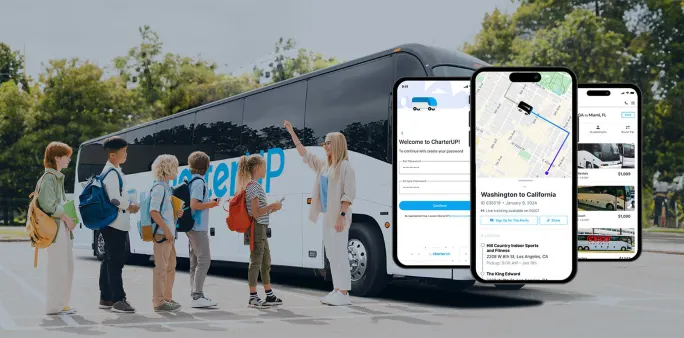
Planning for added capacity, real-time visibility, and clear communication can help districts stay flexible when plans change.
Credit:
CharterUP
3. Remember That the Bus Schedule Goes Past 3 P.M.
Home-to-school is only one element of school-related transportation. Then you factor in field trips, athletics, extracurriculars, special programs, and in some regions, snow days and other weather challenges.
Those added trips can put a real strain on a district’s fleet, especially when several schools need buses at the same time.

Bill Pepping manages CharterUP's enterprise sales, with a focus on K-12 and higher education.
Credit:
CharterUP
“We work with districts of all sizes, and they all run into the same thing,” Pepping said. “Their transportation needs don't stop when the regular school day ends. Sports, extracurriculars, and all the moving pieces that come with them are usually the most strenuous.”
Look at the calendar now. Which weeks are going to be packed? Where could you run short on vehicles? Getting ahead of those demand spikes gives you more options later.
4. See the Entire Operation
Transportation teams manage a lot of information. Without a centralized view, it can be difficult to understand all the moving pieces. Post-its and manual spreadsheets only go so far.
Administrators should be able to pull up a dashboard and quickly answer some basic questions. Where is the bus? Is it running late? Have all stakeholders been notified?
Centralized dashboards with real-time tracking and reporting make that much easier. And when something does go wrong, that visibility matters even more.
“A good transportation system gives you a snapshot of what’s happening across all your movements,” Pepping said. “Planning only goes so far, because things inevitably will go sideways at one point or another. When they do, you should be able to answer those questions quickly.”
Check out CharterUP's interview with our sister brand METRO here:
5. Know the Numbers That Matter
You don't need to track everything. Pick a handful of metrics that tell you if your transit operations are working.
At a minimum, look at:
- On-time performance
- Vehicle utilization
- Last-minute changes or substitutions
- Trip costs
- Parent complaints and questions
If one route is consistently late or a certain type of trip regularly requires last-minute changes, that's something worth looking into. The right tech should help you spot those patterns.
6. Talk to Your Technology Partner
Use the last few weeks of summer to test your systems, review your dashboards, and make sure tracking, notifications, and reporting are working the way they should.
Ask your technology partner: “How can we do this better this year?”
“August and early fall are the right time to have those conversations,” Pepping said. “These times are quieter - you're not currently solving an issue, you're looking ahead and making sure everyone is ready for when an issue arises.”
The first few weeks of school will always be a little hectic, but a little preparation early on can make the rest of the year a whole lot easier.
As you prepare for the school year, I’d love if you wanted to connect with CharterUP to see how our K-12 transportation solutions can help your district stay flexible, improve visibility, and keep students moving all year long.
About the Author: Nick Parsa is the VP of enterprise sales at CharterUP, which works with hundreds of k-12 school districts, helping transportation teams manage everything from daily student movements to field trips, athletics, and special events. Through its nationwide network of transportation providers and technology platform, districts can access additional vehicle capacity, real-time visibility, and centralized trip management in one place.
This article was authored and edited according to School Bus Fleet editorial standards and style. Opinions expressed do not necessarily reflect that of SBF or Bobit Business Media.
Subscribe to Our Newsletter
More Management

Changing Lanes: BusWhere, EverDriven, InterMotive, Summit School Services, Switzer-Carty & Thomas Built Buses
Check out who's been hired, promoted, and appointed to leadership positions at various school transportation suppliers, contractors, and manufacturers.
Read More →
The Most Expensive Thing You Do Before Selling a School Bus: Wait
When should you sell an aging school bus? Learn how maintenance, mileage, corrosion, specifications, and timing can affect resale value long before the auction.
Read More →
American Student Transportation Partners Acquires AJ Myers and Sons
A new deal brings a 75-year Pennsylvania student transportation provider into one of the nation’s largest private school bus contracting groups.
Read More →

What I Brought Home From SBFX: Relationships, Leadership, and Preparing What's Next
Who could lead your transportation operation tomorrow if you couldn't? Bernando Brown explores succession planning, mentorship, and preparing emerging leaders to step up.
Read More →
Inside School Bus Fleet ConneX 2026: Industry Leaders Connect in Scottsdale [Photos]
See highlights from SBFX 2026 in Arizona, where school bus operators and suppliers gathered for meetings, education, networking, awards, and more.
Read More →
School Transportation’s Biggest Pressures and Opportunities: SBFX Attendees Weigh In
School bus operators point to rising costs, staffing, and vehicle prices as immediate pressures while identifying technology, training, and routing as opportunities for growth.
Read More →
STA Acquires Sunrise Transportation
Student Transportation of America expands in Illinois and Connecticut through Sunrise's fleet of nearly 1,000 vehicles.
Read More →
EPA Opens $180M DERA Funding Round for Diesel Upgrades
The 2026 Diesel Emissions Reduction Act program seeks applications from eligible organizations to accelerate the retirement of legacy diesel vehicles.
Read More →
HopSkipDrive’s CareEngine Targets the ‘Exceptions’ in Student Transportation
The new platform works alongside districts’ existing transportation management systems to coordinate specialized rides, automate last-minute changes, and turn ride data into operational improvements.
Read More →
The Right Ride for Every Student: Navigating the New Student Transportation Ecosystem
How should districts blend school buses with small-vehicle transportation and other options? EverDriven CEO Mitch Bowling discusses safety, costs, partnerships, and strategy.
Read More →