




Electric School Bus Financing: Making Fleet Transitions Operationally Sustainable for the Long Haul
How Tax-Exempt Municipal Leases Can Help Finance School Buses
Let’s explore school bus financing options, including municipal leases, vendor payable accounts, and balloon payments, and how they can help stretch fleet budgets.
by Aaron Lindsten, Baystone Government Finance
October 7, 2026
Tax-exempt municipal leases can give public school districts more flexibility when purchasing buses, often with lower interest rates and less upfront capital than traditional commercial financing.
6 min to read
- Municipal leases offer a viable option for schools to finance bus purchases without the upfront costs, preserving budget flexibility.
- Schools can utilize vendor payable accounts to manage payments over time, easing immediate financial burdens.
- Balloon payments allow schools to defer significant portions of the bus cost, providing time to allocate budget resources.
*Summarized by AI
Rising transportation costs, shrinking federal dollars, and other fiscal challenges are making tax-exempt municipal leases an increasingly important option for financing public school bus fleets.
Many school districts across the nation routinely use municipal leases as part of their bus financing strategies. The leases are available for qualified organizations in all 50 states, are structured as lease-purchase agreements, and are considered a cost-effective alternative to issuing bonds.
As budget pressures persist, there are signs that fleet operators may be leaning more heavily on tax-exempt financing for buses.
Some school districts that regularly rely on municipal leases have expanded their funding requests. A system in Michigan used tax-exempt municipal leasing to add 10 new fleet vehicles, for example, while a district in Illinois financed nine new buses, including one for transporting students with special needs.
Other districts are leveraging municipal leases for the first time in their history. A school system in Missouri, for example, recently funded 13 new buses through municipal financing.
Tax-exempt municipal lease financing can only be used for essential equipment required for the operation of state, local, and tribal governments, public school systems, and qualified nonprofits.
However, other financing strategies are helping both private and public school bus fleets stretch budgets. Two of these options are vendor payable accounts (VPAs), which lock in prices and interest rates while waiting for bus deliveries, and the use of a balloon or residual to lower annual payments.
How Municipal Leases Work
Tax-exempt municipal leases provide qualified organizations with financing to acquire the equipment needed to serve their communities. Public schools are eligible because the organization receiving the financing must be a state, state agency, federally recognized tribal government, local government, or political subdivision such as a city, county, or public school district, according to Section 103 of the Internal Revenue Code of 1986. Specifically, the government entity must have at least one of three “powers” to issue tax-exempt obligations: taxing authority, police powers, and/or the power of eminent domain.
In certain circumstances, a 501(c)(3) organization such as a nonprofit college or private school can receive tax-exempt municipal financing, but this requires an “on-behalf of” issuer that meets IRS conditions.
Most nonprofits are not eligible for municipal leases, however. This is because “tax exempt” in the case of municipal leases refers to the fact that the lender is exempt from paying federal income tax on the interest income for the financing. The lender, in turn, can pass along the savings to the customer by lowering the interest rate.
The funding is set up as a lease-purchase agreement. This allows the organization receiving the financing to pay back the lender in installments while using the equipment, then own the equipment outright at the end of the lease term. The lease term typically ranges from three to seven years.
Municipal leasing agreements often include a non-appropriation clause since government organizations and public schools typically use annual appropriated funds to make payments. The non-appropriation clause gives the borrower the right to end the agreement and return the equipment without further obligation or penalties if funding is not appropriated in subsequent budget years. It also enables the municipal lease to be counted as a current expense rather than a debt for accounting purposes.
School systems are applying for municipal lease funding for buses in a variety of ways. They are financing directly through qualified lenders, or through school bus manufacturers and dealers (vendors) or finance originators. These vendors and originators often have working relationships with specialized lenders to finance their municipal transactions.
What’s Driving Interest?
Public school bus fleet operators are using municipal leases to acquire new and used diesel, gasoline, propane, and electric buses and, in some cases, bus charging infrastructure.
What’s driving current demand for municipal leases? Interest rates are certainly one factor. The interest rate for financing a school bus through a tax-exempt municipal lease is about 30% lower, on average, than it is for commercial financing. This is why public school bus fleets usually opt for municipal leases over commercial leases and loans when financing assets.
Budget flexibility is an even more compelling benefit. Leases do not require a large down payment, so fleet operators can order and deploy buses without a major capital outlay. This protects cash flow and conserves capital for other uses where municipal leasing is not an option.
Additionally, the lender can structure the amount and timing of lease payments based on the customer’s budgetary needs. Lenders may allow payments to be delayed so they begin with the next fiscal year, for example. Unlike bond issuance, municipal leases in most jurisdictions do not require voter approval or tax increases.
VPAs and Residual Options
Last summer, School Bus Fleet reported that fewer contractors (65%) planned to buy new buses for the coming school year, “…a likely result of fuel price volatility, general cost pressures, and policy uncertainty.”
VPAs and residual payments can help ease procurement concerns related to this.
While municipal leases are restricted to public schools and qualified organizations, both private and public fleet operators can tap into VPAs and residuals. These options can be incorporated into either a municipal lease, commercial loan, or commercial lease agreement for added potential benefits.
VPAs are non-interest-bearing holding accounts, a form of an escrow account. Once financing is approved, the lender holds the funds in a VPA while the customer waits for the buses. This locks in the price and interest rate, avoiding any increases that could occur in the meantime. Customers begin their payments later after the buses arrive, based on the agreed schedule.
School bus fleet operators can save costs by using a VPA, depending on the situation. One school district in Illinois, for example, avoided a 0.96 basis point interest rate increase a few years ago by using a VPA, the equivalent of more than $30,000 in interest expense savings for the 13 buses financed.
Residual payments are also helping fleet operators. The lender, working with the equipment vendor as needed, can add a final, larger residual payment (also known as a balloon payment) to the end of the term. This reduces the amount required for annual budgeting.
A key reason fleet operators use residual payments is end-of-term flexibility. Many replace vehicles in five-year cycles to maintain new fleets and keep buses under warranty. Incorporating residual payments into their financing strategies supports these goals. Structuring payments this way also helps fleets move forward with purchases they might otherwise delay.
Lender Qualifications
School bus fleet operators typically evaluate potential lenders before applying for funding. So do bus manufacturers, dealers, and finance originators that want to add municipal lease financing for their customers.
Lenders that provide tax-exempt municipal lease funding must have specialized expertise in equipment financing for state, local, and tribal governments, schools, and nonprofits. They should have in-house legal experts and the documentation needed to ensure compliance across jurisdictions; experience working directly with school bus fleets; a streamlined funding process; and flexible financing options, including VPAs and residual payments.
A qualified lender can simplify the complexities of school bus financing while providing critical funding for fleet operators.

Credit:
Aaron Lindsten/Baystone Government Finance
About the Author: Aaron Lindsten is vice president of Baystone Government Finance, the government and nonprofit lending division of KS StateBank. He has more than 17 years’ experience funding buses and other equipment for schools, local governments, state governments, and tribal entities. He can be reached at alindsten@ksstate.bank.
This article was authored and edited according to School Bus Fleet editorial standards and style. Opinions expressed do not necessarily reflect that of SBF or Bobit Business Media.
Quick Answers
Tax-exempt municipal leases are financing agreements where municipalities can purchase assets, such as school buses, without immediately incurring the full cost. These leases offer tax benefits, resulting in lower overall payments.
*Summarized by AI
Subscribe to Our Newsletter
More Management
Nominate Rising School Transportation Pros Under 40!
We’re searching for the next generation of leaders making an impact across the K-12 student transportation industry to recognize as SBF’s 2027 Trailblazers. Nominations are open now!
Read More →
Changing Lanes: BusWhere, EverDriven, InterMotive, Summit School Services, Switzer-Carty & Thomas Built Buses
Check out who's been hired, promoted, and appointed to leadership positions at various school transportation suppliers, contractors, and manufacturers.
Read More →
The Most Expensive Thing You Do Before Selling a School Bus: Wait
When should you sell an aging school bus? Learn how maintenance, mileage, corrosion, specifications, and timing can affect resale value long before the auction.
Read More →
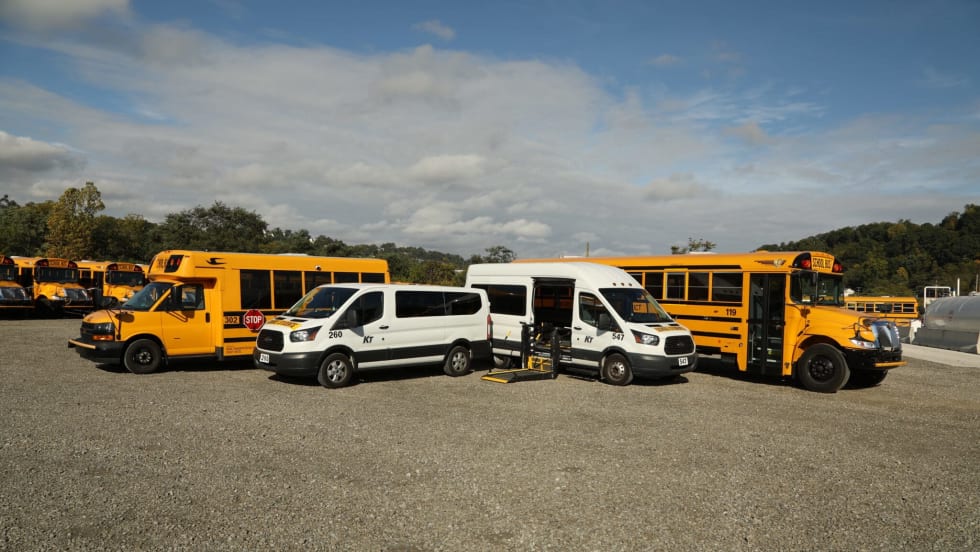
American Student Transportation Partners Acquires AJ Myers and Sons
A new deal brings a 75-year Pennsylvania student transportation provider into one of the nation’s largest private school bus contracting groups.
Read More →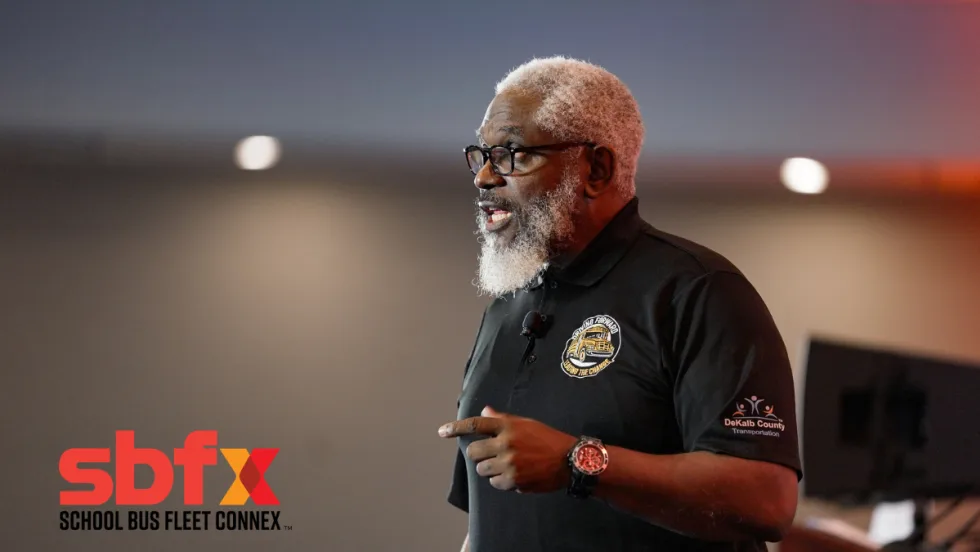
What I Brought Home From SBFX: Relationships, Leadership, and Preparing What's Next
Who could lead your transportation operation tomorrow if you couldn't? Bernando Brown explores succession planning, mentorship, and preparing emerging leaders to step up.
Read More →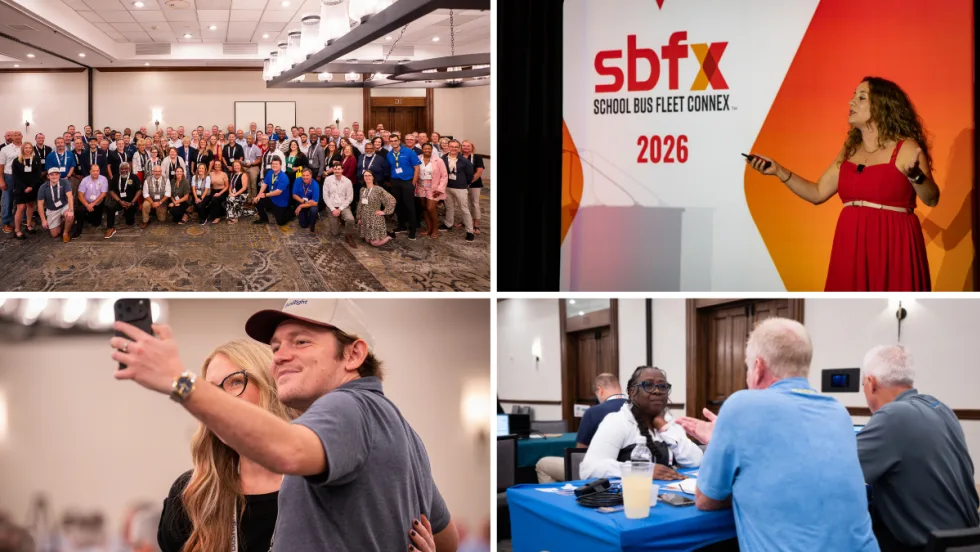
Inside School Bus Fleet ConneX 2026: Industry Leaders Connect in Scottsdale [Photos]
See highlights from SBFX 2026 in Arizona, where school bus operators and suppliers gathered for meetings, education, networking, awards, and more.
Read More →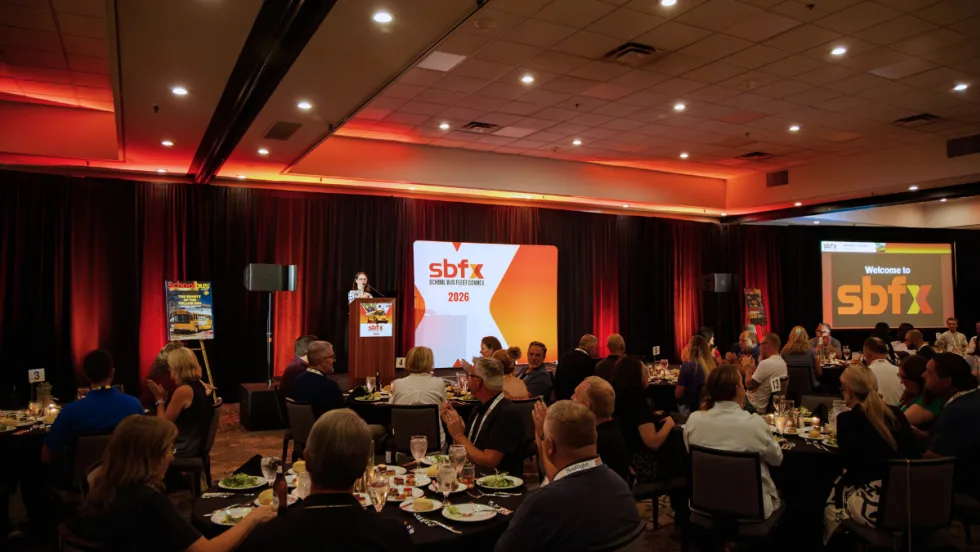
School Transportation’s Biggest Pressures and Opportunities: SBFX Attendees Weigh In
School bus operators point to rising costs, staffing, and vehicle prices as immediate pressures while identifying technology, training, and routing as opportunities for growth.
Read More →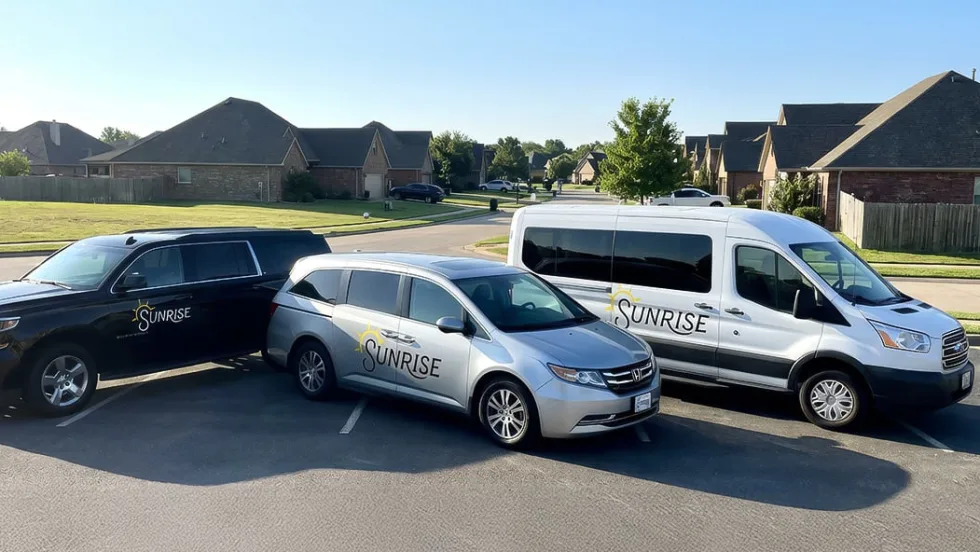
STA Acquires Sunrise Transportation
Student Transportation of America expands in Illinois and Connecticut through Sunrise's fleet of nearly 1,000 vehicles.
Read More →
EPA Opens $180M DERA Funding Round for Diesel Upgrades
The 2026 Diesel Emissions Reduction Act program seeks applications from eligible organizations to accelerate the retirement of legacy diesel vehicles.
Read More →
HopSkipDrive’s CareEngine Targets the ‘Exceptions’ in Student Transportation
The new platform works alongside districts’ existing transportation management systems to coordinate specialized rides, automate last-minute changes, and turn ride data into operational improvements.
Read More →