

Former Thomas Built Leader to Head Virginia School Bus Dealership
US Senator Visits Virginia School Bus Company to Talk Electric Buses, Infrastructure
Sen. Mark Warner (Va.) discusses the current federal infrastructure plan and what it means for electric school buses.
by SBF Staff
August 25, 2021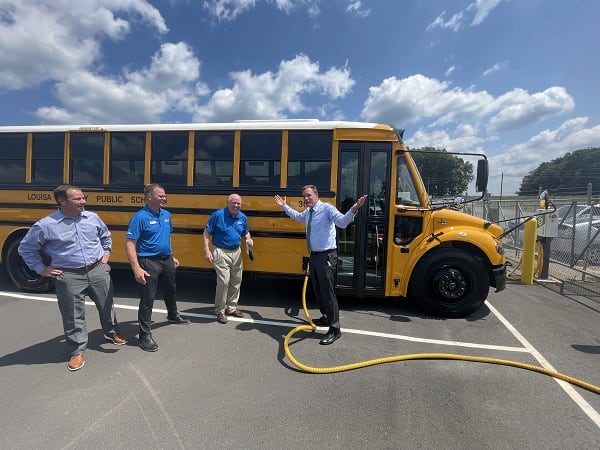
Sen. Mark Warner (right) is shown here plugging in one of Virginia’s Jouley electric school buses with Floyd Merryman, executive chairman of Sonny Merryman Inc.; Caley Edgerly, the company’s president and CEO; and Eric Reynolds, senior director of Proterra.
Photo courtesy Sonny Merryman Inc.
2 min to read
On a four-day tour throughout the Commonwealth, U.S. Senator Mark Warner (D-Va.) made a stop at Lynchburg, Virginia-based school bus company Sonny Merryman Inc. to discuss electric school buses and infrastructure.
Warner specifically talked about the bipartisan Infrastructure Investment and Jobs Act passed by the Senate earlier this month. The plan includes $5 billion for electric and low-emissions school buses and would also allocate to Virginia at least $106 million over five years to support the expansion of an electric vehicle charging network.
“There is no better part of our fleet to start this transformation than school buses,” Warner said during the visit. “This bill got 69 votes in the U.S. Senate. Now we’ve got to hope it gets through the house as quickly as possible so we can get it on the President’s desk — signed — and start implementing these changes to keep Virginia competitive and to make sure we make that switch to sustainable mobility.”
As part of an electric school bus program with school bus manufacturer Thomas Built Buses and Virginia-based power company Dominion Energy, Sonny Merryman has delivered a total of 50 Jouley electric school buses to 15 Virginia localities during the 2020-21 school year. With the recently announced Virginia Department of Environmental Quality Clean School Bus Program funding and the American Power electric school bus program, Sonny Merryman will be delivering more than 40 Jouley electric school buses during the 2021-22 school year across Virginia.
In addition to Warner, several other guests, including local government officials, school division administration and transportation teams, utility and infrastructure partners, clean energy associations, and Virginia’s Secretary of Transportation Shannon Valentine, were in attendance.
“What is taking place with electric school buses is transforming our world for our children,” Valentine said during the event. “These are transformational investments that are needed. To achieve this, it takes all of us — citizens, utilities, business and industry leaders, and bipartisan policymakers.”
As School Bus Fleet previously reported, on Thursday, Virginia has allocated more than $10.5 million of its Volkswagen settlement funds to purchase 83 new electric and propane buses for 19 school districts. The funding is part of several electric vehicle initiatives across the state.
To date, approximately $62 million has been awarded for clean fuel projects in Virginia, including electric transit, school, and shuttle buses; electric equipment at the Port of Virginia; and the development of a statewide electric vehicle charging network.
More Alternative Fuels
Bipartisan Bill Seeks to Extend Clean School Bus Program Through 2031
The proposed legislation would renew federal support for cleaner school buses as districts navigate funding uncertainty, rising fuel and infrastructure costs, and fleet replacement needs.
Read More →
Alt-Fuel Moves: Electric Bus Rollouts, Bidirectional Charging & Propane Growth
See which fleets are adding electric and propane school buses as districts and operators invest in charging infrastructure, bidirectional technology, and alternative-fuel expansion.
Read More →
Nobody Told Diesel Prices They Were Supposed to Come Down
With diesel prices surging, school bus fleets have new reason to stress-test fuel costs, consider diversification, and calculate what each route really costs to operate.
Read More →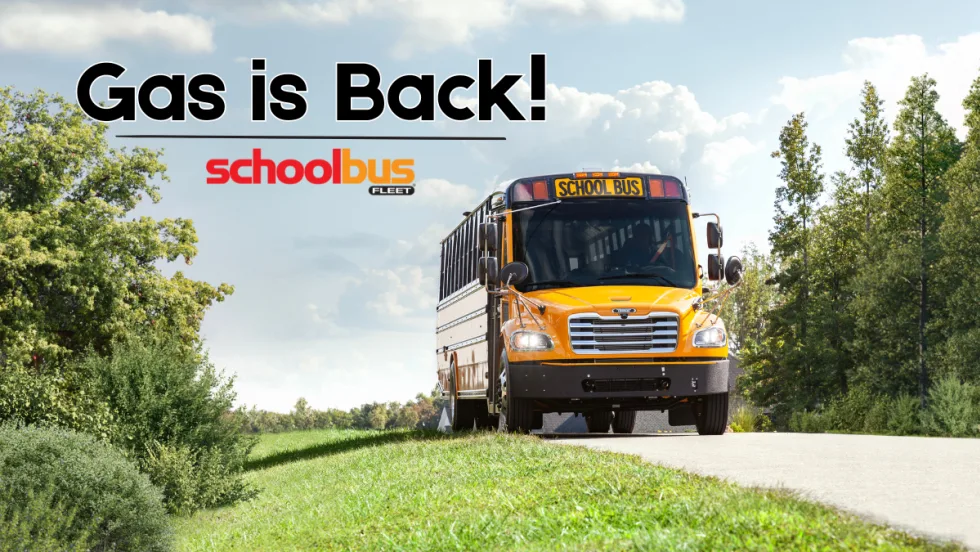
Why Gasoline School Buses Are Making a Comeback
Gasoline is gaining ground in full-size school buses. See how today’s options stack up against diesel on cost, maintenance, emissions, performance, and more.
Read More →
EPA Opens $180M DERA Funding Round for Diesel Upgrades
The 2026 Diesel Emissions Reduction Act program seeks applications from eligible organizations to accelerate the retirement of legacy diesel vehicles.
Read More →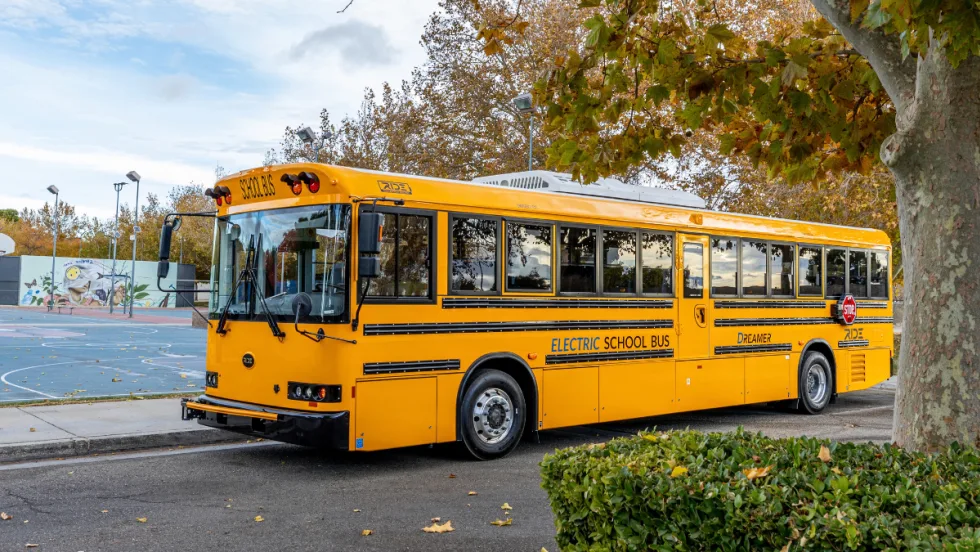
The Secret Life of an Electric School Bus Battery
Batteries change throughout years of daily routes, but degradation doesn’t necessarily mean the end. Here’s what operators should know about performance, safety, and second life.
Read More →
CALSTART and Forth Combine to Form Catalyst Mobility
The new name represents a renewed vision for the nonprofit focused on advancing clean, equitable, and affordable transportation solutions that move people and goods.
Read More →
Alt-Fuel Moves: New Buses, Charging Hubs & Real-World EV Testing
Propane and electric school bus deployments continue to grow as districts add new vehicles, expand charging infrastructure, and gather more real-world operating data.
Read More →
Fewer Electric School Bus Models Reshape the U.S. Market
WRI’s latest buyer’s guide points to a consolidating electric school bus market, but fewer options may reflect a maturing industry rather than fewer meaningful choices for school bus operators.
Read More →
The Fuel Budget You Can Actually Predict: How Propane Autogas Keeps Money in the Classroom
Learn how propane autogas helps school districts manage fuel costs with predictable pricing, lower maintenance, and reduced emissions from former transportation director Joel Stutheit.
Read More →