





More Reflection: A Ride Through School Bus History: Observations from a Newbie
40 Things I Learned in My First Year as SBF Editor
Twelve months, almost 100 interviews and articles later, and countless lessons learned. Here are 40 key takeaways SBF’s editor learned about school buses, safety, and the people who keep students moving.
October 7, 2025
Many in the industry bleed yellow. I think mine is starting to turn orange as I fall in love with the school bus 'biz.
Photo: School Bus Fleet
6 min to read
Putting together School Bus Fleet’s October issue marked one full annual magazine cycle for me. Just over a year ago, I stepped into the shoes of executive editor of the brand I loved supporting years prior. Honestly? It didn’t take long to fall in love with this industry.
I’ve asked many questions (some better than others), leaned on the wisdom of those who welcomed me in, listened to all of you, and discovered just how incredible yellow buses are and the people who make them roll.
As I reflect on both how slow and how fast time went, what I learned, and what I would tell my slightly younger self if I could teleport back, I decided to compile it in a list and share it with you (inspired by former editor Thomas McMahon’s farewell column).
To many readers, this list is old hat. But for anyone else who is new-ish to this world, perhaps my lessons will help you, too.
The school bus is the most regulated vehicle on the road today (and for good reason). It must meet 42 FMVSS rules.
"Bleeding yellow" is a real thing.
The earliest “school buses” in the 1800s were called kid hacks and were horse-drawn wagons.
A lot of industries say safety is paramount, but here, I have no doubt that everyone means it. It’s our driving force, our guiding light.
School buses are slow to adopt new technologies intentionally. As Max Christensen told me, “We don't test new things on kids.”
Special needs transportation is highly unique with its own set of rules and best practices, and it’s a rapidly growing niche. More students are being diagnosed with autism, and experts believe that COVID-19 has had effects we’re still finding out on child development.
IEPs and communication with transportation departments is a serious concern at many districts, despite the law (IDEA) saying it's a related service.
Student behavior is a topic we can’t talk enough about.
I used to wonder why seat belts weren’t on school buses when they’re so important for all other vehicles. Now, I know that compartmentalization is powerful for student safety and that seats and the buses themselves are designed to protect passengers.
Just like automobiles, school bus drivers have two types of licensing. CDLs come with an S or P endorsement, indicating if the driver can transport students, an empty bus, or passengers for non-school-sponsored events.
California and Hawaii operate fewer buses than all other states, each transporting less than 20% of all enrolled students.
Bus manufacturers tend to fall in three categories: Legacy OEMs, specialty bus makers often for smaller-capacity vehicles, and purpose-built electric bus producers.
When making electric buses, the legacy manufacturers convert diesel models to accommodate a battery, while purpose-built OEMs build specifically to hold batteries.
New York and California have the most state funding available, and have the most regulations.
Some states between the coasts feel like they’re not represented on the same level. (We’re trying to change that and cover all the great things across the entire U.S.)
Every state has stop-arm passing laws, but it remains a problem everywhere. Sadly, many Americans don’t know or don’t care about the laws.
The same generational differences across the country and other industries are now felt in this industry; as younger folks step in, we see more turnover in transportation administration than in years past. And yet, so many bus drivers love what they do so much that they stay for decades.
Most transportation staff started as drivers and climbed the ladder to administrative and director roles.
The diversity of voices in the industry is truly beautiful. There is a huge array of inspiring young up-and-comers, women, LGBTQIA+, and BIPOC individuals making big moves.
Diesel has changed significantly in the past 10 years, between aftermarket treatments to reduce emissions and the use of biodiesel and renewable diesel.
CNG buses, once popular decades ago, became expensive to operate. Now, natural gas retrofit options are available on diesel models as another alternative fuel option.
The reason Blue Bird is the only OEM offering propane buses is because of an exclusivity agreement with ROUSH CleanTech that started in 2012 and extends through 2030.
A fully autonomous school bus was prototyped in 2019, but was quickly shut down by NHTSA.
School buses can be WiFi-enabled, and with funding available.
The National Congress on School Transportation is held every five years, gathering industry stakeholders across the county to agree on recommended best practices and self-regulate.
Alternative transportation, seat belts, and electric vehicles are arguably the most divisive topics in the industry.
There is a small pool of school bus manufacturers, and every few years it seems there is a shakeup as a new player emerges and another folds. The manufacturer of the very bus I rode went out of business the same year I became a passenger.
Tiered routes are when the same buses run a high school route, then an elementary, for example. This concept was initially foreign to me as a school bus rider in a small, rural district, where everyone rode the same bus at the same time.
School buses with a white roof are spec'd to keep them cooler in warm weather.
Insurance premiums for school buses have skyrocketed in recent years and keep rising in today’s litigious environment. While rising operating costs are putting some contractors out of business, even districts can be dragged into multi-million-dollar lawsuits, even when there was no clear wrongdoing on the driver’s or operator’s part. This has lead for a clear call for tort reform among many operators.
Contract renewals are typically set up in a range of years, with check-in periods built in. For example, a district may have a contractor run their routes for four years, with the opportunity to review and revise anything two years in. That would be called a 2-2. Other contractors prefer a 3-3-3.
The Type B school bus is on its last route after declining demand. No manufacturer continues to make them, though some older models are still out there.
Fitness requirements for drivers are to ensure that they can adequately react and rescue riders in the event of an emergency.
We learn as much from what goes wrong as from what goes right. Crashing and scrapping buses intentionally has led to many safety features. Much of that happens in my home state of Indiana!
Some states like South Carolina do their own bus purchasing, while most others let districts spec and source buses as they wish (within federal, state, and local standards, of course).
The Colorado Rack and Load and the Kentucky Pole tests were both born out of tragic school bus crashes in each state and evaluate a school bus’ structural integrity in a rollover situation.
Several key governmental agencies like the TSA and NHTSA make themselves available to school districts, often at no charge, to train transportation teams on emergency situations and safe operating practices.
Regulation and policy shifts have widespread effects. It’s hard to keep up with changing rules! That’s why we try to help you navigate through recommendations and protocols to keep you compliant and informed.
Technology and innovation are changing the landscape fast, with turn-by-turn directions replacing paper maps, parent apps reducing the number of phone calls teams must answer, and high-tech cameras helping crack down on illegal stop-arm passing.
School bus drivers are unsung heroes, each with their own story and reason for driving our nation’s children to education and opportunity nearly every day.
What do you remember from your early years in the student transportation industry? I’d love to hear what stuck with you! Share your key takeaways in the comments below or email me: amanda.huggett@bobit.com.
Subscribe to Our Newsletter
More Blog Posts
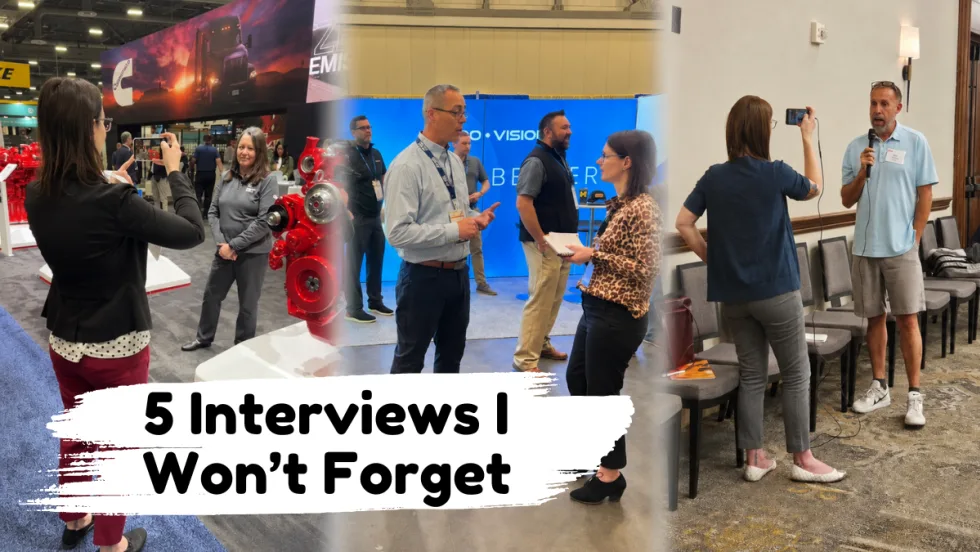
5 Video Interviews That Stuck With Me
After more than 100 episodes of The Route, SBF’s editor looks back at the unforgettable conversations and the school transportation lessons that we won’t forget.
Read More →
Leading with Compassion & Curiosity
What if the story you're telling yourself isn't true? Learning about emotional intelligence can improve communication and culture in school transportation and beyond.
Read More →
Key Trends Shaping The Future of School Transportation: ACT Expo Analysis
What’s next for the school bus market? We walked the show floor in Vegas to find out. From AI and V2G to battery breakthroughs and cutting-edge software, here’s what stood out.
Read More →
Suffering from Imposter Syndrome? You’re Not the Only One
Tips on fearing less instead of being fearless, and a powerful lesson from a group activity inspired by the 2025 NAPT keynote.
Read More →
My Own Trailblazers (and Why We Need More Women in Leadership)
From family influences to industry leaders, SBF’s editor reflects on the women who shaped her path and why representation in school transportation leadership matters.
Read More →
18 Ways to Support Your Transportation Team Beyond Thank-You Notes
Love the Bus Month is about more than thank-you notes. Learn how supporting the entire transportation team builds trust, culture, and retention year-round.
Read More →
When Home Is the Headline: Finding Our Way Forward in Minneapolis [Op/Ed]
In this season of uncertainty, leadership means empathy, critical thinking, and showing up. Here, our editor’s personal reflection on what matters most when times are tough.
Read More →
Seventy Years on the Road Together
School Bus Fleet’s editor reflects on the magazine and the industry’s legacy, change, and what endures.
Read More →
Through Change and Choice: Key Insights from 2025 and the Road Ahead
The school bus industry navigated big changes in 2025. Here’s how we adapted, what the data reveals, and what lies ahead in 2026.
Read More →
The Hidden Risks on the Road
Even the best school bus drivers can’t prevent every danger. As technology races and tempers rise behind the wheel, transportation pros face new challenges beyond the driver’s control.
Read More →