




NHTSA Directs Operator of Driverless Shuttle to Stop Transporting Children
Transdev stops running an autonomous shuttle to transport students in a Florida pilot after NHTSA tells it to cease operation, because it hadn’t approved the shuttle for that purpose.

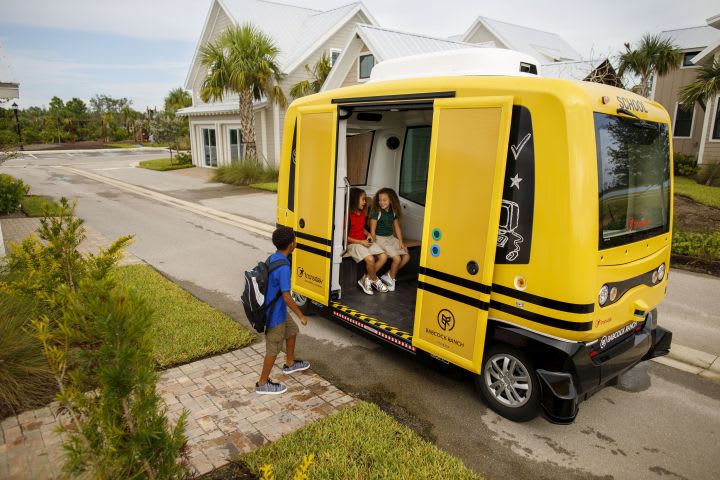
Transdev has stopped running an autonomous shuttle to transport students in a Florida pilot after NHTSA told it to cease operation, because it hadn’t approved the shuttle for that purpose.
Transdev has stopped running an autonomous shuttle to transport students in a Florida pilot after NHTSA told it to cease operation, because it hadn’t approved the shuttle for that purpose.
WASHINGTON, D.C. — A mobility solution provider is no longer running an autonomous shuttle to transport students in a new community in Florida after a federal authority directed it to cease operations on Wednesday.
The National Highway Traffic Safety Administration (NHTSA) issued a letter to Transdev North America telling it to immediately stop transporting schoolchildren in the Babcock Ranch community in Punta Gorda, Florida, on its EasyMile EZ10 Generation II driverless shuttle. Transdev’s use of the autonomous shuttle to transport schoolchildren is “unlawful and in violation of the company’s temporary importation authorization,” according to a news release from NHTSA.
NHTSA also stated in the news release that its direction to Transdev falls in line with the U.S. Department of Transportation’s guidance related to automated vehicles, most recently detailed on Oct. 4. The new guidance can be found here.
"Innovation must not come at the risk of public safety," said Heidi King, deputy administrator for NHTSA. "Using a non-compliant test vehicle to transport children is irresponsible, inappropriate, and in direct violation of the terms of Transdev’s approved test project."
In March 2018, NHTSA granted Transdev permission to temporarily import the driverless shuttle for testing and demonstration purposes. Transdev requested permission to use the shuttle for a specific demonstration project, and failed to disclose or receive approval for use “as a school bus,” according to NHTSA.
In its letter to Transdev, NHTSA noted that federal regulations define a “school bus” as a bus that “is likely to be used significantly to transport preprimary, primary, or secondary students to or from school or related events.”
NHTSA added that school buses are subject to Federal Motor Vehicle Safety Standards that take into account their unique purpose of transporting children, a vulnerable population.
If Transdev had specified that it planned to use the vehicle in student transportation, NHTSA wrote that it would have considered factors such as “whether the vehicle complied with applicable school bus and bus regulation, and whether additional conditions were necessary to ensure the safety of children.”
Transdev responded to School Bus Fleet with a statement in which it said it discussed the six-week pilot last week with NHTSA and elected to stop operation of it one week earlier than it had planned to "out of deference to NHTSA."
"Transdev believed it was within the requirements of the testing and demonstration project previously approved by NHTSA for ridership by adults and children using the same route," Mitun Seguin, vice president of marketing and communications for Transdev, said in the statement.
The shuttle operated one day a week for five weeks, with a maximum of five students aboard, and only on private roads for a three-block trip at a maximum speed of 8 miles per hour. Additionally, the statement pointed to the fact that parents gave permission for their children to ride the shuttle, which was the same shuttle that parents and their children had ridden on during weekends as part of the Babcock Ranch pilot that began in late 2017.
"We designed this pilot to further enhance our learning about what types of services would be most appreciated by residents, so that as the Babcock community grows, we can deliver a robust suite of mobility options," Seguin added in the statement. "Transdev does not — nor would ever — sacrifice safety for progress and is fully committed to compliance with all relevant regulations. We have already transported over 2 million passengers on Transdev shared autonomous transport services around the world. We operate with the highest standard of safety and security for our passengers and employees in all vehicle and service types, autonomous or otherwise."
Transdev told SBF in a recent story, published in the November issue, that it launched an autonomous school shuttle in Babcock Ranch on Sept. 21, and that it didn't refer to it as a school bus. A spokesperson for Transdev told SBF for the story that the shuttle is not required to meet the same state and federal specifications that school buses do because the area charter school and the district it operates under are not involved with the pilot.
More Safety

How to Build a Better School Bus Driver Training Program
Is it time to strengthen your driver training? Here’s how to pick the right talent and improve recruitment, retention, and safety. This video is brought to you by IC Bus.
Read More →
Recent School Bus Accidents Leave 2 Dead, 2 Injured
Four school bus crashes in Florida, Illinois, and Georgia highlight risks in transportation lots, at bus stops, and during student loading and unloading.
Read More →
When Every Second Matters, Clarity Keeps Routes Moving
From routine delays to urgent incidents, strong communication practices help drivers, dispatchers, schools, and families respond with confidence.
Read More →

What Happens When a School Bus Catches Fire — and What Can Help
School bus fires are rare but can be devastating. Learn how advances in fire suppression and asset protection help fleets detect fires earlier, reduce damage, and improve safety.
Read More →
Geotab Launches Tool to Help Fleets Investigate Road Incidents
Geotab Investigations combines telematics data, video, documents, and other evidence to help fleets reconstruct incidents, resolve claims, and determine what happened.
Read More →
Texas Sixth Grader Wins 2026 National School Bus Safety Poster Contest
Sai Darshana Yekolu of Moseley Middle School in Prosper, Texas, was named the newest winner for her artwork, bringing the theme of “Safe Rides, Everyday Heroes” to life.
Read More →
Doing More With Less: How Transportation Directors Can Prioritize Safety Amid Budget Uncertainty
With diesel prices soaring and nearly one-third of transportation directors expecting budget cuts, maintaining student safety has never been more challenging. Download this guide to learn how leading districts are prioritizing risk, funding critical safety technology, and building stronger budget cases with data.
Read More →
Walton County Schools Adds Gatekeeper Stop-Arm Enforcement System
The Florida district will deploy Gatekeeper’s updated Student Protector technology, which now incorporates AI to improve video evidence.
Read More →
How To Build a More Secure School Bus Yard During and After Hours
As thefts and overnight security threats continue, school transportation leaders are combining stronger operational practices with AI-enabled surveillance to better protect buses, facilities, and staff.
Read More →
FMCSA Names New Chief Safety Officer: What School Bus Operators Should Know
Steve Dowling is set to lead the federal agency's efforts to advance commercial motor vehicle safety and reduce crashes, fatalities, and injuries on the nation's roadways.
Read More →