





More on Child Passenger Safety: Child Passenger Safety Learning Portal
Understanding FMVSS 213: Key FAQs on Child Restraint System Requirements
School bus child restraint rules are under review, but there are no new requirements yet. Here’s what operators need to know about proposed changes, exemptions, and the extended compliance date.
August 27, 2025
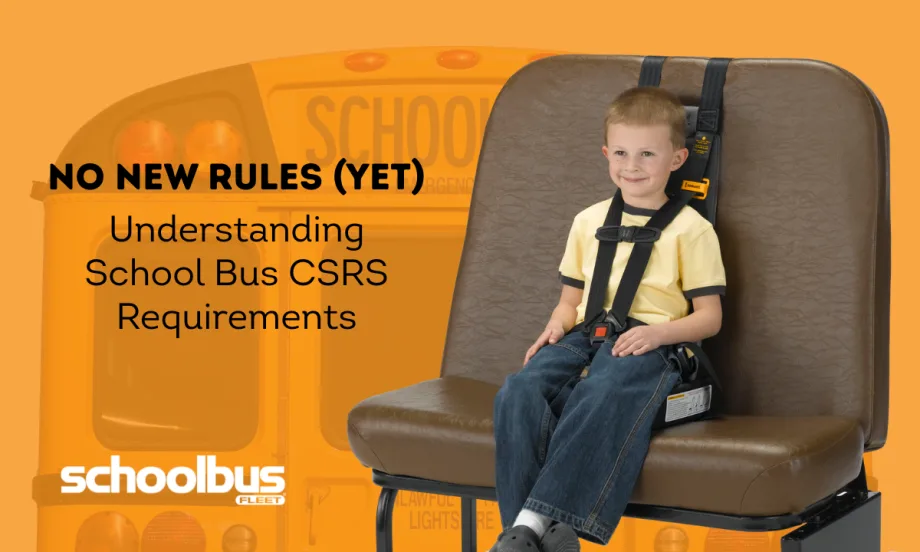
Delegates at the 17th NCST voted to request a delay and clarification of FMVSS 213a and 213b, with NHTSA proposing an extension to Dec. 5, 2026, and no immediate changes for current restraints.
Photo: IMMI/School Bus Fleet
4 min to read
At the 17th National Congress on School Transportation (NCST), delegates adopted a resolution requesting that NHTSA delay and clarify final rules under FMVSS 213a and 213b related to school-bus child safety restraint systems (CSRS). The resolution called for further engagement with NHTSA to ensure rules are both safe and practical in the field.
Why This Update Matters
In recent months, some safety system manufacturers have noted misunderstandings in the industry about the status of these rules. For school bus operators using child restraints, the key point is that there are no new requirements at this time. Existing restraints remain valid under federal policy. Here’s what else you should know.
NHTSA Proposed Rulemaking
In May, NHTSA issued a Notice of Proposed Rulemaking that would:
Exempt school-bus CSRS from side-impact requirements as long as they meet FMVSS 213a labeling standards. This change updates the 2023 frontal-impact rule to allow more add-on CSRS designed specifically for school buses.
Delay the compliance date from June 30, 2025, to Dec. 5, 2026, to prevent market disruption and address limited compliance lab sled time needed for product development and certification—a resolution supported at the 17th NCST.
Remove the 12-month-old dummy from forward-facing CSRS side-impact testing, since its weight (22 lbs.) is below the new minimum 26.5-lb. forward-facing requirement.
Amend dummy positioning procedures to reflect its removal from forward-facing testing.
Exclude school-bus CSRS from LATCH anchorage requirements, recognizing that they use seat-back mounting. Labeling requirements would be updated to reflect school bus-specific installation methods.
Following the NCST resolution, NHTSA formally proposed pushing the compliance date to Dec. 5, 2026, to avoid equipment shortages and ensure the continued availability of compliant restraints until a final rule is issued.
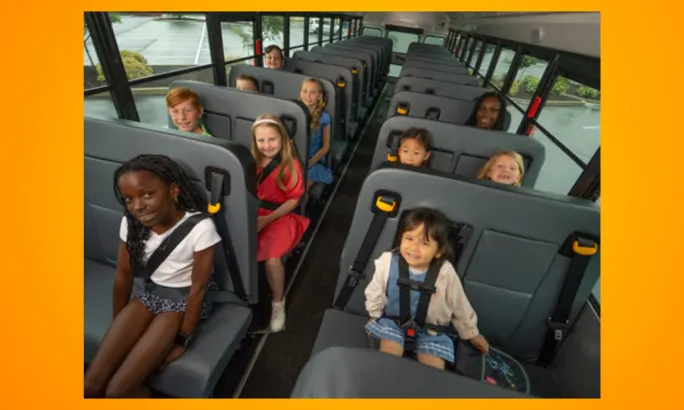
Experts from seating provider IMMI say that there should be no impact for school districts and operators as the deadline change permits business as usual for manufacturers and users of these systems.
Photo: IMMI
Expert Perspectives
Susan Shutrump, president of Susan Shutrump Consulting, pointed out that a June 30, 2025 rule already in effect requires any forward-facing child restraint, including school-bus-only CSRS, to have labels and instructions listing a minimum forward-facing weight of 26.5 pounds.
“This change will impact school transporters who have been using these restraints for children weighing less than that for many years,” Shutrump said. “Districts will now need to place children under 26.5 pounds in rear-facing restraints, which in most cases means returning to conventional child safety seats like those used in private vehicles.”
Charlie Vits, retired occupant protection support for IMMI, provided background on how school-bus CSRS regulations evolved. He noted that FMVSS 213 has historically focused on passenger vehicle seats, and only in December 2023 did NHTSA formally establish a classification for school-bus-specific systems.
"Another consideration related to this standard is seen when looking at the passenger vehicle child seats that already are compliant with FMVSS 213a. These car seats are now even larger and heavier than before. They will require even more effort to be properly installed in a tight school bus seating compartment and may take up more passenger space," said Vits.
Vits explained that the proposed exemptions from FMVSS 213a side-impact requirements and LATCH connector rules are “regulatory housekeeping” that align the federal standard with proven school bus practices. “Crash dynamics in a school bus are very different from passenger cars, with much lower side-impact intrusion risk,” he said. “To date, there are no known serious injuries to properly restrained young children in school bus CSRS.”
He added that NHTSA’s non-enforcement policy — which is in place until a final rule is published — ensures manufacturers can continue production without disruption, giving districts confidence to keep purchasing restraints. Without this, production would have halted in June 2025.
"There is a misunderstanding that there is an issue with current school bus child restraint systems, and they should be taken out of service. There are no changes to the design of school bus child restraint systems because of this legislation, and to improve young child protection in school bus transportation, their use should be increased and not discontinued." — Charlie Vits
Frequently Asked Questions
Q: Why was the deadline delayed?
Manufacturers requested more time for testing and certification to avoid market disruption. NHTSA cited limited lab availability and production concerns, extending the date to Dec. 5, 2026.
Q: Why are school-bus systems exempt from side-impact standards?
School-bus CSRS use seat-back mounting, making side-impact testing less relevant. The structural design of school buses already offers significant side protection, according to safety experts.
Q: Is this rulemaking final?
No. The proposal was open for public comment through June 30, 2025. NHTSA will review feedback before issuing a final rule.
Q: What confusion remains?
Operators still seek clarity on labeling, installation protocols, and how the 26.5-lb. forward-facing minimum applies to existing equipment. Shutrump stressed that these labeling changes could force operational adjustments for children under that weight.
Subscribe to Our Newsletter
More Safety
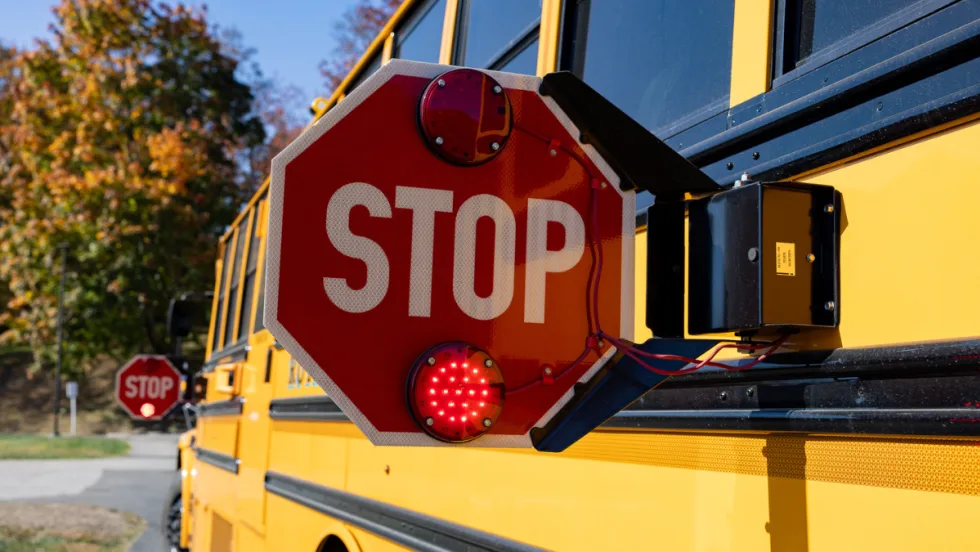
Illegal School Bus Passing Drops 24% in New York Districts
With fewer than 5% of citations involving repeat offenders, Westchester County officials said enforcement, education, and community partnerships are helping change driver behavior.
Read More →
School's Back. Here's What Happened to Traffic, Speeding & Distraction
What happens to traffic when school resumes? New data analysis examines changes in distracted driving, congestion, and speeding around schools.
Read More →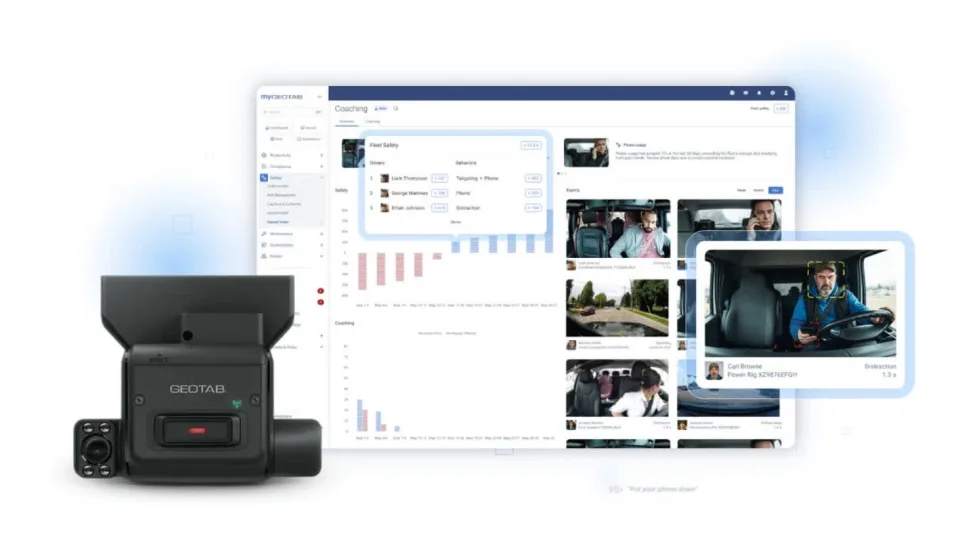
Geotab Expands Fleet Safety Tools With Video Coaching, Risk Insights
New safety and video capabilities aim to help fleet managers assess risk, support drivers, and take targeted action through video coaching, red-light violation detection, and more.
Read More →
How to Build a Better School Bus Driver Training Program
Is it time to strengthen your driver training? Here’s how to pick the right talent and improve recruitment, retention, and safety. This video is brought to you by IC Bus.
Read More →
Recent School Bus Accidents Leave 2 Dead, 2 Injured
Four school bus crashes in Florida, Illinois, and Georgia highlight risks in transportation lots, at bus stops, and during student loading and unloading.
Read More →
When Every Second Matters, Clarity Keeps Routes Moving
From routine delays to urgent incidents, strong communication practices help drivers, dispatchers, schools, and families respond with confidence.
Read More →
What Happens When a School Bus Catches Fire — and What Can Help
School bus fires are rare but can be devastating. Learn how advances in fire suppression and asset protection help fleets detect fires earlier, reduce damage, and improve safety.
Read More →
Geotab Launches Tool to Help Fleets Investigate Road Incidents
Geotab Investigations combines telematics data, video, documents, and other evidence to help fleets reconstruct incidents, resolve claims, and determine what happened.
Read More →
Texas Sixth Grader Wins 2026 National School Bus Safety Poster Contest
Sai Darshana Yekolu of Moseley Middle School in Prosper, Texas, was named the newest winner for her artwork, bringing the theme of “Safe Rides, Everyday Heroes” to life.
Read More →
Sponsored•August 27, 2026
Doing More With Less: How Transportation Directors Can Prioritize Safety Amid Budget Uncertainty
With diesel prices soaring and nearly one-third of transportation directors expecting budget cuts, maintaining student safety has never been more challenging. Download this guide to learn how leading districts are prioritizing risk, funding critical safety technology, and building stronger budget cases with data.
Read More →